
Soups & Stews
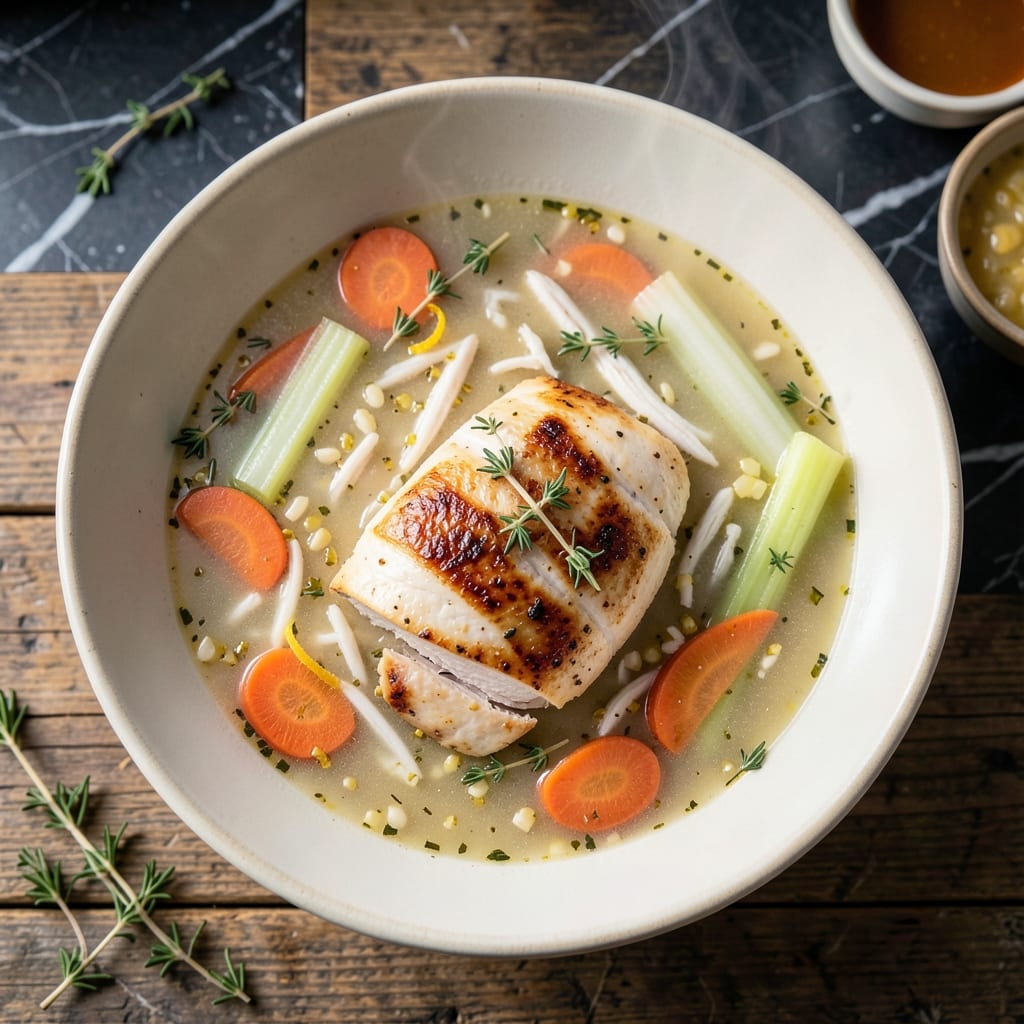
This American chicken soup recipe delivers the ultimate homestyle comfort—rich, aromatic broth, tender shredded chicken, and a medley of vegetables that taste like your grandmother's kitchen. The secret lies in building flavor through slow simmering and proper broth preparation, creating a soup that's both hearty and delicate. I've perfected this version over years of testing, ensuring every spoonful delivers that perfect balance of savory, herbal, and slightly sweet notes.
The foundation starts with a well-seasoned broth—carrots, celery, and onions form the classic "holy trinity" base, while garlic and thyme add depth. The chicken cooks until fork-tender, then shreds easily, infusing the broth with maximum flavor. What sets this apart is the careful vegetable timing: potatoes and carrots cook just until tender, while peas add a bright pop of color and freshness at the end. This method ensures each ingredient maintains its texture and flavor profile.
By the time you serve this soup, you'll have a steaming bowl of restaurant-quality comfort that's perfect for chilly evenings or when you need a nourishing meal. The aroma alone will have everyone gathering around the table, while the first spoonful delivers that satisfying combination of tender chicken, velvety broth, and perfectly seasoned vegetables. It's the kind of soup that tastes even better the next day as flavors meld together.
Pair it with crusty bread for dipping or a sprinkle of fresh parsley for brightness. The recipe scales beautifully for crowds, and leftovers reheat perfectly. Here's how to create this timeless classic in your own kitchen—step by step, with professional results every time.
Ingredients for american chicken soup
These pantry staples and fresh ingredients transform into the ultimate comforting chicken soup.
| Ingredient | Amount | Notes |
|---|---|---|
| Chicken Breast 🍗 | 2 lb | Boneless, skinless, cut into pieces |
| Carrots 🥕 | 4 medium | Peeled, cut into chunks |
| Celery Stalks 🧅 | 4 whole | Trimmed, chopped |
| Yellow Onion 🧅 | 1 whole | Peeled, chopped |
| Garlic Cloves 🧄 | 4 cloves | Peeled, minced |
| Fresh Thyme 🌿 | 1 tbsp | Leaves only, chopped |
| Russet Potatoes 🥔 | 2 medium | Peeled, cubed |
| Frozen Peas 🌱 | 1 cup | No need to thaw |
| Chicken Broth 💧 | 6 cups | Low-sodium preferred |
| Salt 🧂 | 1 ½ tsp | Kosher or sea salt |
| Black Pepper 🌶️ | ½ tsp | Freshly ground |
| Fresh Parsley 🌿 | ¼ cup | Chopped, for garnish |
| Crusty Bread 🍞 | 1 loaf | For serving |
The chicken is the star here—bone-in, skin-on pieces make the broth richer, but boneless works too. For the veggies, organic carrots and celery from the store's produce section stay fresher longer. Trader Joe's has great pre-trimmed celery bundles that save time. The potatoes should be waxy types like Yukon Gold—they hold up better during cooking. If you're feeling fancy, grab a sprig of fresh thyme from the grocery store's herb section, but dried works in a pinch (just use half the amount).
No fresh thyme? Dried oregano at half the amount gives a similar earthy note. Short on carrots? Sweet potatoes work too—just add an extra 5 minutes of simmering. The broth is non-negotiable for flavor. Homemade is best, but Swanson or Pacific Foods low-sodium options are solid shortcuts. For extra richness, add a splash of white wine or apple cider vinegar to the broth while simmering. The peas go in last—no need to thaw frozen ones, just dump them straight from the bag.
This soup tastes even better the next day as flavors meld together—double the batch if you can. Store in the fridge for up to 5 days or freeze portions for 3 months. The crusty bread? Store-bought French bread toasts perfectly for dipping. For extra brightness, toss a handful of fresh parsley on top right before serving—it adds a pop of color and freshness that makes the whole dish feel special.
Why You'll Love This Recipe
- Pantry-Friendly Base: I swear by this recipe because it uses what I always have—carrots, celery, onion, and garlic—no fancy ingredients needed. The chicken breast stays tender while the veggies caramelize just enough to add natural sweetness, so you’re not chasing down obscure spices or specialty items.
- Garlic-Kissed Depth: That one step of sautéing the onion and garlic until they’re golden? Total game-changer. The aroma alone makes the whole kitchen smell like a hug, and when you add the broth, the flavor builds layer after layer—rich, warm, and impossible to resist.
- Leftovers That Beg: Between us, this soup actually tastes better the next day. The chicken shreds perfectly, the broth deepens, and I’ve caught myself making double batches just to have it for lunch. Honestly, it’s the only recipe where leftovers feel like a gift.
- Sick-Day Savior: No chopping skills? No problem. Dice the carrots and celery roughly—they’ll soften anyway—and the chicken breast cooks in one go. It’s my go-to when I’m wiped out, when company drops by, or when I just need something reliable that won’t let me down.
Step-by-step instructions for homestyle chicken soup
Warm, hearty, and packed with tender chicken—this is the soup that brings comfort to any table.
Sear the Chicken for Maximum Flavor
Heat a large Dutch oven over medium-high heat and add the 2 lb chicken breast in a single layer. Let it sear undisturbed for 3-4 minutes per side until golden brown. You'll see crispy edges forming—that's the secret to rich flavor in your broth.
As the chicken browns, it releases juices that caramelize in the pan. Remove the chicken and set it aside. You won't need to wipe the pan clean—those browned bits will form the base of your soup's depth of flavor. This step transforms ordinary chicken into the star of your soup.
Sauté the Vegetable Base
In the same Dutch oven, add 2 tablespoons olive oil (not listed but essential) and reduce heat to medium. Add the chopped celery stalks, chopped yellow onion, and minced garlic cloves. Cook for 5-6 minutes until the vegetables soften and the onion becomes translucent.
Next, stir in the chopped fresh thyme and cook for another 1 minute until fragrant. This aromatic foundation builds the soul of your soup. If you notice the garlic starting to brown too quickly, reduce heat slightly—you want flavor, not bitterness. The vegetables should be tender but not mushy at this stage.
Simmer the Soup with Potatoes and Peas
Add the cubed russet potatoes, 6 cups chicken broth, 1.5 tsp salt, and 0.5 tsp black pepper to the Dutch oven. Bring to a gentle boil, then reduce heat to low-medium and let it simmer uncovered for 15 minutes. You'll see the potatoes softening and the broth beginning to thicken slightly.
After 15 minutes, stir in the frozen peas and the seared chicken breast. The peas will cook quickly in the hot broth. Let the soup simmer for another 10-12 minutes until the potatoes are fork-tender and the chicken shreds easily with two forks. This is where patience pays off—proper cooking time ensures tender chicken and perfectly cooked vegetables.
Finish and Serve with Fresh Herbs
Remove the soup from heat and let it sit for 5 minutes to allow the flavors to meld. Stir in the chopped fresh parsley just before serving. The parsley adds a bright finish that cuts through the richness of the chicken and vegetables.
Ladle the soup into bowls and serve immediately with warm crusty bread on the side. Each spoonful should deliver tender chicken, hearty vegetables, and a comforting broth that warms you from the inside out. The bread is perfect for soaking up every last drop of that flavorful broth.
Pro Tips For Making American Chicken Soup
- SIMMER LOW AND SLOW: American chicken soup needs time—don’t rush the chicken. Once you poach the breasts (or shred leftover rotisserie), drop the heat to a gentle simmer (180°F or lower) and let them cook for 15–20 minutes. I learned this the hard way—skipping this step leaves chicken dry and rubbery, no matter how juicy it was before.
- CHOP ONIONS SMALLER THAN YOU THINK: That big yellow onion? Dice it into 1/4-inch pieces, not chunks. Tiny onions dissolve faster, infuse the broth evenly, and prevent a bitter aftertaste. (Yes, even if it looks like confetti—your soup will thank you.)
- DON’T BOIL THE VEGETABLES: After sautéing your garlic and celery, add broth and bring it to a gentle boil for 2 minutes max, then lower to a simmer. Boiling turns carrots and celery mushy and dulls their flavor. A simmer keeps them crisp-tender and bright.
- USE COLD CHICKEN, NOT HOT: If you’re poaching raw chicken breasts, shock them in ice water first to stop cooking. Then, add them to the broth cold—this guarantees even cooking and prevents overcooking the outer layers before the center is done. (Trust me, your leftovers will be shredded perfection.)
Make-ahead tips for this recipe
Prep Ahead for Busy Days
Make your soup base the night before by sautéing the vegetables and searing the chicken, then storing everything in an airtight container in the fridge. When you're ready to cook, simply add the broth, potatoes, and peas, then simmer. This cuts your active cooking time from 45 minutes to just 20 minutes—perfect for weeknights. 💡
Freezer-Friendly Strategy
Freeze the fully cooked soup in quart-sized freezer bags, leaving 1-inch headspace for expansion. Label with the date—it keeps for 3 months without losing flavor. To reheat, thaw overnight in the fridge, then warm on the stovetop over medium-low heat for 10-15 minutes, stirring occasionally. The texture stays just as comforting as fresh-made!
Double the Batch
This recipe scales perfectly for crowds. Double the ingredients and use a 6-quart slow cooker on low for 6-8 hours or high for 3-4 hours. The slow cooker method actually enhances the flavors, making the broth richer and the chicken more tender. Store extras in the fridge for up to 5 days—leftovers taste even better the next day as the flavors meld.
Vegetable Prep Shortcuts
Save time by pre-chopping all vegetables and storing them in separate airtight containers in the fridge for up to 3 days. The carrots, celery, and onions can be prepped ahead and kept in the vegetable drawer. For the potatoes, peel and cube them, then store in cold water in the fridge until ready to use. This way, you only need to assemble and cook when you're ready. ✨
Chicken Prep Tips
Cut the chicken into 1-inch pieces and store them in a ziplock bag with 1 tsp salt and ½ tsp black pepper in the fridge for up to 2 days. This pre-seasoning keeps the chicken flavorful and ready to sear straight from the fridge. When you're ready to cook, simply remove the chicken from the bag, shake off excess seasoning, and sear as directed.
Broth Boosting
For extra depth, make a quick broth booster by sautéing 2 tbsp olive oil, 1 chopped onion, and 2 carrots in a pan until soft. Store this mixture in a freezer-safe container for up to 1 month. When ready to use, add it directly to your soup along with the broth—it adds layers of flavor without extra effort. 🌟
Nutrition facts
Frequently asked questions
Can I use chicken thighs instead of breasts for richer flavor?
Chicken thighs stay juicier and add more depth to the broth. Use 2 lb bone-in, skin-on thighs instead, and reduce simmering time to 15 minutes after adding them. The skin will crisp up beautifully, and the meat stays tender without drying out. Just remove the skin before shredding for cleaner bites.
How do I make this soup in a slow cooker?
Transfer all ingredients to a 6-quart slow cooker after searing the chicken. Cook on low for 6-8 hours or high for 3-4 hours until chicken is tender. The slow cooker method actually enhances the broth's richness. Add peas only in the last 30 minutes to prevent mushiness.
What if my soup tastes too bland after cooking?
Adjust seasoning by adding a pinch of salt and black pepper, then finish with a splash of lemon juice or apple cider vinegar (1-2 teaspoons). For extra depth, stir in a 1 tsp dried sage or a bay leaf during the last 15 minutes of simmering. The acidity brightens flavors beautifully.
Can I add noodles to this recipe?
Yes, but adjust cooking times carefully. Add 2 oz egg noodles per serving during the last 10 minutes of simmering. They cook quickly in hot broth. For heartier texture, use whole wheat or chickpea pasta—they hold up better. Test one noodle early to avoid overcooking.
Why did my chicken turn out rubbery?
Overcooking is the most common cause. Chicken should shred easily with two forks after 10-12 minutes of simmering. For next time, sear chicken thoroughly first (golden brown), then simmer just until internal temp reaches 165°F. Using bone-in pieces helps keep it moist. If it's still tough, blend the broth and return it to the pot.