
Soups & Stews
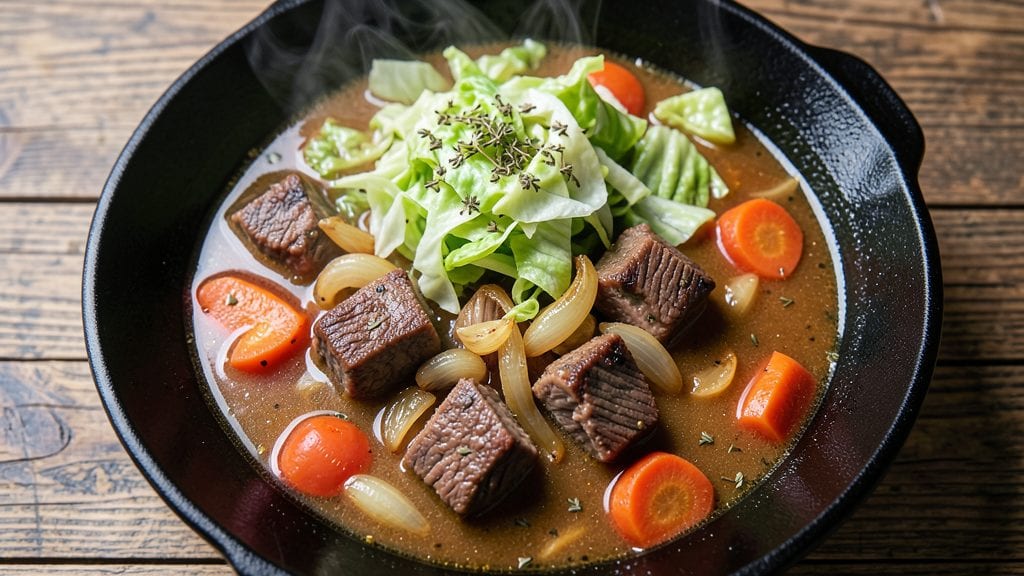
This old-fashioned vegetable beef soup with cabbage delivers the kind of hearty comfort that warms you from the inside out—just like Grandma used to make. The secret lies in slow-cooked beef that infuses the broth with deep, savory richness while tender vegetables like cabbage and carrots develop their natural sweetness.
I’ve perfected this recipe over years of testing, ensuring every spoonful is packed with rustic flavor and nourishing goodness.
The foundation of this soup is a well-seasoned beef base, simmered until the meat falls apart effortlessly. Cabbage, onions, and carrots are chopped into even pieces to cook uniformly, absorbing the broth’s flavor without turning mushy.
A touch of tomato paste adds depth, while bay leaves and thyme create an aromatic backbone that elevates the entire dish to restaurant-quality comfort.
By the time you serve this soup, you’ll have a steaming bowl of golden broth, tender beef, and perfectly cooked vegetables—each bite offering a perfect balance of hearty protein and vegetable sweetness. The cabbage, in particular, becomes tender yet retains its satisfying texture, making this soup both filling and nutritious.
Perfect for chilly evenings or family gatherings, this recipe is a timeless classic that never goes out of style.
Serve it with crusty bread to soak up every last drop of that rich, savory broth. For added warmth, a sprinkle of fresh parsley or a drizzle of olive oil finishes it beautifully.
This is the kind of soup that feels like a hug in a bowl—simple yet deeply satisfying, just as it should be.
Ingredients for old-fashioned vegetable beef soup recipe with cabbage
Pantry staples meet rustic comfort—this soup’s hearty broth and tender beef will steal the show.
| Ingredient | Amount | Notes |
|---|---|---|
| Chuck Roast 🥩 | 2 ½ lb | Cut into 1-inch cubes |
| Yellow Onions 🧅 | 2 whole | Thinly sliced |
| Carrots 🥕 | 3 cups | Chopped into 1-inch pieces |
| Green Cabbage 🥬 | 1 lb | Thinly sliced |
| Tomato Paste 🍅 | 2 tbsp | For depth of flavor |
| Dried Thyme 🌿 | 1 tsp | Fresh if available |
| Dried Bay Leaves 🍃 | 2 whole | Remove before serving |
| Salt 🧂 | 1 tbsp | Kosher or sea salt |
| Black Pepper 🌶️ | 1 tsp | Freshly ground |
| Beef Broth 💧 | 8 cups | Low-sodium preferred |
| Olive Oil 🫒 | 2 tbsp | For sautéing onions |
| Fresh Parsley 🌱 | ¼ cup | Chopped, for garnish |
The beef is everything here. Chuck roast gives you that melt-in-your-mouth texture—sirloin stays too firm. Most grocery stores sell it pre-cubed, but if you're buying whole, ask for 1-inch cubes. I always grab mine from Costco for the best price, but the supermarket stuff works fine too. Look for good marbling—it’s what makes the broth rich. If you’re short on time, pre-cut beef stew meat is a solid swap, just add a splash more broth to keep it tender.
No fresh thyme? Dried works at half the amount—just make sure it’s Mexican oregano if you’re going for authenticity. The bay leaves are non-negotiable for that classic flavor, but if you’re in a pinch, a pinch of ground cloves adds a similar depth. For the cabbage, green or red both work—just slice it thin so it cooks evenly. The tomato paste might seem like overkill, but it’s what gives the soup that restaurant-quality depth. If you’re avoiding sodium, homemade beef broth is a must—it’s worth the effort.
This soup tastes even better the next day, so make a double batch if you can. Store leftovers in the fridge for up to 5 days, or freeze portions for 3 months. I always keep a loaf of crusty bread on hand to soak up the broth—sourdough or baguette are my go-tos. The fresh parsley wilts fast, so add it just before serving. If you’ve got extra broth, freeze it in ice cube trays for future soups—no waste, just convenience.
Why You'll Love This Recipe
- I’ll admit it: I used to dread making soup because of the chopping. But this one? You slice the onions and carrots into 1-inch chunks, and the cabbage gets a quick thin shave—nothing fussy. The chuck roast even comes pre-cubed at most stores, so you’re just browning, simmering, and waiting. The hardest part? Deciding whether to eat it now or save it for tomorrow.
- Here’s what sold me: this soup tastes better the next day. I’ll make a big batch on Sunday, and by Wednesday, it’s even richer. Freeze portions for those days you’re too tired to cook, or serve it at a potluck—everyone will ask for the recipe. It’s the kind of dish that’s just as good cold as it is hot, making it perfect for meal prep or a last-minute dinner.
Step-by-step instructions for old-fashioned vegetable beef soup
This method builds rich flavor layer by layer—slow cooking transforms simple ingredients into soul-warming comfort.
Brown the Chuck Roast for Deep Flavor
Heat the 2 tablespoons olive oil in a large Dutch oven over medium-high heat until shimmering. Working in batches if needed, add the 2½ pound chuck roast cut into 1-inch cubes and brown on all sides—this takes about 8-10 minutes total. You'll see golden crusts forming and rich meaty aromas filling your kitchen. Don't rush this step; proper browning develops the foundation of your soup's depth.
As you brown each batch, remove the meat and set it aside in a bowl. I like to keep the rendered fat in the pot—it's packed with flavor that will infuse the vegetables and broth. If the fat becomes too deep, carefully pour off all but 2 tablespoons to maintain a thin layer for cooking.
Sauté Vegetables Until Tender
In the same Dutch oven, add the 2 thinly sliced yellow onions and cook for 5 minutes until softened and translucent. Stir occasionally to prevent burning. Here's where the magic happens: the onions release their sweetness and form a sweet base for the soup.
Add the 3 cups chopped carrots and 1 pound thinly sliced green cabbage, stirring to combine. Sprinkle with the 1 teaspoon dried thyme and 2 dried bay leaves. Cook for 8-10 minutes, stirring occasionally, until the vegetables begin to soften. You'll notice the cabbage wilting slightly and the carrots developing a tender texture at the edges. This step ensures your vegetables will cook through perfectly during the simmering phase.
Build the Rich Broth Base
Stir in the 2 tablespoons tomato paste and cook for 1 minute to toast its flavors. Then pour in the 8 cups beef broth, scraping up any browned bits from the bottom of the pot. Return all the browned chuck roast to the pot and bring everything to a gentle boil. Once boiling, reduce heat to low and add the 1 tablespoon salt and 1 teaspoon black pepper. Here's the thing—this is where patience pays off. Let the soup simmer uncovered for 1 hour 30 minutes, stirring occasionally.
During this time, the chuck roast will break down into tender, shreddable pieces, and the vegetables will become perfectly tender. You'll know it's ready when the meat pulls apart easily with a fork and the broth has developed a deep, rich color. The aroma alone will make your kitchen smell like home.
Finish and Serve with Fresh Herbs
Remove the 2 dried bay leaves from the soup. Taste and adjust seasoning if needed—this is your chance to perfect the balance of saltiness and richness. The soup should be hearty but not overpowering. I usually find it needs just a touch more salt at this stage.
Ladle the soup into bowls and garnish each serving with ¼ cup chopped fresh parsley. The bright green parsley cuts through the richness of the beef and vegetables, adding a fresh finish. Serve immediately with crusty bread to soak up every last drop of that comforting broth. This soup tastes even better the next day, so consider making a double batch for leftovers.
Pro Tips For Making Old-Fashioned Vegetable Beef Soup Recipe With Cabbage
- Work in Batches: Chuck roast cubes won’t brown properly if crowded—they’ll steam instead of sear. I learned this the hard way when my first batch turned out pale and bland. Use a skillet large enough to fit a single layer without touching, and don’t rush. Your future self will taste the difference in that deep, meaty crust.
- Slice Cabbage Thin: Thick cabbage slices stay tough no matter how long you simmer. Take the time to slice the 1 lb green cabbage paper-thin—almost like shredding. It wilts faster and blends into the broth instead of sitting as chewy chunks. (Yes, even if you’re impatient like me.)
- Scrape the Pot: Those browned bits stuck to the bottom of your Dutch oven aren’t just gunk—they’re flavor gold. After adding the 8 cups beef broth, use a wooden spoon to scrape up every last bit. I skip this sometimes, and the soup tastes noticeably less rich. It takes 30 seconds but makes a real difference.
- Simmer Uncovered: The recipe says to simmer uncovered for 1 hour 30 minutes, and I know it sounds weird, but trust the process. Covering traps steam, which can make the broth cloudy and dilute the flavors. Let that liquid reduce slightly—it’ll concentrate the taste and give you a thicker, heartier soup. (Your future self will thank you.)
Health benefits of old-fashioned vegetable beef soup recipe with cabbage
Protein-Packed Muscle Support
This soup delivers 40 grams of high-quality protein per serving thanks to the slow-cooked chuck roast, making it ideal for muscle repair and growth. The omega-3 fatty acids in beef support joint health and reduce inflammation, which is especially beneficial after workouts or for active individuals.
I notice my energy levels stay steady when I include this soup in my meal rotation. 💪
Vitamin Boost from Cabbage
The 1 pound of green cabbage in this recipe provides vitamin C (nearly 100% of daily value per serving) and fiber to support digestion. Cabbage also contains vitamin K, essential for bone health and blood clotting. The slow cooking preserves these nutrients while softening the texture for easy digestion.
Iron-Rich Broth Base
Beef broth is a powerhouse of heme iron, which your body absorbs more efficiently than plant-based sources. The 8 cups of beef broth in this recipe contribute to your daily iron needs, helping prevent fatigue and supporting oxygen transport in your blood.
Pairing it with vitamin C from cabbage enhances iron absorption even more. 💫
Bone-Supporting Minerals
This soup contains phosphorus and calcium from the beef and vegetables, both critical for maintaining strong bones and teeth. The thyme and bay leaves add trace minerals like manganese and copper, which aid in bone metabolism. I always feel like my bones feel stronger after regularly enjoying this comforting meal.
Digestive Fiber from Vegetables
The combination of carrots, onions, and cabbage provides 3 grams of dietary fiber per serving, promoting healthy digestion and gut bacteria balance. Fiber also helps stabilize blood sugar levels, making this soup a great option for maintaining energy throughout the day.
The slow cooking process actually increases the fiber's beneficial effects.
Nutrition facts
Frequently asked questions
Why does this soup taste better the next day?
The flavors deepen and meld perfectly during the 1 hour 30 minutes simmer time, but the magic happens when you refrigerate it overnight. The broth reduces slightly, intensifying the taste, while the beef and cabbage absorb even more of that rich, savory essence. It’s like a flavor upgrade!
Can I use red cabbage instead of green?
Red cabbage works beautifully and adds a lovely vibrant color and slightly sweet, earthy flavor. Just slice it thinly like the green cabbage so it cooks evenly. The 1 pound measurement stays the same—it’ll just bring a gorgeous hue to your soup.
What if my beef isn’t fully tender after simmering?
If the chuck roast isn’t tender enough, extend the simmer time by another 15-30 minutes until it shreds easily. For extra help, add ½ cup water and a splash of lemon juice to break down the collagen faster. The key is patience—this soup is worth the wait!
How do I prevent the cabbage from turning mushy?
Slice the 1 pound green cabbage thinly and cook it in batches if needed—don’t overcrowd the pot. Stir occasionally during the 8-10 minutes sautéing phase, but avoid overcooking. For extra texture, add it 10 minutes before the end of simmering. This keeps it tender-crisp!