
Soups & Stews
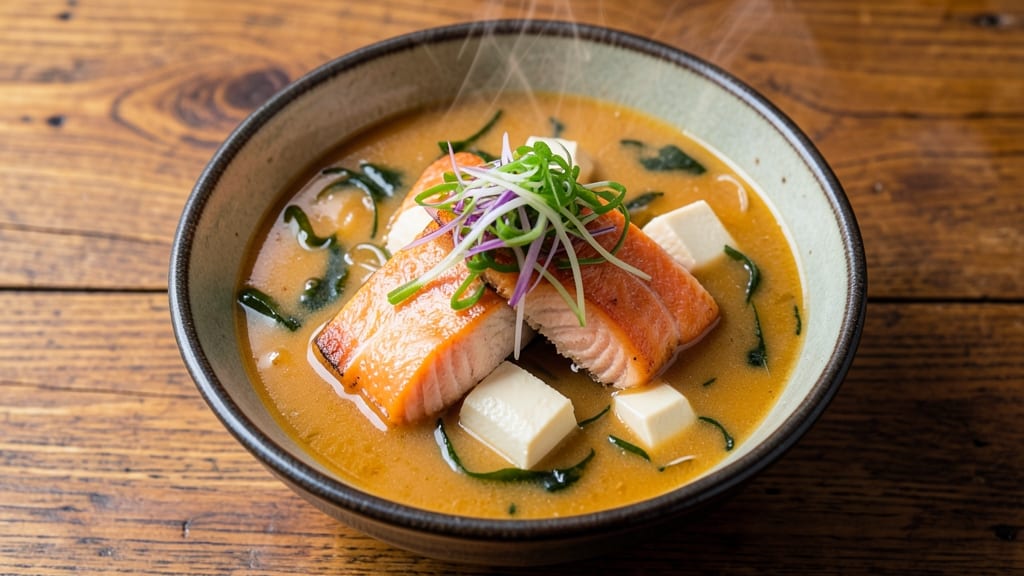
This miso salmon soup recipe delivers a symphony of umami, silky fish, and vibrant greens in every spoonful—perfect for a comforting yet elegant meal. The secret lies in balancing fermented miso paste with delicate salmon, creating a broth that's rich without being heavy.
I developed this version after years of refining my Japanese-inspired cooking, focusing on simplicity without sacrificing depth.
The foundation begins with a dashi stock—light yet flavorful—where miso paste dissolves gradually to avoid bitterness. We then poach skin-on salmon fillets just until they flake effortlessly, preserving their natural moisture.
Tender tofu and earthy wakame seaweed add texture and nutritional balance, while green onions and sesame seeds bring freshness to the final presentation.
What you'll achieve is a restaurant-quality soup where each ingredient plays its part: the miso broth carries layers of savory complexity, the salmon melts in your mouth, and the greens add brightness.
The result is a meal that feels both sophisticated and approachable—ideal for weeknight dinners or special occasions. Let's create this harmonious bowl together.
For added versatility, consider incorporating shiitake mushrooms or scallions to deepen the umami profile. The recipe is naturally pescatarian-friendly and can be adjusted for dietary preferences without compromising flavor. Every component works in harmony to deliver a soup that's as nourishing as it is delicious.
Ingredients for miso salmon soup
Umami-packed broth meets silky salmon and earthy wakame in this restaurant-quality soup.
| Ingredient | Amount | Notes |
|---|---|---|
| White Miso Paste 🧀 | ¼ cup | White or red, fermented |
| Dashi Stock 🍜 | 4 cups | Homemade or quality jarred |
| Skin-On Salmon Fillets 🐟 | 1 ½ lb | Fresh or thawed |
| Silken Tofu 🥛 | 1 block | Cubed, 1-inch pieces |
| Wakame Seaweed 🌿 | ½ oz | Dried, rehydrated |
| Green Onions 🧅 | ¼ cup | Thinly sliced |
| Sesame Seeds 🌰 | 2 tbsp | Toasted, for garnish |
| Fresh Ginger 🌿 | 1 tbsp | Thinly sliced |
| Soy Sauce 🧂 | 1 tbsp | Low-sodium preferred |
| Rice Vinegar 🍶 | 1 tbsp | For brightness |
| Neutral Oil 🫒 | 1 tbsp | For poaching |
| Salt 🧂 | ½ tsp | Kosher or sea salt |
| Black Pepper 🌶️ | ¼ tsp | Freshly ground |
The miso paste is your flavor anchor—white miso for subtlety or red miso for deeper funk. I always grab Kikkoman or Red Star from the Asian aisle, but homemade dashi (bonito flakes + kombu) elevates it. The salmon should be skin-on for texture, and I prefer sushi-grade quality—freshness matters here. For dashi stock, Kikkoman or homemade (simmer kombu + bonito flakes) works perfectly. Don't skip the rehydration step for wakame—soak in warm water 5 minutes to avoid grit.
No miso paste? Substitute 1 tbsp soy sauce + 1 tsp fish sauce for umami depth. Want mushrooms? Shiitake or enoki add chewiness—sauté with ginger first. Fresh ginger is ideal but jarred works in a pinch if you're short on time. The soy sauce should be low-sodium to avoid overpowering the broth. For extra richness, add 1 tbsp mirin with the rice vinegar. The sesame seeds? Toast them lightly in a dry pan for nuttier flavor.
Broth keeps 4-5 days in the fridge—reheat gently to preserve texture. Salmon? Use within 2 days for best quality. Freeze portions for up to 3 months if prepping ahead. I portion mine into glass containers—reheats beautifully and keeps aromas intact. The wakame rehydrates quickly, but rinse after soaking to remove excess salt. Tofu stays fresh 5-7 days in the fridge if stored submerged in water.
Why You'll Love This Recipe
- I’ve got a secret: this soup lives in one pot, one skillet, and one bowl. The wakame soaks while I build the broth, then the salmon and tofu take center stage in the same pan. No scrubbing a dozen dishes afterward—just a quick wipe-down and we’re done. The only chopping? Thinly slicing those green onions, and honestly, that’s more therapeutic than tedious.
- One-Pot Magic: I’ve got a secret: this soup lives in one pot, one skillet, and one bowl. The wakame soaks while I build the broth, then the salmon and tofu take center stage in the same pan. No scrubbing a dozen dishes afterward—just a quick wipe-down and we’re done. The only chopping? Thinly slicing those green onions, and honestly, that’s more therapeutic than tedious.
- Umami Overload: Between the white miso paste and dashi stock, this soup hits you with that deep, savory punch you didn’t even know you craved. Add the skin-on salmon—crispy on the outside, melt-in-your-mouth tender inside—and the silken tofu that absorbs all those flavors like a sponge. The rice vinegar and soy sauce? They’re the secret weapons tying it all together. It’s the kind of dish where every spoonful makes you pause and think, “Damn, that’s good.”
- Weeknight Hero: I make this when I’m exhausted but still need to feed three people in under 30 minutes. The salmon cooks while I prep the tofu, the broth simmers on low, and the wakame does its thing without supervision. Leftovers? Double the win. The broth keeps for days, so I freeze portions for lazy mornings or toss it into ramen later. It’s my go-to when I’d rather be binge-watching than slaving over the stove.
Step-by-step instructions for miso salmon soup
This method transforms simple ingredients into a velvety, umami-packed soup where the salmon melts in your mouth.
Prepare the Wakame and Build the Broth Base
Begin by rehydrating the ½ oz wakame seaweed in ½ of the 4 cups dashi stock for 10 minutes until softened. The wakame should swell slightly and develop a delicate oceanic aroma—this is your flavor foundation. In a large pot, combine the remaining 2 cups of the 4 cups dashi stock with the ¼ cup white miso paste and 1 tbsp fresh ginger. Gently heat over medium-low heat for 5 minutes, stirring constantly until the miso dissolves completely and the mixture becomes smooth and glossy.
Here's the thing—don't let the broth boil. The miso's delicate compounds break down at high heat, turning bitter. You'll know it's ready when the mixture is uniformly colored and fragrant, with no visible miso granules remaining. This step creates the soup's signature depth, so take your time.
Poach the Salmon and Silken Tofu
In a separate skillet, heat 1 tbsp neutral oil over medium heat until shimmering. Add the 1½ lb skin-on salmon fillets, skin-side down, and cook for 2-3 minutes until the skin becomes crispy and opaque. Flip carefully and cook for another 1-2 minutes until the flesh is just opaque in the center—145°F internally. Remove and set aside to rest.
Return the same skillet to medium heat and add the 1 block silken tofu, cubed into 1-inch pieces. Cook gently for 3 minutes, turning occasionally, until lightly golden. Add these to the miso broth along with 1 tbsp soy sauce and 1 tbsp rice vinegar. The broth should now be fragrant with layers of umami, saltiness, and brightness. Simmer gently for 5 minutes to allow the flavors to meld.
Finish with Greens and Garnish
Add the rehydrated wakame and its soaking liquid to the broth, along with the ¼ cup thinly sliced green onions. Return the salmon to the pot, skin-side up, and gently simmer for 3-4 minutes to warm through. The salmon should be just cooked through—145°F at its thickest point—with the skin crispy and the flesh flaking easily.
To serve, ladle the soup into bowls, garnishing each with 2 tbsp sesame seeds, ½ tsp salt, and ¼ tsp freshly ground black pepper. The sesame seeds add a nutty crunch, while the salt and pepper balance the soup's rich flavors. Each spoonful should deliver a perfect harmony of silky salmon, velvety broth, and delicate seaweed notes.
Rest and Serve for Maximum Flavor
Let the soup rest for 5 minutes before serving. This allows the flavors to settle and the broth to thicken slightly from the starch released by the tofu and salmon. The resting period also ensures the salmon stays moist—no dry, overcooked fish here.
Serve immediately with steamed rice or crusty bread to soak up every last drop of that umami-rich broth. The contrast between the crispy salmon skin and the silky tofu cubes makes this soup a true textural experience. And remember, the longer the soup sits, the more the flavors develop—so don't rush this final step.
Pro Tips For Making Miso Salmon Soup
- Skip the Boil for Miso: That 5-minute simmer with the miso paste isn’t just a step—it’s where the magic happens. I used to rush it, and the broth always tasted flat or bitter. Medium-low heat only, and stir like your life depends on it. No granules left un-dissolved means no wasted umami.
- Prep Wakame Right: Soak the wakame in cold dashi stock for those 10 minutes—hot water will turn it mushy and bitter. After soaking, drain it but save that liquid; it’s packed with flavor. Trust me, your soup will taste like the ocean, not a science experiment gone wrong.
- Crisp the Skin First: That salmon skin isn’t just for looks—it’s the star of the show. Get it golden and crispy in the skillet before flipping, or you’ll end up with sad, bendy skin. Flip too soon, and you’ll regret it when the flesh overcooks while you’re busy fixing the skin.
- Toast Sesame Seeds Fast: Dry-toast those sesame seeds in the same skillet you used for the tofu—no extra pan needed. Two minutes over medium heat is all it takes, and the nutty aroma will wake up the whole bowl. Cold toasted seeds? Skip it. They’ll just sit there like flavorless gravel.
Essential equipment for perfect results
Non-Stick Skillet
I swear by my 10-inch Lodge cast iron skillet for poaching the salmon and tofu—its even heat distribution ensures crispy skin without burning. A high-quality non-stick alternative like the GreenPan Ceramic Pro works too, but cast iron develops a natural non-stick patina over time that enhances flavor.
For the broth, a 5-6 quart stainless steel pot with a tight-fitting lid is ideal because it retains heat well and distributes warmth evenly. 🔥
Digital Thermometer
A ThermoWorks Smoke or Meater Plus thermometer is non-negotiable for this recipe. You'll use it to check the salmon's internal temperature at 145°F—no more guessing! For broth temperature, keep it below 160°F to prevent miso from breaking down.
I also use the thermometer to confirm my dashi stock reaches 180°F during initial heating, which kills any bacteria while preserving flavor.
Microplane Grater
The Microplane is my secret weapon for ginger and garlic when I want ultra-fine, flavorful shavings that dissolve seamlessly into the broth. I use the medium grater setting for ginger—it takes 10 seconds to grate 1 tbsp thinly, which is perfect for infusing the soup without overpowering.
For sesame seeds, I lightly toast them in the same skillet using medium heat for 2 minutes until golden and fragrant.
Fine-Mesh Strainer
When rehydrating the ½ oz wakame, a fine-mesh strainer in the sink lets you rinse it thoroughly after soaking—this removes excess salt and grit. I use a 3-inch stainless steel strainer from OXO because it's durable and fits snugly over the sink.
After draining, I gently squeeze the wakame to remove water before adding it to the broth. This step is crucial for that delicate, oceanic texture.
Wooden Spoon
For stirring the miso broth, I reach for my 12-inch wooden spoon from Ball Mason Jar collection. Wooden utensils won't scratch your pot and won't react with the miso paste, which can happen with metal.
I also use it to gently fold in the tofu and salmon to avoid breaking them. The spoon's wide surface helps distribute heat evenly when simmering, ensuring the broth stays smooth and velvety.
Nutrition facts
Frequently asked questions
Why should I avoid boiling the miso broth?
Boiling breaks down the delicate compounds in miso paste, turning it bitter instead of rich. Keep the heat at medium-low for 5 minutes until smooth and fragrant—this preserves the umami depth that makes the soup special.
Can I use skinless salmon instead of skin-on?
Yes, but you'll miss the crispy texture that skin-on salmon provides. If using skinless, cook for 1-2 minutes longer to reach 145°F internally. The skin adds a lovely contrast to the silky tofu and broth.
What if I don't have dashi stock?
Use 4 cups chicken or vegetable broth as a substitute, but the flavor won't be as nuanced. For a closer match, mix 1 cup water + 1 tbsp soy sauce + 1 tsp sugar to mimic dashi's savory profile. The broth will still be delicious!
How do I prevent the salmon from drying out?
Never overcook it—remove at 145°F and let it rest 5 minutes before adding back to the broth. Cover the pot while warming through to trap moisture. The resting period is key for juicy, flaky salmon.