
Soups & Stews
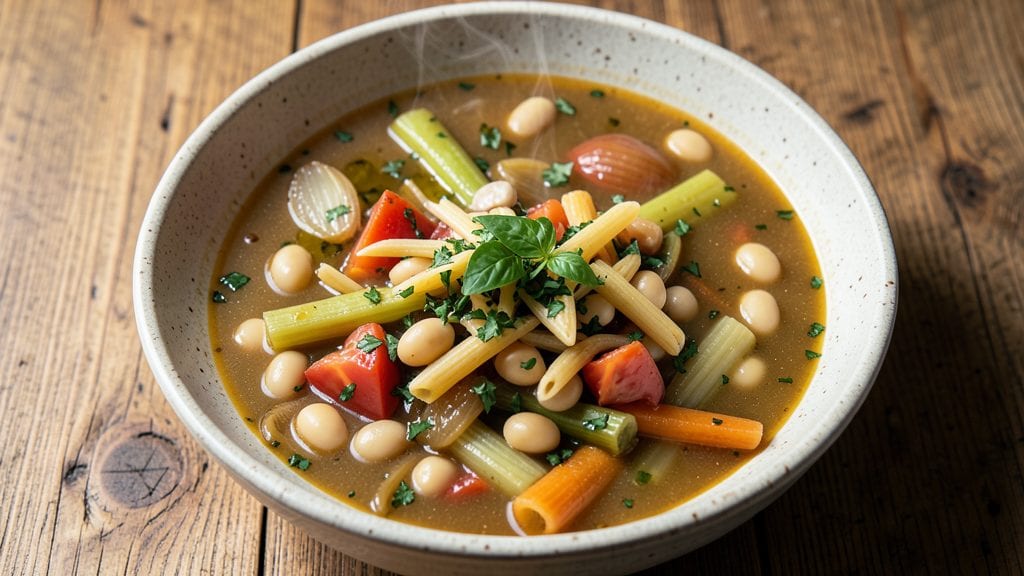
This minastrone soup recipe brings the rustic comfort of Tuscan kitchens to your table, where simple ingredients transform into a hearty, vegetable-packed masterpiece. Born from peasant traditions, this soup combines cannellini beans, seasonal vegetables, and pasta in a single pot, creating a dish that's both nourishing and deeply satisfying.
The beauty lies in its adaptability—traditionally vegetarian but easily enhanced with bacon or sausage for those who prefer a meatier version.
The foundation of great minastrone is a rich vegetable broth infused with garlic, onions, and aromatic herbs, simmered until flavors meld into a harmonious blend.
Adding cannellini beans and chopped vegetables like carrots, celery, and kale ensures a balance of textures—creamy beans, tender vegetables, and al dente pasta all working together. The result is a soup that's hearty enough to stand alone but flexible enough to pair with crusty bread or a sprinkle of Parmesan.
What makes this recipe truly special is its ability to transform humble ingredients into something extraordinary with minimal effort. The vegetables soften into sweet, tender bites while the beans and pasta absorb the flavorful broth, creating a dish that's as comforting as it is nutritious.
Perfect for chilly evenings or as a make-ahead meal, this minastrone soup delivers the kind of warmth and satisfaction that only a well-crafted, one-pot dish can provide.
Whether you're following the traditional vegetarian route or adding a touch of meat, this recipe promises a bowl of soup that's rich in flavor and even richer in comfort. Let's get started on creating a dish that feels like a hug in every spoonful.
Ingredients for minastrone soup
Tuscan simplicity meets hearty vegetable abundance in this one-pot masterpiece.
| Ingredient | Amount | Notes |
|---|---|---|
| Cannellini Beans 🥭 | 2 cans | Rinsed, drained, liquid reserved |
| Ditalini Pasta 🍝 | 1 lb | Small tubular pasta preferred |
| Yellow Onions 🧅 | 2 whole | Thinly sliced, caramelized |
| Carrots 🥕 | 3 whole | Diced, medium-sized |
| Celery Stalks 🌿 | 3 whole | Diced, aromatic base |
| Garlic Cloves 🧄 | 6 cloves | Minced, aromatic foundation |
| Kale Leaves 🍃 | 2 cups | Chopped, stemmed |
| Tomato Paste 🍅 | ¼ cup | High-quality, unsweetened |
| Vegetable Broth 💧 | 6 cups | Low-sodium preferred |
| Dried Rosemary 🌿 | 1 tsp | Fresh preferred, crushed |
| Dried Thyme 🌿 | 1 tsp | Mexican oregano substitute |
| Extra-Virgin Olive Oil 🫒 | ½ cup | High-quality, fruity profile |
| Salt 🧂 | 1 ½ tsp | Diamond Crystal kosher salt |
| Black Pepper 🌶️ | ½ tsp | Freshly ground, freshly cracked |
| Parmesan Cheese 🧀 | ½ cup | Freshly grated, aged |
The foundation of authentic minastrone lies in the quality of your broth and beans. Cannellini beans from Italian markets—like those at Eataly or Marketside—offer superior texture and flavor compared to canned varieties. Opt for low-sodium vegetable broth to control seasoning, and always reserve the liquid from the beans to enrich the soup. Ditalini pasta should be 100% durum wheat for optimal texture, and fresh rosemary elevates the herb profile significantly over dried.
No fresh kale? Swiss chard or collard greens work beautifully in a pinch, though texture differs slightly. The tomato paste is non-negotiable for depth—San Marzano brand guarantees the best balance of sweetness and acidity. For a quicker prep, pre-diced carrots and celery save time without sacrificing flavor. If you prefer a less intense garlic profile, reduce the amount to 4 cloves and adjust to taste. The broth can be enhanced with a splash of balsamic vinegar for complexity, but this is optional.
This soup tastes even better the next day as flavors meld. Store in an airtight container in the refrigerator for up to 5 days, or freeze in portions for up to 3 months. For optimal reheating, add a splash of water or broth and simmer gently to restore texture. The Parmesan should be grated fresh from a block—pre-shredded contains anti-caking agents that disrupt the soup's creaminess. Always taste before serving and adjust seasoning with fine sea salt and freshly cracked pepper.
Why You'll Love This Recipe
- I swear by this: just rough-chop the onions, carrots, and celery into big chunks—no fancy dicing. The soup still breaks down into that perfect, tender base, and honestly? I’ve burned dinner more times trying to make everything "pretty" than I ever have from rushing.
- No-Chop Trick: I swear by this: just rough-chop the onions, carrots, and celery into big chunks—no fancy dicing. The soup still breaks down into that perfect, tender base, and honestly? I’ve burned dinner more times trying to make everything "pretty" than I ever have from rushing.
- Creamy-Crunch Harmony: That buttery cannellini bean mash against the al dente ditalini? It’s the kind of contrast that makes you pause mid-spoonful. Between us, the crispy edges on the pasta after a quick toast in the pot are the real MVP—no extra work, just chef’s kiss.
- Leftovers That Beg: This soup tastes even better the next day, which is basically a superpower. I make a double batch on Sundays, and by Wednesday, my kids are fighting over the last bowl. (Yes, even after I’ve eaten half the pot straight from the fridge.)
Step-by-step instructions for hearty vegetable-packed minestrone
This method delivers rich, comforting flavors while keeping the process simple and efficient.
Build the Aromatic Vegetable Base
Heat the ½ cup extra-virgin olive oil in a large Dutch oven over medium heat. Add the 2 yellow onions, 3 carrots, and 3 celery stalks, stirring occasionally for 8-10 minutes until the vegetables soften and begin to caramelize—this develops deep, sweet flavors that form the soup's foundation.
Add the 6 minced garlic cloves and cook for 30 seconds until fragrant. Here's where it gets important: don't let the garlic brown or it will turn bitter. Immediately stir in the ¼ cup tomato paste, spreading it evenly across the bottom of the pot to create a flavorful crust. Cook for 2 minutes while stirring constantly to prevent sticking.
Develop the Herb-Infused Broth
Pour in the 6 cups vegetable broth, scraping up any browned bits from the bottom of the pot. Add the 1 teaspoon dried rosemary and 1 teaspoon dried thyme, stirring to combine. Bring the mixture to a gentle boil, then reduce heat to medium-low and let it simmer uncovered for 15 minutes. This allows the herbs to steep and the broth to deepen in flavor.
Add the 2 cups chopped kale leaves and 2 cans drained cannellini beans (reserve the liquid), stirring to incorporate. The kale will wilt completely within 5 minutes, releasing its earthy sweetness into the broth. Taste and adjust seasoning with ½ teaspoon black pepper and 1½ teaspoons salt—this is your flavor baseline before adding the pasta.
Cook the Pasta to Al Dente Perfection
Add the 1 pound ditalini pasta to the simmering soup. Stir gently to distribute the pasta evenly. The pasta should cook for 8-10 minutes in the broth, stirring occasionally to prevent sticking. You're aiming for al dente—the pasta should have a slight bite but still be tender when bitten.
About 2 minutes before the pasta is fully cooked, add the reserved bean liquid (1½ cups) to the pot. This starchy liquid helps create a silky texture without over-thickening the soup. The pasta will finish cooking in the hot broth, absorbing just enough liquid to reach perfect doneness.
Finish with Parmesan and Rest
Remove the pot from heat and stir in the ½ cup freshly grated parmesan cheese. The cheese should melt smoothly into the soup, creating a creamy finish. Here's the thing—don't skip this step. The parmesan adds a salty, umami depth that ties all the flavors together.
Let the soup rest for 5 minutes before serving. This allows the flavors to meld and the pasta to absorb any remaining broth. Serve immediately with crusty bread to soak up every last drop of that hearty, vegetable-packed goodness.
Pro Tips For Making Minastrone Soup
- Don’t Rush the Caramelize: Those onions, carrots, and celery need a full 8–10 minutes over medium heat to turn golden—no shortcuts. I used to skimp here, and the soup always tasted flat. The slow cook transforms their natural sweetness into the soul of your minestrone.
- Salt the Broth Early: Taste and adjust the seasoning before adding the pasta—this is your baseline. The beans and kale will mellow out the broth later, so if it’s bland now, it’ll be underseasoned by the end. Trust me, you’ll regret waiting.
- Stir the Tomato Paste: Spread that ¼ cup tomato paste thin across the pot’s bottom and cook it constantly for those 2 minutes. Letting it crust in patches means burnt spots that’ll ruin the whole batch. Think of it like a flavorful glue—even coverage is everything.
- Use Fresh Herbs If Possible: Swap dried rosemary and thyme for fresh if you can—they steep faster and taste brighter. If you’re using dried, crush the stems first to release their oils. It’s a small effort for a flavor upgrade that actually matters.
Storing and reheating your leftovers
Refrigerator Storage Tips
Once your minastrone cools to room temperature, transfer it to airtight glass containers—I swear by Pyrex—to maintain flavor and prevent odors. Let it cool completely before storing to avoid condensation, which can dilute the soup.
I always store it within 2 hours of cooking to prevent bacterial growth. The flavors actually deepen overnight, making it even more delicious the next day! ❄️
Freezing for Future Meals
Portion your minastrone into quart-sized freezer bags or airtight containers, leaving 1 inch of headspace for expansion. Freeze for up to 3 months for best quality. I like to freeze individual servings for quick lunches—just squeeze out excess air before sealing to prevent freezer burn.
Thaw overnight in the refrigerator for even reheating.
Reheating Like a Pro
For stovetop reheating, pour soup into a heavy-bottomed pot and add ¼ cup water or broth to prevent sticking. Heat over medium-low for 10-15 minutes, stirring occasionally.
This gentle method restores the silky texture while keeping the pasta al dente. Taste and adjust seasoning—soups often need a pinch of salt after reheating. 🔥
Microwave Revival
For quick reheats, use a microwave-safe dish and cover loosely with a damp paper towel. Heat on 70% power for 2-3 minutes, stirring halfway. If the soup looks dry, add 1-2 tablespoons water and continue heating until steaming.
The Parmesan will melt beautifully during reheating, adding richness to each bite.
Texture Restoration
If your minastrone seems too thick after reheating, thin it with 1-2 tablespoons broth or water. For extra creaminess, stir in 1 tablespoon reserved bean liquid or a splash of olive oil.
I also like to finish with fresh grated Parmesan and a sprinkle of fresh basil to revive the flavors before serving.
Make-Ahead Magic
This soup tastes even better the next day, so I always make it a day ahead for busy weeknights. Store leftovers in the refrigerator and reheat as needed. The flavors meld beautifully, and the pasta absorbs all the rich broth—trust me, it’s worth the extra effort! 💛
Nutrition facts
Frequently asked questions
Can I make minestrone soup without beans?
Traditional minestrone includes beans for protein and creaminess, but you can substitute or omit them. For a lighter version, use white beans or lentils instead. If skipping entirely, add extra pasta (½ lb more) or chopped potatoes to maintain heartiness. The soup will be less filling but still flavorful.
What's the best pasta for minestrone?
Ditalini (small tubes) is ideal, but small shells, penne, or orzo work beautifully too. Avoid large shapes like rigatoni—they absorb too much broth and can make the soup gluey. For extra texture, mix ½ lb ditalini with ½ lb small shells to create a satisfying bite.
How can I make minestrone more flavorful?
Boost depth with umami-rich ingredients: Add 1 tablespoon soy sauce or Worcestershire sauce to the broth, or stir in 1 teaspoon balsamic vinegar at the end. For freshness, finish with chopped parsley, basil, or a drizzle of high-quality olive oil. A pinch of red pepper flakes adds subtle heat.
Can I make minestrone in a slow cooker?
Sauté the vegetables and garlic first, then transfer everything to the slow cooker with 6 cups broth. Cook on low for 6-7 hours or high for 3-4 hours, adding pasta only in the last 30 minutes. The slow cooker intensifies flavors—just stir in Parmesan at the end to prevent curdling.
Why did my minestrone turn out too thick?
This usually happens when pasta absorbs too much liquid. Next time, add pasta to the soup only 2 minutes before serving or use 1 cup reserved bean liquid to thin it. For immediate fixes, stir in ¼ cup warm broth or water and adjust seasoning—thick soups often need extra salt.