
Soups & Stews
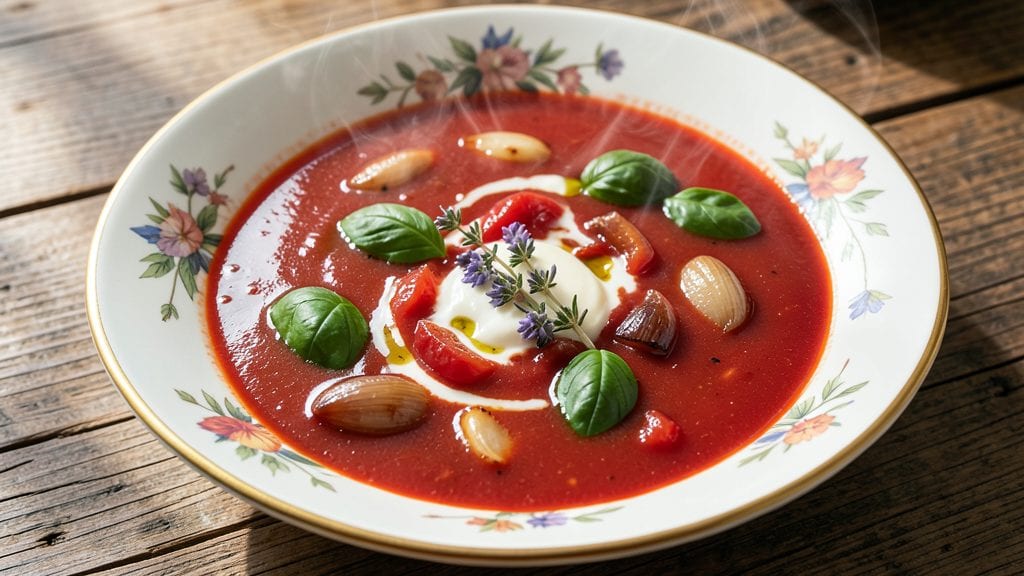
This Grandma's tomato soup recipe brings back the warmth of Sunday afternoons in a Boston triple-decker, where the kitchen always smelled of simmering tomatoes and fresh herbs.
Standing on a stool beside Nonna, I learned how a few simple ingredients—slow-cooked tomatoes, aromatic herbs, and a touch of cream—could create something deeply comforting. The secret lies in letting the flavors meld over low heat, transforming humble ingredients into velvety smoothness with rustic depth.
What makes this recipe special is its simplicity—no fancy techniques, just time and patience. You'll start with sautéed onions and garlic, then add crushed tomatoes and herbs to build layers of flavor.
After simmering for an hour, the soup blends into silky perfection, with just enough cream to round out the acidity. The result? A bowl of soup that tastes like home, with every spoonful carrying the warmth of tradition.
By the time you're done, you'll have a pot of soup so rich and inviting, it’ll have everyone asking for seconds. The aroma alone will fill your kitchen with nostalgia, while the texture—smooth yet hearty—makes it perfect for chilly evenings.
Serve it with crusty bread or grilled cheese for the full comfort-food experience. This is the kind of recipe that turns a simple meal into a memory.
Here's where it gets interesting—this soup improves overnight, so making a big batch means you'll have leftovers for days. The flavors deepen as they sit, making it even more worth the effort. Let's get cooking!
Ingredients for grandma's tomato soup
Pantry staples plus a few fresh herbs. Simmered slow for velvety comfort.
| Ingredient | Amount | Notes |
|---|---|---|
| Yellow Onion 🧅 | 1 whole | Medium, thinly sliced |
| Garlic Cloves 🧄 | 4 cloves | Fresh, minced |
| Unsalted Butter 🧈 | 4 tbsp | Full-fat for richness |
| Canned San Marzano Tomatoes 🍅 | 2 cans | 28 oz each, crushed by hand |
| Fresh Basil Leaves 🌿 | ½ cup | Packed, torn not chopped |
| Fresh Thyme Sprigs 🌿 | 2 whole | Stems removed, leaves only |
| Heavy Cream 🥛 | ½ cup | Full-fat for velvety texture |
| Chicken Broth 💧 | 2 cups | Homemade or low-sodium |
| Sea Salt 🧂 | 1 ½ tsp | Adjust to taste |
| Black Pepper 🌶️ | ½ tsp | Freshly cracked |
| Sugar 🍚 | 1 tsp | Balances acidity |
| Olive Oil 🫒 | 1 tbsp | For finishing drizzle |
The tomatoes make or break this soup. San Marzano is the gold standard—sweet, meaty, and perfect for slow cooking. If you can't find them, whole peeled tomatoes from the Italian section work too (just crush them yourself). I always grab a few extra cans—this soup tastes even better the next day. The fresh basil and thyme? Grow your own or buy from the grocery store's herb section—they're brighter than dried. Pro tip: Tear the basil leaves by hand instead of chopping; it keeps more flavor and looks prettier on top.
No San Marzano? Any good-quality crushed tomatoes will do—just add a pinch more sugar to balance. Fresh herbs missing? Dried basil at one-third the amount works in a pinch (though it won't be as vibrant). Short on cream? Half-and-half or even whole milk will work, but the texture won't be as rich. The butter is non-negotiable though—use full-fat (none of that low-fat nonsense). For extra depth, a splash of red wine in the simmering stage adds complexity. And if you're feeling fancy, a bay leaf while simmering adds aromatic layers.
This soup gets better overnight, so make a big batch—it reheats beautifully. Store in the fridge for up to 5 days, or freeze portions for 3 months. I like to portion it into jars with a dollop of cream on top—just microwave until hot. For serving, a drizzle of olive oil and extra basil makes it feel restaurant-quality. Leftovers? Even better for sandwiches the next day.
Why You'll Love This Recipe
- Here’s what sold me: you’re using real butter and fresh herbs, but the canned San Marzano tomatoes and broth keep it from breaking the bank. A whole onion and a handful of garlic? Cheap. A sprig of thyme and a basil plant? Grow your own if you’re feeling fancy. It’s the kind of dish that makes you feel like you’re splurging, even when you’re not.
- No-Pot-Washing Regret: Honestly, this soup is the kind of recipe that lets you not think about cleanup. One pot, one spatula, and by the time you’re tearing up basil leaves, the worst of the work is already done. The butter caramelizes the onions just enough to coat the pan—no scrubbing required. And that olive oil drizzle at the end? Pure lazy genius.
- Creamy Without Cheese: Between us, heavy cream makes this soup dangerously good—rich but not cloying, with that velvety texture that feels like a hug in a bowl. The San Marzano tomatoes add sweetness without needing sugar bombs, and the thyme and basil? They’re the secret handshake that keeps it from tasting like your basic canned soup. Trust me, it’s the kind of creamy that doesn’t need a side of guilt.
- Leftovers That Outlast the Meal: I make this on a Sunday and it’s still my go-to Monday lunch. The flavors only get better the next day—the cream and herbs meld into something chef’s kiss—and it freezes like a dream. Need a quick dinner after a long day? Boom. Need to feed a crowd? Double the recipe. It’s the kind of soup that doesn’t get boring, even if you eat it three nights in a row.
Step-by-step instructions for Grandma's tomato soup
Here's how to make this creamy, herb-forward tomato soup that tastes like home.
Sauté the Aromatics in Butter
Melt the 4 tablespoons unsalted butter in a large pot over medium heat. Add the 1 yellow onion and cook for 5-6 minutes until softened and translucent. Here's the thing—you want the onion to turn golden, not brown, so keep an eye on it.
Add the 4 cloves minced garlic and cook for another 30 seconds until fragrant. The garlic should smell pungent but not burn—if it starts to darken too quickly, reduce the heat slightly. This aromatic base forms the flavor foundation for the entire soup, so take your time here.
Build the Tomato Base
Pour in the 2 cans crushed San Marzano tomatoes, stirring to combine with the onions and garlic. Add the 2 cups chicken broth, 1½ teaspoons sea salt, ½ teaspoon black pepper, and 1 teaspoon sugar. Bring everything to a gentle boil, then reduce heat to medium-low and let it simmer uncovered for 15 minutes.
This simmering time allows the flavors to meld and the acidity to mellow slightly. Stir occasionally to prevent the tomatoes from sticking to the bottom. You'll notice the soup thickens slightly as it reduces, which is exactly what we want for that velvety texture.
Add Herbs and Cream
Remove the 2 thyme sprigs from their stems and add them to the soup along with the ½ cup torn fresh basil leaves. Simmer for another 5 minutes to infuse the herbs' flavors. Then, stir in the ½ cup heavy cream. The cream will immediately thicken the soup and add luxurious richness.
Here's where it gets good—taste the soup and adjust seasoning if needed. The sugar should balance the acidity, but if it needs more sweetness, add a pinch more. The herbs should be present but not overpowering. If the soup is too thick, whisk in 2-3 tablespoons of water to reach your preferred consistency.
Finish and Serve
Remove the pot from heat and let the soup rest for 5 minutes. This resting period allows the flavors to fully develop and the cream to emulsify with the tomato base. Skim off any excess foam that rises to the surface.
Drizzle with the 1 tablespoon olive oil just before serving. This final touch adds a silky sheen and a subtle olive oil flavor that complements the herbs. Ladle the soup into bowls and garnish with additional torn basil leaves if desired. Serve with crusty bread or grilled cheese sandwiches for the ultimate comfort meal.
Pro Tips For Making Grandma'S Tomato Soup
- Crush Those Tomatoes: Skip the blender—your hands do the work better here. San Marzano tomatoes are juicy, so crushing them by hand (not chopping) releases more flavor and keeps the texture smooth. I learned this the hard way when I puréed mine and ended up with a thinner, less rich soup. The effort pays off.
- Watch the Garlic: Those 30 seconds with the garlic are sacred. If you walk away or let the pot get too hot, it’ll burn faster than you can say "bitter flavor." Keep the heat at medium-low and stir constantly—even if it means hovering over the pot like a hawk. Trust me, no one wants to taste burnt garlic in their tomato soup.
- Simmer Uncovered Always: The recipe says uncovered for a reason—don’t lid it up during those 15 minutes of simmering. Trapped steam makes the tomatoes watery and dulls the flavors. Let that liquid reduce naturally; it’s how you get that perfect, velvety consistency without needing extra cream later.
- Rest Before Skimming: That 5-minute rest after adding cream isn’t optional. Let the soup sit off the heat so the cream fully emulsifies and the flavors marry. Skim the foam after resting—it’ll be thicker and easier to remove, and your soup will look (and taste) polished. Skipping this step is how you end up with a greasy sheen on top.
Essential equipment for this dish
Your Trusty Large Pot
You don’t need fancy equipment for this soup—just a large, heavy-bottomed pot like the Le Creuset Dutch oven I’ve used for years. The deep sides prevent spattering, and the thick enamel distributes heat evenly. If you’re on a budget, a stainless steel pot with a lid works too.
I’ve made this soup in my Lodge cast iron skillet when I was short on pots, and it still turned out perfect. Just avoid thin aluminum—it burns easily and ruins the texture. 🔥
The Must-Have Wooden Spoon
A wooden spoon is non-negotiable for stirring this soup. Metal spoons can scratch the pot and react with the acidity of the tomatoes. I keep a wide, flat wooden spoon (about 10 inches long) in my drawer for stirring soups and sauces.
It’s gentle on the pot and won’t overmix the cream at the end. If you don’t have one, a spatula or even a wooden spoon from your utensil drawer will do. Just avoid plastic—it can melt near the stove.
Immersion Blender for Silky Smoothness
While you can blend this soup by transferring it to a blender (carefully!), an immersion blender is my go-to for this recipe. It keeps everything in one pot, saving cleanup and preventing burns. The Moulinex Immersion Blender is affordable and does the job perfectly.
If you don’t own one, you can hand-blend it in batches—but be cautious of steam escaping! I’ve learned that the hard way after my 2019 pot pie disaster. 💫
Fine-Mesh Strainer for Crispy Toppings
If you’re adding toppings like croutons or crispy bacon, a fine-mesh strainer is handy for draining them quickly. I use a 10-inch stainless steel strainer to toss croutons in olive oil and roast them until golden. It’s also great for draining pasta or rinsing herbs.
No strainer? A colander will work, but the croutons might be soggy by the time you serve. Pro tip: Toast your croutons in a dry pan for extra crunch—just watch them like a hawk!
Digital Thermometer for Precision
While this soup doesn’t require precise temperature control, a digital thermometer can help you avoid overcooking the cream. If you’re worried about curdling, check the soup’s temperature before adding the cream—it should be below 160°F.
I use a Thermoworks CW2 for soups and sauces, but even a basic instant-read thermometer works. Trust me, you’ll thank yourself if you avoid a lumpy soup. 💡
Nutrition facts
Frequently asked questions
Why does this soup taste better the next day?
The flavors deepen and mellow after resting, allowing the herbs and tomatoes to fully integrate. The cream also emulsifies better overnight, creating a smoother texture. Many traditional recipes rely on this principle—like Nonna's wisdom that "good soup needs time to marry its ingredients."
Can I skip the heavy cream for a lighter version?
Yes! Swap the ½ cup heavy cream for an equal amount of coconut milk or even a splash of whole milk. The soup will be lighter but still rich. For extra creaminess without dairy, blend in 1-2 tablespoons of tomato paste after simmering—it adds depth without heaviness.
What if my soup is too thick after adding cream?
No problem—just whisk in 2-3 tablespoons of water or broth until you reach your desired consistency. The cream will still add richness while thinning the soup. Over-simmering after adding cream can also thicken it, so remove it from heat immediately after stirring in the cream.
How do I prevent the soup from getting watery when reheating?
Reheat gently on the stove over low-medium heat until hot, stirring occasionally. Avoid boiling vigorously, which can break down the cream and make it watery. If it starts to separate, whisk in a splash of warm water or broth to restore smoothness. Leftovers reheat beautifully when done this way.