
Soups & Stews
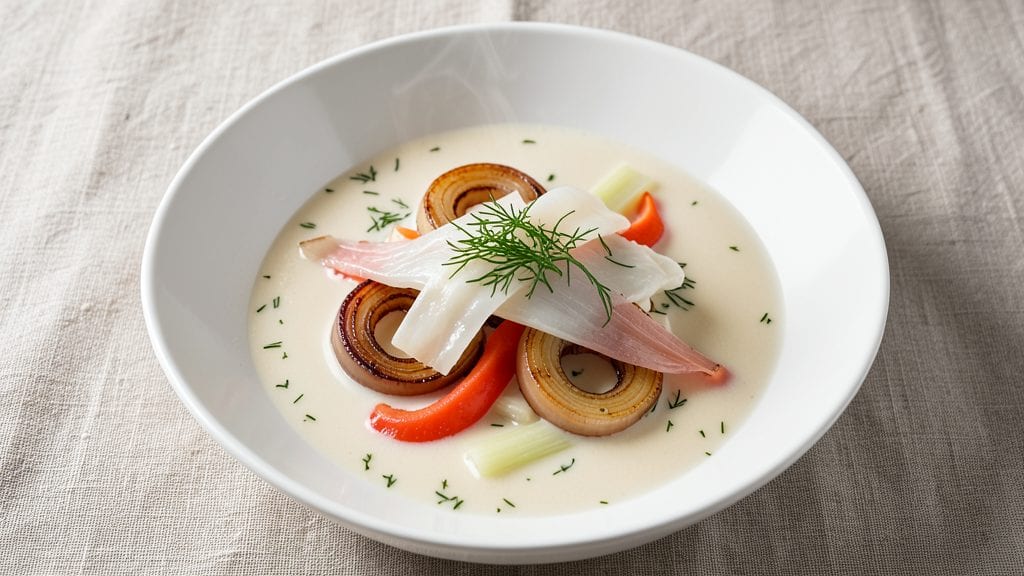
This Nordic fin soup recipe brings the rich, briny flavors of Scandinavian seafood traditions to your kitchen, where delicate fish maw simmers into velvety broth with dill and cream. The process transforms what might seem like an unusual ingredient into a luxurious, comforting dish that's both elegant and deeply satisfying.
I first encountered fin soup during a trip to Sweden, where it's a staple in coastal communities—now I make it regularly for its ability to turn simple ingredients into something extraordinary.
The foundation of this recipe lies in properly preparing the fish maw, which requires soaking and cleaning before simmering for hours to extract its gelatinous richness. You'll combine it with aromatic vegetables, herbs, and a touch of cream to create a soup that's both substantial and delicate.
The key is patience—the longer it simmers, the deeper the flavor becomes, developing a natural umami that's impossible to replicate with shortcuts.
What you'll end up with is a creamy, aromatic soup with tender fish maw that practically melts in your mouth, all balanced by bright dill and just enough cream to round out the flavors.
It's the kind of dish that feels special enough for company but simple enough for a weeknight dinner. The texture is where this soup truly shines—silky broth with delicate, almost translucent fish pieces that dissolve with each spoonful.
While traditional versions use fish maw, you can adapt this recipe by substituting tofu or mushrooms for a vegetarian version that still captures the essence of the dish. The technique remains the same: long, slow simmering to develop depth.
Whether you stick to the classic or experiment with variations, this soup delivers restaurant-quality results with just a few carefully chosen ingredients and proper technique.
Ingredients for fin soup
Nordic seafood tradition meets comforting home cooking with these carefully chosen ingredients.
| Ingredient | Amount | Notes |
|---|---|---|
| Fish Maw (Dried) 🐟 | ½ lb | Soaked overnight in cold water |
| Heavy Cream 🥛 | 1 cup | Full-fat for richness |
| Fresh Dill 🌿 | ½ cup | Chopped, stems removed |
| Onion 🧅 | 1 whole | Yellow or white, sliced |
| Carrot 🥕 | 1 lb | Peeled, cut into chunks |
| Celery Root 🥬 | 1 lb | Peeled, cut into chunks |
| Garlic Cloves 🧄 | 6 cloves | Peeled, smashed |
| Potatoes 🥔 | 1 ½ lb | Yukon gold, cubed |
| Bay Leaves 🌿 | 2 whole | Fresh preferred |
| Salt 🧂 | 1 ½ tsp | Diamond Crystal kosher |
| Black Peppercorns 🌶️ | ½ tsp | Freshly cracked |
| Lemon Juice 🍋 | 2 tbsp | Freshly squeezed |
| Butter 🧈 | 2 tbsp | Unsalted, for finishing |
| Chicken Stock 💧 | 6 cups | Homemade or high-quality |
Fish maw is the heart of this soup, and proper preparation is essential. Most specialty seafood markets carry it dried—ask for the thickest, most translucent pieces available. Soak it overnight in cold water to remove any impurities, then simmer gently to preserve its delicate texture. For a vegetarian adaptation, shiitake mushrooms or firm tofu work beautifully, though the texture will differ slightly. The dill and cream balance the brininess perfectly—fresh dill from a farmers market has the most vibrant flavor, but store-bought works in a pinch. If you can't find fish maw locally, Asian grocery stores often carry it in the dried seafood section.
No fish maw? King oyster mushrooms are the closest substitute in texture, though they won't have the same gelatinous quality when cooked. For the vegetables, celery root and carrots can be swapped for regular celery and additional carrots if needed. The potatoes add body—Yukon golds are ideal for their creamy texture, but russets work too. When selecting stock, homemade is best, but high-quality store-bought like Kitchen Basics or Pacific Foods will suffice. The butter at the end isn't just for flavor—it adds a luxurious finish that elevates the entire dish.
This soup tastes even better the next day as flavors meld together. Store it in an airtight container in the fridge for up to 4 days, or freeze portions for 3 months. The fish maw will continue to tenderize over time, so reheat gently on low heat. For serving, a sprinkle of fresh dill and cracked pepper brightens each bowl. I often make a double batch—one for dinner and one to freeze for lazy weeknights when I crave something comforting yet sophisticated.
Why You'll Love This Recipe
- No-Fuss Simmering: Honestly, this soup is the kind that makes me feel like a pro even when I’m running late. Soaking the fish maw overnight is the only prep work—no chopping frenzy, no last-minute stress. Just dump, simmer, and forget about it for 45 minutes while you prep the rest of dinner.
- Creamy Umami Magic: The fish maw doesn’t just sit there—it turns into these silky, jelly-like strands that soak up the garlic, bay leaves, and lemon juice like a flavor sponge. That first spoonful? The heavy cream and fresh dill make it rich but bright, like a hug in a bowl.
- Leftover Hero: I make this on Sundays, and honestly, the best part is the leftovers. Four days in the fridge, and it still tastes like it came out of the pot yesterday. Freeze portions too? Yes, because this soup gets even better when you reheat it gently—like a cozy time machine for your freezer.
- Budget-Friendly Luxe: You’d think fish maw and cream would break the bank, but honestly, it’s cheaper than takeout and way more impressive. The chicken stock and Yukon gold potatoes stretch the ingredients so far, you’ll have enough for seconds—or even a third bowl.
Step-by-step instructions for Nordic seafood simmer with dill and cream
Transform dried fish maw into a velvety, aromatic Nordic-inspired soup where each ingredient plays a precise role.
Prepare the Fish Maw and Vegetable Base
Drain the soaked fish maw and rinse briefly under cold water to remove any excess surface starch. Cut it into ½-inch thick strips using a sharp chef's knife—this size ensures even cooking without toughness. In a large stockpot, melt the 2 tablespoons butter over medium heat until foaming, then add the sliced onion and cook for 5 minutes until translucent and slightly caramelized.
Add the 1 pound carrot and 1 pound celery root, both cut into ½-inch chunks. Stir occasionally for 8-10 minutes until the vegetables soften slightly but retain their shape. This foundational step develops the soup's sweet, earthy depth before introducing the fish maw. The butter ensures the vegetables develop a subtle golden hue rather than steaming colorlessly.
Build Flavor with Aromatics and Stock
Push the vegetables to one side of the pot and add the 6 smashed garlic cloves to the empty space. Sauté for 30 seconds until fragrant—you'll smell the garlic's pungency transform into a mellow sweetness. Return the vegetables to the center and add the fish maw strips, spreading them evenly. Pour in the 6 cups chicken stock and bring to a gentle simmer over medium-low heat.
Add the 2 bay leaves and 1½ teaspoons salt. The stock should just cover the ingredients, leaving the fish maw partially submerged. Simmer uncovered for 45-50 minutes until the fish maw becomes tender enough to pierce easily with a fork. The soup should reduce slightly, intensifying its flavor. Here's the thing—if the fish maw resists after 50 minutes, add ¼ cup water and continue cooking; it must reach a delicate, almost jelly-like texture.
Incorporate Potatoes and Seasonings
Add the 1½ pounds cubed Yukon gold potatoes and the ½ teaspoon cracked black peppercorns to the simmering pot. Stir gently to distribute the potatoes evenly. The potatoes will absorb some of the soup's liquid as they cook, creating a heartier texture. Simmer for an additional 15-20 minutes until the potatoes are fork-tender and the fish maw is completely tender.
Remove the 2 bay leaves and taste the broth. Adjust seasoning with additional salt if needed—this Nordic preparation relies on balanced saltiness to complement the fish maw's natural umami. The potatoes should be soft enough to mash slightly between your fingers, indicating they've absorbed enough flavor from the broth.
Finish with Cream and Dill
Reduce the heat to low and stir in the 1 cup heavy cream and 2 tablespoons lemon juice simultaneously. The cream will immediately begin to thicken the soup slightly, while the lemon juice brightens the rich, earthy flavors. Simmer gently for 3-4 minutes—no longer, or the cream may curdle. The soup should coat the back of a spoon with a velvety consistency.
Remove the pot from heat and stir in the ½ cup chopped fresh dill. The dill's bright, herbal notes cut through the cream's richness, creating the signature Nordic balance. Let the soup rest for 5 minutes to allow the flavors to meld completely. This resting period ensures the dill releases its full aroma without overpowering the delicate fish maw.
Serve with Finishing Touches
Ladle the soup into warmed bowls, ensuring each serving contains an even distribution of fish maw, potatoes, and vegetables. Garnish each bowl with an additional sprinkle of chopped fresh dill and a small pat of butter on top. The butter adds a final layer of richness that contrasts beautifully with the soup's acidity and creaminess.
The finished soup should have a glossy sheen from the cream, with the fish maw presenting as delicate, translucent strands that melt in your mouth. Serve immediately while hot, as the cream and dill flavors are most vibrant at serving temperature. Pair with crusty sourdough bread to soak up every last drop of this Nordic-inspired seafood simmer.
Pro Tips For Making Fin Soup
- Rinse the Fish Maw: That quick cold water rinse after soaking removes the slimy starch buildup—skipping it means your soup will taste gummy instead of silky. Trust me, the 10-second rinse makes all the difference when those strips transform into melt-in-your-mouth strands.
- Don’t Rush the Cream: After adding the heavy cream and lemon juice, the soup needs those exact 3-4 minutes of gentle simmering—any longer and you’ll end up with curdled butterfat. I learned this when my first batch looked like a science experiment gone wrong.
- Test the Fish Maw: The 45-50 minute simmer isn’t a guess—it’s when the fish maw should pierce like butter. If it’s still tough, add that ¼ cup water and keep going. Overcooking turns it rubbery; undercooking leaves you with chewy disappointment.
- Rest Before Serving: The 5-minute rest after stirring in the dill lets the flavors settle—skipping it means the dill will taste sharp and the cream will feel heavy. It’s weirdly satisfying to watch the soup’s sheen deepen while it rests.
Pro cooking tips for this dish
Mastering Fish Maw Texture
The secret to perfect fish maw lies in its preparation—soaking it overnight in cold water removes excess starch and prevents a gummy texture. After soaking, rinse briefly under cold water to eliminate any remaining impurities.
Cutting the fish maw into ½-inch strips ensures even cooking without toughness. I always use a sharp chef's knife for clean cuts that don’t tear the delicate strands. 🔪
Controlling the Simmer
This soup demands medium-low heat to develop its velvety texture. After adding the fish maw and stock, let it simmer uncovered for 45-50 minutes—this slow process breaks down collagen into gelatin, creating that signature silky mouthfeel.
If the fish maw resists after 50 minutes, add ¼ cup water and continue cooking. The key is patience—rushing this step results in a chewy texture. 🌡️
Balancing Cream and Acid
When incorporating the 1 cup heavy cream, reduce heat to low and stir in the 2 tablespoons lemon juice simultaneously. This prevents curdling while brightening the soup’s richness.
Simmer for just 3-4 minutes after adding the cream—any longer risks separation. The acidity cuts through the cream’s heaviness, creating the perfect balance. 🍋
Avoiding Common Pitfalls
Overcrowding the pot during the initial vegetable sauté leads to steamed, rather than caramelized, onions and carrots. Always push vegetables to one side when adding garlic to prevent burning. And never skip the resting period—letting the soup sit for 5 minutes after adding dill allows flavors to meld properly.
Skipping this step results in a dish that’s flat and unbalanced. ⏰
Potato Timing Matters
Adding potatoes after the fish maw has simmered ensures they absorb flavor without becoming mushy. Cook them for 15-20 minutes until fork-tender but still holding their shape. If they break apart too easily, they’ve absorbed too much liquid.
I always taste the broth before removing the bay leaves—this Nordic preparation relies on precise seasoning to complement the fish maw’s natural umami. 🥔
Nutrition facts
Frequently asked questions
Why does fish maw need to be soaked overnight?
Soaking the dried fish maw overnight in cold water removes excess starch and impurities, preventing a gummy texture in your soup. This step is essential for achieving the delicate, silky consistency that defines this Nordic-inspired dish. Skipping it can leave you with a chewy or overly dense result.
Can I substitute fish maw with another ingredient?
Yes! For a vegetarian version, use shiitake mushrooms or firm tofu instead of fish maw. While the texture won't be identical, these alternatives still absorb flavors beautifully. The key is maintaining the same simmering time to develop depth in the broth.
What if my fish maw isn't tender after 50 minutes?
If the fish maw resists tenderness, add ¼ cup water and continue simmering gently. The collagen in fish maw needs time to break down—don't rush it. Patience ensures that delicate, jelly-like texture you're aiming for.
Why is the resting period important after adding dill?
The 5-minute rest lets the dill's aroma fully infuse into the broth without overpowering the fish maw. Skipping this step can make the soup taste flat or one-dimensional. It's a simple but crucial step for balancing all the flavors.
How do I prevent the cream from curdling?
Reduce heat to low and stir in the lemon juice and cream simultaneously. Simmer for just 3-4 minutes after adding the cream—any longer risks separation. The acidity helps stabilize the cream while brightening the soup's richness.