
Soups & Stews
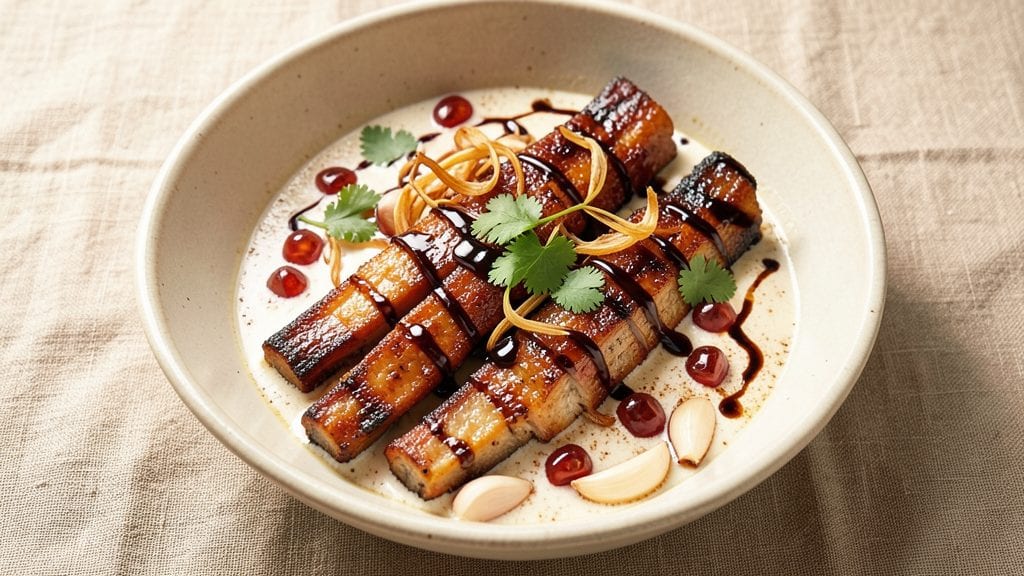
Conchita soup delivers the bold, tangy comfort of the Philippines in every spoonful—smoky pork ribs braised in a tamarind broth that balances sweet, sour, and spicy flavors. This dish is my go-to when craving that perfect harmony of textures: tender meat, crisp vegetables, and a broth so rich it deserves its own bowl. The secret lies in the marinade and slow braising, which transforms tough cuts into melt-in-your-mouth perfection.
Traditionally served over steamed rice with a side of calamansi (Filipino lime) to brighten each bite, this soup is more than a meal—it’s a celebration of Filipino home cooking. The tamarind base gives it that signature tang, while garlic, ginger, and chili add depth.
Steamed eggplant, string beans, and radishes keep it fresh and vibrant, balancing the richness of the pork.
What makes this recipe special is the 350°F braise that infuses the ribs with smoky, savory goodness while keeping the broth rich and flavorful. The result? A bowl of soup that’s hearty enough for a cold evening but light enough to enjoy any day.
Every spoonful delivers layers of umami, tang, and warmth—exactly what comfort food should be.
Serve with extra rice to soak up the broth and a wedge of calamansi for that final citrus kick. This is the kind of dish that turns a simple dinner into a memorable experience. Let’s get cooking!
Ingredients for conchita soup
Pantry staples meet Filipino flavors—smoky ribs, tangy tamarind, and fresh veggies create comfort in every bite.
| Ingredient | Amount | Notes |
|---|---|---|
| Pork Ribs 🥩 | 3 lb | Bone-in, cut into 3-inch pieces |
| Tamarind Paste 🍈 | ¼ cup | Or 1/2 cup tamarind concentrate |
| Coconut Milk 🥥 | 2 cans | Full-fat, 13.5 oz each |
| Fish Sauce 🐟 | ½ cup | Red or white, like Red Boat |
| Brown Sugar 🍚 | ½ cup | Light or dark, packed |
| Garlic Cloves 🧄 | 12 cloves | Minced, fresh preferred |
| Fresh Ginger 🌿 | 1 whole | 2-inch knob, grated |
| Thai Chili Peppers 🌶️ | 4 whole | Or 1 tbsp chili flakes |
| Eggplant 🍆 | 2 whole | Medium, sliced into rounds |
| String Beans 🌱 | 1 lb | Trimmed, cut into 2-inch pieces |
| Radishes 🥕 | 1 lb | Thinly sliced, daikon preferred |
| Calamansi 🍋 | 4 whole | Or 2 tbsp lime juice |
| Vegetable Oil 🫒 | ½ cup | For searing ribs |
| Salt 🧂 | 1 tsp | Kosher or sea salt |
| Black Peppercorns 🌶️ | 1 tsp | Freshly ground |
The pork ribs are the heart of this dish. Bone-in ribs give you that rich, smoky flavor—Costco or local butcher usually has them pre-cut. Look for ribs with good marbling; they’ll stay juicy during the long braise. I always buy extra because they freeze beautifully for future meals. If you can’t find bone-in, pork shoulder cut into chunks works but may need extra liquid to stay tender. The tamarind paste is non-negotiable for that signature tang—Thai Kitchen or Filipino markets carry it, but tamarind concentrate works in a pinch (just double the amount).
No calamansi? Lime juice works but lacks that bright, citrusy punch. Fresh ginger is ideal, but dried ginger at half the amount gets you close. Thai chilies add heat, but red pepper flakes or serrano peppers work too. The coconut milk should be full-fat—Thai Kitchen or Trader Joe’s have great prices. For the beans and eggplant, frozen works in a pinch, but fresh keeps the texture perfect. The brown sugar? Light or dark doesn’t matter—just make sure it’s packed for the right consistency.
This soup tastes even better the next day. Store the broth in the fridge for 5 days or freeze for 3 months. I portion the ribs and veggies separately so they stay fresh. The eggplant and radishes? Toss them in cold water after prepping to keep them crisp. The ribs reheat great—just add a splash of water to the pot and simmer. Serve with extra rice and a squeeze of calamansi for that authentic Filipino touch.
Why You'll Love This Recipe
- I’ll be real: this recipe makes enough for leftovers, but don’t worry—it tastes even better the next day. Plus, the pork ribs pull apart so easily, even picky eaters will ask for seconds.
- One-Pot Wonder: Honestly, the only cleanup here is wiping down the Dutch oven—no extra pots, no fuss. That sear of the pork ribs in the same pan where you build the base? Chef’s kiss for lazy but proud cooks.
- Tangy Umami Magic: The tamarind paste and fish sauce team up like peanut butter and jelly—sweet, salty, and just a little funky. That brown sugar? It’s the secret weapon that turns the coconut milk from creamy to dangerously addictive.
- Feeds a Crowd (or Your Cravings): I’ll be real: this recipe makes enough for leftovers, but don’t worry—it tastes even better the next day. Plus, the pork ribs pull apart so easily, even picky eaters will ask for seconds.
Step-by-step instructions for conchita soup
Here's how to build this rich, layered Filipino soup from scratch.
Sear the Pork Ribs for Deep Flavor
Heat the ½ cup vegetable oil in a large Dutch oven over medium-high heat until shimmering. Pat the 3 lb pork ribs dry with paper towels and season generously with 1 tsp salt and 1 tsp black peppercorns, pressing the spices into the meat. Working in batches to avoid crowding, sear the ribs for 4-5 minutes per side until deeply golden brown and crispy in spots. This step develops the Maillard reaction that forms the soup's rich foundation.
As the ribs brown, you'll notice the fat rendering out and sizzling in the pan. That's exactly what you want—it carries layers of flavor into the broth. Once all ribs are seared, transfer them to a plate and set aside. Don't drain the oil yet; we'll use it to build the soup base.
Build the Savory Base with Aromatics
In the same Dutch oven, reduce heat to medium and add the 12 garlic cloves and 1 fresh ginger (grated). Cook for 1-2 minutes until fragrant and just beginning to color—this prevents bitterness. Add the 4 Thai chili peppers (sliced lengthwise) and cook for another 30 seconds until they blister slightly.
Pour in the ½ cup fish sauce and ½ cup brown sugar, stirring to deglaze the pan and scrape up all those flavorful browned bits. Let this mixture simmer for 3-4 minutes until slightly reduced. Here's where the magic happens—the fish sauce adds umami depth while the brown sugar balances the acidity from the tamarind we'll add later.
Simmer the Vegetables in Coconut Milk
Add the 2 eggplant (sliced into rounds) and 1 lb string beans (cut into 2-inch pieces) to the pot. Pour in the 2 cans coconut milk, stirring gently to combine. Bring to a gentle simmer and cook for 8-10 minutes until the eggplant begins to soften but still holds its shape. The coconut milk will create a creamy, velvety texture that's characteristic of this dish.
Add the 1 lb radishes (thinly sliced) and the seared pork ribs back to the pot. Pour in the ¼ cup tamarind paste, stirring well to distribute. The tamarind adds that signature tangy depth that cuts through the richness of the coconut milk. Let everything simmer together for 15-20 minutes until the pork is tender enough to pull apart with a fork and the vegetables are cooked through but still vibrant.
Finish with Bright Citrus and Fresh Herbs
Squeeze the juice from the 4 calamansi into the pot and stir. The bright citrus notes will wake up all the flavors and give that final refreshing touch. Taste and adjust seasoning—you might want to add a bit more fish sauce for saltiness or brown sugar for sweetness, depending on your preference.
Let the soup rest for 5 minutes off the heat before serving. This resting period allows all the flavors to meld together beautifully. Serve hot with steamed rice to soak up every last drop of that rich, comforting broth.
Pro Tips For Making Conchita Soup
- SEAR IN BATCHES: I learned this the hard way—trying to sear all 3 lb of pork ribs at once just steams them instead of browning. Work in batches, even if it takes a little longer. The golden crust on those ribs is where the flavor lives, and skipping this step means a duller soup. Trust me, your future self will notice the difference.
- GRATE GINGER FINE: That 2-inch knob of ginger won’t infuse properly if it’s in big chunks. Use the smallest holes on your grater or pulse it in a food processor until it’s almost paste-like. You want it to dissolve into the coconut milk, not sit as a chewy surprise in every bite. (Yes, even if you’re impatient like me.)
- DON’T SKIP THE REST: The 5-minute rest after adding calamansi isn’t optional—it’s when the tamarind’s tang and the coconut milk’s richness finally marry. I used to rush this and serve it straight away, but the flavors always felt disjointed. Let it sit, cover it loosely, and let the heat work its magic.
- SALT THE RADISHES FIRST: Toss those 1 lb of thinly sliced radishes with a pinch of salt right after cutting. Let them sit for 10 minutes while you finish the rest of the soup—this draws out the bitterness and keeps them crisp. Skip this, and you’ll end up with a mouthful of peppery radish instead of the bright, clean bite you want cutting through the richness.
Troubleshooting this dish
Broth Too Thin?
If your broth ends up watery after simmering, it’s likely because too much liquid evaporated or you didn’t use enough tamarind paste. To fix this, reduce the heat to low and let the soup simmer uncovered for 10-15 minutes to thicken naturally.
If needed, stir in 1-2 tbsp cornstarch mixed with 2 tbsp cold water to create a quick slurry. Add it gradually while stirring to avoid clumping. This works wonders for balancing the broth’s consistency without altering the flavor. 🔥
Ribs Staying Tough
Undercooked ribs are the most common issue, but don’t worry—this is easy to fix. If your pork ribs aren’t tender after 15-20 minutes of simmering, return the pot to medium-low heat and add ½ cup water or broth.
Cover with a lid and let them braise for another 20-30 minutes, checking the internal temperature with a meat thermometer. They’re done when they reach 195°F and pull apart easily. Patience is key here!
Tamarind Overpowering
If the tangy flavor of the tamarind paste is overwhelming, balance it with a touch of sweetness. Stir in 1-2 tbsp extra brown sugar and let it dissolve completely. Alternatively, add 1 tbsp coconut cream (from an extra can) to smooth out the acidity.
Taste as you go—this dish relies on balance, so adjust gradually until it feels right. 💛
Vegetables Turning Mushy
Overcooked vegetables can ruin the texture of your soup. If your eggplant or string beans turn mushy, remove them from the pot and set them aside. Return the broth to a gentle simmer and add the veggies back in for just 3-5 minutes to finish cooking.
This keeps them vibrant and crisp-tender while the broth remains rich. Quick cooking is the trick!
Broth Separating
If the coconut milk separates or curdles, don’t panic—it’s fixable! Gently whisk the soup for 1-2 minutes over low heat to re-emulsify. If that doesn’t work, blend ½ cup of the broth with 1 tbsp coconut cream until smooth, then stir it back into the pot.
This restores the creamy texture without sacrificing flavor. A little whisking goes a long way! ✨
Nutrition facts
Frequently asked questions
Why does this conchita soup need tamarind?
The tamarind paste gives this soup its signature tangy kick that perfectly balances the rich, creamy coconut milk and smoky pork ribs. This Filipino staple adds depth and brightens the dish, cutting through the richness while keeping flavors harmonious. Without it, the dish would lack its authentic soul!
Can I use chicken instead of pork ribs?
Chicken thighs or drumsticks work beautifully in this soup. Just cook them for 15-20 minutes longer than the ribs to ensure tenderness. The broth will still be rich and flavorful, with the chicken adding a lighter protein option.
How do I adjust the spice level?
Start by removing the Thai chilies before adding them to the pot. For extra heat, add 1 tbsp chili flakes or a dash of hot sauce at the end. Taste as you go—Filipino cooking is all about balancing flavors! Adjust gradually until it matches your preferred spice level.
What if I don’t have calamansi?
No problem! Use 2 tablespoons lime juice instead—it’ll provide that bright citrus finish. While not identical, it keeps the dish fresh and tangy. For extra authenticity, add a pinch of salt to mimic calamansi’s complexity.
Can I make this soup ahead of time?
Yes! The flavors actually improve overnight. Store the broth in the fridge for 5 days or freeze for 3 months. Reheat gently with a splash of water to restore creaminess. The pork ribs reheat beautifully—just cover and simmer until hot.