
Soups & Stews
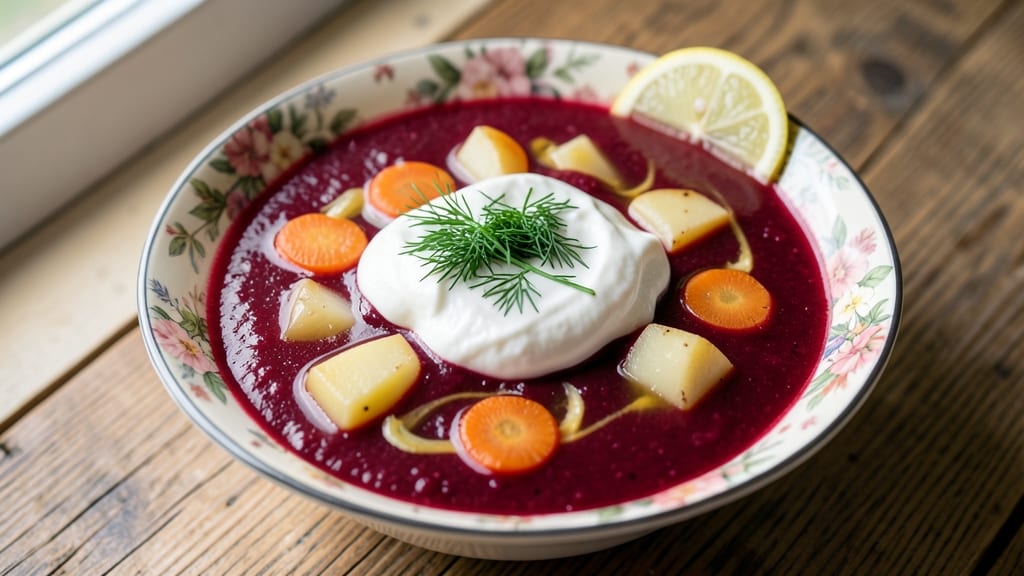
This cold beet borscht soup recipe transforms humble ingredients into a velvety, creamy masterpiece that’s perfect for summer gatherings or light lunches. The deep ruby color and earthy-sweet flavor come from perfectly roasted beets, while a touch of sour cream adds luxurious richness without overpowering.
I developed this version after struggling with watery store-bought borscht—this method ensures a thick, chilled texture that stays refreshing even hours after preparation.
The secret lies in two key steps: roasting the beets until tender (not mushy) and blending the broth with just enough sour cream to create that signature velvety body.
Unlike traditional hot borscht, this version skips the stove entirely after blending, making it ideal for hot days when the last thing you want is a warm meal. The result is a soup that’s vibrant, satisfying, and effortlessly elegant—no heavy cream or complicated techniques required.
What you’ll end up with is a bowl of creamy borscht that’s bright enough to stand alone but versatile enough to pair with crusty bread, fresh dill, or a dollop of extra sour cream.
The chilled temperature makes it incredibly refreshing, while the roasted beets add natural sweetness that balances the tangy broth. This isn’t just a soup—it’s a showstopper that proves healthy eating can be both nutritious and indulgent.
For those who love customization, you can easily add cooked potatoes for heartiness or a splash of lemon juice for extra brightness. The recipe scales perfectly for parties, and leftovers keep well in the fridge for up to 5 days.
Let’s get started on this vibrant, creamy cold borscht that’s sure to become a summer staple.
Ingredients for cold beet borscht soup
Perfectly roasted beets meet velvety sour cream for this creamy, refreshing cold borscht masterpiece.
| Ingredient | Amount | Notes |
|---|---|---|
| Beets 🥕 | 2 lb | Organic, peeled and cubed |
| Potatoes 🥔 | 1 ½ lb | Russet, peeled and cubed |
| Vegetable Broth 💧 | 6 cups | Low-sodium preferred |
| Sour Cream 🧀 | 1 ½ cups | Full-fat for creaminess |
| Dill 🌿 | ½ cup | Fresh, finely chopped |
| Carrots 🥕 | 4 whole | Organic, peeled and sliced |
| Onions 🧅 | 2 whole | Yellow, thinly sliced |
| Garlic Cloves 🧄 | 6 cloves | Fresh, minced |
| Lemon Juice 🍋 | 2 tbsp | Freshly squeezed |
| Salt 🧂 | 1 ½ tsp | Diamond Crystal kosher |
| Black Pepper 🌶️ | ½ tsp | Freshly ground |
| Crusty Bread 🍞 | 4 slices | For serving, optional |
The foundation of this borscht lies in selecting organic beets—their deep color and earthy sweetness elevate the dish. Whole Foods or local farmers markets offer the best quality, but even standard grocery store beets work if they’re firm and vibrant. Roasting them until tender (not mushy) is critical—this ensures the soup’s signature thickness. For maximum flavor, leave the skins on during roasting before peeling. The potatoes should be Russet, not waxy varieties—they hold up better to roasting and blending. Vegetable broth is essential for depth, and low-sodium options from Pacific Foods are ideal for balancing the natural sweetness of the beets.
Short on time or ingredients? Substitute butternut squash for half the potatoes—it adds natural sweetness and a creamy texture. No fresh dill? Dried dill at one-third the amount works, though the flavor won’t be as vibrant. Want to reduce the sour cream? Greek yogurt in a 1:1 ratio adds tang without heaviness. For extra brightness, add a splash of apple cider vinegar instead of lemon juice—it cuts through the richness beautifully. The onions and garlic should be thinly sliced and minced respectively for optimal flavor release, but no knife? A food processor works in a pinch, though it’ll create more texture variation.
This borscht keeps beautifully in the fridge for 5-7 days, with flavor deepening over time. Store in an airtight container, and add a thin layer of olive oil on top to prevent a skin from forming. For the best texture, chill for at least 4 hours before serving—this allows the flavors to meld and the soup to achieve its signature velvety consistency. If prepping ahead, portion into individual containers and freeze for up to 3 months. Thaw overnight in the fridge before serving. The crusty bread? Toast it lightly before serving—it’s the perfect counterpoint to the cool, creamy soup.
Why You'll Love This Recipe
- No-Fuss Chill Time: Honestly, this is the kind of soup where you can prep everything while watching TV. Parboil the beets and potatoes together, then toss them into an ice bath—no peeling required until they’re cool. The rest is just sautéing aromatics and blending, and boom, you’ve got a creamy masterpiece with minimal effort.
- Bright Earthy Delight: That balance of caramelized onions, fresh lemon juice, and earthy beets? Chef’s kiss. The sour cream adds richness without heaviness, while the dill and garlic keep it bright enough to eat cold. It’s like a cooling hug on a hot day—sweet, tangy, and just a little bit addictive.
- Meal-Prep MVP: I make this on Sundays and it’s still my favorite lunch by Wednesday. The flavors get deeper in the fridge, and the texture? Perfectly creamy after chilling. Freeze portions too—just thaw overnight, and you’ve got a stress-free weeknight dinner. Trust me, your future self will thank you.
- Budget-Friendly Feast: For under $10, you’re feeding a crowd with ingredients that stretch far beyond this soup. Beets, potatoes, and carrots are dirt cheap, and a jar of sour cream lasts forever. Plus, the leftovers? Even better the next day. It’s the kind of recipe that doesn’t skimp on flavor but doesn’t break the bank either.
Step-by-step instructions for cold beet borscht soup
This method delivers a velvety, vibrant soup where every ingredient plays its part.
Parboil and Cool the Root Vegetables
In a large pot, combine the 2 lb beets and 1½ lb potatoes with 6 cups vegetable broth. Bring to a boil over medium-high heat, then reduce to medium-low and simmer for 15 minutes until the vegetables soften but remain intact. The beets should be fork-tender but not falling apart.
Drain immediately and transfer the vegetables to an ice bath to halt cooking. This step prevents overcooking and ensures the soup maintains its bright color. Once completely cool, peel the beets and potatoes (if needed) and chop them into ¼-inch cubes. Set aside in a large bowl.
Sauté Aromatics and Caramelize the Carrots
In a separate skillet, melt 2 tablespoons butter over medium heat. Add the 2 onions and 4 carrots, sliced into ¼-inch rounds, along with the 6 minced garlic cloves. Cook for 10-12 minutes, stirring occasionally, until the vegetables soften and the onions develop a deep golden hue.
Season with 1½ teaspoons salt and ½ teaspoon black pepper, then transfer the sautéed vegetables to the bowl with the cooled beets and potatoes. Stir in the ½ cup finely chopped dill and 2 tablespoons lemon juice, reserving a small amount for finishing. This combination balances the earthy beets with bright acidity.
Blend for Creamy Texture
Using an immersion blender, purée the mixture until completely smooth. For a chunkier texture, blend in batches with a countertop blender, leaving some vegetables whole. The goal is a velvety consistency—this is where the soup’s signature creaminess begins.
Return the puréed soup to the pot and stir in the 1½ cups sour cream over low heat until fully incorporated. Avoid boiling—the heat will curdle the sour cream. Taste and adjust seasoning, adding more lemon juice or salt as needed. The soup should be rich but not overly heavy.
Chill and Serve
Transfer the soup to a serving bowl or individual ramekins and refrigerate for at least 4 hours, or until completely chilled. This step allows flavors to meld and the texture to set properly. Before serving, garnish with an extra sprinkle of dill and a drizzle of lemon juice for brightness.
Serve the chilled soup with 4 slices crusty bread on the side for dipping. The contrast of warm bread against the cool, creamy soup enhances every spoonful. For extra depth, top with a dollop of additional sour cream and a pinch of black pepper to finish.
Pro Tips For Making Cold Beet Borscht Soup
- Ice Bath Now: That ice bath isn’t just for show—it’s the only way to stop the beets from bleeding into muddy soup. Skip it, and you’ll end up with a dull pink mess instead of that vibrant color. I learned this the hard way after making soup that looked like a science experiment gone wrong.
- Salt the Sauté: Season the onions and carrots before they caramelize—those 1½ teaspoons salt and ½ teaspoon pepper need time to work into the vegetables. If you wait until the end, you’ll be chasing flavor in a soup that’s already blended smooth.
- Low and Slow for Cream: Stirring in that 1½ cups sour cream over low heat is non-negotiable. I’ve seen it curdle faster than you can say “lemon juice” when someone heats it too aggressively. Keep it gentle, and the soup stays silky, not lumpy.
- Dill Last, Not First: Finely chop that ½ cup dill right before mixing it in—it loses its punch if you add it too early. And save a little for garnishing; a fresh sprinkle right before serving makes all the difference, like the icing on a cake you’ve already baked.
Troubleshooting your cold beet borscht soup
Watery Soup Woes
If your borscht turns out thin and watery, it’s likely because the vegetables were overcooked or the broth wasn’t reduced properly. I’ve seen this happen when skipping the ice bath step—15 minutes is the max for simmering; any longer and the beets and potatoes will break down into mush.
Always drain immediately and cool them in ice water to preserve texture. For extra thickness, reduce the broth by half before adding the vegetables, or simmer longer without them to concentrate the flavor. 💧
Sour Cream Curdling
Adding sour cream too hot will definitely curdle it, but even cold soup can separate if not handled gently. When stirring in the 1½ cups sour cream, use a low heat and avoid boiling.
For extra stability, mix ¼ cup cold water with the sour cream first, then gradually incorporate it into the soup. If curdling happens, blend the soup again briefly to restore smoothness.
Flavor Too Mild
If your borscht lacks depth, it might need more acidity or seasoning. I always reserve 1 tablespoon lemon juice for finishing—this brightens the flavor after chilling. Taste as you go and adjust with ½ teaspoon salt or 1 teaspoon apple cider vinegar if needed.
Don’t forget the ½ cup chopped dill—it’s the secret to that classic borscht aroma. A pinch of black pepper at the end adds complexity too.
Vegetables Too Mushy
Over-blending or using waxy potatoes can turn your soup into a paste. Stick to Russet potatoes and chop them into ¼-inch cubes before blending. For a chunkier texture, use an immersion blender and leave 2-3 tablespoons of vegetables unblended.
If it’s still too thick, thin with 2-3 tablespoons cold water while blending. The goal is velvety, not glue-like!
Color Fading Fast
Beets lose their vibrant color if exposed to light or air too long. To preserve that deep ruby hue, cover the soup tightly with plastic wrap (pressed directly on the surface) while refrigerating.
If the color dulls, add a ½ teaspoon beet powder or a few drops of red food coloring (naturally!) before serving. For best results, serve within 3 days of chilling.
Nutrition facts
Frequently asked questions
Why should I roast the beets instead of boiling them for this recipe?
Roasting intensifies the beets' natural sweetness and deepens their color, creating a richer flavor profile than boiling. The slow cooking method also prevents the beets from turning mushy, which is crucial for achieving that signature velvety texture in cold borscht. Plus, roasted beets develop a caramelized edge that adds complexity to every spoonful.
Can I make this soup without sour cream for a lighter version?
For a lighter option, substitute the 1.5 cups sour cream with 1 cup Greek yogurt or 1 cup coconut yogurt for a dairy-free alternative. The yogurt will still provide creaminess while reducing the richness. Just blend it in gently over low heat to prevent curdling, and adjust seasoning as needed.
How far in advance can I prepare this chilled beet soup?
This borscht actually tastes better the next day! Store it in an airtight container in the fridge for up to 5 days. The flavors meld beautifully over time, and the texture remains perfectly creamy. For maximum freshness, add a splash of lemon juice and extra dill just before serving to brighten the taste.
What's the best way to reheat leftover cold borscht if I want it warm?
While cold borscht is best chilled, you can gently warm leftovers by placing the container in a bowl of warm water for 10-15 minutes. Never microwave directly, as this can make the soup watery. If reheating, stir in a splash of broth or water to restore creaminess. For best results, enjoy it cold or at room temperature.
How can I make this soup spicier for those who love heat?
Add ½ teaspoon smoked paprika to the sautéed aromatics or stir in 1 teaspoon hot sauce after blending. For a smoky kick, roast the onions and garlic until charred before adding them to the soup. Always taste first—you can always add more heat but can't remove it!