
Soups & Stews
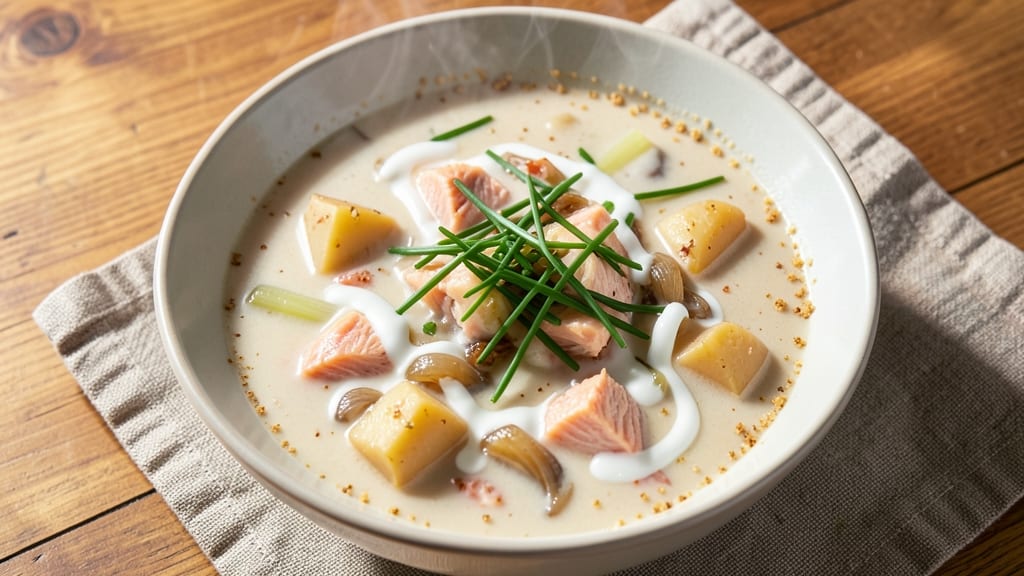
This canned salmon chowder soup delivers the creamy, smoky depth and flaky fish bites of a restaurant-quality bowl without the fuss of fresh salmon. The secret lies in balancing rich broth with tender potatoes and a touch of cream, while canned salmon adds that signature flakiness in every spoonful.
I developed this recipe during a busy winter when I needed a comforting meal that came together in under an hour—no special techniques required, just smart layering of flavors.
The foundation begins with a savory broth built from chicken stock, onions, and celery, simmered until deeply aromatic. Adding potatoes early ensures they break down into a velvety texture, while a splash of cream or coconut milk at the end creates that signature silky finish.
Canned salmon holds its shape beautifully when added just before serving, offering tender, flaky bites that contrast perfectly with the creamy broth.
What you’ll end up with is a bowl of chowder that’s rich yet balanced—creamy enough to coat every spoonful, with smoky undertones from the broth and flaky salmon that melts in your mouth.
The aroma alone will have everyone gathering around the table, and the leftovers reheat beautifully for lazy weeknight lunches. This is the kind of soup that transforms a simple can of salmon into something extraordinary.
Serve it with crusty bread to soak up every last drop, or garnish with fresh herbs for a pop of color. Whether you’re feeding a family or meal prepping for the week, this chowder delivers restaurant-quality comfort with minimal effort. Let’s get cooking—your taste buds will thank you.
Ingredients for canned salmon chowder soup
Pantry staples meet flaky canned salmon for a bowl of creamy, smoky comfort in under an hour.
| Ingredient | Amount | Notes |
|---|---|---|
| Canned Salmon 🐟 | 14 ½ oz | High-quality, drained, flakes removed |
| Russet Potatoes 🥔 | 2 lb | Peeled, cut into 1-inch cubes |
| Chicken Stock 💧 | 4 cups | Low-sodium preferred, homemade or high-quality |
| Yellow Onion 🧅 | 1 whole | Diced, medium size |
| Celery Stalks 🥬 | 3 whole | Diced, fresh and crisp |
| Heavy Cream 🥛 | ½ cup | Full-fat for richness |
| Butter 🧈 | 4 tbsp | Unsalted, for sauteing |
| All-Purpose Flour 🌾 | 1 tbsp | For thickening |
| Garlic Cloves 🧄 | 3 cloves | Minced, fresh preferred |
| Dried Thyme 🌿 | 1 tsp | Or 1 tbsp fresh |
| Bay Leaves 🌿 | 2 whole | Removed before serving |
| Salt 🧂 | 1 ½ tsp | Adjust to taste |
| Black Pepper 🌶️ | ½ tsp | Freshly ground |
| Lemon Juice 🍋 | 1 tbsp | Freshly squeezed |
| Green Onions 🧅 | 2 whole | Chopped, for garnish |
The salmon makes this chowder shine—high-quality brands like Wild Planet or Vital Choice have the best texture. Look for cans labeled 'boneless, skinless' to avoid any gritty bits. The potatoes are non-negotiable—Russets break down perfectly into that velvety texture, while Yukon Golds add a touch of sweetness. I always buy a 5-pound bag of Russets at Costco when I'm making big batches, but the regular grocery store ones work fine for a weeknight dinner. For the broth, homemade or high-quality low-sodium brands like Pacific Foods keep this soup from tasting flat.
No heavy cream? Full-fat coconut milk works beautifully—just add a splash of lemon juice to balance. Fresh thyme is ideal, but dried at one-third the amount gets you close. Running out of bay leaves? Double the thyme and add a pinch of cinnamon for warmth. The green onions can be swapped for chives if that's what you've got, but keep the garnish—it adds that fresh pop of color. For extra smokiness, add a dash of smoked paprika when you're sauteing the onions. The flour is just for thickening—don't skip it, but don't overdo it either.
This soup tastes even better the next day—honestly, that's when all the flavors meld together perfectly. Keeps for 4-5 days in the fridge, and freezes beautifully for up to 3 months. I portion mine into glass containers so lunches are ready to grab. The salmon stays flaky when reheated, but if you're worried, add a splash of cream when warming. Serve with crusty bread or oyster crackers for that classic chowder experience.
Why You'll Love This Recipe
- No-Pot-To-Watch Magic: I’ve got three kids, and this is the kind of recipe that lets me prep dinner while they’re still arguing over who gets the last cookie. Just toss everything in one pot, let it simmer while I stir occasionally, and boom—flaky salmon and creamy goodness with zero babysitting.
- Creamy-Salmon Harmony: That first bite? Pure perfection. The heavy cream and flour slurp create this velvety texture, while the canned salmon (flakes removed, because we’re civilized) adds a delicate, buttery richness. The lemon juice at the end? Game-changer—cuts through the richness like a fresh breeze.
- Freezer-Friendly Comfort: I make this on Sundays, portion it into containers, and—voilà—I’ve got dinner for the week. It freezes like a dream for up to three months, and when I pull it out, it’s still creamy and packed with flavor. My husband even eats it cold for lunch (I won’t judge).
- Budget Salmon Upgrade: Canned salmon isn’t just cheap—it’s a steal for flavor. You’re getting that rich, oceanic taste without the price tag of fresh, and the potatoes and celery bulk it up so you’re not paying for just the fish. Plus, the butter and cream make it feel like a splurge, even if it’s not.
Step-by-step instructions for canned salmon chowder soup
Here's how to build rich, velvety chowder where every bite delivers that perfect balance of flaky salmon and creamy texture.
Sauté Aromatics Until Deeply Fragrant
Melt 4 tablespoons butter in a large pot over medium heat. Add the 1 diced yellow onion and 3 diced celery stalks, cooking for 8-10 minutes until softened and just beginning to caramelize. Here's the thing—you want them golden at the edges but not browned, as that adds bitterness rather than depth.
Stir in the 3 minced garlic cloves and 1 teaspoon dried thyme, cooking for 30 seconds until the garlic releases its aroma. Add the 2 bay leaves and 1½ teaspoons salt, then pour in the 4 cups chicken stock. Bring to a gentle simmer and let it bubble for 5 minutes to infuse all those flavors into the liquid.
Cook Potatoes Until Fork-Tender
Add the 2 pounds peeled, 1-inch cubed russet potatoes to the simmering stock. Increase heat to medium-high and bring to a boil, then reduce to medium-low and let them cook for 15-18 minutes until they're tender when pierced with a knife. You'll know they're ready when they collapse easily under gentle pressure.
Here's where it gets fun—the potatoes should absorb some of that flavorful stock, creating the perfect base for the creamy finish. If the liquid reduces too much before the potatoes are done, add ½ cup water to maintain the right consistency. Don't skip this step; properly cooked potatoes are the foundation of great chowder.
Build the Creamy Base
Remove the 2 bay leaves from the pot. In a small bowl, whisk together ½ cup heavy cream and 1 tablespoon all-purpose flour until smooth. Slowly pour this mixture into the chowder, stirring constantly for 2-3 minutes until it thickens slightly and coats the back of a spoon.
Add the 14½ ounces drained canned salmon (with flakes removed) and ½ teaspoon black pepper. Stir gently to distribute the salmon evenly without breaking it into tiny pieces. The cream should now have a luxurious, velvety texture that coats every spoonful. If it's too thick, whisk in 1-2 tablespoons hot chicken stock to reach your preferred consistency.
Finish with Brightness and Garnish
Stir in the 1 tablespoon lemon juice and taste—this brightens the chowder and cuts through the richness. The acidity should make your mouth water. If you want to adjust the seasoning, add a pinch more salt or pepper at this stage.
Remove from heat and let the chowder sit for 5 minutes to allow the flavors to meld. Just before serving, stir in the 2 chopped green onions for a fresh finish. Ladle into bowls and serve immediately, garnished with additional green onions if desired. Each spoonful should deliver that perfect marriage of creamy texture and flaky salmon—exactly what makes this chowder so special.
Pro Tips For Making Canned Salmon Chowder Soup
- Cook Onions to Gold: I used to rush this step and wonder why my chowder tasted flat—those 8-10 minutes of gentle caramelizing on medium heat are where the flavor lives. Push through the urge to speed it up; the onions should soften and just start turning golden at the edges, not brown. That’s the sweet, deep base your soup needs.
- Cube Potatoes Evenly: Uneven potato pieces mean some will turn to mush while others stay hard. Stick to 1-inch cubes—no smaller—and cut them all the same size. I learned this the hard way when I mixed in a few smaller chunks that turned to glue. A sharp knife and a little patience make all the difference.
- Whisk Cream and Flour First: Don’t just dump the flour into the pot raw—it’ll clump like a rock and ruin your creamy texture. Whisk the ½ cup heavy cream and 1 tablespoon flour together until smooth before adding it to the chowder. This ensures a silky, lump-free finish every time.
- Add Salmon Last: Tossing in the salmon too early turns those beautiful flakes into tiny, sad crumbles. Wait until the cream has thickened and the chowder is just off the heat, then stir it in gently. The warmth will keep the pieces intact, giving you that perfect bite of flaky salmon in every spoonful.
Make-ahead tips for this canned salmon chowder soup
Double Batch Prep
Double your recipe in a 5-quart pot to make 8 servings—it reheats beautifully and saves time on weeknights. I prep everything except the salmon first, then store the base in the fridge for up to 3 days.
When ready to serve, just add the salmon and lemon juice. This method keeps the chowder from getting watery or overcooked. 💛
Freezer-Friendly Portions
Portion your chowder into 1-quart glass containers before freezing—this prevents ice crystals from forming and makes reheating easier. Label each container with the date and "add salmon before reheating." The salmon flakes stay tender when added fresh to warmed chowder, so never freeze it with the soup. ❄️
Salmon Timing Hack
Add the 14.5-ounce can of salmon just before reheating frozen chowder—this prevents soggy texture. Warm the chowder first, then stir in the salmon and lemon juice to restore the bright, creamy balance. I always keep a can of salmon in my freezer for this exact purpose. 🔥
Herb Infusion Boost
For extra flavor depth, steep 1 tbsp fresh dill or parsley in the hot chowder for 10 minutes before serving. Remove the herbs before reheating leftovers—they can turn bitter. This adds a fresh, vibrant note that pairs perfectly with the smoky salmon. ✨
Make-Ahead Broth Base
Prep the onion, celery, garlic, and thyme mixture in broth ahead and refrigerate it for up to 5 days. When ready to cook, simply add the potatoes and continue with the recipe. This saves 20 minutes of prep time and keeps your kitchen clean. 💡
Nutrition facts
Frequently asked questions
Why does this chowder taste better the next day?
The flavors really come together after resting overnight! The potatoes absorb more of the aromatic broth, and the cream and salmon meld perfectly. This is when you'll notice the smoky depth and creamy texture shine—just reheat gently and add fresh lemon juice before serving.
Can I use a different type of potato?
Russets are ideal because they break down smoothly into that velvety texture, but Yukon Golds work too—they'll add a touch of sweetness. Avoid waxy potatoes like red potatoes, as they stay firm and can make the chowder grainy. For best results, stick to starchy varieties like Russets or Yukon Golds.
What if my chowder is too thick?
Simply whisk in 1-2 tablespoons hot chicken stock until you reach your desired consistency. The key is to add it slowly while stirring constantly. If you're worried about thinning it too much, start with just 1 tablespoon and adjust as needed.
How do I prevent the salmon from breaking apart?
Add the drained salmon just before serving and stir gently—this keeps the flakes intact. If you add it too early, the heat can break it down. For extra flakiness, let the chowder rest off the heat for 5 minutes before stirring in the salmon.