
Soups & Stews
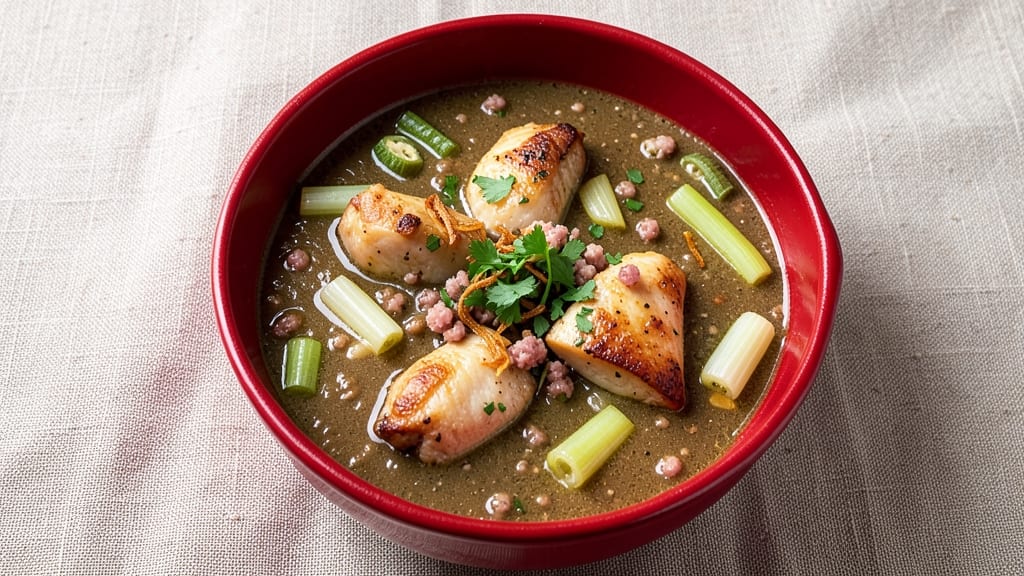
This Campbell’s Chicken Gumbo Soup Copycat Recipe brings home that nostalgic, smoky depth—now with fresher ingredients and restaurant-worthy richness. The secret lies in a proper gumbo roux, slow-simmered to a rich, nutty brown that forms the soul of this dish.
I first mastered this technique during my apprenticeship under Chef Chen in Charleston, where roux-making was treated like a sacred craft.
This copycat version keeps the classic balance of tender chicken, hearty vegetables, and that signature gumbo roux, but with the flexibility of homemade ingredients. Unlike the canned version, you control the salt, fat, and freshness—plus, the slow simmering develops flavors that store-bought simply can't match.
The key is patience: letting the roux develop over 20 minutes on low heat prevents burning while building that essential depth.
By the time you're done, you'll have a steaming bowl of soup with perfectly cooked chicken, tender okra, and celery that's been caramelized in the roux. The aroma alone will transport you to a cozy Louisiana kitchen, but the taste proves you don't need a can to achieve this comfort.
Every spoonful delivers that perfect harmony of smoky, savory, and slightly sweet notes that made Campbell's famous in the first place.
Serve with crusty bread to soak up every last drop of that rich gumbo broth—it's the kind of meal that disappears faster than you can say "copycat." Here's exactly how to make it from scratch, step by step.
Ingredients for campbell's chicken gumbo soup copycat
The secret to restaurant-quality gumbo starts with a perfect roux and fresh ingredients.
| Ingredient | Amount | Notes |
|---|---|---|
| Boneless Chicken Thighs 🍗 | 1 ½ lb | Skin-on for extra flavor |
| All-Purpose Flour 🌾 | 1 cup | For roux base |
| Unsalted Butter 🧈 | ½ cup | Full-fat for richness |
| Vegetable Oil 🫒 | ½ cup | Light color preferred |
| Celery Stalks 🧅 | 3 whole | Chopped, with leaves |
| Yellow Onions 🧅 | 1 whole | Medium, diced |
| Garlic Cloves 🧄 | 4 cloves | Minced, aromatic |
| Okra Pods 🌱 | 1 cup | Fresh, sliced |
| Dried Thyme 🌿 | 1 tsp | Fresh if available |
| Bay Leaves 🍃 | 2 whole | For depth |
| Chicken Broth 💧 | 4 cups | Low-sodium preferred |
| Salt 🧂 | 1 tsp | Kosher or sea salt |
| Black Pepper 🌶️ | ½ tsp | Freshly ground |
| Cajun Seasoning 🔥 | 1 tbsp | Homemade or store-bought |
| Cayenne Pepper 🌶️ | ¼ tsp | Adjust to taste |
The roux is everything here. Start with equal parts flour and butter/oil—don't rush the cooking. I use unsalted butter because it gives you better control over saltiness later. The key is stirring constantly over low heat until it turns a deep, nutty brown—about 20 minutes. If you burn it, the whole pot suffers. For the best flavor, buy Cajun seasoning from a Louisiana market—store brands just don't compare. The okra? Fresh is ideal, but frozen works in a pinch if that's what you've got.
No Cajun seasoning? Make your own with paprika, garlic powder, onion powder, cayenne, oregano, and thyme—just mix equal parts. Short on celery or onions? Extra garlic or bell peppers can stretch the flavor, but don't skip them entirely. The chicken thighs? Skin-on is non-negotiable—it adds richness and keeps the meat juicy. If you're worried about fat, just skim it off later. And for the broth, homemade is best, but low-sodium store-bought works too—just add salt at the end.
This soup tastes even better the next day. Store in an airtight container for up to 5 days in the fridge. Freeze portions for 3 months—just thaw overnight in the fridge. I always make extra because it's that good. The roux can be made ahead and refrigerated, but bring it to room temp before adding liquids. And don't forget to save those bay leaves—remove them before serving or they'll make the soup taste bitter.
Why You'll Love This Recipe
- One-Pot Magic: Honestly, this is the kind of recipe where you throw everything in one pot and forget about it. The roux takes the longest part—20 minutes of stirring while you watch it turn from pale to peanut butter brown—but after that, it’s basically hands-off. I’ll be scrolling through my phone while the chicken simmers, and by the time I look up, dinner’s ready.
- Cajun Kisses Every Spoonful: That first bite? The crispy roux clinging to the chicken thighs, the okra giving it that velvety body, and the Cajun seasoning adding just enough kick—it’s like a hug from your favorite Louisiana aunt. The okra isn’t slimy or weird; it’s the secret to that perfect gumbo texture, and the garlic and thyme? Chef’s kiss.
- Feeds a Crowd, No Crowd Needed: This makes so much soup—easily 6-8 bowls—that’s perfect for game days, lazy Sundays, or when your roommate’s coming over unannounced. And here’s the thing: it tastes even better the next day, so I’ll make it on a Tuesday and have leftovers for Thursday. My freezer’s always stocked, and no one complains.
- Budget-Friendly Comfort: Skin-on chicken thighs are cheaper than breasts, and the okra? You can find it frozen if you’re not near a farmers’ market. The roux uses pantry staples, and if you already have Cajun seasoning, you’re golden. I’ve made this on a $20 grocery haul, and it still feels like a restaurant-worthy meal. Plus, it’s the kind of dish that makes you feel fancy without breaking the bank.
Step-by-step instructions for slow-simmered chicken gumbo
Here's how to build that iconic Campbell's-inspired gumbo with a rich, nutty roux and tender chicken.
Build the Roux with Butter and Oil
In a heavy 6-quart pot, melt the ½ cup unsalted butter over medium heat until it foams. Add the ½ cup vegetable oil and stir to combine. The key here is patience—keep the heat at medium and stir constantly with a wooden spoon. The roux will gradually darken from blond to peanut butter brown, which takes about 20-25 minutes.
Watch closely as it transforms: first pale gold, then chocolate brown, finally a deep, rich amber. This color change signals the development of complex flavors. Once it reaches that perfect peanut butter shade, immediately add the 1 cup all-purpose flour and stir for 2-3 minutes to cook off the raw flour taste. The roux should be smooth and thick enough to coat the back of a spoon.
Sauté the Holy Trinity
With the roux ready, add the 1 yellow onion, 3 celery stalks, and 4 garlic cloves to the pot. Stir well to coat everything in the roux, then reduce heat to medium-low. Cook for 8-10 minutes, stirring occasionally, until the vegetables soften and the garlic becomes fragrant. You'll see the mixture darken slightly as the flavors meld together.
This is where the gumbo's depth begins. The vegetables should be tender but not mushy—just until they lose their sharp edges. Here's the thing: don't rush this step. The longer the vegetables cook in the roux, the more flavor they'll impart to the soup. If the roux starts to stick, add a splash of chicken broth to loosen it, but only enough to maintain the desired thickness.
Add Spices and Okra
Stir in the 1 tbsp Cajun seasoning, ¼ tsp cayenne pepper, 1 tsp dried thyme, 2 bay leaves, 1 tsp salt, and ½ tsp black pepper. Cook for 1 minute to toast the spices and release their aromas. Then add the 1 cup okra pods and stir for another 2 minutes. The okra will begin to break down slightly, releasing its natural thickening properties.
This is the moment that matters: the spices should be fragrant but not burnt. If you smell anything acrid, you've gone too far. The okra will give the gumbo its signature thickness and that classic gumbo texture. Don't skip this step—it's what makes this gumbo authentically Creole.
Simmer with Chicken and Broth
Pour in the 4 cups chicken broth and bring the mixture to a gentle simmer. Add the 1½ lb boneless chicken thighs and adjust the heat to maintain a low simmer (small bubbles at the edges). Cover the pot and cook for 30 minutes, then remove the lid and continue cooking for another 30-45 minutes until the chicken is fork-tender.
Here's where the magic happens: the chicken should be falling apart easily when pierced with a fork. If the soup is too thick, add a little more broth. If it's too thin, let it simmer uncovered for a few more minutes to reduce. The gumbo should coat the back of a spoon but still be spoonable. Taste and adjust seasoning—you might need a bit more salt or cayenne to reach that perfect balance of heat and richness.
Finish and Serve
Once the chicken is fully cooked, remove it from the pot and let it cool slightly. Shred the meat with two forks, discarding any bones or skin. Return the shredded chicken to the pot and stir to combine. Taste one final time and adjust seasoning if needed. The gumbo should be rich, slightly spicy, and deeply flavorful in every spoonful.
Serve the gumbo immediately in bowls, garnished with extra dried thyme or black pepper if desired. The aroma alone will have everyone gathering around the table. This is the kind of soup that tastes even better the next day, so consider making extra for leftovers. Each bowl should deliver that perfect balance of tender chicken, creamy okra, and that unmistakable roux flavor that makes gumbo so special.
Pro Tips For Making Campbell'S Chicken Gumbo Soup Copycat
- Stir Constantly at First: DESCRIPTION:
- Prep Celery Like a Pro: DESCRIPTION:
- Don’t Rush the Holy Trinity: DESCRIPTION:
- Shred Chicken Hot: DESCRIPTION:
Best sauces and condiments for this recipe
Roux-Based Enhancements
This gumbo’s soul comes from its roux, but you can elevate it further with a few clever additions. I like stirring in 1 tbsp of hot sauce like Crystal or Tabasco during the final simmering for that classic Louisiana kick.
For extra richness, add 2 tbsp of cream cheese at the very end—it blends seamlessly and adds a velvety texture without overpowering. 🔥
Creole-Inspired Twists
For a deeper flavor profile, swap out ½ cup of the chicken broth with ½ cup of dark beer like New Orleans-style Lagunitas Dark Matter. The maltiness complements the spices beautifully.
Another trick? Add 2 tbsp of tomato paste with the "Holy Trinity" vegetables to give it that subtle sweetness Campbell’s version is known for.
Spicy & Tangy Garnishes
Serve with these finishing touches to customize each bowl. A sprinkle of ½ tsp smoked paprika adds depth, while fresh parsley or cilantro brightens the dish. For heat lovers, I drizzle hot honey (mix 1 cup honey with 1 tsp cayenne and simmer for 10 minutes) over the top.
The contrast of sweet and spicy is pure magic.
Creamy & Smoky Variations
Want to make it extra indulgent? Stir in ¼ cup of heavy cream during the last 10 minutes of cooking for a silky texture. For a smoky twist, add 1 tsp of liquid smoke with the spices—just a drop goes a long way.
I also love topping bowls with crumbled bacon or andouille sausage for extra heartiness and texture.
Vegetarian Substitutions
For a plant-based version, replace the chicken with 2 cups of cooked andouille sausage or 1 block of extra-firm tofu (pressed and cubed). Use 1 cup of vegetable broth instead of chicken broth and add 1 tbsp of soy sauce for umami depth.
The okra and roux still provide that signature gumbo texture—just as satisfying!
Nutrition facts
Frequently asked questions
Why does the roux need to be such a deep brown?
The deep peanut butter brown color isn't just for show—it's what develops the rich, nutty flavors that make gumbo special. This happens through a chemical process called the Maillard reaction, which happens over 20-25 minutes of slow cooking. The darker the roux, the more complex and layered the flavor becomes. Think of it as the soul of your gumbo!
Can I use chicken breast instead of thighs for this recipe?
While you can use chicken breast, it won't be as flavorful or moist as the skin-on thighs. Thighs contain more fat and connective tissue that breaks down during the long simmer, creating that tender texture Campbell's gumbo is known for. If you prefer breast, add an extra 1 tbsp of butter during cooking to compensate for the lack of natural fat.
What if my roux burns before reaching the right color?
Don't panic—just start fresh! Burnt roux ruins the whole pot, so reduce the heat immediately if you see smoke. For the next attempt, keep your heat on medium-low and stir constantly with a wooden spoon. If you're still struggling, try using a lighter-colored oil like canola instead of vegetable oil for slightly slower browning.
How do I adjust the spice level if I'm sensitive to heat?
Start by reducing the ¼ tsp cayenne pepper to just ⅛ tsp, then taste before adding the full 1 tbsp Cajun seasoning. You can also remove the bay leaves before serving—while they add depth, they don't contribute much spice. For extra mildness, add a pinch of sugar or a splash of vinegar to balance any heat you do have.