
Soups & Stews
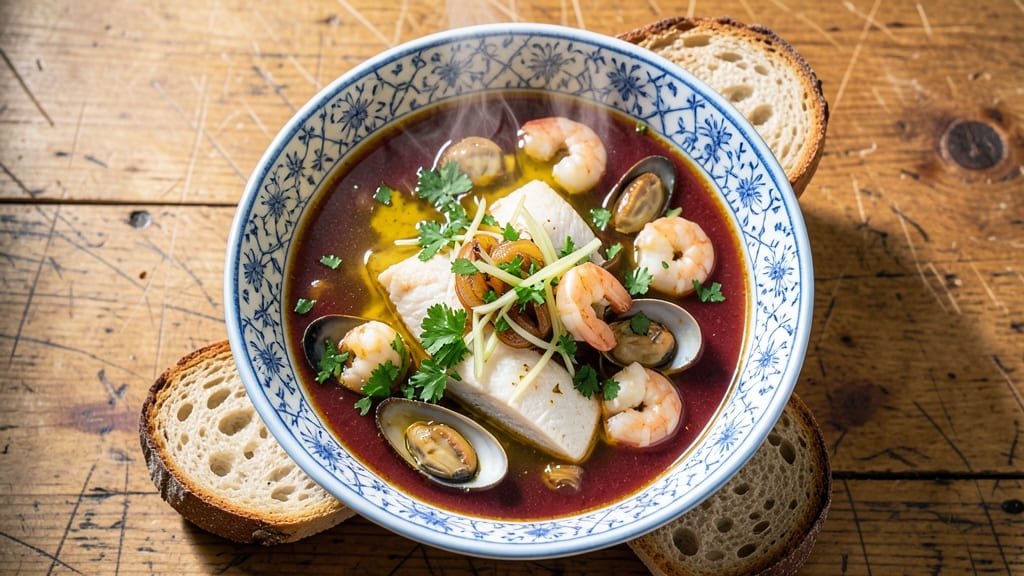
This bouillabaisse soup recipe brings the coastal flavors of Provence to your kitchen with a rich, aromatic fish stew that balances saffron-infused oil, fresh seafood, and a signature rouille sauce.
The foundation begins with a carefully crafted fumet—our secret weapon for developing deep, briny flavor from sustainable fish scraps and shellfish. What sets this version apart is the traditional bouillabaisse paste, a blend of onions, garlic, and herbs that forms the heart of the stew's complexity.
Mastering bouillabaisse requires patience, particularly in building the stock and sautéing the aromatic vegetables until they're deeply caramelized. The Provençal method emphasizes using local, seasonal seafood—rockfish, monkfish, and mussels—but modern adaptations often include white fish and shrimp for accessibility.
Each ingredient plays a role: the saffron threads infuse the oil with golden hue and subtle earthiness, while the rouille adds a creamy, garlicky contrast that elevates every spoonful.
By the time you serve this soup, you'll have a restaurant-quality dish that's rich yet balanced, with tender fish swimming in a fragrant broth and crispy croûtons adding texture. The key is timing—the seafood must cook just until done, while the rouille should be served separately for dipping.
This isn't just soup; it's a celebration of Provençal tradition with every bite.
Perfect for special occasions or weekend projects, this bouillabaisse transforms a simple seafood stew into a centerpiece dish. The method scales beautifully for gatherings, and leftovers reheat well—though they rarely last that long. Let's create this classic with confidence, step by step.
Ingredients for bouillabaisse soup
Saffron-infused oil, caramelized onions, and Provençal herbs create this aromatic bouillabaisse masterpiece.
| Ingredient | Amount | Notes |
|---|---|---|
| Saffron Threads 🌿 | 0.1 oz | High-quality, golden threads |
| Extra-Virgin Olive Oil 🫒 | 1 ½ cups | For saffron infusion and sautéing |
| Yellow Onions 🧅 | 3 whole | Thinly sliced, caramelized |
| Garlic Cloves 🧄 | 12 cloves | Minced, for bouillabaisse paste |
| Fresh Fennel Bulb 🌿 | 1 whole | Thinly sliced, adds anise notes |
| Dried Thyme Leaves 🌿 | 1 tbsp | Crushed, for aromatic depth |
| Dried Rosemary 🌿 | 1 tbsp | Chopped, for piney aroma |
| White Fish Fillets 🐟 | 3 lb | Cod or halibut, skinless |
| Mussels 🐚 | 3 lb | Cleaned, with strings removed |
| Shrimp 🦐 | 1 ½ lb | Peeled, deveined, tails on |
| Rockfish or Monkfish 🐠 | 2 lb | Cubed, for texture contrast |
| Tomato Paste 🍅 | ½ cup | For depth and body |
| Fish Stock 🍲 | 8 cups | Homemade or high-quality |
| White Wine 🍷 | 1 cup | Dry, for deglazing |
| Bay Leaves 🌿 | 4 whole | For subtle earthiness |
| Salt 🧂 | 1 ½ tbsp | Diamond Crystal kosher |
| Black Pepper 🌶️ | 1 tbsp | Freshly cracked |
| Baguette 🍞 | 1 whole | For croûtons, sliced thin |
| Dijon Mustard 🧂 | 3 tbsp | For rouille base |
| Garlic Cloves (extra) 🧄 | 6 cloves | For rouille, roasted |
| Cayenne Pepper 🔥 | ¼ tsp | For rouille heat |
| Extra-Virgin Olive Oil (extra) 🫒 | ¼ cup | For rouille emulsion |
The saffron is non-negotiable—look for threads, not powder, at specialty markets like Whole Foods or La Boîte. A pinch goes a long way; 0.1 oz here will infuse your oil with that golden hue and floral aroma. For the bouillabaisse paste, fennel adds complexity that many modern recipes skip, but it’s what makes this taste authentically Provençal. I always grab organic fennel from the produce section—it holds up better to caramelization. The rockfish or monkfish? Ask your fishmonger for sustainably sourced options; Trader Joe's has decent pre-cut pieces if you’re short on time, but whole fish tastes better when cubed yourself.
No mussels? Clams or scallops work in a pinch—just adjust cooking time. The white fish fillets can be any firm variety, but cod or halibut stay flakiest. Short on wine? Beef broth with a splash of lemon juice mimics the acidity. The rouille calls for roasted garlic—roast whole cloves until golden, then blend into the mustard for depth. Dijon mustard is key; French-style brands like Maille are best for that tangy punch. Skip the pre-made rouille—it’s never as good as homemade.
This soup tastes better the next day, so make it ahead and store in the fridge for up to 4 days. The rouille keeps separately for 5 days if sealed with a layer of olive oil. Freeze portions of the broth for 3 months—just thaw and reheat before adding fresh seafood. The croûtons? Toast them fresh before serving to avoid sogginess. And if you’re feeding a crowd, double the seafood—it’s the star of the show.
Why You'll Love This Recipe
- Saffron Magic in Minutes: That golden saffron-infused oil? It turns 15 minutes of caramelized onions and fennel into liquid gold. No fancy techniques—just patience and a Dutch oven. The aroma alone makes the prep worth it.
- One-Pot, Crowd-Pleaser: I serve this for dinner parties and lazy Sundays. Mussels, shrimp, and fish all cook together, so no juggling pans. Plus, the rouille croûtons? My kids fight over them—no judgment.
- Flavor That Grows Better: The broth tastes even richer after a day in the fridge. That’s the beauty of simmering with bay leaves and tomato paste—every bite gets deeper. Trust me, it’s not just good, it’s necessary.
- Budget-Friendly Luxury: Saffron threads might sound pricey, but a little goes a long way. And with 3 lbs of fish, mussels, and shrimp, this feeds four for under $30. The rouille keeps for ages, so you’ll have a secret weapon for weeks.
Step-by-step instructions for bouillabaisse soup
Here's how to build a rich, aromatic fish stew with layers of saffron-infused oil and rouille.
Infuse the Saffron Oil and Build the Base
Heat the 1½ cups extra-virgin olive oil in a large Dutch oven over medium-low heat. Add the 0.1 oz saffron threads and let steep for 5 minutes until the oil turns a delicate golden hue. This infusion carries the signature flavor of bouillabaisse.
Add the 3 yellow onions, 1 fresh fennel bulb (thinly sliced), and 12 garlic cloves (minced). Cook for 12-15 minutes until the onions are deeply caramelized and the fennel softens. Stir in the ½ cup tomato paste, 1 tbsp dried thyme, and 1 tbsp dried rosemary, cooking for another 3 minutes to meld the flavors. Here's the thing—don't rush this step. The deeper the caramelization, the richer the base will be.
Deglaze and Simmer the Stock
Pour in the 1 cup white wine and scrape up all the browned bits from the bottom of the pot. Let it simmer for 5 minutes until the wine reduces by half. Add the 8 cups fish stock, 1½ tbsp salt, 1 tbsp black pepper, and 4 bay leaves, then bring to a gentle boil.
I've found that maintaining a low simmer is crucial here—anything higher will cook the fish too quickly. The stock should bubble gently, allowing the flavors to develop without breaking down the delicate seafood. Keep the heat at medium-low and let it simmer for 15 minutes to build a flavorful broth.
Add Seafood in Stages
First, add the 3 lb mussels and 1½ lb shrimp, covering the pot with a lid. Cook for 5 minutes until the mussels open. Discard any that don't open—this ensures only the freshest seafood makes it to the table. Remove the mussels with a slotted spoon and set aside.
Next, add the 3 lb white fish fillets and 2 lb rockfish or monkfish (cubed). Simmer gently for 8-10 minutes until the fish is just cooked through—it should flake easily with a fork. The key is to avoid overcooking; you want the fish to remain tender and moist. If the soup starts to thicken too much, add a splash of water to maintain the right consistency.
Prepare the Rouille and Assemble
While the soup simmers, make the rouille by roasting the 6 extra garlic cloves (extra) in a dry skillet over medium heat until golden, about 3 minutes. Blend them with the 3 tbsp Dijon mustard, ¼ tsp cayenne pepper, and ¼ cup extra-virgin olive oil (extra) until smooth. The rouille should have a vibrant, garlicky aroma—this is the signature condiment that elevates the dish.
Slice the 1 baguette into thin rounds and toast in the oven at 375°F for 5 minutes until crisp. Spread the rouille on the toasted bread to create croûtons. Ladle the bouillabaisse into bowls, garnish with the rouille croûtons, and serve immediately. The contrast of the garlicky rouille against the delicate fish is what makes this dish unforgettable.
Pro Tips For Making Bouillabaisse Soup
- Caramelize Onions Slowly: I used to rush this step and end up with bitter, burnt onions—don’t. The 12-15 minutes for those 3 onions to turn deep gold is non-negotiable. If they’re not glossy and sweet-smelling, you’re missing the soul of the dish.
- Test Mussels Twice: After the 5-minute cook, check for open mussels—then wait another 2 minutes before discarding the closed ones. Some need extra time, and tossing them too soon ruins the whole batch. (Yes, even if you’re impatient like me.)
- Simmer, Don’t Boil: That gentle bubble isn’t optional—if the stock roils like a storm, your fish will turn to rubber. Keep it at a whisper-simmer, and the broth will stay silky while the fish stays tender. Trust the process.
- Toast Garlic for Rouille: Skipping the 3-minute roast for those 6 garlic cloves? The rouille will taste raw and sharp. Golden garlic is the difference between good and wow—so don’t skip it, even if you’re multitasking.
Best sauces and condiments for this bouillabaisse soup
Signature Rouille Variations
Classic rouille is a must, but I love experimenting with twists. For a smoky depth, add ½ tsp smoked paprika to the rouille blend—it pairs beautifully with the saffron oil.
Another favorite is lemon zest rouille: mix in 1 tsp lemon zest with the garlic and mustard for a bright, citrusy contrast. Both versions keep the creamy texture but add complexity. 🌟
Herbal Oil Enhancements
Beyond saffron, infuse your base oil with fresh herbs like parsley or basil for a modern touch. Toss 2 tbsp chopped parsley into the 1½ cups olive oil during the initial saffron infusion—it mellows into the oil over 10 minutes.
For a Mediterranean twist, use 1 tbsp dried oregano instead of thyme in the bouillabaisse paste. The herb notes complement the fish without overpowering.
Spicy Condiment Boosts
If you crave heat, elevate the rouille with 1 tsp harissa paste or ½ tsp chipotle powder for a smoky kick. For a milder option, add ½ tsp ground coriander to the rouille—it brightens the garlic flavor.
I always keep a small bowl of hot sauce (like Frank's RedHot) on the table for guests to customize their bowls. The rouille's creaminess balances any spice perfectly. 🔥
Creamy Broth Additions
For richer broth, stir in ¼ cup crème fraîche or ½ cup coconut milk at the end of simmering—it adds a velvety texture without diluting flavors. Another trick is to blend ½ cup cooked white beans into the stock for umami depth.
These additions work especially well if you're serving bouillabaisse to vegetarian guests who still want that hearty feel. The beans blend seamlessly into the broth.
Garnish Elevations
Beyond rouille croûtons, I love finishing bowls with toasted almonds for crunch or edible flowers like nasturtiums for elegance. A drizzle of truffle oil (about 1 tsp per bowl) adds luxury.
For a fresh finish, sprinkle microgreens like pea shoots over the top—they add vibrant color and a peppery bite. These garnishes turn bouillabaisse into a visually stunning dish. ✨
Nutrition facts
Frequently asked questions
Why does this bouillabaisse call for saffron-infused oil?
The saffron-infused oil is the soul of authentic bouillabaisse! It adds a delicate golden hue and earthy floral notes that elevate the dish’s signature aroma. 0.1 oz of high-quality threads steeped in 1½ cups olive oil for 5 minutes creates that luxurious, aromatic base that traditional Provençal recipes rely on.
Can I substitute any seafood if I don’t have mussels or monkfish?
Swap mussels for clams or scallops, and use cod or halibut instead of monkfish—both work beautifully. Just adjust cooking times slightly: scallops cook in 3-4 minutes, while cod fillets need 8-10 minutes to flake easily. The key is keeping the fish tender!
How do I know when the fish is perfectly cooked?
Fish is done when it flakes easily with a fork and reaches an internal temperature of 145°F. For white fish fillets, 8-10 minutes of gentle simmering usually does it. Overcooking makes it rubbery—so remove it as soon as it’s just opaque and tender.
What’s the best way to reheat bouillabaisse?
Gently warm the soup on the stovetop over low heat for 5-7 minutes, stirring occasionally. Avoid boiling—it can break down the seafood and make the broth cloudy. If the rouille separates, blend it briefly with a splash of warm water before serving.
Why does the rouille need roasted garlic?
Roasting the garlic before blending deepens its sweetness and mellows its sharpness, creating a smoother, more complex rouille. The 6 extra garlic cloves roasted until golden add richness that balances the Dijon mustard and ¼ tsp cayenne—no raw garlic needed!