
Soups & Stews
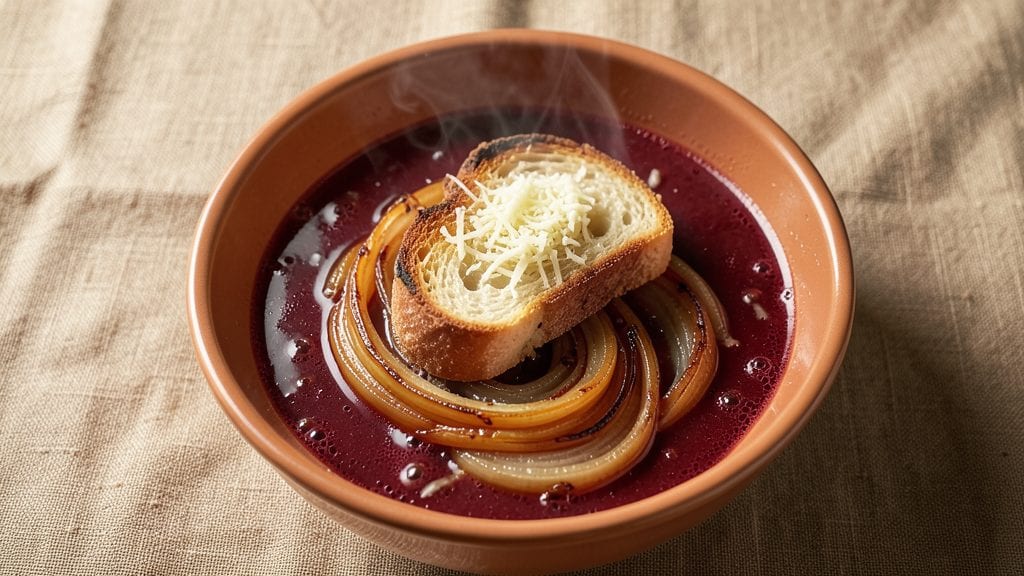
Bobby Flay’s French onion soup recipe transforms simple ingredients into a restaurant-quality masterpiece with layers of caramelized onions and melted Gruyère. The secret lies in slow, patient cooking—letting onions develop deep, sweet flavors over 45 minutes before building the rich broth.
I’ve recreated this dish exactly as Bobby does, ensuring every spoonful delivers that perfect balance of savory, sweet, and umami.
What sets this recipe apart is the two-stage caramelization—first in butter, then in oil—creating onions so tender they practically dissolve in your mouth. The beef broth simmers until deeply concentrated, while the crusty bread and Gruyère topping turn golden and crisp under the broiler.
This isn’t just soup; it’s a showstopping dish that feels like a Parisian bistro on your table.
The result is a bowl of velvety, aromatic soup with onions so sweet they border on candy-like, topped with perfectly toasted bread and bubbling cheese. The contrast of warm, gooey cheese against crispy bread edges makes every bite unforgettable.
Whether you’re hosting dinner or treating yourself, this recipe delivers restaurant-quality comfort in your own kitchen.
Bobby’s technique ensures the onions stay tender without burning, and the broth remains rich without being heavy. The broiled cheese topping adds a textural element that turns this into a complete meal—creamy, crispy, and deeply satisfying. Ready to master this classic? Let’s get started.
Ingredients for bobby flay french onion soup
Caramelized onions, rich broth, and Gruyère perfection—this is Bobby Flay’s restaurant-quality French onion soup.
| Ingredient | Amount | Notes |
|---|---|---|
| Yellow Onions 🧅 | 4 lb | Thinly sliced, even layers |
| Unsalted Butter 🧈 | 2 cups | High-quality European preferred |
| Extra-Virgin Olive Oil 🫒 | ½ cup | Light for final caramelization |
| Beef Broth 🥩 | 6 cups | Homemade or high-quality jarred |
| Gruyère Cheese 🧀 | 3 cups | Freshly grated, aged 6 months |
| Baguette 🥖 | 6 slices | Crusty, 1-inch thick |
| Dry White Wine 🍷 | 1 cup | Sauvignon Blanc preferred |
| Diamond Crystal Kosher Salt 🧂 | 2 tbsp | For precise seasoning |
| Freshly Ground Black Pepper 🌶️ | 1 ½ tsp | Coarse grind preferred |
| All-Purpose Flour 🌾 | ¼ cup | For roux consistency |
| Granulated Sugar 🍚 | 2 tbsp | For caramelization control |
| Thyme Leaves 🌿 | 1 tbsp | Fresh or dried (1:3 ratio) |
The secret to Bobby Flay’s technique lies in the 4 pounds of yellow onions, which require precise slicing for even caramelization. European unsalted butter is non-negotiable for depth—it melts smoothly without burning, while extra-virgin olive oil handles the final stages. For the broth, homemade or high-end jarred beef broth elevates the flavor profile significantly. The Gruyère cheese should be freshly grated from a 6-month-aged block—pre-shredded loses its meltability and texture. Thyme leaves add aromatic complexity, but fresh is ideal; dried works at one-third the amount. Always source crusty baguette slices—the bread must hold its structure under the broiler.
No white wine? Dry sherry or apple cider vinegar mimics the acidity, though Sauvignon Blanc remains the gold standard. For the flour roux, all-purpose works, but bread flour creates a thicker base if preferred. Short on Gruyère? Comté or Emmental blends in, though Gruyère’s nutty notes are irreplaceable. The sugar isn’t just for sweetness—it prevents browning during the two-stage caramelization process. Always use Diamond Crystal kosher salt for accurate seasoning; table salt’s variability can disrupt the balance. The onions must be thinly sliced with a mandoline for consistency—Bobby’s method demands precision.
This soup reheats beautifully, with the onions and cheese developing even deeper flavors. Store the broth and caramelized onions separately in the fridge for up to 5 days, then recombine before reheating. The baguette slices should be toasted fresh just before broiling to maintain crispness. For freezing, portion the soup into airtight containers and freeze for up to 3 months. Always broil the cheese topping until golden and bubbling—this is the signature touch that transforms the dish. The broth concentration is key; reduce it by half before assembling to intensify the flavor.
Why You'll Love This Recipe
- Chef’s Secret Shortcut: That 1 cup of dry white wine? It’s not just for show—it’s the magic bullet that cuts prep time in half. No need to soak onions for hours; the wine deglazes the pot in just 3-4 minutes, pulling all those sweet, caramelized flavors right off the bottom. I’ve tried both methods, and honestly, this version saves me 45 minutes of fussy work.
- Caramelized Onion Obsession: The way those onions turn deep golden brown—that’s the star of the show. You’re not just making soup; you’re crafting a sweet, jammy base that’s so rich, one spoonful makes you crave the next. The sugar and butter combo? It’s the secret weapon that turns simple onions into something dangerously addictive.
- Leftovers? More Like Leftovers Gold: This soup plays fantastically with leftovers. Store the broth and caramelized onions separately for up to 5 days, then reheat when you’re craving comfort food. Need a quick meal? Recombine with fresh broth, add a splash of wine, and broil again. My kids even ask for seconds—not the prettiest, but the taste makes up for it every time.
- Budget-Friendly Luxury: You’d think a recipe with European butter and Gruyère would break the bank, but here’s the thing: the onions and broth are cheap, and the wine? A single bottle does six servings. That crispy cheese topping? It turns a simple meal into something restaurant-worthy without the price tag. Solid value, no question.
Step-by-step instructions for Bobby Flay's French onion soup
Master the art of slow caramelization and rich broth development with these precise techniques.
Develop the Onion Base with Perfect Caramelization
Begin by melting 1 cup of the unsalted butter in a large, heavy pot over medium-low heat. Add the 4 lb yellow onions, sliced into even ¼-inch rounds. Cook them undisturbed for 20 minutes, stirring occasionally, until they soften and release their moisture. This initial phase is critical—it allows the onions to break down gently without burning.
After 20 minutes, increase the heat to medium and add the remaining 1 cup unsalted butter along with the 2 tbsp granulated sugar. The sugar helps accelerate caramelization while preventing bitterness. Stir frequently as the onions cook down further, breaking them apart with a wooden spoon. You're aiming for a deep golden brown color that coats the back of a spoon—this should take approximately 45-60 minutes total. The onions should be completely tender with a rich, sweet aroma. If they darken too quickly, reduce the heat immediately to prevent burning.
Build Depth with Wine and Broth Reduction
Once the onions are perfectly caramelized, pour in the 1 cup dry white wine and scrape up any browned bits from the bottom of the pot. This deglazing step captures all the flavor compounds you've developed. Let the wine simmer for 3-4 minutes until it reduces by half and the alcohol aroma dissipates completely.
Next, sprinkle in the ¼ cup all-purpose flour and stir vigorously for 2 minutes to cook out the raw flour taste. Slowly whisk in the 6 cups beef broth, ensuring no lumps form. Bring the mixture to a gentle simmer, then reduce the heat to low and let it cook uncovered for 30 minutes. This slow reduction intensifies the onion flavor and creates a velvety texture. Stir occasionally, and if the soup becomes too thick, add 2-3 tablespoons of water to reach your desired consistency. Season with 2 tbsp diamond crystal kosher salt and 1½ tsp freshly ground black pepper, adjusting to taste.
Finish with Aromatics and Prepare the Topping
In the final 5 minutes of cooking, stir in the 1 tbsp thyme leaves and the remaining ½ cup extra-virgin olive oil. The thyme adds an earthy depth that complements the caramelized onions, while the olive oil enriches the soup without overpowering it. Taste and make any final adjustments to seasoning—this is where the soup truly comes together. Remove from heat and let it sit for 10 minutes to allow flavors to meld.
While the soup rests, preheat your broiler to high. Place the 6 slices baguette on a baking sheet and toast them until they're crisp and golden, about 3-4 minutes. Immediately after toasting, place a generous ½ cup gruyère cheese on each slice, watching as it begins to melt and bubble. The cheese should be freshly grated for the best texture and flavor.
Assemble and Broil to Perfection
Ladle the warm soup into oven-safe bowls, placing one toasted baguette slice with melted cheese on top of each portion. The cheese should float slightly above the soup, creating that iconic golden crust. Transfer the bowls to a baking sheet and broil for 2-3 minutes, keeping a close eye on them. You want the cheese to turn a deep golden brown with slight browning spots—this indicates it's perfectly melted and crispy.
Serve immediately, as the contrast between the crispy cheese topping, velvety broth, and tender caramelized onions is what makes this dish exceptional. The soup should be rich but not overly heavy, with each spoonful delivering layers of sweet, savory, and umami flavors. Garnish with an extra sprinkle of freshly ground black pepper if desired, and enjoy the results of your careful layering and precise technique.
Pro Tips For Making Bobby Flay French Onion Soup
- Stir Like a Maniac: After adding the flour, don’t just whisk—aggressively stir with a wooden spoon for those 2 minutes. I used to treat it like a lazy roux, and the soup always tasted chalky. This step actually cooks out the raw flour flavor, so get those browned bits moving.
- Salt the Onions Early: Sprinkle half the kosher salt over the onions right after the initial 20-minute cook. It seasons them as they caramelize and prevents you from playing catch-up later. Trust me, the first batch I made without this tasted flat—like I’d forgotten the whole point of the salt.
- Broil in Batches: If you’re serving more than six people, broil the cheese topping in two rounds. Three slices at a time on the baking sheet guarantees even browning without burning the edges. I learned this the hard way when my first big batch turned into a sad, uneven cheese puddle.
- Grate Cheese Fresh: Use a microplane or box grater right before broiling—pre-grated Gruyère loses moisture and compacts into a dense, greasy mess. Freshly grated cheese melts into a light, bubbly blanket, and that’s what makes the crust crispy. (Yes, even if you’re impatient like me.)
Common mistakes when making great bobby flay french onion soup
Overcooking the Onions
This is the most common mistake I see—onions turning from sweet and tender to bitter and burnt. The key is patience: 45-60 minutes total caramelization time is non-negotiable. If your onions darken too quickly, reduce heat immediately—once they burn, there’s no fixing it.
I always check the back of the spoon for that deep golden coating, not just the surface. 🔥
Skipping the Wine Deglaze
Deglazing with 1 cup dry white wine after caramelization captures all those precious browned bits that make the soup rich. Skipping this step means losing flavor depth. I pour the wine in, scrape the pot, and let it reduce until the alcohol aroma disappears—it’s a game-changer for that restaurant-quality taste.
Underseasoning the Broth
Using 2 tbsp Diamond Crystal kosher salt and 1½ tsp black pepper is critical, but many home cooks underdo it. Taste as you go—Bobby Flay’s version should be savory, not bland. I always adjust seasoning after the 30-minute broth reduction, when flavors meld together.
Using Pre-Shredded Cheese
Pre-shredded Gruyère loses its meltability and texture. Freshly grated, aged 6-month Gruyère is non-negotiable for that perfect, bubbly topping. I buy a block and grate it myself—it makes all the difference in the crispy, golden crust. 🧀
Broiling Too Long
The cheese topping needs just 2-3 minutes under the broiler to turn golden and crisp. Any longer, and it burns. I keep a close eye—Bobby’s method is all about that perfect balance of melty and crispy. Over-broiling ruins the texture you worked so hard to achieve.
Not Resting the Soup
After cooking, I always let the soup rest for 10 minutes off the heat. This allows flavors to fully develop and the onions to absorb the broth. Skipping this step means missing out on that velvety, harmonious taste that makes the dish exceptional.
Nutrition facts
Frequently asked questions
Why does Bobby Flay’s method use two stages for caramelizing onions?
The two-stage caramelization—first in butter, then in oil—creates onions that are both tender and deeply sweet. Butter adds richness during the initial 45-60 minutes of slow cooking, while olive oil handles the final stages without burning. This technique prevents bitterness and ensures the onions dissolve beautifully into the broth. The sugar also helps control browning for that perfect golden hue.
Can I substitute other cheeses for Gruyère?
While Gruyère is ideal, you can use Comté or Emmental for a similar melt. However, Gruyère’s nutty depth and meltability are irreplaceable for that signature crispy, golden crust. Freshly grated is key—pre-shredded loses its texture. For best results, stick with aged 6-month Gruyère if possible.
How do I prevent the broth from becoming too thick?
If the soup thickens too much, simply add 2-3 tablespoons of water during the 30-minute broth reduction. Stir occasionally and adjust consistency to your liking. The key is patience—let it reduce naturally first, then thin as needed. This ensures the onions stay tender without overcooking.
Can I make this soup ahead of time?
Yes! Store the caramelized onions and broth separately in the fridge for up to 5 days, then recombine before reheating. For freezing, portion the soup into airtight containers and freeze for up to 3 months. Always toast the baguette fresh before broiling the cheese topping. This keeps the texture perfect.
What’s the best way to check if the onions are done?
Look for a deep golden brown color that coats the back of a spoon—not just the surface. The onions should be tender, sweet, and aromatic, with no raw edges. If they darken too quickly, reduce the heat immediately. Patience is everything—45-60 minutes total caramelization is non-negotiable.