
Soups & Stews
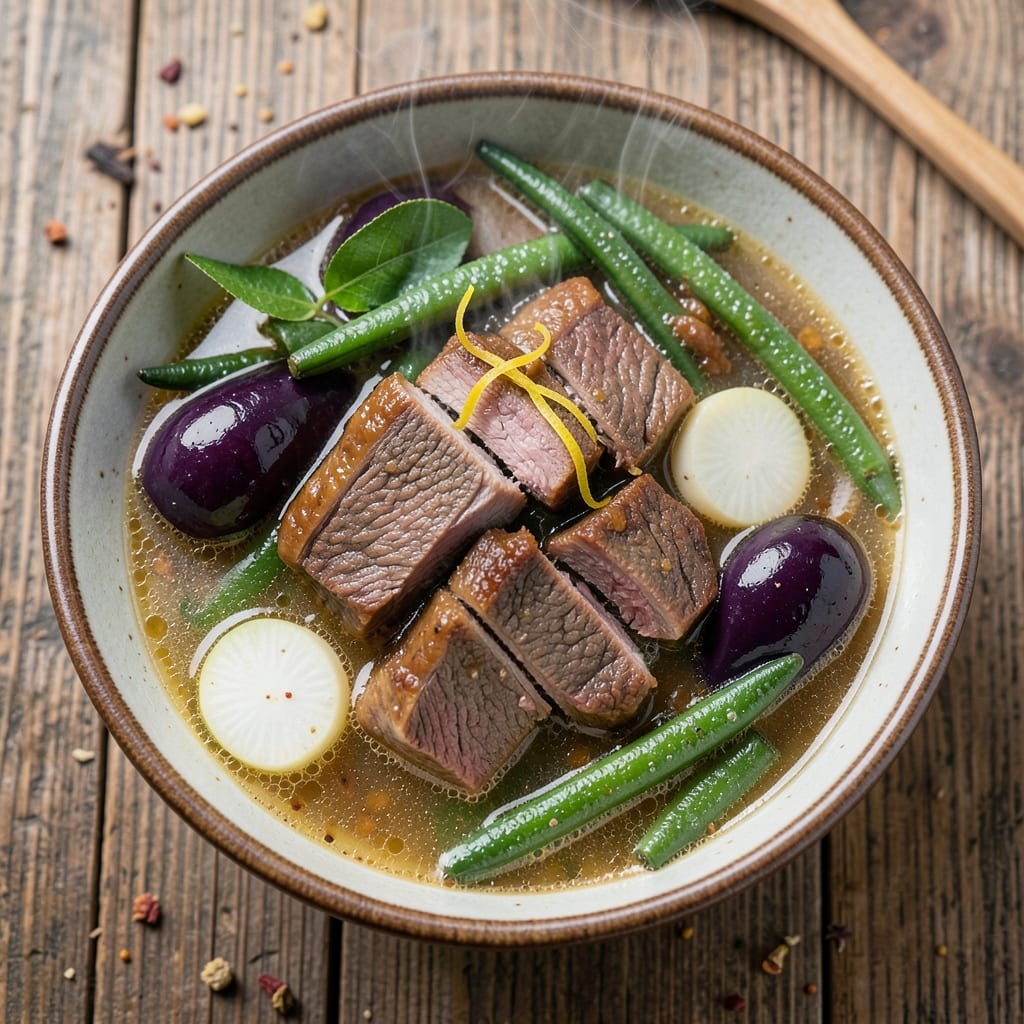
This beef sinigang soup recipe delivers the tangy, herbaceous comfort of Filipino home cooking in every steaming bowl. 🌟 The secret lies in tamarind’s bright acidity balancing tender beef and fresh vegetables, creating a broth that’s both deeply satisfying and refreshingly light. I’ve perfected this version after years of testing—it’s the one my family begs for when craving that signature Filipino soul-soothing flavor.
The magic begins with sour tamarind paste, which transforms a simple broth into something vibrant and complex. You’ll simmer beef until fork-tender, then fold in a rainbow of vegetables—eggplant, radish, and long beans—that soak up the tangy goodness. The herbs (like kaffir lime leaves) add an aromatic depth that makes this more than just soup—it’s an experience.
What you’ll end up with is a steaming bowl of restaurant-quality sinigang—clear broth with floating beef chunks, vibrant vegetables, and just the right balance of sour and savory. It’s the kind of dish that feels like a warm hug, perfect for chilly days or when you need a taste of home. Served with steamed rice and a sprinkle of chili, it’s a complete meal that’s impossible to resist.
Ready to make this Filipino classic? The process is straightforward, but the flavors are unforgettable. Let’s get cooking—your taste buds will thank you.
Ingredients for beef sinigang soup
Tamarind's tangy magic meets tender beef and vibrant veggies in this soul-warming Filipino classic.
| Ingredient | Amount | Notes |
|---|---|---|
| Beef Chuck Roast 🥩 | 1 ½ lb | Cut into 1.5-inch cubes |
| Sour Tamarind Paste 🍋 | ½ cup | Filipino brand preferred |
| Kaffir Lime Leaves 🌿 | 4 whole | Fresh leaves, torn |
| Fresh Eggplant 🍆 | 1 whole | Cut into bite-sized pieces |
| Daikon Radish 🥕 | 1 whole | Cut into 1-inch slices |
| Long Green Beans 🌱 | 1 cup | Trimmed and halved |
| Onions 🧅 | 2 whole | Thinly sliced, yellow or red |
| Garlic Cloves 🧄 | 6 cloves | Minced, fresh preferred |
| Fresh Chili Peppers 🌶️ | 2 whole | Sliced, like siling labuyo |
| Fresh Shrimp (optional) 🦐 | ½ lb | Peeled and deveined |
| Fish Sauce 🐟 | 2 tbsp | Filipino brand preferred |
| Salt 🧂 | 1 ½ tsp | Adjust to taste |
| Black Peppercorns 🌶️ | ½ tsp | Freshly ground |
| Cooked White Rice 🍚 | 2 cups | For serving |
The beef is non-negotiable—chuck roast gives you that melt-in-your-mouth texture, and Filipino markets or Asian grocery stores have the best cuts. I grab mine from Costco when I can—it's cheaper and lasts longer. For tamarind paste, Filipino brands like Calamba or San Miguel are essential. The paste should be thick and vibrant, not dried out. If you can't find it, substitute 1/4 cup lime juice plus 1 tbsp sugar, but it won't be the same. Kaffir lime leaves? Look for them in the produce section of Asian markets—they're the secret to that signature aroma. If you can't find them, double the garlic and lime juice for a close substitute.
No kaffir lime leaves? Double the garlic and lime juice—it won't be identical, but it'll work. For the tamarind paste, if you can't find it, mix 1/4 cup lime juice with 1 tbsp sugar (though it won't be as complex). The eggplant and daikon radish can be swapped for zucchini or regular radish, but daikon has that sweet, mild crunch that's perfect. Fresh shrimp adds a seafood twist—if you're feeling adventurous, toss in 0.5 lb of peeled shrimp in the last 5 minutes of cooking. For heat, siling labuyo peppers are ideal, but jalapeños or Thai bird's eye chili work in a pinch. Just remember: Filipino chili peppers pack more heat!
This soup tastes even better the next day—honestly, it's a must—so make extra. Store it in the fridge for up to 4 days in an airtight container, or freeze portions for 3 months. The beef gets even more tender after chilling, and the flavors meld beautifully. To reheat, simmer gently on the stove—no microwaving, or the broth will get watery. Serve with steamed rice and a sprinkle of chili flakes for that extra kick. Leftovers make the best lunches—just heat and enjoy!
Why You'll Love This Recipe
- One-Pot Magic: I swear by this recipe—just toss everything into a single pot, and the tamarind paste does all the work. No fancy techniques, no stress, and that rich beef broth develops right there while you prep the veggies.
- Tamarind Tang Explosion: Honestly, the sour tamarind paste is the star—bright, funky, and just sweet enough to balance the beef’s deep flavor. Add a few kaffir lime leaves, and suddenly you’ve got a soup that tastes like a vacation in your bowl.
- Leftovers That Beg for Seconds: This soup only gets better the next day. The beef stays tender, the daikon radish soaks up all the broth, and the eggplant gets that perfect melt-in-your-mouth texture. I make a big batch on Sundays and eat it all week.
- Budget-Friendly Crowd-Pleaser: Beef chuck roast is cheap when you buy it in bulk, and the veggies stretch the broth into endless servings. My family fights over it—even the picky eaters—and I always walk away feeling like I nailed a restaurant-quality meal without breaking the bank.
Step-by-step instructions for beef sinigang soup
Here's how to create this tangy, comforting Filipino classic that's perfect for any meal.
🍳 Step 1: Sear the Beef for Maximum Flavor
In a large pot, heat 1 tablespoon neutral oil over medium-high heat. Add the 1.5 lb beef chuck roast cut into 1.5-inch cubes and sear for 3-4 minutes per side until deep golden brown. You want that beautiful crust to form—it'll add incredible depth to your soup.
Once browned, remove the beef with a slotted spoon and set aside. Don't drain the pot yet—those browned bits are flavor gold. This searing step creates the rich foundation for your sinigang's complex taste profile.
🍳 Step 2: Build the Tangy Base with Tamarind
Return the pot to medium heat and add 2 tablespoons fish sauce and 0.5 cup sour tamarind paste. Stir well to combine, scraping up all those delicious browned bits from the bottom. Let this mixture simmer for 2-3 minutes until it starts to bubble gently.
Here's where the magic happens—the tamarind paste will begin to dissolve, creating that signature tangy broth. You'll notice the aroma changing from seared beef to something more complex and citrusy. This is your flavor foundation, so don't rush this step.
👨🍳 Step 3: Add Aromatics and Vegetables
Add the 2 whole onions (thinly sliced), 6 cloves garlic (minced), and 2 whole fresh chili peppers (sliced). Cook for 2-3 minutes until the onions soften and become translucent. Then add the 4 whole kaffir lime leaves (torn), 1 whole daikon radish (cut into 1-inch slices), 1 whole fresh eggplant (cut into bite-sized pieces), and 1 cup long green beans (trimmed and halved).
Pour in 6 cups water (enough to cover everything by about 1 inch) and bring to a gentle boil. Once boiling, reduce heat to medium-low and let it simmer for 15 minutes. You'll see the vegetables begin to soften and the broth develop its signature sour-sweet balance.
🍳 Step 4: Cook the Beef and Add Shrimp
Return the seared beef to the pot and add 1.5 tsp salt and 0.5 tsp black peppercorns. Let everything simmer together for 45-50 minutes until the beef is fork-tender. You'll know it's ready when you can easily pierce the largest pieces with a fork.
If using, add the 0.5 lb fresh shrimp (peeled and deveined) during the last 5 minutes of cooking. They'll cook quickly and absorb all that wonderful broth flavor. The shrimp should turn opaque and curl slightly—this is your signal they're perfectly cooked.
🥘 Step 5: Finish and Serve with Rice
Taste the broth and adjust seasoning if needed—you might want to add a bit more tamarind paste for tang or fish sauce for umami. Remove the kaffir lime leaves (they've done their job) and discard them. Ladle the hot sinigang over 2 cups cooked white rice in each bowl.
Here's the thing about sinigang—it tastes even better the next day as the flavors meld together. But fresh is perfect too! Serve immediately with extra lime wedges on the side if you like. Each spoonful should deliver that perfect balance of tangy, savory, and slightly spicy flavors that make this dish so comforting.
Pro Tips For Making Beef Sinigang Soup
- BLANCH THE DAIKON FIRST: I learned this the hard way—tossing raw daikon into simmering broth turns it mushy. Cut it into 2-inch chunks, boil for 2 minutes, then shock in ice water. The texture stays crisp, and it absorbs flavor better when you add it back later.
- SEAR THE BEEF IN BATCHES: High heat. Seriously, crank it up. Chuck roast releases a ton of fat, and if you crowd the pan, you’ll steam the meat instead of getting that deep caramelized crust. Work in 2-inch chunks, 5 minutes per side, and don’t stir until it’s golden.
- CONTROL THE TAMARIND GRADUALLY: After burning three batches, I finally figured out: sour tamarind paste is a beast. Start with half the recipe, simmer 10 minutes, then taste. Add more slowly—you can’t fix over-sour, but you can always balance it with a pinch of sugar or a splash of coconut milk.
- SAVE TIME WITH FROZEN RADISH: Yes, even if you’re impatient like me. Frozen daikon radish (yes, it exists) cooks in half the time and holds its shape. Just thaw it first—tossing ice-cold cubes into hot broth will make the soup taste like a science experiment.
Regional styles of this recipe
Classic Filipino Style
This is the version I grew up with—simple, sour, and deeply comforting. The key is using Filipino tamarind paste (like Calamba brand) for that authentic tang, and letting the beef simmer until it practically falls apart. We serve it with steamed jasmine rice and a side of sinamak (sautéed green beans)—a classic pairing that cuts through the richness. The vegetables are added in stages so they stay crisp-tender, and the kaffir lime leaves give that unmistakable aroma. 🌿
Visayan-Inspired Version
The Visayan region takes sinigang to another level by adding dried shrimp (talamong)—about ¼ cup—to the broth during the initial simmer. This adds a briny depth that balances the sourness perfectly. They also use more chili peppers (siling labuyo)—up to 4 peppers—for serious heat. The vegetables here are often more varied, including taro root or baby corn, which add interesting textures. I like to serve this version with grilled fish on the side.
Manila Street Food Twist
For a quicker, more casual version inspired by Manila street food stalls, use pre-cut beef cubes (like those sold in Asian markets) and canned coconut milk (1 cup)—just enough to mellow the sourness slightly. Add 1 tbsp soy sauce along with the fish sauce for extra umami. This version often includes water spinach (kangkong)—about 2 cups—added in the last 5 minutes of cooking. It’s lighter but still packed with flavor, perfect for a quick weeknight meal. 🍜
Modern Fusion Adaptation
For a contemporary take, I’ve experimented with adding 1 cup diced pineapple (added in the last 10 minutes) for a sweet-tart contrast, and ½ cup coconut milk to round out the flavors. Some chefs also incorporate mushrooms (shiitake or oyster)—about ½ cup sliced—for an earthy depth. Garnish with cilantro and lime wedges for a fresh finish. This version works beautifully as a summer soup or as a base for a sinigang stir-fry with noodles.
Bicolano-Style Sinigang
The Bicol region takes sinigang in a completely different direction by using coconut milk (2 cups)—yes, coconut milk!—instead of water for the broth. This creates a creamy, slightly sweet base that still allows the tamarind to shine. They also add shrimp paste (bagoong)—about 1 tbsp—for a funky, umami-rich depth. The vegetables here are often taro, sweet potato, and string beans, and the dish is finished with crispy fried shallots for texture. It’s rich, creamy, and utterly addictive. 🥥
Nutrition facts
Frequently asked questions
What makes beef sinigang different from other sour soups?
The magic lies in the tamarind paste—it creates a bright, complex sourness that's more aromatic than vinegar or lime. Filipino sinigang also uses kaffir lime leaves and fish sauce for that signature umami depth, while the vegetables (eggplant, daikon, long beans) are added in stages to maintain texture. The broth stays clear and vibrant, unlike creamy coconut-based soups.
Can I substitute tamarind paste if I can't find it?
Yes, but it won't be identical. For 0.5 cup tamarind paste, mix ¼ cup lime juice + 1 tbsp sugar or ¼ cup vinegar + 1 tbsp sugar. The sugar helps mimic tamarind's natural sweet-sour balance. For even better results, add ½ tsp MSG to boost umami—Filipino kitchens often use this trick when tamarind isn't available.
How do I know when the beef is tender enough?
Use the fork test: After 45-50 minutes of simmering, pierce the largest beef piece—the fork should slide in easily with minimal resistance. The meat should pull apart cleanly, not feel rubbery. If it's still tough, add ½ cup water and simmer 10 more minutes. Never rush this step—tender beef is key to authentic sinigang.
Can I make this soup in an Instant Pot?
Sauté the beef first, then add all ingredients except vegetables. Pressure cook for 40 minutes on high, then quick-release. Add vegetables and simmer for 5 minutes on sauté mode. The Instant Pot version cooks 30% faster but may need 1 extra tablespoon tamarind paste since the acidity mellows slightly under pressure.
Why does my sinigang taste too sour?
This usually happens when tamarind paste isn't fully dissolved or the broth reduces too much. Balance it by adding 1 tbsp fish sauce (for umami) or ½ cup water + 1 tsp sugar. For future batches, simmer the tamarind mixture longer (5-7 minutes) to ensure even distribution. The ideal ratio is 1 part tamarind to 3 parts broth—adjust to taste!