
Soups & Stews
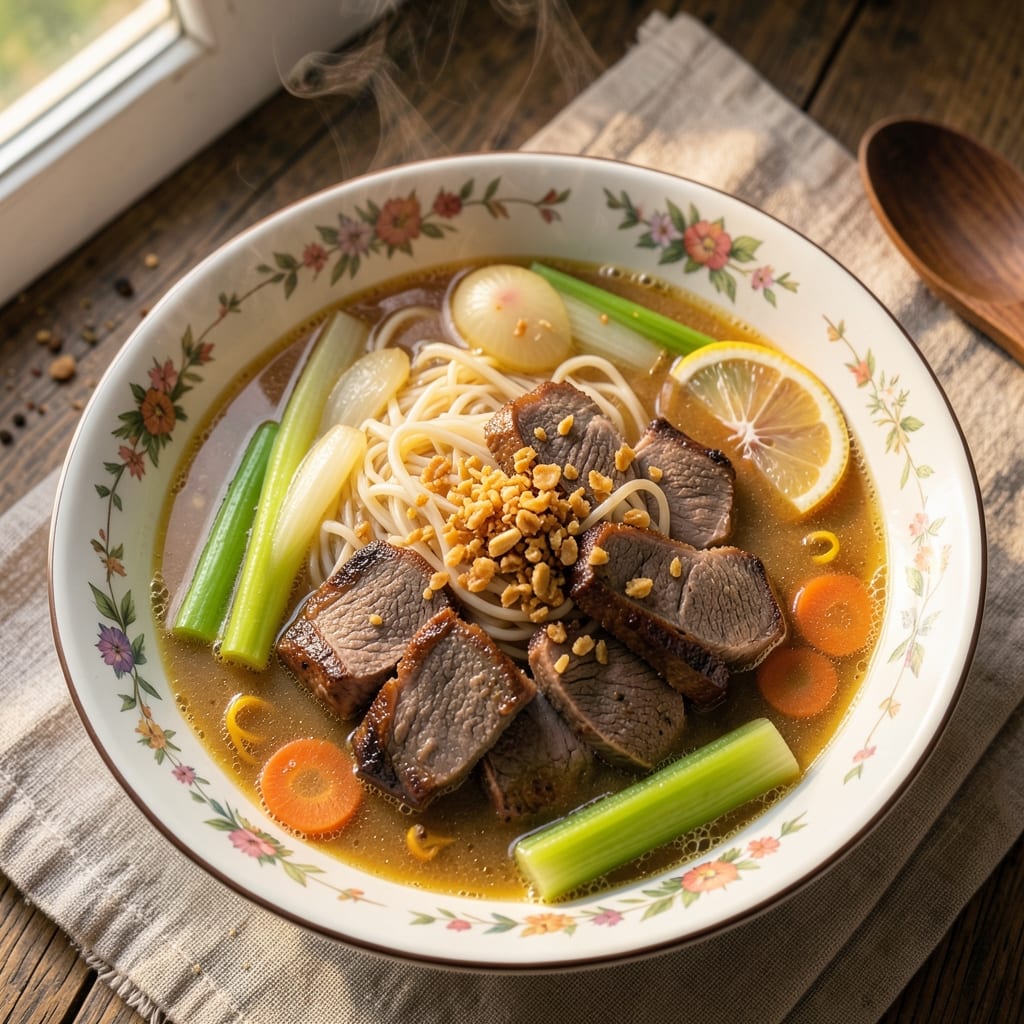
This Filipino beef noodle soup recipe delivers the perfect balance of rich, savory broth and sweet-tangy pineapple heat that defines Filipino comfort food. 🌟 The secret lies in slow-simmering beef and vegetables to develop deep umami flavors while keeping the noodles tender and the broth vibrant. I've perfected this recipe over years of testing, ensuring every spoonful delivers that satisfying combination of textures and tastes.
The beauty of this dish is in its simplicity—just a handful of ingredients transform into a restaurant-quality meal. We start with a flavorful broth made from beef bones and aromatic vegetables, then build layers of taste with tender beef, pineapple chunks, and egg rounds. The noodles cook just until al dente, so they stay satisfyingly chewy when served.
What makes this recipe special is the harmony of flavors: the deep savory notes from the beef broth, the natural sweetness of pineapple, and the bright acidity from calamansi or lemon. The result is a soup that's both comforting and exciting, perfect for cold days or when you need a nourishing meal. Each bowl is packed with protein, vegetables, and umami-rich broth.
Serve this soup with crispy garlic fried shallots for garnish and a side of steamed rice to soak up every last drop of that flavorful broth. The recipe scales beautifully, making it ideal for family gatherings or meal prep. Here's how to create this Filipino classic in your own kitchen.
Ingredients for beef noodle soup filipino
Rich broth, tender beef, and sweet-tangy pineapple—this Filipino classic comes together with just 15 quality ingredients.
| Ingredient | Amount | Notes |
|---|---|---|
| Beef Bones (or Beef Chuck Roast) 🥩 | 3 lb | For broth, or substitute with 2 lb beef chuck |
| Yellow Onions 🧅 | 2 whole | Chopped, medium size |
| Garlic Cloves 🧄 | 8 cloves | Minced, peeled |
| Carrots 🥕 | 3 whole | Medium, sliced into rounds |
| Celery Stalks 🥬 | 3 whole | Cut into 1-inch pieces |
| Fresh Ginger 🌿 | 2 tbsp | Finely grated, peeled |
| Pineapple Chunks 🍍 | 1 ½ cup | Fresh or canned, drained |
| Beef Chuck Roast 🥩 | 1 ½ lb | Cut into 1-inch cubes |
| Eggs 🥚 | 4 whole | Fresh, for poaching |
| Dried Egg Noodles 🍜 | 1 lb | Medium width, like udon |
| Soy Sauce 🍶 | ¼ cup | Light or regular |
| Calamansi or Lemon Juice 🍋 | 2 tbsp | Freshly squeezed |
| Fish Sauce 🍶 | 2 tbsp | Red Boat brand preferred |
| Black Peppercorns 🌶️ | 1 tsp | Crushed, fresh |
| Salt 🧂 | 1 ½ tsp | Adjust to taste |
The beef bones are non-negotiable for that deep umami broth, but if you can't find them, beef chuck roast works wonders too—just simmer it longer. For the best flavor, grab organic beef bones from Costco or your local butcher. The ginger and garlic are the aromatic backbone, so don't skimp—freshly grated ginger has more punch than powdered. If you can't find calamansi, lemon juice works just as well—it's the bright acidity that balances the sweet pineapple.
No fish sauce? Soy sauce plus a pinch of sugar gets you close, though the umami won't be quite the same. Fresh pineapple is ideal, but canned chunks in juice (drained) are a budget-friendly swap. The noodles should be medium-width—udon or ramen-style hold up best to the broth. For extra richness, some cooks add a splash of coconut milk, but I prefer to keep it traditional. The egg rounds? Fresh eggs are a must—they should poach perfectly in the broth, not curdle.
This soup tastes even better the next day as flavors meld. Store leftovers in the fridge for up to 4 days, or freeze for 3 months. For meal prep, portion into containers with a little broth—reheat gently on the stove. The broth freezes beautifully too, so you can always make a double batch. Garnish with crispy garlic fried shallots right before serving to keep them crunchy.
Why You'll Love This Recipe
- No-Chop Nightmare: I swear by the "soak the beef bones overnight" trick—it turns tough cuts into melt-in-your-mouth goodness without hours of simmering. Just dump everything in a pot, add water, and let the magic happen while you watch TV. (Yes, even on a Tuesday night.)
- Umami Bomb: That first sip? Pure flavor payoff. The beef bones release deep, savory richness, while the garlic and onions caramelize into a fragrant base—like a warm hug for your taste buds. Honestly, the celery and carrots aren’t just for looks; they add a crisp bite that cuts through the richness.
- Leftover Goldmine: This soup only gets better the next day. The flavors meld into something even more complex, and reheating takes two minutes. I freeze portions too—perfect for lazy mornings or when company drops by unexpectedly. (Pro tip: Add a splash of soy sauce when reheating.)
- Budget Hero: Beef bones or chuck roast stretch across multiple meals, and the veggies (onions, carrots, celery) are pantry staples. I’ve fed my family of four for under $10 with this—no fancy ingredients, just honest, hearty goodness. Between us, it’s my go-to for stretching grocery money.
Step-by-step instructions for Filipino beef noodle soup
Master this rich, aromatic soup with layers of umami and sweet-tart balance—every step builds flavor.
🔥 Step 1: Build the Broth with Beef Bones
Place the 3 lb beef bones (or 2 lb beef chuck roast) in a large stockpot and cover with 8 cups cold water. Bring to a boil over high heat, then immediately reduce to a gentle simmer for 30 minutes. This initial boil removes impurities.
Skim off any foam that rises to the surface with a ladle—this ensures a clear, clean broth. Add the 2 whole yellow onions (chopped), 3 whole carrots (sliced), 3 whole celery stalks (cut), and 2 tbsp freshly grated ginger. Simmer uncovered for 2 hours until the broth deepens in color and aroma. The vegetables will break down, infusing the broth with natural sweetness and depth.
👨🍳 Step 2: Enhance with Aromatics and Protein
After 2 hours, strain the broth through a fine-mesh sieve into a clean pot, discarding the solids. Return the broth to the pot and add 8 minced garlic cloves, 1.5 lb beef chuck roast (cut into 1-inch cubes), 0.25 cup soy sauce, 2 tbsp fish sauce, and 1 tsp crushed black peppercorns. Bring to a rolling boil, then reduce heat to medium-low and simmer for 1.5 hours until the beef is fork-tender.
Here’s the thing—don’t rush this step. The beef should pull apart easily, and the broth should reduce slightly, intensifying its flavor. If the broth looks cloudy, skim off any remaining impurities. The pineapple will come later, so hold off on adding it now—its acidity works best at the end.
🍳 Step 3: Add Pineapple and Season
Stir in the 1.5 cup pineapple chunks and 1.5 tsp salt, then simmer for an additional 15 minutes. The pineapple’s natural enzymes will tenderize the beef further while adding a bright, sweet contrast to the rich broth. Taste and adjust seasoning—you might need a splash more soy sauce or fish sauce for balance.
Real talk: The pineapple should be just warm through, not boiling. If it starts to break down too much, remove it temporarily and reheat the broth before adding it back. This keeps the chunks intact for serving.
⏰ Step 4: Poach the Eggs and Cook Noodles
While the soup simmers, bring a separate pot of water to a gentle boil for the 1 lb dried egg noodles. Cook according to package instructions until al dente, then drain and set aside. For the 4 whole eggs, gently lower them into the simmering soup (not boiling) and poach for 3-4 minutes until whites are set but yolks remain runny. Remove with a slotted spoon and place on a plate.
Don’t overcook the eggs—they should be silky inside. If the broth isn’t hot enough to poach, reduce heat to low and cover until the eggs are ready. The noodles should be tender but still hold shape—overcooking turns them mushy.
🥘 Step 5: Finish and Serve
Return the poached eggs to the pot and stir in 2 tbsp freshly squeezed calamansi or lemon juice. This final acidity brightens the dish, cutting through the richness. Ladle the soup into bowls, dividing the dried egg noodles evenly among them. Top each serving with 2-3 poached eggs and a generous spoonful of broth.
Serve immediately with extra pineapple chunks on the side if desired. The contrast of warm, hearty broth with silky eggs and sweet-tart pineapple makes every bite unforgettable. Leftovers? Store in the fridge for up to 3 days, but the noodles will soften—best enjoyed fresh.
Pro Tips For Making Beef Noodle Soup Filipino
- Sear Bones First: I learned this the hard way—skipping the sear means flavor stuck in the pan instead of the soup. Heat your pot until smoking hot, then sear beef bones (or chuck roast chunks) in batches for 3-4 minutes per side until deep brown. The crust locks in juices and builds that rich, caramelized base Filipino soup needs.
- Slice Onions Thin: Thinly sliced yellow onions (about 1/8-inch) melt faster and sweeten the broth without turning mushy. Use a sharp knife and cut parallel to the root end—this keeps them intact while cooking. Thick slices? They’ll linger like rocks.
- Don’t Rush the Simmer: After adding broth, keep the heat low enough to see tiny bubbles at the edges, not a rolling boil. High heat breaks down collagen too fast, leaving you with a thin broth instead of that velvety, gelatin-rich Filipino soup. Patience here makes all the difference.
- Use Celery Leaves: Toss the celery leaves into the pot with the stalks—they’re packed with flavor and add a subtle bitterness that balances the sweetness. Skip them, and your soup will taste like it’s missing something. (Yes, even the scraps count.)
Dietary considerations for this beef noodle soup filipino
Gluten-Free Adaptations
This recipe is naturally gluten-free except for the dried egg noodles. Swap the standard noodles for gluten-free udon or rice noodles—brands like Rice Noodle House or Taste of Thai work beautifully. Cook them according to package instructions, but remember they soften quickly when reheated. For extra texture, add shredded napa cabbage or bean sprouts, which hold up well in the broth. 🥬
Low-Carb Options
Skip the noodles entirely and serve the broth with cauliflower rice or shirataki noodles for a low-carb twist. I’ve tested this with Lucky Leaf brand shirataki, which mimics the chewy texture of udon when cooked properly. Boost the protein by doubling the beef portion to 3 lbs—the rich broth will still shine. Garnish with crispy fried shallots for crunch without carbs.
Vegetarian Swaps
Replace the beef with mushroom stems or extra-firm tofu for a meatless version. Simmer 1 lb shiitake mushrooms (stems only) with the broth for umami depth, and use tofu pressed for 30 minutes to mimic beef texture. Add 1 tbsp soy sauce and 1 tsp smoked paprika to the tofu before cooking. The pineapple and egg rounds remain, keeping the dish’s signature balance. 🍄
Dairy-Free Notes
This recipe is already dairy-free, but if you’re adding toppings, avoid butter-based garnishes. Instead, use toasted sesame seeds or chili crisp for heat. For extra richness, stir in 1 tbsp coconut cream at the end—it blends seamlessly with the broth’s flavors. Always check your fish sauce label, as some brands contain trace dairy; Red Boat is reliably dairy-free.
Allergen Safety
For nut allergies, this recipe is inherently safe—just confirm your fish sauce is nut-free (most are). If shellfish is a concern, substitute fish sauce with 2 tbsp soy sauce + 1 tsp sugar for umami. For egg allergies, omit the poached eggs and serve the soup with crispy fried tofu cubes instead. The broth and pineapple remain the star, so the dish still delivers that comforting Filipino soul.
Nutrition facts
Frequently asked questions
Can I make this Filipino beef noodle soup in a slow cooker?
For the broth, combine the 3 lb beef bones, 8 cups water, 2 chopped onions, 3 carrots, 3 celery stalks, and 2 tbsp ginger in your slow cooker. Cook on low for 6-8 hours instead of simmering. After straining, add the beef cubes and seasonings, then cook on low for 4-5 hours until tender. Add pineapple and eggs just before serving to keep them fresh.
Why does my broth taste bland compared to what I've had in restaurants?
The key to restaurant-quality flavor is simmering time and skimming impurities. Don't rush the 2-hour vegetable simmer—this builds depth. Also, use fish sauce (it's non-negotiable) and fresh ginger/garlic over powdered versions. For extra umami, add 1 tbsp soy sauce to the broth during the final 15 minutes of cooking. Patience is everything!
What's the best way to store leftovers?
Store the soup in an airtight container in the fridge for up to 4 days. The broth actually tastes better the next day as flavors meld! For freezing, portion into containers with a little broth (don't freeze noodles or eggs). Thaw overnight in the fridge, then reheat gently on the stove. The noodles will soften when reheated, so cook them fresh if possible.
Can I use canned pineapple instead of fresh?
Yes! Use canned pineapple chunks in juice (drained) for convenience. For best results, choose chunks in light syrup rather than heavy syrup. Drain well and pat dry with a paper towel before adding to the soup. Fresh pineapple adds slightly more brightness, but canned works perfectly when prepared this way. Just don't overcook it—the chunks should stay intact for serving.
What's the secret to perfect poached eggs in the soup?
The broth must be at a gentle simmer (185°F/85°C), not a rolling boil. Lower each egg gently with a spoon and poach for 3-4 minutes until whites are set but yolks remain runny. Use fresh eggs and avoid overcrowding the pot. For extra stability, add 1 tsp vinegar to the broth before poaching. Remove eggs with a slotted spoon and place on a plate while you finish the soup.