
Soups & Stews
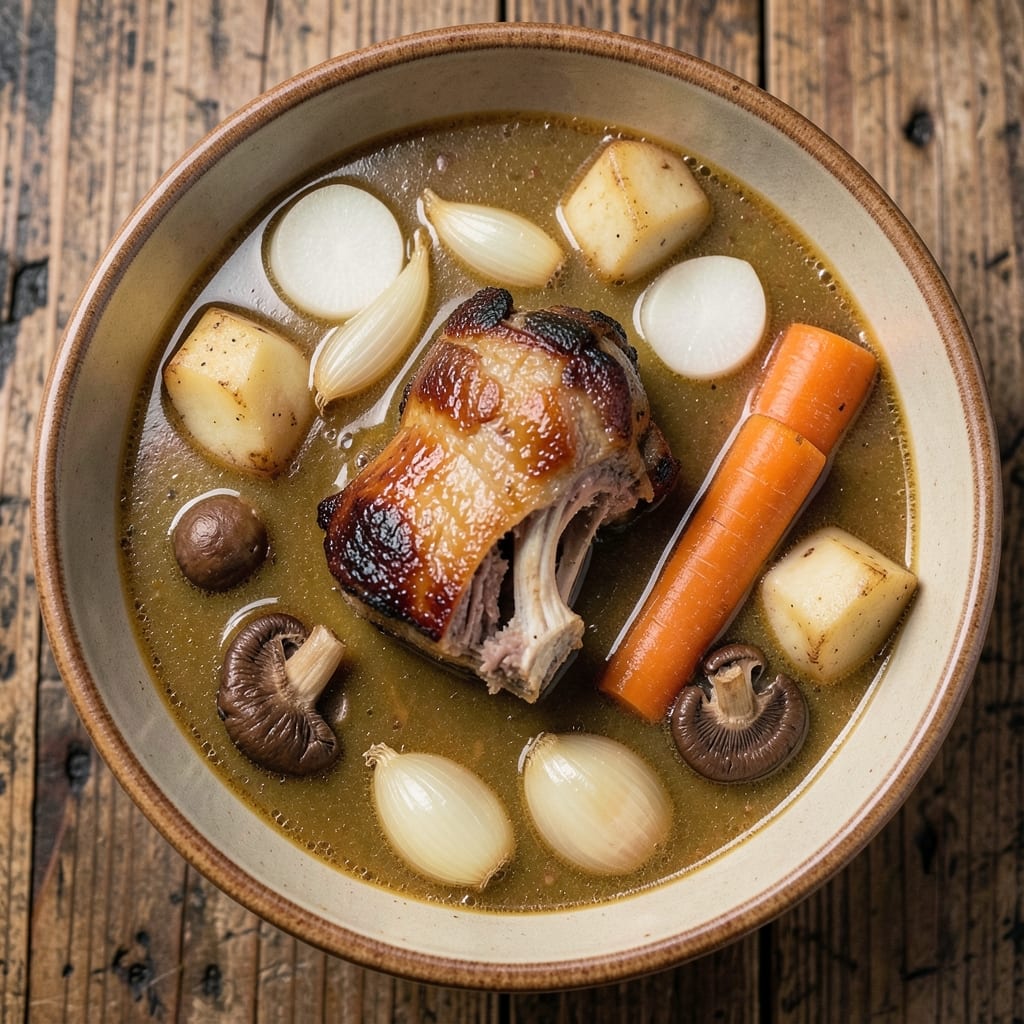
This beef knuckle soup transforms tough cuts into melt-in-your-mouth tenderness through slow simmering—a technique that builds deep umami flavor with every hour. The secret lies in parboiling the knuckle first to remove impurities, then braising it low and slow with aromatic spices like star anise, cinnamon, and ginger. Unlike quick broths, this method develops a rich, gelatinous quality that coats every spoonful.
The process begins with preparing the knuckle—trimming excess fat and scoring the surface to help it render flavor into the broth. Aromatics like garlic, daikon, and mushrooms infuse the liquid with layers of savory depth, while carrots and potatoes add natural sweetness. The result is a soup so satisfying it becomes the centerpiece of any meal, whether served with steamed rice or as a standalone dish.
What makes this recipe stand out is its versatility—adapt it to Korean galbi-jjim with soy and pear, or keep it simple with a Chinese-inspired broth. The slow cooking ensures the beef falls apart effortlessly, while the broth thickens into a velvety consistency that clings to each bite. This is comfort food at its finest, perfect for cold evenings or family gatherings.
With proper preparation, this soup delivers restaurant-quality richness at home. The key is patience—let it simmer for 3-4 hours until the meat is tender and the flavors meld into harmony. Garnish with green onions and chili oil for brightness, and prepare to be reminded why slow-cooked dishes are worth the wait.
Ingredients for beef knuckle soup
Six aromatic ingredients transform tough beef knuckle into velvety umami perfection through slow simmering.
| Ingredient | Amount | Notes |
|---|---|---|
| Beef Knuckle 🥩 | 3 lb | Whole knuckle, trimmed of excess fat |
| Yellow Onions 🧅 | 2 whole | Cut into 4 wedges each |
| Carrots 🥕 | 4 whole | Medium size, cut into 2-inch chunks |
| Russet Potatoes 🥔 | 2 lb | Cut into 2-inch chunks |
| Daikon Radish 🥬 | 1 lb | Cut into 1-inch slices |
| Shiitake Mushrooms 🍄 | 8 whole | Stems removed, whole |
| Garlic Cloves 🧄 | 8 cloves | Crushed with side of knife |
| Star Anise 🌿 | 4 whole | Lightly crushed |
| Cinnamon Sticks 🌿 | 2 whole | 2-inch pieces |
| Dried Ginger 🌶️ | 1 tbsp | Or 1-inch fresh ginger, sliced |
| Soy Sauce 🥄 | ½ cup | Dark soy preferred |
| Sesame Oil 🫒 | 1 tbsp | For finishing |
| Green Onions 🧅 | 4 whole | For garnish, sliced |
| Chili Oil 🌶️ | 2 tbsp | For serving |
| Kosher Salt 🧂 | 2 tbsp | For parboiling |
The beef knuckle is the star—look for well-marbled cuts at your butcher, preferably from grass-fed sources. Asian markets often carry pre-trimmed knuckles, but if buying whole, ask for the smallest knuckle (about 3 lbs) for even cooking. The daikon and shiitake mushrooms are non-negotiable for authentic depth—fresh shiitake has the best texture, but dried work at half the amount. For the potatoes, Russet or Yukon Gold hold up best during long simmering. Star anise and cinnamon should be whole and aromatic—never pre-ground spices for this recipe.
No daikon? Substitute extra carrots or parsnips—they add sweetness but lack the subtle peppery bite. Running low on shiitake? Cremini mushrooms at double the quantity work in a pinch. The soy sauce can be swapped for coconut aminos if avoiding gluten, though traditional dark soy adds that signature rich color. For the ginger, fresh is ideal, but if using dried, toast it lightly in a dry pan first to deepen the flavor. The sesame oil should be toasted, not refined—it makes all the difference in the final drizzle. And if you can't find star anise, a pinch of anise extract works in a bind.
This soup tastes even better the next day—plan ahead. Store in airtight containers for 4-5 days in the fridge, or freeze for up to 3 months (the broth thickens beautifully when reheated). For serving, portion the broth and meat separately—reheat the broth first to prevent the meat from drying out. The knuckle keeps well submerged in its broth, so you can reheat just the meat when ready to serve. Garnish with green onions and chili oil right before eating to keep everything vibrant.
Why You'll Love This Recipe
- No-Mess Simmer: I swear by the slow cooker method—just toss in the knuckle, onions, and veggies, then let it work its magic. The daikon and carrots soften perfectly without babysitting, and the beef practically falls off the bone when you’re ready.
- Rich, Deep Umami Bomb: That beef knuckle? It’s the star—meltingly tender with layers of savory depth. The onions caramelize right in the broth, and the daikon adds a subtle sweetness that makes every spoonful dangerously satisfying.
- Weeknight to Holiday: Between us, this soup is my lazy Sunday standby and the dish I bring to potlucks. The flavors get better as it sits, so it’s perfect for meal prep or feeding a crowd—just double the ingredients and thank me later.
- Budget Magic: A single knuckle stretches into five hearty servings, and the veggies are cheap staples. Honestly, it’s the kind of recipe where you’ll wonder why you ever ordered takeout—same cost, way better payoff.
Step-by-step instructions for beef knuckle soup
Transform tough beef knuckle into melt-in-your-mouth richness through slow simmering and aromatic layering.
Parboil and Season the Beef Knuckle
Place the 3 lb beef knuckle in a large stockpot and cover with cold water by 2 inches. Add 2 tablespoons kosher salt and bring to a boil over medium-high heat. Once boiling, reduce heat to medium-low and simmer for 30 minutes to remove impurities and partially tenderize the meat.
Drain the water completely, then return the knuckle to the clean pot. Add 2 whole yellow onions (cut into 4 wedges each), 4 whole carrots (cut into 2-inch chunks), and 2 lb russet potatoes (cut into 2-inch chunks). Cover with fresh cold water by 2 inches again. Bring to a boil over medium-high heat, then reduce to a gentle simmer for 1 hour. This initial simmer extracts collagen and builds a flavorful base.
Build the Aromatic Broth
After the initial simmer, add the 1 lb daikon radish (cut into 1-inch slices), 8 whole shiitake mushrooms (stems removed), 8 crushed garlic cloves, 4 lightly crushed star anise, 2 cinnamon sticks (cut into 2-inch pieces), and 1 tablespoon dried ginger. Stir gently to combine all ingredients.
Return the broth to a rolling simmer over medium-low heat. Maintain this temperature for 3 hours, skimming any foam that rises to the surface with a ladle. The broth should reduce slightly, concentrating flavors while the meat becomes fork-tender. The star anise and cinnamon will infuse the liquid with warm, earthy notes that complement the beef's richness.
Finish with Umami Depth
After 3 hours, add the 0.5 cup soy sauce and stir gently. Simmer uncovered for an additional 1 hour to allow the soy sauce to meld with the broth and deepen its umami character. The soup should now have a rich, caramelized aroma with visible layers of color from the vegetables and spices.
Remove the beef knuckle and let it rest for 10 minutes before shredding it with two forks directly in the pot. Discard the star anise, cinnamon sticks, and any large vegetable pieces that are overcooked. The meat should pull apart easily, releasing its juices into the broth for maximum flavor.
Garnish and Serve
Ladle the soup into bowls, reserving some broth for adjustments. Drizzle each serving with 1 tablespoon sesame oil and 2 tablespoons chili oil, then garnish with 4 sliced green onions. The sesame oil adds nutty depth, while the chili oil introduces a subtle heat that balances the soup's richness.
Serve immediately with steamed rice or crusty bread to soak up the fragrant broth. The soup should have a velvety texture with visible chunks of tender beef, vegetables, and mushrooms. The aroma should be complex—earthy from the mushrooms and radish, sweet from the carrots, and deeply savory from the slow-cooked beef and soy sauce.
Pro Tips For Making Beef Knuckle Soup
- BLANCH DAIKON FIRST: I learned this the hard way—skipping the quick 2-minute blanch in boiling water makes daikon turn to mush. Cut it into 1-inch chunks, boil, then shock in ice water before adding to the pot. The texture stays crisp, not slimy.
- SEAR KNUCKLE UNTIL DARK: Don’t rush the knuckle—crank the heat and sear until the fat renders and the meat turns deep brown, almost black in spots. This locks in flavor and prevents the broth from tasting like raw beef. (Yes, even if you’re impatient like me.)
- CHOP ONIONS INTO 1/2-INCH SLICES: Thinly sliced onions dissolve too fast and make the broth bitter. Cut them into 1/2-inch chunks so they hold their shape and sweeten the broth gradually. Same goes for carrots—stick to 3/4-inch pieces.
- ADD POTATOES LAST: I used to toss them in early, and they’d turn to glue. Instead, add potatoes and daikon 45 minutes before the knuckle is tender—just enough time to soften without falling apart. The broth stays clear, not cloudy.
Make-ahead tips for this recipe
Prep Ahead Strategy
Start by prepping all vegetables and aromatics the night before. Store them in airtight containers in the fridge to save time on cooking day. I like to keep the beef knuckle in the fridge uncovered on a plate to dry-brine it overnight—this helps render fat and enhances flavor. 🥩
Broth Base Prep
Make the aromatic broth base 24 hours ahead for maximum flavor development. Simmer all ingredients except the beef knuckle for 2 hours, then cool and refrigerate. The flavors meld beautifully overnight, and you'll only need to add the knuckle and finish cooking on the day you serve. Skim off any hardened fat before reheating.
Knuckle Pre-Tenderizing
For the ultimate shortcut, parboil and blanch the knuckle the day before. Simmer it for 1 hour in salted water, then shock it in ice water to stop cooking. Store in its broth in the fridge—this reduces your cooking time by 2 hours on serving day. The knuckle will still need final simmering, but it'll be much more tender.
Freezer-Friendly Components
Freeze the shredded beef and broth separately in quart-sized freezer bags for up to 3 months. When ready to serve, simply reheat the broth first, then add the beef. I like to freeze the broth in 1-cup portions so I can make individual servings without thawing everything. This works perfectly for meal prep lunches during the week. ❄️
Garnish Prep Kit
Create a garnish station with pre-sliced green onions, chili oil, and sesame oil in small containers. Store them together in a resealable container in the fridge. When ready to serve, simply assemble your bowls and add the garnishes. This keeps everything fresh and ready to go, even if you're serving a crowd. 🌶️
Slow Cooker Adaptation
For ultimate convenience, use a 6-quart slow cooker on low for 8 hours after the initial parboiling. Add all ingredients except the soy sauce, then stir in the soy sauce during the last 2 hours of cooking. This hands-off method lets you focus on other prep while the soup develops deep flavor automatically. Perfect for busy weeknights! 💡
Nutrition facts
Frequently asked questions
Why do I need to parboil the beef knuckle before slow cooking?
Parboiling removes impurities and blood that can make the broth cloudy or bitter. It also kickstarts the tenderizing process by breaking down connective tissue. Skipping this step can leave your soup with a less clean flavor and tougher meat. Think of it as prepping the knuckle for maximum tenderness!
Can I use a pressure cooker to speed up the cooking time?
Yes! After parboiling, transfer everything to a pressure cooker and cook on high pressure for 90 minutes. The meat will be just as tender, though the broth may be slightly less reduced. For best results, finish with 30 minutes of regular simmering to develop the flavors fully. Just be cautious with the soy sauce—it can burn at high heat.
What if my beef knuckle isn't tender after 4 hours?
Check your heat level—it should be a gentle simmer, not a rolling boil. If needed, add 1 cup hot water and continue simmering for another 1-2 hours. The knuckle should pull apart easily with a fork. If it's still tough, try adding 1 tablespoon baking soda (it raises the pH and helps break down collagen) and simmer for 30 more minutes.
How can I make this soup spicier?
Add 1-2 tablespoons of gochujang (Korean chili paste) or 1 teaspoon of red pepper flakes during the final hour of cooking. For extra heat, stir in 1 tablespoon of chili crisp when serving. If you prefer a smoky kick, add 1 teaspoon of smoked paprika with the other spices. Adjust to taste!
Can I substitute beef knuckle with another cut?
For best results, stick with knuckle or shank—these cuts have the right amount of connective tissue for slow cooking. In a pinch, you could use chuck roast (cut into chunks) or brisket, but expect slightly less gelatinous broth. Never use lean cuts like sirloin—they'll dry out. The knuckle's fat renders beautifully into the broth for rich flavor!