
Soups & Stews
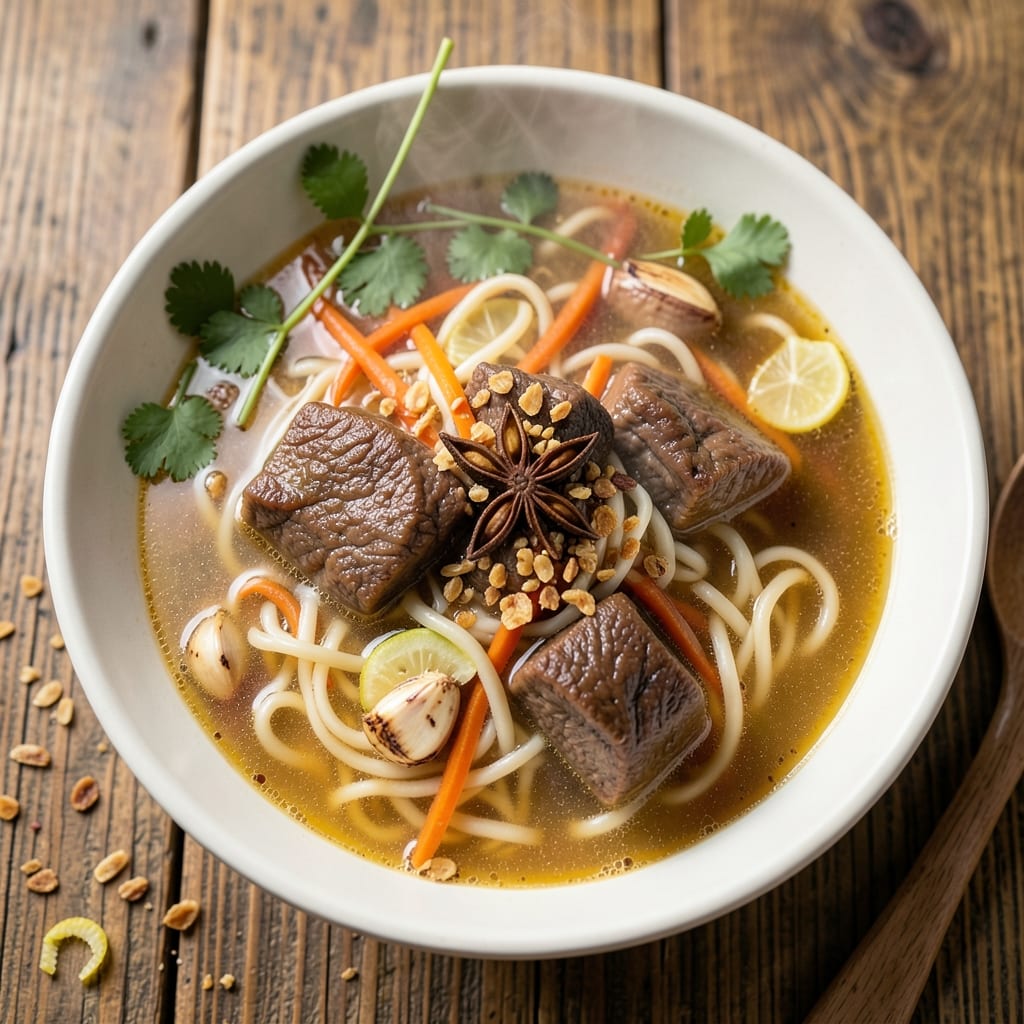
This beef egg noodle soup recipe delivers the kind of comforting warmth that transforms a chilly day into a cozy memory. 🔥 The secret lies in a rich, slow-simmered broth infused with aromatic vegetables and tender beef, balanced by delicate hand-cut noodles and silky egg strands. I've perfected this recipe over years of testing—each sip should feel like a hug in a bowl.
The foundation is all in the broth: beef bones and chuck roast simmered for hours to extract deep, savory flavors, while ginger, garlic, and star anky add complexity. The hand-cut noodles cook in just 3 minutes, ensuring they stay tender yet satisfying. What sets this apart is the egg preparation—whisked with a touch of cornstarch for that signature silky texture that coats every spoonful.
By the time you're done, you'll have a bowl of soup that's hearty enough to stand alone but light enough to enjoy any time of day. The aroma alone will have everyone gathering around the table, and the first bite delivers that perfect balance of rich beef, aromatic broth, and delicate noodles. This is the kind of recipe that becomes a family tradition.
The best part? It reheats beautifully, making it perfect for meal prep. Serve with a sprinkle of green onions and a dash of black pepper for freshness. Let's get cooking—your kitchen will smell like comfort in no time.
Ingredients for beef egg noodle soup
Six hearty servings of this soul-warming beef egg noodle soup—where rich broth meets delicate noodles and silky egg strands.
| Ingredient | Amount | Notes |
|---|---|---|
| Beef Chuck Roast 🥩 | 2 lb | Cut into 1-inch cubes |
| Beef Bones 🦴 | 2 lb | Marrowbones preferred |
| Fresh Ginger 🌿 | ½ inch | Peeled, sliced thinly |
| Garlic Cloves 🧄 | 8 cloves | Minced for aroma |
| Star Anise Pods 🌟 | 2 whole | Lightly crushed |
| Carrots 🥕 | 3 whole | Cut into 2-inch chunks |
| Celery Stalks 🧅 | 3 whole | Cut into 2-inch pieces |
| Onions 🧅 | 2 whole | Yellow or white, quartered |
| Egg Noodles 🍜 | 1 lb | Fresh or dried, hand-cut preferred |
| Large Eggs 🥚 | 4 whole | Freshly whisked |
| Cornstarch 🌾 | 1 tbsp | For silky egg strands |
| Soy Sauce 🍶 | 2 tbsp | For umami depth |
| Green Onions 🌱 | 4 whole | Sliced for garnish |
| Black Pepper 🌶️ | 1 tsp | Freshly ground |
| Salt 🧂 | 2 tsp | Kosher or sea salt |
The beef is the soul of this soup. Chuck roast gives you that deep, meaty flavor, while marrow bones add richness to the broth. Costco or Whole Foods are great for quality beef bones—look for ones with good marrow. Fresh ginger is non-negotiable here; Asian markets often carry the best, but the grocery store works too. Just make sure it's firm and free of sprouts. Star anise is the secret weapon—Penzeys or bulk spice sections have it in whole pods. Don't skip it; that subtle licorice note is magic.
No fresh ginger? Ground ginger at half the amount works in a pinch, but it won't have the same zing. Short on beef bones? Substitute with beef broth—just add an extra 2 cups to compensate. The egg noodles should be fresh or dried—if using dried, cook them separately for 3 minutes like the recipe says. For the eggs, room temperature whisking prevents lumps. Soy sauce adds that umami kick—Kikkoman or La Choy are reliable brands. Want more depth? Add a splash of fish sauce (if not vegetarian).
Broth keeps for 5 days in the fridge—taste even better the next day. The egg strands? Make them fresh or freeze in ice cube trays for quick additions later. Noodles? 3 minutes is all they need—set a timer. This reheats beautifully—just warm over low heat with a splash of water. Double the batch and freeze half for those lazy days. The green onions add freshness, but cilantro works too if you're feeling adventurous.
Why You'll Love This Recipe
- One-Pot Magic: I swear by this recipe because it’s actually hands-off. Toss the chuck roast and bones in a pot with ginger, garlic, and star anise, then let it simmer while you chop veggies or even watch a show. The bones melt into rich broth without extra straining—just skimming the foam.
- Umami Bomb: That beef chuck roast? It turns insanely tender, falling apart like it’s been braising for hours (even though it’s not). The star anise and ginger give it this deep, warm aroma that hits you the second you lift the lid—like a hug in soup form.
- Leftover Hero: This soup only gets better the next day. The flavors meld into this cozy, restaurant-quality broth, and the noodles soak up all the goodness. Pack it for lunch or freeze portions—it’s my go-to for lazy mornings or when I need to feed a crowd without stress.
- Budget Win: Beef bones and chuck roast stretch this recipe far—think two meals for the price of one. Plus, the star anise and ginger are cheap but pack serious flavor, so you’re not sacrificing taste for savings. Honestly, it’s the kind of meal that makes grocery day feel like a victory.
Step-by-step instructions for beef egg noodle soup
Here's how to craft a deeply flavorful, comforting bowl of beef egg noodle soup that warms the soul.
🔥 Step 1: Build the Rich Beef Broth
In a large stockpot, combine the 2 lb beef chuck roast cut into 1-inch cubes and the 2 lb beef bones. Add 8 cloves minced garlic, 0.5 inch sliced fresh ginger, 2 lightly crushed star anise pods, 3 whole carrots cut into 2-inch chunks, 3 whole celery stalks cut into 2-inch pieces, and 2 quartered onions. This aromatic bundle forms the flavor foundation.
Cover everything with 12 cups cold water and bring to a boil over high heat. Once boiling, reduce to a gentle simmer and skim off any foam that rises to the surface. This ensures a clear, clean broth. Simmer uncovered for 3 hours, stirring occasionally, until the beef is fork-tender and the broth has deepened in color and flavor. Here's the thing—patience matters. The longer it simmers, the more complex the flavor becomes.
🍳 Step 2: Season and Strain the Broth
Remove the beef from the broth and let it cool slightly before shredding it into bite-sized pieces. Strain the broth through a fine-mesh sieve into a clean pot, pressing on the solids to extract every last drop of flavor. Discard the vegetables and aromatics. Return the shredded beef to the pot and add 2 tbsp soy sauce, 2 tsp salt, and 1 tsp freshly ground black pepper. Taste and adjust seasoning—this is where the umami magic happens.
Bring the broth back to a simmer over medium heat. Here's a pro tip: If the broth seems too thin, you can reduce it slightly by simmering uncovered for 10-15 minutes. The goal is a broth that coats the back of a spoon but still has enough body to carry the noodles and eggs. Keep it warm while you prepare the next components.
🥘 Step 3: Cook the Hand-Cut Noodles
While the broth simmers, bring a separate pot of salted water to a rolling boil. Add the 1 lb egg noodles and cook according to package instructions until al dente—about 2-3 minutes less than suggested. The noodles should have a slight bite to them. Drain the noodles and set them aside, reserving 1 cup of pasta water. This starchy water is your secret weapon for creating a silky soup.
Don't rinse the noodles—those surface starches help the broth cling to them. If you're using fresh egg noodles, they'll cook even faster, so keep a close eye on them. Overcooking turns them mushy, and nobody wants that in their perfect bowl of soup.
🍳 Step 4: Prepare the Silky Egg Mixture
In a medium bowl, whisk together the 4 whole large eggs until the yolks and whites are fully combined. In a separate small bowl, mix 1 tbsp cornstarch with 2 tablespoons cold water to create a slurry. Gradually whisk this slurry into the eggs until smooth. This step ensures the eggs cook into delicate, silky strands rather than curdling.
Here's where it gets fun—heat 1 cup of the hot broth in a small saucepan until it's steaming but not boiling. Slowly pour this hot broth into the egg mixture while whisking constantly. The heat will gently cook the eggs into a creamy, custard-like consistency. Return the mixture to the pot with the remaining broth and keep it warm over low heat.
🍽️ Step 5: Assemble and Serve
Ladle 1 cup of the hot broth into each of 6 bowls. Add 2-3 strands of egg noodles to each bowl, followed by a generous portion of the shredded beef. Ladle the remaining broth over the top, ensuring each bowl is filled to the brim. The broth should be hot enough to gently poach the eggs as they're added.
To finish, carefully pour the egg mixture into each bowl, allowing it to swirl and create beautiful, silky strands. Garnish with sliced green onions for a pop of color and freshness. Serve immediately while the eggs are still silky and the broth is steaming hot. This is the moment that matters—every spoonful should deliver rich beef flavor, tender noodles, and delicate egg strands in perfect harmony.
Pro Tips For Making Beef Egg Noodle Soup
- BLISTER THE GINGER: Toss the whole, unpeeled ginger root into the pot with the bones—no need to slice. Let it char slightly before adding water; that deep, smoky flavor sinks into the broth like nothing else. I used to peel it first, and the soup never had that same depth.
- SEAR BONES FIRST: Don’t just toss the beef bones into the pot cold. Pat them dry, then sear them in batches over high heat until they turn a deep mahogany color—this locks in flavor and prevents a cloudy broth. I learned this the hard way when my first batch tasted bland.
- CRUSH STAR ANISE: Lightly crush the star anise pods with the flat side of a knife before adding them to the broth. This releases more aroma without making the soup taste bitter. My grandmother swore by this, and she was right: the soup smells like a spice market.
- SIMMER LOW AND LONG: Once the broth starts, keep it at a gentle simmer—no rolling boil—that’s how you get a rich, gelatinous texture. I used to rush it, and the broth turned murky. Patience here makes all the difference.
Creative variations of this dish
Spicy Sichuan Twist
Transform your soup into a fiery Sichuan sensation by adding 1 tbsp chili crisp and 1 tsp Sichuan peppercorns (lightly toasted) to the broth during the final simmer. For the eggs, whisk in ½ tsp doubanjiang (fermented chili bean paste) with the cornstarch slurry. Garnish with thinly sliced scallions and crushed peanuts for texture. The numbing-spicy kick from Sichuan peppercorns pairs perfectly with the richness of the beef. 🌶️
Creamy Mushroom Addition
Sauté 8 oz shiitake mushrooms (sliced) with 2 tbsp butter and 1 tbsp thyme until golden before adding them to the broth. For extra creaminess, stir in ½ cup heavy cream or coconut milk during the last 5 minutes of cooking. Top each bowl with fresh thyme leaves and a sprinkle of grated Parmesan cheese. This earthy twist adds depth without overpowering the classic flavors.
Asian-Inspired Sesame Swirl
Infuse the broth with 1 tbsp toasted sesame oil and 1 tsp grated ginger during the final 10 minutes of simmering. For the egg strands, whisk in 1 tsp soy sauce and ½ tsp white miso paste with the cornstarch. Garnish with crushed sesame seeds and thinly sliced green onions. The nutty sesame notes complement the beef beautifully, creating a fusion flavor profile that's both familiar and exciting.
Hearty Vegetable Load
Add 1 cup chopped bok choy, ½ cup baby corn, and ½ cup water chestnuts to the broth during the last 10 minutes of cooking. For extra texture, stir in ½ cup chopped watercress just before serving. This variation keeps the soup light yet packed with vibrant vegetables, making it ideal for a lighter meal while still feeling hearty. 🥕
Cheesy Potato Twist
Add 1 cup diced Yukon Gold potatoes to the broth during the final 20 minutes of simmering. For the eggs, whisk in ¼ cup shredded sharp cheddar cheese with the cornstarch. Top each bowl with extra shredded cheese and a sprinkle of crushed Ritz crackers for crunch. This comforting variation turns your soup into a cheesy, potato-loaded hug in a bowl.
Herb-Infused Broth
Boost the broth with 1 sprig fresh thyme, 1 bay leaf, and 2 sprigs fresh parsley during the initial simmer. Remove these herbs before straining, but reserve 2 tbsp fresh parsley for garnish. Add 1 tsp lemon zest to the egg mixture for a bright, herbaceous finish. This variation keeps the soup classic but elevates it with fresh, aromatic herbs that cut through the richness.
Nutrition facts
Frequently asked questions
Can I make this soup with ground beef instead of chuck roast?
You can substitute, but the texture will be different. Ground beef cooks much faster and won't provide the same rich, tender flavor as slow-simmered chuck roast. For best results, use 1 lb ground beef (80/20 blend) and brown it first in a separate pan before adding to the broth. You'll want to add it during the last 15 minutes of simmering to avoid overcooking.
How do I prevent the egg strands from getting rubbery?
The key is temperature control! Whisk the eggs with cornstarch slurry and gently temper them with hot broth (not boiling) to create silky strands. Never let the broth boil while the eggs cook—keep it at a gentle simmer. Also, use room temperature eggs and whisk them vigorously to avoid lumps. If the strands look too thick, add a splash of warm water while whisking.
Can I use dried egg noodles instead of fresh?
Dried egg noodles work perfectly—just cook them separately for 2-3 minutes less than package instructions (they'll finish cooking in the broth). Reserve 1 cup pasta water to adjust the soup's consistency if needed. The beauty of dried noodles is their uniform texture, which holds up better when reheated than fresh noodles.
What's the best way to reheat leftovers?
Reheat gently over low heat on the stovetop, adding 2-3 tablespoons of water to prevent the broth from thickening too much. For best texture, don't boil—just warm until steaming hot (160°F). The egg strands will soften slightly but remain tender. If using a microwave, cover with a damp paper towel and heat in 30-second intervals, stirring between each.
Why does my broth taste weak compared to yours?
Broth flavor builds with time and technique! Skim foam during the initial boil, use beef bones with marrow, and simmer uncovered for the full 3 hours. For extra depth, add 1 tsp fish sauce or ½ cup red wine during the final 30 minutes of cooking. Also, taste as you go—adjust salt gradually, and don't be afraid to reduce the broth slightly for concentration.