
Soups & Stews
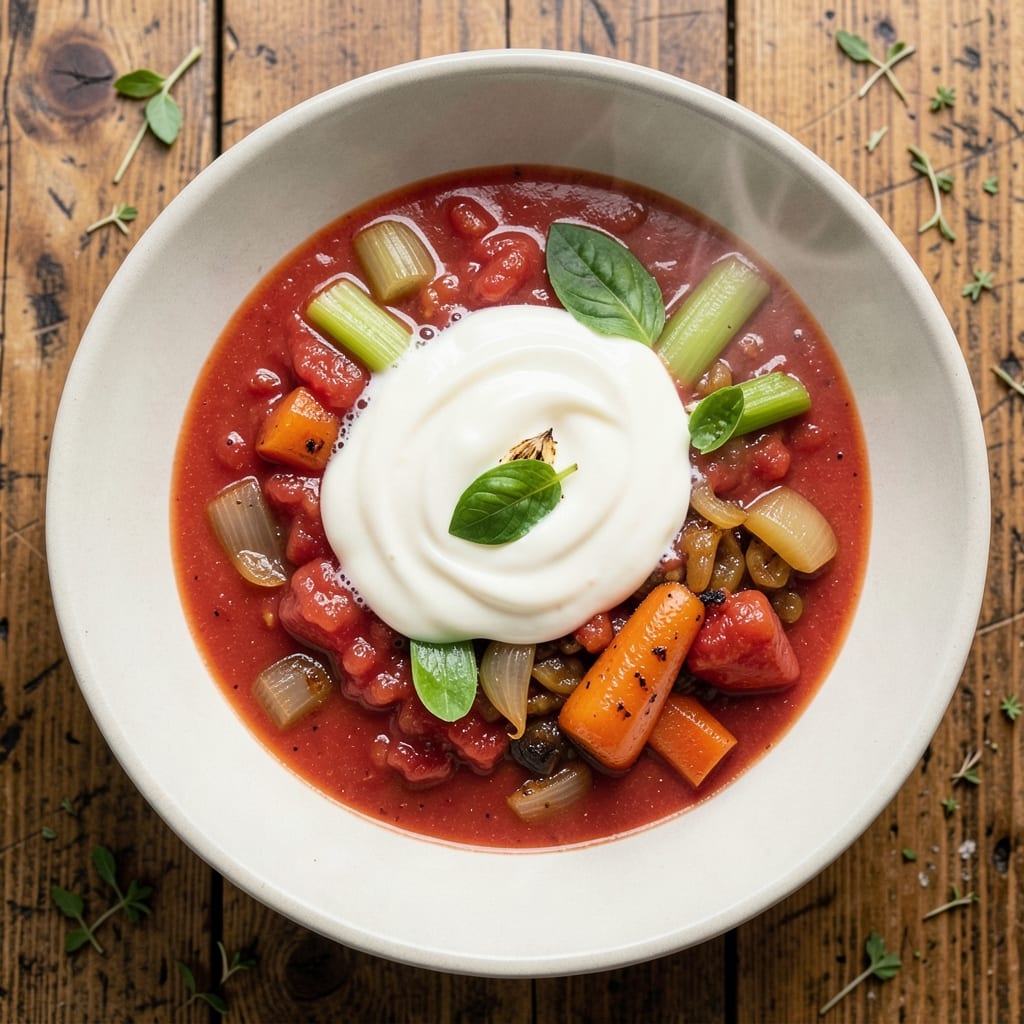
Beecher's flagship tomato soup recipe delivers that iconic restaurant-quality velvety texture and rich umami flavor we all crave. The secret lies in slow-simmered canned tomatoes, aromatic vegetables, and a perfect balance of cream and broth that creates that signature smoothness. This isn't just soup—it's comfort in a bowl, with depth of flavor that makes every spoonful satisfying.
What sets this recipe apart is the technique: simmering the tomatoes until their natural sweetness develops, then blending with just enough cream to create that luxurious mouthfeel without heaviness. The aromatics—onion, celery, and carrot—build layers of savory complexity that elevate it beyond basic tomato soup. Professional results don't require fancy ingredients, just proper technique and patience.
By the time you're done, you'll have soup that's perfectly balanced—sweet from the tomatoes, rich from the cream, and aromatic from the slow-cooked vegetables. The texture is velvety smooth with just enough body, and the flavor is so developed it tastes like it's been simmering for hours. This is the kind of soup that makes people ask for seconds.
Serve it classic-style with grilled cheese sandwiches or as a starter for your next dinner party. The recipe scales beautifully, so you can make enough to feed a crowd or just enough for leftovers. Here's how to achieve restaurant-quality tomato soup at home.
Ingredients for beecher's flagship tomato soup
Professional-quality tomato soup starts with these twelve ingredients—simple yet transformative when combined properly.
| Ingredient | Amount | Notes |
|---|---|---|
| Canned San Marzano Tomatoes 🍅 | 28 oz | Crushed, high-quality variety |
| Yellow Onion 🧅 | 1 medium | Diced, yellow or white |
| Celery Stalks 🌿 | 3 whole | Trimmed, cut into chunks |
| Carrots 🥕 | 2 medium | Peeled, cut into chunks |
| Garlic Cloves 🧄 | 4 cloves | Peeled, whole |
| Heavy Cream 🥛 | 1 cup | Full-fat for richness |
| Vegetable Broth 💧 | 4 cups | Low-sodium preferred |
| Unsalted Butter 🧈 | 2 tbsp | European-style preferred |
| Salt 🧂 | 1 ½ tsp | Diamond Crystal kosher |
| Black Pepper 🌶️ | ½ tsp | Freshly ground |
| Sugar 🍚 | 1 tbsp | Granulated, optional |
| Fresh Thyme Leaves 🌿 | ¼ cup | Or 1 tsp dried thyme |
The tomatoes are non-negotiable. San Marzano is the gold standard—sweet, meaty, and with that perfect balance of acidity. Whole Foods or Trader Joe's carry them year-round, or look for them in the Italian foods aisle. The vegetable trio—onion, celery, carrot—should be fresh but not overly sweet; organic produce from the grocery store's fresh market section works best. Garlic? Use fresh cloves—jarred minced garlic lacks the depth. For the butter, European-style unsalted (like Plugrá) adds a nutty richness that regular butter can't match. If you're using dried thyme, measure carefully—it's more potent than fresh.
No San Marzano tomatoes? Crushed tomatoes from a high-quality brand like Muir Glen will work in a pinch, but you'll lose some of that signature sweetness. Swapping heavy cream for half-and-half cuts the richness but still delivers a velvety texture. For a dairy-free version, full-fat coconut milk mimics the creaminess surprisingly well. The vegetable broth can be homemade or store-bought, but low-sodium is key—you'll be adding salt later. Fresh thyme unavailable? Dried works at one-third the amount, but toast it lightly in a dry pan first to deepen the flavor. The sugar is optional but helps balance acidity; if your tomatoes are particularly tart, add it. For a smokier profile, swap half the thyme for smoked paprika.
Store canned tomatoes in a cool, dark pantry—they'll keep for 18-24 months. Fresh vegetables should be used within 5-7 days for peak flavor, but the celery and carrots can be prepped ahead and refrigerated in a sealed container. The finished soup reheats beautifully—simmer gently on the stove or microwave until just warmed through. For leftovers, it keeps for 5 days in the fridge or 3 months frozen. To freeze, cool completely, portion into airtight containers, and leave a 1-inch headspace. Thaw overnight in the fridge before reheating.
Why You'll Love This Recipe
- One-Pot Magic: I swear by this recipe—just toss the diced onion, celery, carrots, and garlic into a pot, then add the San Marzano tomatoes and simmer. No blender, no straining, no fuss. Honestly, the only "chopping" I do is the veggies, and I often grab pre-diced celery from the store when I’m lazy.
- San Marzano Secret: That single ingredient—San Marzano tomatoes—changes everything. They’re sweet, meaty, and rich without being watery. The soup tastes like summer in a bowl, not the canned tomato sludge I’ve had before. (Yes, even on a Tuesday night.)
- Meals for Days: This soup doubles easily and reheats like a dream. I make a big batch on Sundays, freeze half, and pull it out for quick lunches or to pair with grilled cheese. My kids beg for seconds, and my husband always says it’s "the good stuff."
- Budget-Friendly Luxury: Fresh tomatoes cost a fortune, but San Marzano cans deliver the same depth for pennies. The onion, celery, and carrots are cheap staples, and garlic adds flavor without breaking the bank. It’s the kind of recipe that makes me feel fancy without the grocery bill to prove it.
Step-by-step instructions for beecher's flagship tomato soup
Mastering this recipe delivers restaurant-quality tomato soup with velvety texture and layered umami flavors.
Sauté the Aromatic Vegetable Base
Melt the 2 tablespoons unsalted butter in a large Dutch oven over medium heat. Add the 1 medium yellow onion, 3 whole celery stalks (cut into chunks), and 2 medium carrots (peeled and chopped). Cook for 8-10 minutes, stirring occasionally, until the vegetables soften and the onion becomes translucent.
Add the 4 cloves garlic cloves and the 0.25 cup fresh thyme leaves to the pot. Continue cooking for 2-3 minutes until the garlic releases its aroma and the thyme leaves darken slightly. This foundational step develops the soup's complex flavor profile through the Maillard reaction.
Build the Tomato Foundation
Pour in the 28 oz canned San Marzano tomatoes and stir to combine with the sautéed vegetables. Add the 4 cups vegetable broth and bring the mixture to a gentle simmer over medium-high heat. The soup should bubble steadily but not vigorously.
Simmer uncovered for 20-25 minutes, stirring occasionally, until the vegetables are completely tender and the soup has reduced slightly. This reduction concentrates the flavors and creates a more intense tomato base. Taste occasionally and adjust seasoning with 1.5 teaspoons salt and 0.5 teaspoon black pepper as needed.
Create the Velvety Texture
Reduce the heat to low and stir in the 1 cup heavy cream and 1 tablespoon sugar. The sugar helps balance the acidity of the tomatoes while adding subtle sweetness. Simmer gently for 5-7 minutes, stirring frequently, until the soup reaches your desired consistency and the cream is fully incorporated.
For the smoothest texture, use an immersion blender to purée the soup directly in the pot. If you prefer a chunkier texture, simply stir vigorously with a wooden spoon. The key is to maintain heat control—never let the soup boil after adding the cream, or it may curdle.
Final Adjustments and Serving
Taste the soup and make any final adjustments to seasoning. The soup should be perfectly balanced with bright tomato acidity, sweetness from the sugar, and umami depth from the vegetables. If needed, add a pinch more salt or a splash of vegetable broth to achieve the ideal consistency.
Serve the soup immediately while hot, garnished with additional fresh thyme leaves if desired. The velvety texture and rich flavors will be at their peak when served fresh. For best results, this soup tastes even better the next day as the flavors continue to meld.
Pro Tips For Making Beecher'S Flagship Tomato Soup
- SWEEP THE POT: The San Marzano tomatoes will release more juice when they simmer—don’t let them stick. After adding the crushed tomatoes, stir vigorously for 30 seconds to break up any clumps, then reduce heat to low. I learned this the hard way when my first batch turned into a gloppy mess.
- CHOP ONIONS SMALLER THAN YOU THINK: Beecher’s recipe calls for a "fine dice," but trust me—cut those onions into 1/8-inch pieces or smaller. They’ll dissolve faster and sweeten the soup without leaving noticeable texture. (Yes, even if you’re impatient like me, resist the urge to rush this.)
- SALT THE TOMATOES FIRST: Drain the San Marzano tomatoes, then sprinkle them with 1/2 teaspoon of salt and let them sit for 10 minutes before adding to the pot. This draws out excess water and intensifies their flavor—no one wants a watery tomato soup, even with the best cans.
- USE A LID, THEN REMOVE IT: After the soup comes to a boil, cover the pot and let it steam for 5 minutes. Then, uncover and simmer uncovered for the remaining time. The initial steam breaks down the vegetables faster, and the uncovered finish prevents a skin from forming. (Your future self will thank you.)
Common mistakes when making great beecher's flagship tomato soup
Overcooking the Vegetables
One of the biggest mistakes is letting the aromatic vegetables—onion, celery, and carrot—turn mushy or brown too quickly. When you sauté them in butter over medium heat, they should soften but still retain their shape and vibrant color. If you crank the heat too high, they’ll release bitter compounds and lose their sweetness. I’ve found that 8-10 minutes on medium is perfect—they’ll be tender but still hold their structure. 🧅
Skipping the Simmer Time
Rushing the 20-25 minute simmer is a common shortcut that robs the soup of its depth. This step isn’t just about cooking the vegetables—it’s where the tomatoes develop their natural sweetness and the broth reduces to concentrate flavors. If you cut this time short, your soup will taste flat and underdeveloped. Trust the process; patience pays off with every spoonful.
Adding Cream Too Early
Introducing the 1 cup heavy cream before the soup has fully simmered is a recipe for disaster. The cream will curdle if exposed to high heat or boiling liquids. Always reduce the heat to low and stir gently after adding the cream. If your soup starts to look grainy, immediately remove it from heat and whisk vigorously to restore smoothness. A little caution here saves a lot of frustration.
Ignoring the Sugar Balance
The 1 tablespoon sugar isn’t just for sweetness—it balances the acidity of the tomatoes, which can be sharp if not tempered. Some recipes omit it entirely, but I’ve found it’s especially important when using San Marzano tomatoes, which are naturally sweeter but still need that subtle touch. Taste as you go; if the soup tastes too tart, add a pinch more sugar or a splash of broth to mellow it out.
Overblending the Soup
While a silky texture is the goal, overblending can turn your soup into a gluey mess. An immersion blender is ideal because it lets you control the consistency directly in the pot. If you’re using a countertop blender, don’t pulse it longer than necessary—10-15 seconds is usually enough. For a rustic touch, leave some small vegetable pieces intact by blending only half the soup and stirring the other half back in.
Underseasoning at the End
Many home cooks hold back on salt and pepper until the very end, but by then, it’s too late to adjust properly. The 1.5 teaspoons salt and 0.5 teaspoon black pepper should be added gradually during the simmering phase. Taste the soup before adding the cream, and again after blending. Remember, flavors deepen as the soup cools, so it’s better to err on the lighter side initially. A pinch more salt after reheating can always save the day. 🧂
Nutrition facts
Frequently asked questions
Can I make this tomato soup without San Marzano tomatoes?
Yes, but you'll lose some of that signature sweetness and depth. Use high-quality crushed tomatoes like Muir Glen or a good Italian brand instead. For extra richness, add 1 teaspoon tomato paste to the sautéed vegetables before adding the tomatoes. The flavor won't be identical, but it'll still be delicious!
How do I prevent the soup from curdling when adding cream?
Never let the soup boil after adding cream—always reduce heat to low and stir constantly. If it starts to curdle, immediately remove from heat and whisk vigorously. For extra insurance, temper the cream first by mixing 1 tablespoon cold cream with a spoonful of hot soup before adding the rest.
Can I make this soup ahead of time?
This soup actually tastes better the next day as flavors meld. Let it cool completely, then refrigerate in an airtight container for up to 5 days. Reheat gently on the stove, stirring occasionally. For freezing, portion into containers with 1-inch headspace and freeze for up to 3 months.
What's the best way to serve this tomato soup?
The classic pairing is with grilled cheese sandwiches, but it also works beautifully as a starter for dinner parties. Garnish with fresh thyme leaves, a drizzle of cream, or a sprinkle of grated Parmesan. For extra flair, serve with warm crusty bread or croutons on the side.
Why does my tomato soup taste too acidic?
This usually happens when the tomatoes aren't fully simmered or the sugar balance is off. Try adding ½ teaspoon more sugar or a splash of broth to dilute the acidity. For future batches, simmer the tomatoes 5 minutes longer to develop their natural sweetness before adding cream.