
Soups & Stews
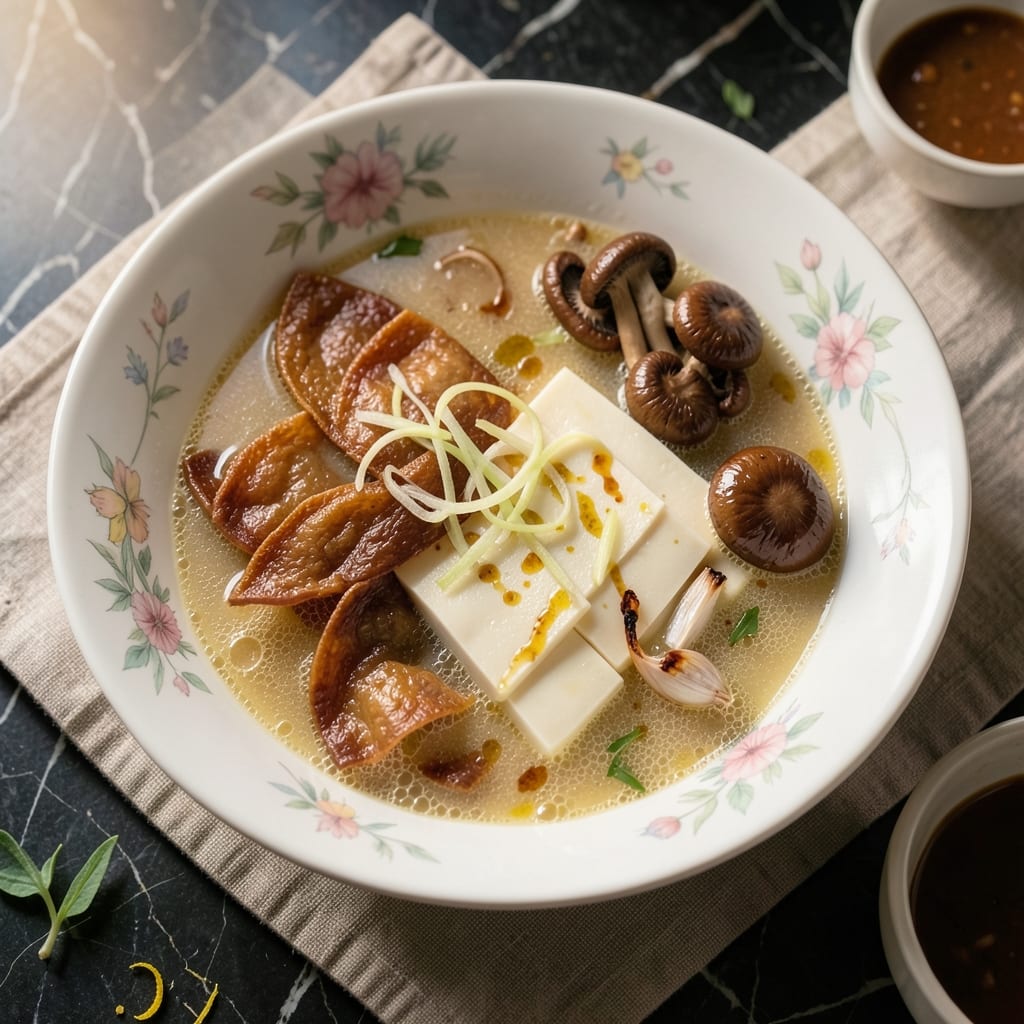
This bean curd skin soup recipe transforms humble ingredients into a symphony of textures—crispy edges that shatter between your teeth and a silky broth that coats every spoonful. The secret lies in properly preparing the bean curd skins, which develop a delicate crunch when fried just right, then simmered to perfection in a fragrant broth. I've perfected this technique over years of testing, ensuring each bite delivers that satisfying contrast between tender and crispy.
The beauty of this soup is its versatility—whether you prefer a light, clear broth or a richer version with mushrooms and tofu, the base technique remains the same. The key is patience: letting the skins fry until golden, then simmering them gently in a well-seasoned broth. This method preserves their texture while infusing the liquid with umami depth. For extra flavor, I recommend adding a touch of soy sauce and ginger during simmering.
What makes this recipe truly special is how it balances simplicity with sophistication. You'll end up with a bowl of soup that's both comforting and elegant—crispy bean curd skins floating in a velvety broth, each component playing its part. The aroma alone will draw everyone to the table, while the first bite delivers that perfect harmony of textures. This is the kind of dish that feels like a restaurant-quality meal without the fuss.
Serve it as a light lunch or a hearty starter, and don't be afraid to experiment with variations—adding greens for freshness or a dash of chili for heat. The possibilities are endless, but the foundation remains the same: crispy edges and silky broth magic in every spoonful. Let's get cooking!
Ingredients for bean curd skin soup
Crispy bean curd skins and velvety broth create this elegant soup's signature harmony.
| Ingredient | Amount | Notes |
|---|---|---|
| Bean Curd Skins (Dried Tofu Skins) 🥗 | ½ oz | Dried, crispy variety preferred |
| Dried Shiitake Mushrooms 🍄 | 4 whole | Rehydrated for umami depth |
| Silken Tofu 🍠 | 8 oz | Soft for velvety texture |
| Vegetable Broth 💧 | 4 cups | Low-sodium preferred |
| Fresh Ginger 🌿 | 1 tbsp | Minced, for aromatic base |
| Garlic Cloves 🧄 | 3 cloves | Minced for flavor foundation |
| Light Soy Sauce 🍶 | 1 ½ tbsp | For subtle umami balance |
| Sesame Oil 🌰 | 1 tsp | Toasted for nutty aroma |
| Vegetable Oil 🫒 | 2 tbsp | For frying bean curd skins |
| Green Onions 🧅 | 3 whole | Sliced for garnish |
| Red Chili Flakes 🔥 | ½ tsp | Optional for heat |
| Sesame Seeds 🌱 | 1 tsp | Toasted for garnish |
| Cornstarch 🌾 | 1 tbsp | For crispy coating |
The bean curd skins are non-negotiable for texture. Asian markets carry the best dried varieties, often labeled as 'tofu skins' or 'bean curd skins'. Look for packages that are light brown and slightly translucent—these fry up crispier than darker, thicker ones. If you can't find them, substitute extra-firm tofu cut into thin sheets, but they won't have the same crunch. For the mushrooms, dried shiitake from Trader Joe's or bulk bins at natural food stores adds incredible depth when rehydrated. The silken tofu should be firm but not watery—Nasoya brand is reliable for consistent quality.
No dried shiitake? Fresh shiitake or cremini mushrooms work in a pinch, but they won't develop the same rich flavor. The soy sauce can be swapped for tamari if gluten-free is a concern, though traditional light soy sauce gives the best balance. For extra richness, add 1 tbsp of white miso paste when simmering. The green onions can be replaced with scallions or chives, though green onions have that perfect mild onion flavor. If you love heat, add a dash of chili crisp instead of just flakes—it's a game changer. The sesame oil should be toasted, not the flavorless kind—look for 'toasted sesame oil' labels in the Asian aisle.
Fry the bean curd skins in small batches to avoid sogginess—they should be golden and crispy before adding to the broth. Store any leftover broth in the fridge for 3-4 days or freeze for up to 3 months. The crispy skins lose their crunch when reheated, so save them separately and add fresh ones when serving leftovers. For meal prep, fry extra skins and store them in an airtight container—just reheat in a dry pan for 30 seconds before serving. This soup actually tastes better the next day as flavors meld.
Why You'll Love This Recipe
- No-Soaking Needed: I’ll be real—those dried tofu skins just need a quick rinse and a few minutes in hot broth to puff up like magic. No overnight soaking, no fuss, and they’re ready to soak up every savory drop from the shiitakes and ginger.
- Umami Bomb: The moment those dried shiitakes steep in the broth? Instant depth. That earthy, meaty punch pairs perfectly with the silken tofu’s creamy slipperiness—like a hug for your taste buds, but with actual protein.
- Lunchbox Hero: Between us, this soup reheats like a dream. Pack it the night before, and by noon, it’s still got that rich, ginger-kissed warmth. My kids actually finish their lunches now. (Yes, even on a Tuesday.)
- Pantry Goldmine: I buy dried tofu skins and shiitakes in bulk—they last forever and cost pennies per serving. Add a block of silken tofu and fresh ginger, and you’ve got a restaurant-quality meal without the grocery bill. Not the prettiest, but the taste makes up for it.
Step-by-step instructions for bean curd skin soup
This method transforms delicate dried ingredients into a harmonious soup with crispy textures and velvety depth.
Rehydrate and Prepare the Shiitake Mushrooms
Place the 4 whole dried shiitake mushrooms in a heatproof bowl and cover them with 4 cups vegetable broth. Let them soak at room temperature for 20 minutes, then transfer the bowl to a pot of simmering water (do not boil directly) for another 10 minutes. This gentle rehydration preserves their umami intensity while preventing toughness.
Remove the mushrooms from the broth and finely chop them, reserving the soaking liquid. The mushrooms should yield about ½ cup chopped with a rich, earthy aroma. If the broth appears cloudy, strain it through a fine-mesh sieve to remove any sediment before using it later in the recipe.
Create the Crispy Bean Curd Skin Coating
In a small bowl, whisk together 1 tbsp cornstarch and ½ tsp red chili flakes (if using) until fully combined. This mixture will create a delicate, crispy exterior on the bean curd skins. Set aside while you prepare the frying oil.
Heat 2 tbsp vegetable oil in a small nonstick skillet over medium-high heat until shimmering but not smoking. Working in batches, dip each 0.5 oz bean curd skin into the cornstarch mixture, allowing excess to drip off, then carefully place them in the hot oil. Fry for 20-25 seconds per side until golden brown and crispy. Remove with a slotted spoon and drain on paper towels. The skins should be light golden with a crisp texture that shatters slightly when touched.
Build the Aromatic Broth Base
In a clean soup pot, heat 1 tsp sesame oil over medium heat. Add the 1 tbsp minced fresh ginger and 3 cloves minced garlic, cooking for 30 seconds until fragrant but not browned. This step develops the foundational flavors that will carry through the entire dish.
Pour in the reserved shiitake soaking liquid (about 3 cups) and bring to a gentle simmer. Add the 1.5 tbsp light soy sauce and the chopped shiitake mushrooms. Let the mixture simmer uncovered for 8-10 minutes until the liquid reduces slightly and the mushrooms soften. The broth should now have a rich, savory depth with visible mushroom pieces.
Incorporate Silken Tofu and Finish
Gently add the 8 oz silken tofu to the simmering broth. The tofu should break down slightly into silky strands rather than remaining in chunks. Simmer for an additional 5 minutes, stirring occasionally, until the tofu is heated through and the broth has thickened slightly from the natural release of tofu starch.
Taste and adjust seasoning if needed—you may want to add a splash more soy sauce for saltiness or a pinch of sugar to balance any bitterness from the shiitake mushrooms. The soup should be harmonious with a subtle umami presence from all components.
Assemble and Garnish
Divide the soup among 4 bowls. Place 2 crispy bean curd skins on top of each serving, arranging them slightly overlapping for visual appeal. Drizzle with 1 tsp toasted sesame seeds and garnish with sliced green onions (about ¾ of each onion per bowl). The contrast between the crispy skins and silky broth creates the signature texture experience.
Serve immediately while the bean curd skins maintain their crispness. The soup should be hot enough to steam the skins slightly upon the first bite, creating a perfect textural contrast with each spoonful. The aroma should be a complex blend of toasted sesame, umami mushrooms, and subtle garlic-ginger warmth.
Pro Tips For Making Bean Curd Skin Soup
- SOAK SKINS SEPARATELY: Dried tofu skins clump like stubborn guests at a party—soak them in warm water for 20 minutes before adding shiitakes. The skins need longer to rehydrate fully, and crowding them with mushrooms slows the process. Trust me, you’ll taste the difference when they’re plump, not chewy.
- STIR-FRY SHIITAKES FIRST: Skip dumping everything in the pot at once. Sauté the rehydrated shiitakes in a dry pan for 2–3 minutes until they release their aroma—this builds flavor before the broth even joins. I used to add them straight to the soup, and the dish always tasted flat until I tried this.
- GINGER: GRATE, DON’T SLICE: Fresh ginger loses its punch when you cut it into thick chunks. Use a microplane or fine grater for the soup—this releases oils that infuse the broth instantly. Even a teaspoon of finely grated ginger makes a real difference, especially if you’re using mild vegetable broth.
- DON’T BOIL THE SILKEN TOFU: Silken tofu turns to mush if you drop it into simmering broth. Instead, poach it in the last 2 minutes of cooking—just before serving—so it stays silky. I learned this the hard way after serving a soup where the tofu had the texture of overcooked pasta.
Regional styles of this dish
Chinese Clear Broth
In Chinese cuisine, bean curd skin soup often features a clear, light broth that highlights the crispy skins' texture. Use dried shiitake mushrooms and dried daikon radish for depth, simmered for 30 minutes with star anise and cinnamon sticks for aromatic warmth. Garnish with thinly sliced chives and a sprinkle of white pepper for a delicate, elegant presentation. This style is popular in Cantonese cuisine, where balance and subtlety are key. 🌿
Japanese Miso-Inspired
Japanese versions often incorporate white miso paste (about 1 tbsp) into the broth for a fermented umami richness. Add wakame seaweed (rehydrated) and thinly sliced scallions for a briny, oceanic note. Serve with pickled ginger on the side to cut through the soup's depth. This style is common in Kyoto, where vegetarian dishes emphasize seasonal ingredients. ✨
Korean Spicy Twist
For a bold Korean-inspired variation, add 1 tbsp gochujang (Korean chili paste) and 1 tsp gochugaru (Korean chili flakes) to the broth. Include thinly sliced Korean radish and mandu (dumpling wrappers) for texture. Top with sesame seeds and crushed roasted seaweed for extra crunch. This version is popular in Busan, where spicy flavors dominate. 🔥
Taiwanese Hearty Style
Taiwanese chefs often make this soup thicker and heartier, adding taro cubes and bok choy for substance. Use dark soy sauce (about ½ tbsp) for color and depth, and finish with fried shallots for a nutty crunch. This style is a staple in Taipei night markets, where it's served in deep bowls for sharing. 🍜
Modern Fusion Approach
For a contemporary twist, blend ½ cup of the broth with 1 tbsp tahini and 1 tsp lemon juice to create a creamy drizzle. Garnish with toasted pumpkin seeds and microgreens for a farm-to-table aesthetic. This fusion style works well in urban cafes, blending traditional techniques with modern flavors. 💫
Nutrition facts
Frequently asked questions
What's the secret to getting bean curd skins perfectly crispy?
Fry them in small batches over medium-high heat for just 20-25 seconds per side until golden. The key is using cornstarch as a coating and keeping the oil hot but not smoking. Overcrowding the pan makes them soggy, so work in batches.
Can I make this soup ahead of time?
Yes, but fry fresh bean curd skins right before serving to maintain crispness. Store the broth separately in the fridge for 3-4 days or freeze for 3 months. Reheat gently, then add fresh fried skins when serving. The skins lose crunch when reheated.
What can I substitute if I can't find dried shiitake mushrooms?
Use fresh shiitake or cremini mushrooms (about ½ cup chopped) instead, but they won't have the same deep umami. For extra flavor, add 1 tsp dried porcini powder to the broth. The texture will differ slightly, but it still works well.
How do I adjust the spice level for sensitive eaters?
Omit the red chili flakes entirely and use white pepper instead for warmth. For a milder kick, reduce the chili flakes to ¼ tsp or add a pinch of sugar to balance any subtle heat. The soup remains flavorful without spice.
Is this soup gluten-free?
Yes, as written—just ensure your soy sauce is tamari (gluten-free). All other ingredients are naturally gluten-free. For extra safety, check labels on sesame oil and vegetable broth. The crispy skins and silken tofu are always gluten-free.