
Soups & Stews
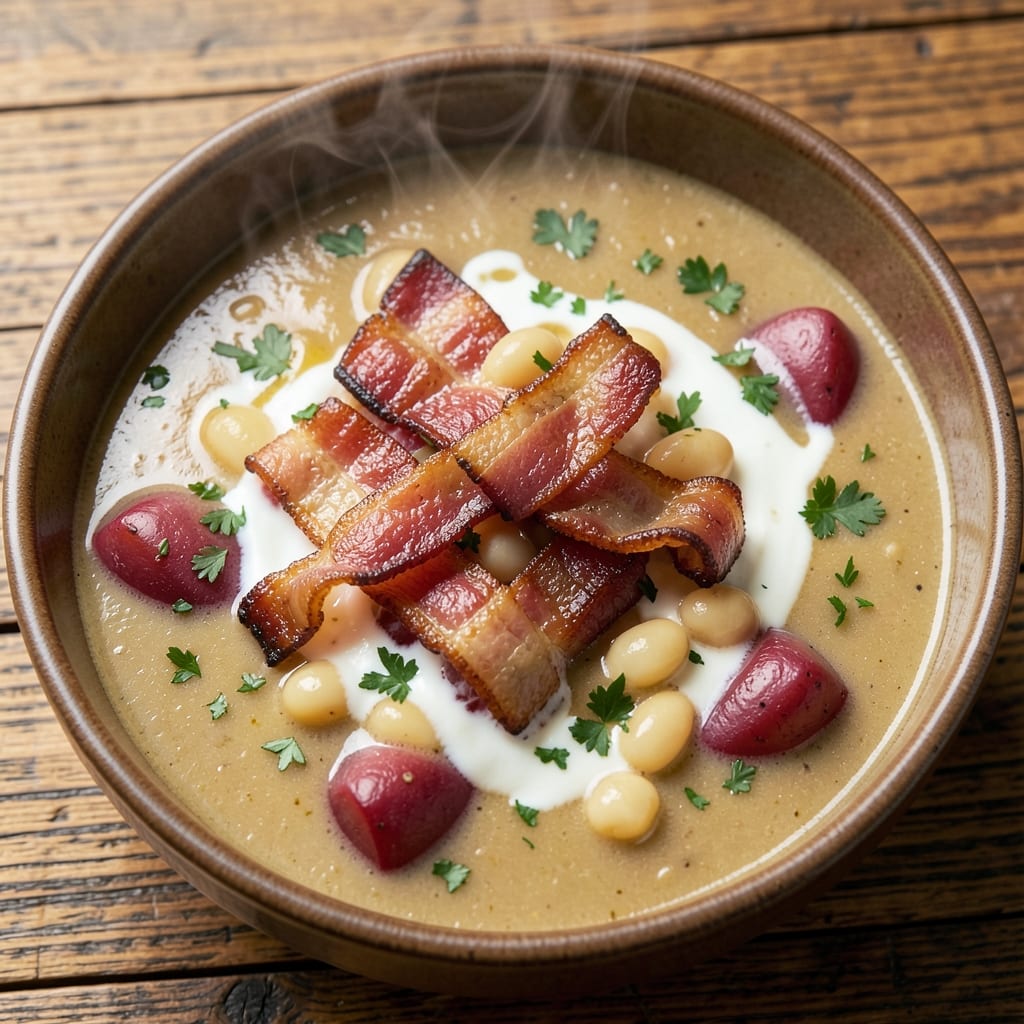
This bean chowder soup recipe delivers the perfect balance of smoky bacon, hearty beans, and velvety cream—transforming a simple pot of soup into a comforting centerpiece for any meal. The secret lies in slow-cooked bacon rendering rich, savory depth while white beans absorb the flavors, creating a texture that’s both creamy and satisfying. I’ve perfected this version to avoid the common pitfall of overly thick or grainy chowder, ensuring every spoonful is smooth and flavorful.
The foundation starts with crispy bacon, which forms the base for a smoky, aromatic broth infused with onions, garlic, and a touch of thyme. Adding white beans and diced potatoes allows them to simmer until tender, while a splash of heavy cream at the end elevates the soup to a luxurious finish. This method keeps the soup hearty yet refined, making it ideal for chilly evenings or as a filling appetizer before a main course.
What sets this chowder apart is its versatility—adjust the creaminess by adding more broth or milk, or swap bacon for smoked sausage for a different twist. The result is a soup that’s rich in flavor but never heavy, with a creamy texture that coats every spoonful. Serve it with crusty bread to soak up every last drop, or pair it with a crisp green salad for balance.
Whether you’re preparing it for a weeknight dinner or a cozy gathering, this chowder is designed to impress with minimal effort. The slow simmering process means you can focus on other tasks while the soup develops its deep, complex flavors. Ready in under an hour, it’s the kind of recipe that feels like a hug in a bowl—warm, inviting, and impossible to resist.
Ingredients for bean chowder soup
Smoky bacon and creamy beans create this hearty chowder's perfect balance of rich depth and velvety texture.
| Ingredient | Amount | Notes |
|---|---|---|
| Thick-Cut Bacon 🥓 | 8 oz | Center-cut for crispiness |
| Yellow Onion 🧅 | 1 whole | Diced, medium size |
| Garlic Cloves 🧄 | 4 cloves | Minced, fresh preferred |
| White Potatoes 🥔 | 2 lb | Yukon gold, cubed small |
| Canned Cannellini Beans 🌾 | 2 cups | Drained, rinsed, medium |
| Heavy Cream 🥛 | 1 cup | Full-fat for richness |
| Chicken Broth 💧 | 4 cups | Low-sodium preferred |
| Fresh Thyme 🌿 | 1 tbsp | Leaves only, chopped |
| Dried Bay Leaf 🍃 | 1 whole | Removed before serving |
| Salt 🧂 | 1 ½ tsp | Kosher or sea salt |
| Ground Black Pepper 🌶️ | ½ tsp | Freshly ground preferred |
| Unsalted Butter 🧈 | 2 tbsp | For finishing, optional |
The bacon is where the magic starts. Thick-cut from Costco or your butcher renders the best flavor—skip the pre-cubed stuff. Look for good marbling, not just thin slices. The potatoes? Yukon golds break down just enough to thicken the soup without turning it gluey. If you can't find them, Russets work in a pinch, but they'll make it starchier. The cannellini beans should be medium-sized—giant ones stay whole and chewy, while tiny ones disappear into the soup. Wooden spoon stirring prevents breaking them up too much.
No chicken broth? Vegetable broth works equally well, though it'll have a slightly different depth. Fresh thyme is ideal, but dried at one-third the amount gets you close. The bay leaf is non-negotiable—it adds that subtle earthy note that makes chowder taste professional. Swapping bacon for smoked sausage? Andouille or kielbasa both work, but reduce the broth by 1/2 cup since they're more flavorful. For a dairy-free version, use coconut milk instead of heavy cream and skip the butter finish—still delicious, just different.
This soup tastes even better the next day, so double the batch if you're feeding a crowd. Store in the fridge for 4-5 days or freeze for 3 months. I like to portion it into individual containers before freezing—just reheat with a splash of broth or milk to restore creaminess. The bacon fat solidifies when chilled, so stir vigorously when reheating. For serving, I always add a pat of butter on top—salted or unsalted, your call—and a sprinkle of fresh thyme if you've got any left.
Why You'll Love This Recipe
- Crisps in Minutes: I swear by the thick-cut bacon—crispy edges that crumble into the pot like magic. No waiting for thin slices to render; just chop, fry, and move on while the onions caramelize in the same pan.
- Rich Without Effort: That smoky bacon fat and garlic cloves build flavor so deep, you’ll forget it’s just canned beans. The potatoes soak up the richness, turning creamy without a single drop of heavy cream.
- Leftovers That Beg: This soup actually improves the next day—potatoes absorb the broth, bacon gets even saltier, and the beans melt into the broth. I freeze half the batch because reheating it is my lazy-day superpower.
- Budget-Friendly Feast: A whole meal for under $10 with ingredients that last. Cannellini beans stretch the pot, potatoes fill you up, and bacon makes it feel fancy. Honestly, it’s my go-to when groceries are tight but I still want to eat well.
Step-by-step instructions for bean chowder soup with rich creamy depth
Transform simple ingredients into a velvety chowder where smoky bacon meets hearty potatoes and beans.
Cook the Bacon and Build the Flavor Base
Cut the 8 oz thick-cut bacon into ½-inch pieces and cook in a large Dutch oven over medium heat for 8-10 minutes, stirring occasionally. The bacon should render fat while becoming deep golden brown and crispy at the edges. This fat is the foundation of your chowder's rich flavor—don't drain it.
Remove the bacon with a slotted spoon and set aside, leaving the rendered fat in the pot. Add the diced yellow onion and cook for 5 minutes until softened and translucent. Stir in the minced garlic cloves and cook for 30 seconds until fragrant. This aromatic base ensures every spoonful carries depth of flavor before we add the remaining ingredients.
Sauté Potatoes and Add Liquids
Add the 2 lb white potatoes, cut into ½-inch cubes, to the pot with the onions and garlic. Stir to coat the potatoes evenly in the bacon fat. Pour in the 4 cups chicken broth and bring to a gentle boil. Reduce heat to medium-low and simmer uncovered for 15 minutes, stirring occasionally, until the potatoes are tender but not falling apart. You want them to hold their shape while still being fork-tender.
Add the 2 cups drained cannellini beans, 1 whole dried bay leaf, 1 tbsp chopped fresh thyme, 1.5 tsp salt, and 0.5 tsp ground black pepper. Stir well and continue simmering for another 10 minutes. The beans should be heated through and the flavors should meld together. This step transforms your base from a simple broth to a complex, savory foundation.
Finish with Cream for Velvety Texture
Reduce heat to low and gradually stir in the 1 cup heavy cream. Simmer gently for 5-7 minutes, stirring frequently to prevent scorching. The cream should heat through but not curdle—watch carefully as it thickens the soup slightly. If the soup appears too thick, you can add ½ cup water to adjust the consistency.
Return the crispy bacon to the pot and stir gently to distribute. Taste and adjust seasoning if needed—this is your final chance to balance the flavors. Remove the dried bay leaf before serving. The result should be a creamy, comforting chowder where each bite delivers smoky bacon, hearty potatoes, and velvety creaminess.
Optional Butter Finish for Extra Richness
For an extra layer of richness, stir in the 2 tbsp unsalted butter during the last 2 minutes of simmering. The butter should melt completely, creating a glossy finish that enhances the soup's texture. Serve immediately in warm bowls, garnished with additional chopped fresh thyme if desired. This finishing touch elevates the chowder from good to exceptional, making it a centerpiece for any meal.
Pro Tips For Making Bean Chowder Soup
- CRISP THE BACON LOW: I learned this the hard way—cooking thick-cut bacon at high heat turns it into greasy sludge. Instead, use medium-low and let it render slowly; the fat will be golden and flavorful, not burnt. Save that bacon grease for the potatoes later—it’s liquid gold for crispy edges.
- CUT POTATOES UNIFORM: I used to eyeball it, and ended up with some mushy chunks and others still raw. For bean chowder, dice the potatoes into ½-inch cubes—small enough to soften fast, but not so tiny they turn to paste. A mandoline makes this easier, but a sharp knife works too.
- DRAIN BEANS WELL: Skip the rinse, but drain those canned beans thoroughly. The starchy water makes chowder gluey, and no one wants a soup that’s more paste than broth. Pat them dry with a paper towel if you’re feeling extra—it’s a small effort for a smoother texture.
- SIMMER POTATOES FIRST: Start the potatoes in the pot before adding the beans. They’ll absorb the bacon fat and broth, cooking through while the beans warm up. If you toss in everything at once, the potatoes steam instead of crisp up—you’ll end up with sad, mealy bites.
Common mistakes when making great bean chowder soup
Overcooking Potatoes
One of the most common mistakes is letting the potatoes turn to mush. They should be tender but still hold their shape—15 minutes of simmering is ideal for ½-inch cubes. If you notice them breaking apart too soon, reduce the heat slightly or cover the pot to slow cooking. I’ve ruined chowder this way before, and it’s a game-changer to taste the difference between perfect and gluey potatoes. 🥔
Skipping the Bacon Fat
Draining the bacon fat after cooking is a rookie move. That golden liquid is packed with flavor—it’s the secret to a rich, smoky base. Instead of discarding it, use it to sauté onions and garlic, creating a flavorful foundation. I’ve learned the hard way that skipping this step makes the soup taste flat and watery. Trust me, leave that fat in the pot!
Adding Cream Too Early
Introducing heavy cream before the soup is fully cooked can cause curdling or a grainy texture. Always wait until the potatoes and beans are tender before stirring in the cream. Heat it gradually over low heat for 5-7 minutes while stirring constantly. This ensures a silky, velvety finish instead of a lumpy mess. 🥛
Ignoring the Bay Leaf
That little dried bay leaf might seem insignificant, but it adds depth to the soup’s flavor profile. Remove it before serving, but don’t skip it entirely—it infuses subtle earthy notes that elevate the dish. I once forgot to add one and noticed a noticeable lack of complexity in the final chowder. It’s a small detail that makes a big difference!
Over-Salting the Broth
Using high-sodium broth or adding too much salt early on can make the soup inedible. Taste the broth before adding beans and adjust seasoning gradually. Remember, you can always add more salt, but you can’t take it out. I like to use low-sodium broth and add salt in small increments to avoid overdoing it. 🧂
Rushing the Cream Finish
Adding cream too quickly or at high heat can cause it to separate or curdle. Always stir it in slowly over low heat and keep the soup moving. If it starts to look grainy, immediately remove it from heat and whisk vigorously. Patience here ensures a smooth, luxurious texture that makes the chowder feel restaurant-quality. 💫
Nutrition facts
Frequently asked questions
Can I make this bean chowder vegetarian?
Swap the bacon for smoked paprika or liquid smoke (½ tsp) to maintain depth, and use vegetable broth instead of chicken. For richness, replace heavy cream with coconut milk or cashew cream. The potatoes and beans will still provide a hearty texture while keeping it plant-based.
How can I adjust the thickness of my chowder?
If your chowder is too thick, stir in ½ cup water or broth at a time until it reaches your desired consistency. For a thicker texture, simmer uncovered for 5-10 extra minutes to reduce the liquid. The key is balance—aim for a spoonful that coats the back of a spoon but still flows smoothly.
Can I prepare this chowder ahead of time?
Yes! This chowder tastes even better the next day. Store it in an airtight container in the fridge for 4-5 days or freeze for 3 months. When reheating, add a splash of broth or milk to restore creaminess, as the starches settle during storage. Stir well over low heat to avoid curdling.
What's the best way to reheat leftovers?
Reheat gently on the stove over low heat, stirring frequently to prevent scorching. If using the microwave, cover with a damp paper towel and heat in 30-second intervals, stirring between each. For frozen chowder, thaw overnight in the fridge first, then reheat slowly. Never microwave directly from frozen—it can make the cream separate.
Can I add other vegetables to this recipe?
Certainly! Try adding diced celery (½ cup) with the onions or chopped kale (1 cup) at the end for color. For a smoky twist, stir in ½ cup diced smoked gouda when adding the cream. Just