
Soups & Stews
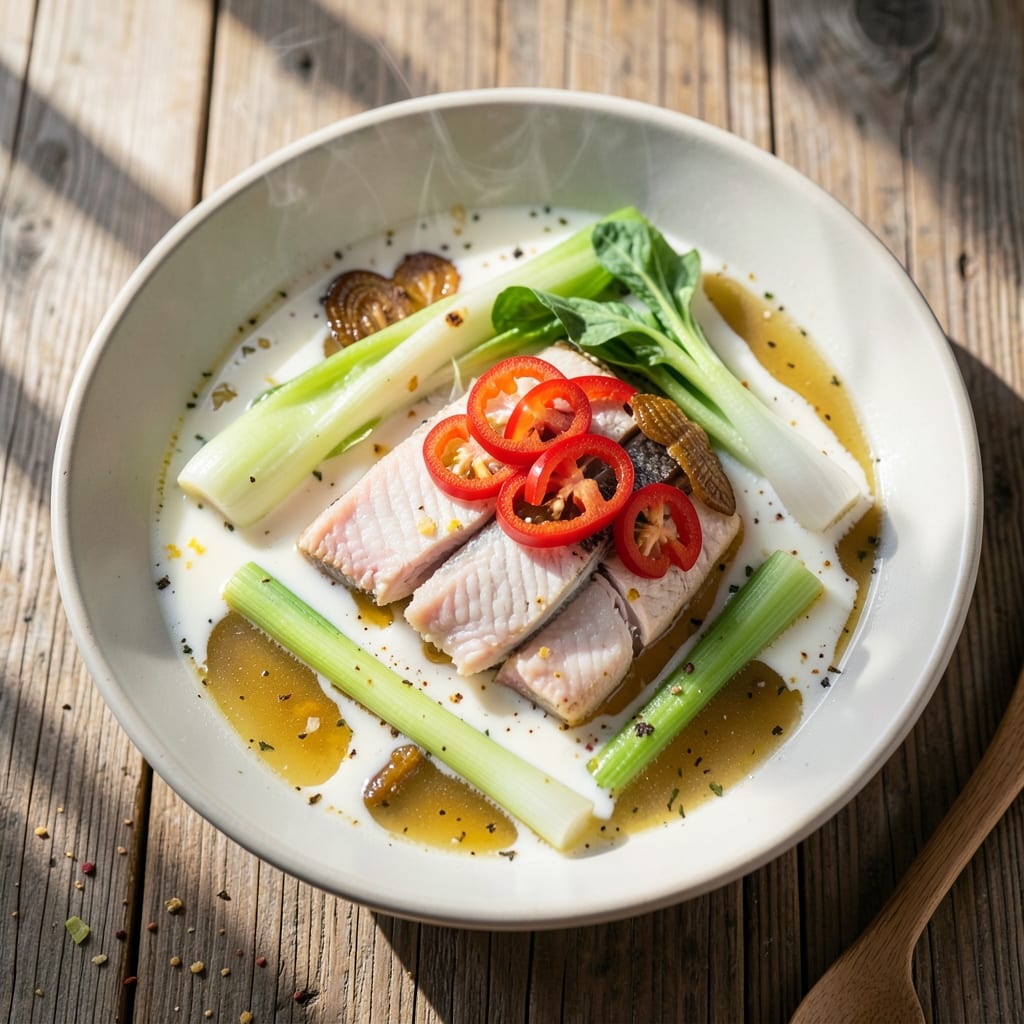
This barramundi fish soup delivers a fragrant symphony of lemongrass and coconut that transforms a simple meal into an aromatic experience. The delicate white fish absorbs the bright, citrusy broth while maintaining its tender texture—perfect for those who appreciate restaurant-quality flavors at home. What sets this recipe apart is the balance of traditional techniques with modern simplicity, ensuring your soup is both elegant and approachable.
The foundation begins with a rich, fragrant broth infused with lemongrass, galangal, and coconut milk, creating a velvety base that harmonizes with the fish. Barramundi fillets are gently poached to maintain their moisture, while supporting vegetables like bell peppers and bok choy add texture and freshness. The result is a soup that’s light yet satisfying, with every spoonful offering layers of flavor.
What makes this recipe truly special is its versatility—whether you prefer a clear consommé or a creamy coconut-infused broth, the techniques adapt seamlessly. The final presentation is as important as the taste: garnished with fresh cilantro, lime wedges, and a drizzle of chili oil for a touch of heat. This dish is ideal for a cozy dinner or an impressive gathering, proving that homemade soup can rival any restaurant creation.
Ready in about 45 minutes, this recipe is designed for both beginners and seasoned cooks. The step-by-step process ensures foolproof results, with tips to adjust spice levels or swap ingredients based on what you have on hand. Once you taste the first bowl, you’ll understand why this soup has become a favorite in coastal kitchens around the world.
Ingredients for barramundi fish soup
Fragrant lemongrass, velvety coconut, and delicate barramundi create a symphony of coastal flavors in this elegant yet approachable soup.
| Ingredient | Amount | Notes |
|---|---|---|
| Fresh Barramundi Fillets 🐟 | 1 ½ lb | Skin-on, center-cut preferred |
| Lemongrass Stalks 🌿 | 4 whole | Bruised, outer leaves removed |
| Galangal Slices 🧅 | 3 slices | Fresh, peeled, about 1-inch thick |
| Coconut Milk 🥥 | 1 ½ cups | Full-fat, canned for creaminess |
| Red Bell Peppers 🌶️ | 1 whole | Julienned, about 1 cup |
| Bok Choy 🥬 | 2 heads | Baby variety, quartered |
| Garlic Cloves 🧄 | 6 cloves | Minced, aromatic intensity |
| Shallots 🧅 | 3 whole | Thinly sliced, 2 tbsp total |
| Fish Stock 💧 | 4 cups | Homemade or high-quality store-bought |
| Lime Juice 🍋 | 2 tbsp | Freshly squeezed, bright acidity |
| Fresh Cilantro 🌿 | ¼ cup | Chopped, for garnish |
| Chili Oil 🌶️ | 2 tbsp | Homemade or store-bought |
| Kosher Salt 🧂 | 1 ½ tsp | Diamond Crystal preferred |
| White Peppercorns 🌶️ | ½ tsp | Freshly cracked |
| Olive Oil 🫒 | 2 tbsp | Extra-virgin, for aromatics |
The barramundi is the star—look for center-cut fillets with the skin intact at your fishmonger. If you can't find barramundi, snapper or sea bass work beautifully as substitutes. For the lemongrass and galangal, Asian markets often carry the freshest stalks, but most grocery stores stock them too. Bruise the lemongrass with the side of your knife to release those essential oils before adding to the pot. Galangal has a peppery kick similar to ginger but with a more citrusy edge—if you can't find it, extra ginger works in a pinch, though it won't be identical. The coconut milk should be full-fat for that rich, creamy texture that balances the broth's brightness.
No fish stock on hand? Vegetable stock with a splash of soy sauce mimics the umami depth, though it won't be identical. The red bell peppers add a subtle sweetness—yellow or orange work too, but red has that classic visual pop. Bok choy is non-negotiable for texture, but if you're out, spinach or baby kale can stretch the dish. For the chili oil, homemade is ideal (infuse oil with dried chilies), but store-bought works fine—just check for no added sugar. The lime juice is crucial for brightness, so don't skip it even if you're sensitive to acidity. Freshly cracked white peppercorns add a sophisticated finish without overpowering the delicate fish flavor.
This soup tastes even better the next day as the flavors meld—plan ahead and make a double batch if you're hosting. Store in an airtight container in the fridge for up to 3 days, or freeze portions for 2 months. The broth keeps well separately too, so you can reheat and add fresh fish later for a quick meal. Garnish with cilantro and chili oil just before serving to keep everything vibrant. If you're serving a crowd, prep the aromatics and broth first—they can simmer while you handle the fish, keeping everything hot and fresh.
Why You'll Love This Recipe
- One-Pot Magic: I swear by this recipe—just toss everything in a single pot, simmer, and walk away. The barramundi flakes effortlessly, the lemongrass infuses without fuss, and that galangal? It’s the secret weapon that does all the flavor work while you sip your tea.
- Creamy-Zing Balance: Between us, the coconut milk makes this soup dangerously comforting, but the galangal and lemongrass cut through the richness with a bright, citrusy punch. Add the red bell peppers for a subtle crunch, and suddenly, it’s like a hug in a bowl—warm, bold, and just a little spicy.
- Weeknight to Dinner Party: This soup starts as my lazy Tuesday dinner but somehow ends up on the table when Auntie Marge visits. The barramundi’s delicate texture holds up beautifully, and the flavors only deepen the longer it sits—so it’s just as impressive reheated as it is fresh.
- Leftovers That Don’t Suck: Honestly, I make this on purpose so I can have leftovers. The coconut milk keeps it luscious even after two days, and the barramundi stays moist—no sad, dry fish here. Pack it in jars for lunch, or freeze portions for those nights when you’d rather binge Netflix than cook.
Step-by-step instructions for barramundi fish soup
This fragrant barramundi soup delivers layers of lemongrass brightness and coconut richness—let's build it together.
Build the Aromatic Base
Heat the 2 tablespoons olive oil in a large pot over medium heat. Add the 3 whole shallots and 6 cloves garlic, cooking for 3-4 minutes until the shallots soften and become translucent. The garlic should smell intensely aromatic without browning.
Add the 4 whole lemongrass stalks (bruised by pounding gently with the side of your knife) and 3 slices galangal. Cook for another 2 minutes until the galangal begins to soften and release its citrusy, peppery aroma. This aromatic trio forms the soul of your soup—don't rush this step. The flavors will develop fully as they simmer.
Develop the Flavor Foundation
Pour in the 4 cups fish stock and bring to a gentle simmer. Add 1.5 teaspoons kosher salt and 0.5 teaspoon freshly cracked white peppercorns, stirring to dissolve. The soup should taste like the ocean meets a tropical garden at this point—bright, clean, and full of potential.
Simmer uncovered for 10 minutes to let the flavors meld. This isn't just about time—watch for the surface to develop a subtle sheen. The stock should reduce slightly, concentrating the aromatics. If it reduces too much, add ¼ cup water to maintain proper consistency for the fish to come.
Prepare and Add the Barramundi
While the stock simmers, pat the 1.5 lb fresh barramundi fillets dry with paper towels. Season generously with ½ teaspoon kosher salt and ¼ teaspoon white peppercorns on both sides. The skin should remain intact—this will crisp beautifully as it cooks.
Carefully slide the fillets into the simmering broth. They should float just below the surface. Simmer gently for 6-8 minutes until the fish is just cooked through—it should flake easily with a fork but still hold together. The center should reach 145°F internally. Overcooking will make the fish dry and crumbly.
Finish with Vegetables and Creaminess
Add the 1 whole red bell pepper (julienned) and 2 heads bok choy (quartered). Stir gently to distribute the vegetables throughout the broth. Pour in the 1.5 cups coconut milk and 2 tablespoons lime juice, stirring well. The soup should immediately take on a velvety appearance with bright pops of color.
Simmer for another 3-4 minutes until the bok choy is tender-crisp and the bell pepper has softened slightly. Taste and adjust seasoning—you might need a touch more salt or lime to balance the flavors. The soup should be harmonious, with each element complementing rather than competing with the others.
Garnish and Serve with Confidence
Remove the pot from heat and let the soup rest for 2-3 minutes. This brief pause allows the flavors to settle and the fish to absorb any remaining broth. Ladle the soup into bowls, dividing the fish evenly among servings.
Drizzle each serving with 2 tablespoons chili oil and garnish with 0.25 cup chopped fresh cilantro. The chili oil adds a final layer of heat and aroma, while the cilantro brings freshness. Serve immediately with steamed jasmine rice or crusty baguette slices to soak up every last drop of that fragrant broth.
Pro Tips For Making Barramundi Fish Soup
- Split Lemongrass Properly: Don’t just chop it—bruise the stalks first by smashing them with the flat side of your knife. This releases the oils and aroma without turning your soup into a fibrous mess. I used to skip this and wondered why my soup tasted flat.
- Simmer, Don’t Boil: Barramundi flakes apart at high heat. Once the coconut milk and broth hit a gentle bubble (just a few tiny breaks every 10 seconds), drop the fish in and keep it at a whisper. Too much heat = shredded fish, not tender chunks.
- Salt the Coconut Milk: Coconut milk needs salt too—add a pinch when you stir it in, not just at the end. The fat absorbs it better early, and it balances the sweetness of the bell peppers. I learned this after a batch tasted blandly creamy.
- Char the Bell Peppers: Toss the red bell peppers in a dry pan for 2-3 minutes until blackened in spots before slicing. The smoky depth cuts through the richness of the coconut milk and makes the soup taste like it simmered for hours, not 20 minutes.
Pro cooking tips for great barramundi fish soup
Poaching Perfection
The key to tender barramundi in soup is gentle poaching—never boiling. Maintain a gentle simmer at 185-190°F (just below a rolling boil) to prevent the fish from curling or becoming rubbery. I use a thermometer to monitor the broth temperature, adjusting heat as needed. The fish should cook for 6-8 minutes—any longer and it risks drying out. 🌡️
For extra tenderness, add the fish skin-side down first and let it crisp slightly before turning. This creates a delicate contrast between the crisp skin and silky flesh. If your fillets vary in thickness, remove the thinnest pieces first—they cook faster and can turn mushy if left too long.
Broth Balance
The coconut milk adds richness, but too much can make the soup heavy. I recommend 1.5 cups for this recipe—enough to create velvety texture without overwhelming the delicate fish flavor. For a lighter version, reduce to 1 cup and add ½ cup light coconut cream instead. Always stir the coconut milk in off the heat to prevent curdling from sudden temperature changes.
Taste your broth before adding the fish—it should be seasoned like the ocean, with bright lemongrass and galangal notes. If it tastes flat, add ½ teaspoon fish sauce or a pinch of MSG to deepen the umami. The fish will absorb these flavors beautifully during poaching.
Vegetable Timing
Add bok choy and bell peppers last—they cook fastest and should remain tender-crisp. If using thicker cut vegetables, reduce simmer time to 2-3 minutes maximum. For extra color, blanch the bell pepper strips in boiling water for 30 seconds before adding to the soup—they'll retain their vibrant hue while softening just enough.
Pro tip: If your bok choy looks wilted after cooking, it needs less time. The leaves should still hold their shape with a slight bite. For a more elegant presentation, arrange the vegetables around the fish when plating rather than stirring them throughout.
Garnish Like a Pro
The final garnishes elevate this soup from home-cooked to restaurant-worthy. Drizzle chili oil in a zigzag pattern over each serving for visual appeal and heat. Fresh cilantro should be chopped fine—large stems look messy. For an extra touch, add lime zest along the edge of the bowl or toasted coconut flakes for texture contrast.
Serve with steamed jasmine rice in small bowls alongside the soup for an authentic presentation. The rice soaks up the fragrant broth beautifully. For a modern twist, offer crispy rice crackers on the side for crunch lovers.
Nutrition facts
Frequently asked questions
Can I substitute barramundi with another type of fish?
Barramundi's delicate flavor works beautifully with similar mild, white fish. Try snapper, sea bass, or mahi-mahi—they hold up well to gentle poaching. For texture, avoid flaky fish like cod, which can turn mushy. If using a firmer fish like halibut, reduce cooking time by 1-2 minutes to prevent overcooking.
How do I make this soup spicier?
Start with the broth: add 1-2 slices of fresh chili (like Thai bird's eye) when building aromatics, or ½ teaspoon chili flakes to the stock. For heat at the end, double the chili oil to 4 tablespoons or add 1 teaspoon sambal oelek per serving. For smoky depth, char a lime wedge and rub it over the soup before serving.
Can I make this soup ahead of time?
Yes! This soup tastes even better the next day as flavors meld. Prepare the broth and aromatics first, then cool completely before refrigerating for up to 3 days. When ready to serve, reheat gently (don't boil) and add the fish and vegetables fresh. For longer storage, freeze the broth separately for up to 2 months—just thaw and finish with fresh fish.
What if I don't have galangal?
Don't worry—galangal adds depth but isn't essential. Use 1 tablespoon extra ginger (freshly grated) combined with 1 teaspoon lime zest for a similar citrusy, peppery note. For a more authentic flavor, try 1 teaspoon ground coriander as a dry substitute. The soup will still be delicious, just with slightly different complexity.
How do I prevent the coconut milk from curdling?
Curdling happens when coconut milk hits hot liquid suddenly. Always stir it in off the heat and let the soup cool slightly first. For extra insurance, mix the coconut milk with 2 tablespoons cold broth before adding to the pot. If you see separation, whisk vigorously and strain through a fine-mesh sieve to restore smoothness.