
Soups & Stews
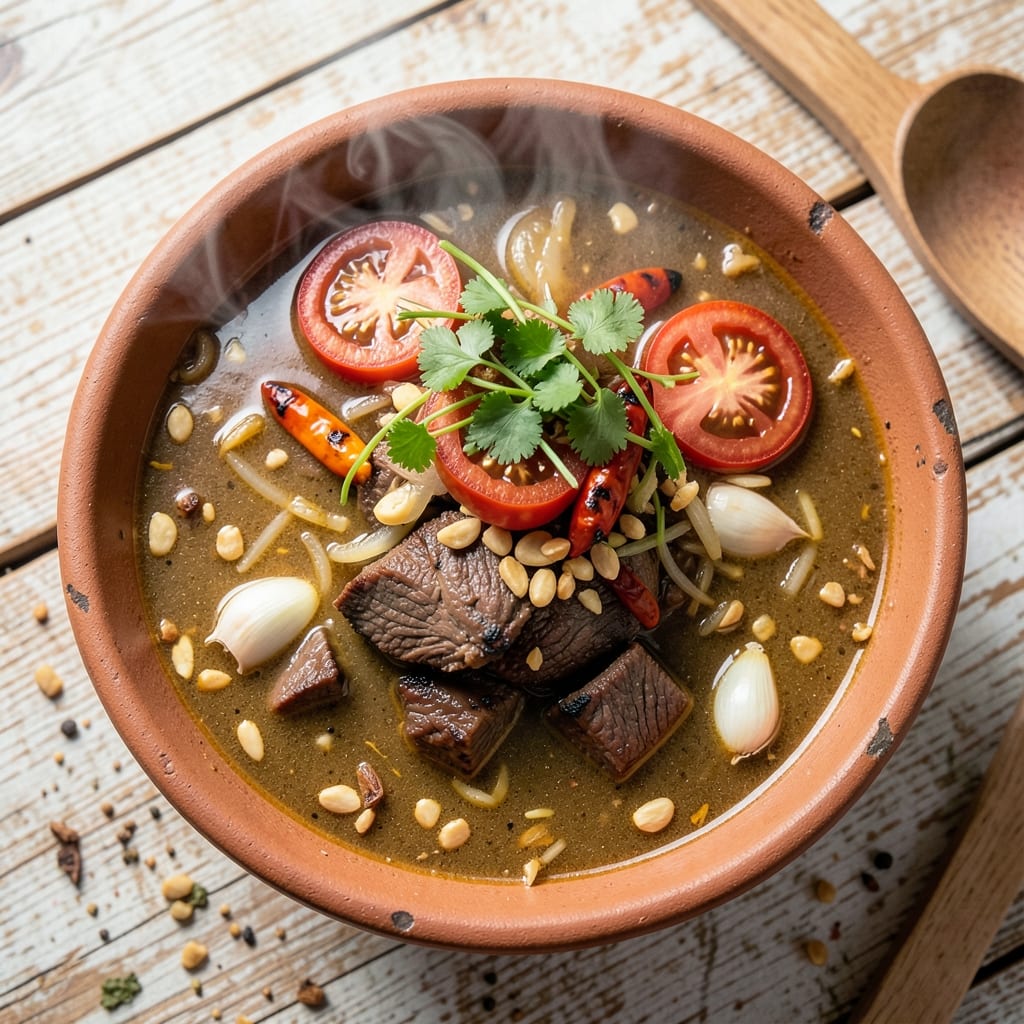
This Banga soup recipe Cameroon delivers the rich, peppery complexity that makes it a staple across West Africa. The secret lies in slow-cooked meat—beef, goat, or fish—simmered with peanuts, tomatoes, and a blend of spices that create layers of heat and depth. Every bite balances tender protein with nutty, slightly sweet peanuts, all suspended in a thick, aromatic broth that's as comforting as it is flavorful.
The dish begins with a deep, spiced base where onions, garlic, and Scotch bonnet peppers build the foundation, then transforms with the addition of ground peanuts that thicken the broth into a velvety consistency. What sets authentic Banga apart is the patience—allowing the meat to break down over hours until it's fork-tender, while the peanuts infuse the broth with their signature nutty richness. The result is a soup that's hearty enough for a family meal but still light enough for a weeknight dinner.
By the time you serve it, you'll have a steaming bowl of Banga with melt-in-your-mouth meat, creamy peanut notes, and just the right amount of spicy kick. The dish pairs beautifully with rice, plantains, or crusty bread to soak up every drop of that flavorful broth. This isn't just a recipe—it's a taste of Cameroon's vibrant culinary tradition, brought to your kitchen with professional precision.
Whether you're using beef, goat, or fish, the key is letting the flavors meld slowly. The peanuts should be ground fine but not into a paste, and the broth must reduce until it's thick enough to coat a spoon. Serve immediately, with a side of rice to balance the richness. Here's how to make it perfectly every time.
Ingredients for banga soup recipe cameroon
Six hearty ingredients build the foundation for Cameroon's boldest soup.
| Ingredient | Amount | Notes |
|---|---|---|
| Beef Chuck Roast 🥩 | 2 lb | Cut into 2-inch cubes |
| Dried Peanuts 🥜 | 1 cup | Raw, unsalted, skin-on |
| Yellow Onions 🧅 | 3 whole | Chopped into 1/2-inch pieces |
| Garlic Cloves 🧄 | 8 cloves | Minced finely |
| Scotch Bonnet Peppers 🌶️ | 2 whole | Seeds removed, chopped |
| Fresh Tomatoes 🍅 | 4 whole | Ripe, chopped (or 1 can diced) |
| Tomato Paste 🍅 | ½ cup | Smooth, no sugar added |
| Dried Ginger 🌿 | 1 tbsp | Ground, aromatic |
| Ground Nutmeg 🌿 | ½ tsp | Freshly grated preferred |
| Ground Black Pepper 🌶️ | 1 tsp | Freshly cracked |
| Salt 🧂 | 2 tsp | Diamond Crystal preferred |
| Vegetable Oil 🫒 | ½ cup | For sauteing |
| Water 💧 | 6 cups | Or low-sodium beef broth |
| Fresh Thyme 🌿 | ¼ cup | Chopped, or 1 tbsp dried |
| Fresh Cilantro 🌿 | ¼ cup | Chopped, for garnish |
The meat is non-negotiable—beef chuck gives you that melt-in-your-mouth texture, but goat or fish work too if you prefer. Costco or Whole Foods sell pre-cubed chuck for convenience, but if you're buying a whole roast, ask the butcher to cut it into 2-inch pieces. For the peanuts, raw and unsalted is key—roasted or salted will overpower the dish. The Scotch bonnet peppers are the real flavor bombs here, so don't skip them. If you can't find fresh, two tablespoons of hot pepper sauce in a pinch, but fresh is worth the hunt at Latin markets or specialty stores.
No Scotch bonnet? Habanero or red jalapeño will work, but scale back to half the amount. The ginger and nutmeg are essential for that authentic warmth—substitute 1/2 teaspoon each of ground ginger and cinnamon if needed. For the tomatoes, fresh is ideal, but one 14-ounce can of diced tomatoes saves time. The tomato paste is your thickener, so don't skip it. If you're using beef broth instead of water, reduce the salt to 1 teaspoon. The thyme can be dried if you're in a rush, but fresh adds that extra layer of complexity that makes this dish special.
This soup tastes even better the next day as the flavors meld—make a double batch if you can. Store in an airtight container in the fridge for up to 5 days, or freeze for 3 months. The peanuts will separate slightly when reheated, so give it a quick stir and add a splash of water if it gets too thick. Serve with steamed rice or plantains to soak up every last drop of that rich, spicy broth. The leftovers reheat beautifully—just add a little water to loosen it up.
Why You'll Love This Recipe
- Here’s what sold me: that perfect balance of smoky beef, toasted peanuts, and Scotch bonnet heat. The garlic and onions caramelize into something so addictive, you’ll want to eat it straight from the pot.
- One-Pot Magic: Honestly, the way this soup simmers everything—beef, peanuts, and all—means you’re basically done after chopping onions. No fancy techniques, no separate pans, just deep, rich flavor with minimal effort.
- Peanut-Pepper Power: Here’s what sold me: that perfect balance of smoky beef, toasted peanuts, and Scotch bonnet heat. The garlic and onions caramelize into something so addictive, you’ll want to eat it straight from the pot.
- Weeknight Crowd-Pleaser: Between us, this feeds a houseful without breaking the bank. My roommates always ask for seconds, and it’s just as good the next day—reheated, it’s even richer.
Step-by-step instructions for Banga soup Cameroon
Here's how to create this rich, nutty, and spicy West African classic with perfectly tender beef.
Prepare the Peanut Base
Heat the 0.5 cup vegetable oil in a large Dutch oven over medium heat. Add the 1 cup dried peanuts and toast them for 3-4 minutes until they release their aroma and begin to turn golden. This step is crucial—it removes any bitterness and intensifies their nutty flavor.
Immediately remove the peanuts with a slotted spoon and set them aside. In the same pot, add the 3 whole yellow onions that have been chopped into ½-inch pieces. Cook them for 5-6 minutes until they become translucent and just beginning to caramelize. This forms the aromatic foundation of your soup.
Build the Spice Foundation
Add the 8 cloves finely minced garlic and cook for 30 seconds until fragrant. Be careful not to let it burn—garlic turns bitter quickly. Next, stir in the 2 whole Scotch bonnet peppers (seeds removed and chopped) and cook for 1 minute to soften slightly while releasing their fiery heat.
Now add the 0.5 cup tomato paste, 1 tablespoon dried ginger, 0.5 teaspoon ground nutmeg, 1 teaspoon ground black pepper, and 2 teaspoons salt. Stir continuously for 2 minutes until the spices bloom and the mixture becomes fragrant. This is where all the complex flavors develop.
Brown the Beef and Simmer
Add the 2 lb beef chuck roast cut into 2-inch cubes to the pot. Brown them on all sides over medium-high heat for 5-6 minutes. This step creates the deep, meaty flavor that's essential for authentic Banga. Once browned, pour in the 6 cups water and bring to a boil.
Reduce heat to low and let it simmer uncovered for 1 hour 15 minutes. You'll notice the beef releases its juices and the soup begins to thicken slightly. Skim off any foam that rises to the surface during the first 15 minutes of simmering for a cleaner soup.
Finish with Vegetables and Herbs
After the beef has simmered, add the 4 whole fresh tomatoes (chopped) and the 0.25 cup fresh thyme. Simmer for another 15 minutes until the tomatoes break down and the flavors meld together. The soup should now have a rich, reddish color with a thick, velvety consistency.
Stir in the toasted peanuts you set aside earlier and simmer for an additional 5 minutes. This allows the peanuts to reabsorb some of the soup's flavor while keeping their texture intact. Taste and adjust seasoning if needed—Banga should be bold but balanced, with the heat from the Scotch bonnet peppers complementing the nutty, savory flavors.
Serve with Fresh Garnish
Remove from heat and let the soup rest for 5 minutes to allow the flavors to fully develop. Ladle into bowls and garnish with 0.25 cup fresh cilantro just before serving. The bright, citrusy notes of the cilantro cut through the richness of the peanuts and beef.
Serve Banga with fufu, garri, or white rice to soak up every last drop of this flavorful, hearty soup. The combination of tender beef, nutty peanuts, and fiery Scotch bonnet peppers makes this a truly satisfying dish that captures Cameroon's bold culinary traditions.
Pro Tips For Making Banga Soup Recipe Cameroon
- BLANCH THE PEANUTS FIRST: Soak the dried peanuts in hot water for 10 minutes before adding them to the pot—this softens them faster and prevents them from turning into rubbery, unappetizing chunks. I used to toss them in dry, and they’d either stay rock-hard or split weirdly. Trust me, the 10-minute soak makes all the difference in texture.
- SWEAT THE ONIONS LOW AND SLOW: Don’t rush the onion cooking—let them caramelize for 15-20 minutes over medium-low heat until they’re deep golden, not just translucent. I learned this the hard way after burning two batches; the flavor in banga soup comes from those sweet, slow-cooked onions, not just raw chopped bits.
- CONTROL THE SCOTCH BONNET HEAT: Remove the seeds and membranes from the Scotch bonnet before chopping—this cuts the heat by half without losing flavor. I was skeptical at first (less heat = less "authentic"?) but the soup still packs a punch, just with a cleaner, more balanced spice. Use gloves, though; that pepper’s no joke.
- SEAR THE BEEF IN BATCHES: Cut the beef chuck into 1.5-inch chunks and sear them in batches over high heat until deeply browned—this locks in flavor and prevents the broth from turning bland. I used to throw everything in at once, and the soup always tasted underwhelming. Two batches max, even if it takes a little longer.
Regional styles of this dish
Douala Style
In Douala, Cameroon's largest city, Banga takes on a slightly sweeter profile with the addition of palm oil—about 2 tablespoons stirred into the broth during the final 10 minutes of simmering. This gives the soup a rich, reddish hue and a subtle sweetness that balances the heat. Locals often serve it with attieke (fermented cassava flour) instead of rice, creating a thicker, more substantial consistency. The palm oil also adds a velvety texture that makes it extra comforting. 🌶️
Bamenda's Spicy Twist
Up in the highlands of Bamenda, the climate calls for a spicier Banga. Here, the recipe includes extra Scotch bonnet peppers (3 instead of 2) and a pinch of cayenne pepper to intensify the heat. The meat is often goat instead of beef, as it's more readily available in the region. Bamenda-style Banga also incorporates dried shrimp (1/4 cup), added during the last 15 minutes of cooking, which adds a briny depth that cuts through the richness. The soup is traditionally served with plantains to cool the palate.
Littoral Coast Variation
Along Cameroon's coastal regions, particularly in the Littoral province, Banga often features fresh seafood instead of meat. A classic version includes firm white fish (like snapper or cod), cut into chunks and added during the final 20 minutes of cooking. The recipe also incorporates fresh okra (1 cup), sliced and simmered with the tomatoes, which gives the broth a slightly slimy, luxurious texture. The heat level is moderated slightly, with 1 Scotch bonnet pepper instead of 2, to complement the seafood's delicate flavor. This version pairs beautifully with coconut rice for a tropical twist.
Eastern Region Adaptation
In Cameroon's Eastern region, Banga often reflects the local agriculture by using wild mushrooms (1 cup) instead of some of the meat. These are sautéed with the onions and garlic to deepen the umami profile. The recipe also includes ground crayfish (1/4 cup), which adds a unique, slightly metallic flavor that's beloved in this area. The heat is balanced with a touch of honey (1 teaspoon) stirred in during the final minutes, creating a sweet-spicy contrast that's signature to the region. This version is typically served with millet porridge for a heartier meal.
Modern Urban Twist
In Cameroon's bustling cities like Yaoundé, modern chefs are putting their own spin on Banga. One popular variation replaces ground peanuts with peanut butter (1/2 cup), blended with 1/4 cup water to create a smoother, creamier base. The recipe also incorporates smoked paprika (1 teaspoon) for a subtle smokiness that pairs beautifully with the peanuts. Some urban versions even include diced bell peppers (1/2 cup) for a touch of sweetness that softens the heat. This modern take is often served with garlic bread on the side for a fusion-friendly presentation. 💫
Nutrition facts
Frequently asked questions
Can I make Banga soup without peanuts?
While peanuts are traditional and essential for authentic flavor, you can substitute with ½ cup peanut butter blended with ¼ cup water for a creamier texture. For a nut-free version, try ½ cup cashew butter or ¼ cup tahini, but the dish will taste different. The peanuts add that signature nutty richness that's hard to replicate.
How spicy should Banga soup be?
The heat level depends on the Scotch bonnet peppers—remove seeds for milder heat or keep them for extra spice. A good rule: start with 1 pepper if you're sensitive to heat, or 2 peppers for classic intensity. You can always add more later, but you can't remove the spice once it's cooked. Taste as you go!
What's the best meat for Banga soup?
Traditionally, beef chuck is ideal for its rich flavor and tender texture when slow-cooked. Goat meat is another classic choice, especially in Bamenda's spicier version. For seafood lovers, firm white fish like snapper works beautifully in coastal variations. Avoid lean meats—they won't stay tender during the long simmer.
Why does my Banga soup taste bitter?
Bitterness usually comes from overcooking the onions or garlic, or using too many Scotch bonnet peppers. To fix it, add 1 teaspoon honey or sugar during the last 5 minutes of cooking to balance the flavors. For prevention, remove peanuts immediately after toasting and don't let the garlic burn. A pinch of nutmeg also helps mask bitterness.
Can I make Banga soup in a slow cooker?
Follow the same steps but transfer everything to your slow cooker after browning the meat. Cook on low for 6-7 hours or high for 3-4 hours. The slow cooker's gentle heat will make the meat even more tender. Just add the peanuts during the last 30 minutes to prevent them from turning mushy.