
Soups & Stews
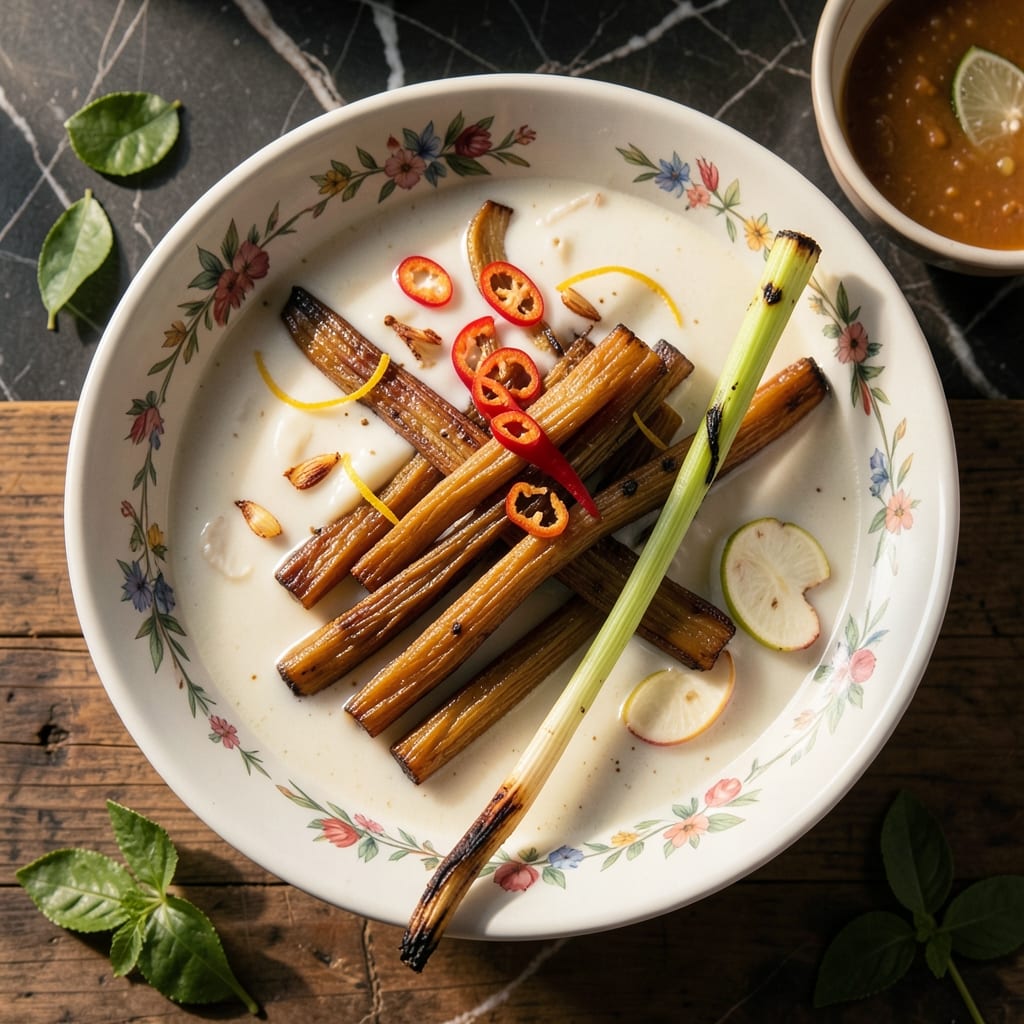
This vegan banana stem soup transforms humble stems into a velvety, umami-rich dish with Thai-inspired warmth and Filipino comfort food roots. The fibrous stems soften into a delicate, almost gelatinous texture that absorbs the coconut broth's creamy depth, creating a dish that's both earthy and subtly sweet. What makes this recipe special is how it repurposes what many consider waste—banana stems—into a restaurant-worthy meal that's surprisingly simple to prepare.
The process begins with carefully preparing the stems: boiling them to remove bitterness, then peeling and slicing them into bite-sized pieces. The broth, simmered with coconut milk, garlic, ginger, and lemongrass, infuses the stems with fragrant, aromatic layers. Unlike traditional versions that rely on meat-based broths, this version stays plant-forward while delivering the same rich, satisfying depth. The result is a soup that's velvety on the palate, with each spoonful offering a perfect balance of textures and flavors.
What you'll achieve is a restaurant-quality soup that's both hearty and light—ideal for warm evenings or as a comforting meal any time of year. The stems develop a tender yet slightly chewy consistency, while the coconut broth adds a luxurious creaminess that's naturally vegan. This dish pairs beautifully with steamed jasmine rice, which soaks up every last drop of the fragrant broth, or with a side of quick-pickled vegetables for a tangy contrast.
Perfect for adventurous cooks looking to explore Southeast Asian flavors or those seeking a vegan-friendly alternative to traditional soups, this recipe delivers bold umami notes without relying on meat. The preparation might seem unfamiliar at first, but the steps are straightforward once you understand the key techniques. Let's bring this earthy, comforting bowl to your table.
Ingredients for banana stem soup
Transform humble banana stems into a velvety, umami-rich soup with these 15 carefully selected ingredients.
| Ingredient | Amount | Notes |
|---|---|---|
| Banana Stems 🍌 | 2 cups | Fresh, fibrous stems only |
| Full-Fat Coconut Milk 🥥 | 2 cups | Canned, unsweetened preferred |
| Garlic Cloves 🧄 | 6 cloves | Minced for aromatic depth |
| Fresh Ginger 🌿 | 1 ½ tbsp | Grated, peeled root |
| Lemongrass Stalk 🌿 | 1 whole | Bruised, cut into 2-inch pieces |
| Thai Chili Peppers 🌶️ | 2 whole | Seeds removed for mild heat |
| Vegetable Broth 💧 | 4 cups | Low-sodium preferred |
| Yellow Onion 🧅 | 1 whole | Diced, medium size |
| Lime Juice 🍋 | 2 tbsp | Freshly squeezed |
| Fish Sauce 🍶 | 1 tbsp | Vegan alternative preferred |
| Soy Sauce 🍶 | 1 tbsp | Tamari for gluten-free |
| Coconut Sugar 🍯 | 1 tbsp | Or brown sugar substitute |
| Kaffir Lime Leaves 🍋 | 2 whole | Bruised for aroma |
| Fresh Cilantro 🌿 | ¼ cup | Chopped, for garnish |
| Jasmine Rice 🍚 | 1 cup | Uncooked, for serving |
The banana stems are the heart of this dish—look for fresh, fibrous stems at Asian markets or specialty grocers. Costco or Whole Foods often carry them, but if unavailable, substitute with okra or extra eggplant for texture. The stems must be peeled and boiled to remove bitterness before use. For the coconut milk, full-fat canned versions like Thai Kitchen deliver the richest flavor. Fresh ginger and lemongrass are non-negotiable for authentic aroma—bruise the lemongrass before adding to release oils. Kaffir lime leaves add a citrusy depth; if unavailable, substitute with lime zest at half the amount.
No fish sauce? Vegan fish sauce alternatives like Red Boat Vegan Fish Sauce or a mix of soy sauce and mushroom sauce work well. The Thai chilies can be swapped for red pepper flakes, but reduce to half the amount for milder heat. For extra umami, add 1 tbsp miso paste to the broth. The vegetable broth should be low-sodium—homemade or high-quality brands like Pacific Foods ensure clean flavor. If coconut sugar isn't available, brown sugar or maple syrup work in a pinch, though coconut sugar's caramel notes are ideal. The jasmine rice is optional but recommended—steamed to perfection it soaks up the fragrant broth beautifully.
Prepped stems keep for 3 days in the fridge, covered with water to prevent drying. The broth base can be made ahead and stored for 5 days or frozen for 3 months. For best texture, reheat gently on the stove—microwaving can make the stems mushy. Garnish with fresh cilantro just before serving to preserve its vibrant color. This soup tastes even better the next day as flavors meld, making it perfect for meal prep. Store in airtight containers and reheat with a splash of water to maintain creaminess.
Why You'll Love This Recipe
- One-Pot Magic: I swear by this recipe because it’s literally one pot—no chopping boards overflowing, no tiny garlic bits hiding in the sink. Just toss in the banana stems (peeled and sliced), garlic, ginger, and lemongrass, let it simmer, then blend with coconut milk. Twenty minutes later, you’re done. The stems soften faster than you’d think, and the coconut milk turns it velvety without extra fuss.
- Umami Bomb: That first sip? Chef’s kiss. The garlic and ginger caramelize into something rich, while the lemongrass adds a bright, citrusy lift—like a hug for your taste buds. And the banana stems? They hold their own, offering a subtle earthiness that balances the creaminess of the coconut milk. Honestly, it’s the kind of flavor that makes you pause mid-slurp.
- Leftover Lifesaver: This soup begs to be made in batches. It reheats like a dream (no graininess, no weird textures) and keeps in the fridge for days. I’ve turned it into a quick lunch, a late-night snack, or even a base for stir-fries when I’m lazy. Plus, the coconut milk makes it feel indulgent, so you won’t feel guilty eating it cold straight from the jar.
- Budget Bright Spot: Banana stems are cheap—way cheaper than chicken or tofu—and they bulk up the soup beautifully. Full-fat coconut milk adds richness without breaking the bank, and the aromatics (garlic, ginger, lemongrass) stretch flavor further than any pre-made broth. Between us, this is the kind of recipe that makes grocery day feel like a win.
Step-by-step instructions for earthy, umami-rich Thai-inspired banana stem soup
Aromatic, deeply flavorful, and uniquely Thai—this soup transforms humble banana stems into a velvety, complex broth.
Prepare the Aromatic Base
In a large pot, combine the 2 cups banana stems, 1 whole yellow onion, and 1 whole lemongrass stalk cut into 2-inch pieces. Add 6 cloves garlic cloves and 1.5 tbsp fresh ginger. Bruise the 2 whole kaffir lime leaves by rolling them with the palm of your hand, then add them to the pot. This aromatic bundle forms the foundation of your soup.
Cook over medium heat for 5-7 minutes, stirring occasionally, until the banana stems soften slightly and the onion becomes translucent. You'll notice the lemongrass and kaffir lime infusing the pot with their signature citrusy aroma—this is where the soup's complexity begins. Keep the heat steady to avoid burning the delicate aromatics.
Build the Broth with Depth
Add the 4 cups vegetable broth and bring to a gentle boil. Reduce heat to medium-low and simmer uncovered for 15-20 minutes. This slow simmering allows the banana stems to break down completely, releasing their earthy sweetness into the broth. Stir occasionally to prevent sticking.
After 15 minutes, add the 2 whole Thai chili peppers (seeds removed) and 1 tbsp coconut sugar. The sugar helps balance the natural bitterness of the banana stems while the chili peppers add a subtle heat. Taste the broth now—it should be developing a rich, umami character with notes of ginger and lemongrass. If it tastes too mild, add ½ tbsp fish sauce now.
Finish with Creamy Texture and Balanced Flavors
Strain the soup through a fine-mesh sieve into a clean pot, pressing gently on the solids to extract maximum flavor. Return the strained soup to medium heat and stir in the 2 cups full-fat coconut milk. The soup will thicken slightly as the coconut milk heats through—this creates that signature Thai velvety texture.
Add 1 tbsp soy sauce and 2 tbsp lime juice, then taste and adjust seasoning. The lime brightens the richness while the soy sauce adds depth. The soup should be balanced between sweet, savory, and slightly tangy. If it needs more umami, add another ½ tbsp fish sauce. Keep warm over low heat while you prepare the rice.
Serve with Jasmine Rice and Garnish
Cook the 1 cup jasmine rice according to package instructions until tender and fluffy. Divide the rice among bowls and ladle the hot soup over each serving. Garnish immediately with 0.25 cup fresh cilantro, chopped, and any remaining kaffir lime leaves torn into pieces. The fresh herbs add a bright contrast to the rich soup.
This soup shines when served immediately while the aromatics are still vibrant. Each spoonful delivers layers of flavor—earthy banana stems, creamy coconut, spicy chili, and citrusy lime. The jasmine rice soaks up the flavorful broth beautifully, making every bite satisfying. For extra depth, serve with a side of crispy shallots or toasted rice crackers.
Pro Tips For Making Banana Stem Soup
- PEEL STEMS FIRST: Banana stems are fibrous and stubborn—peel the tough outer layer off before slicing, or you’ll spend 10 minutes fighting the knife. Run the stem under cold water while peeling; it loosens the skin and keeps your fingers from getting shredded. (Yes, even if you’re impatient like me.)
- BLANCH STEMS BEFORE SIMMERING: Drop sliced banana stems into boiling water for 30 seconds first—this softens them faster and cuts down on the total simmering time. Skip this, and you’ll end up with a soup where the stems are still chewy after 45 minutes. I learned this the hard way when my first batch tasted like overcooked celery.
- SMASH GINGER WITH THE KNIFE: Instead of grating ginger, just smash the whole knob with the flat side of your knife before slicing—this releases more oils and aroma without turning your soup into a mushy ginger purée. Works for garlic too, but don’t overdo it or your soup will taste like a garlic factory.
- STRAIN COCONUT MILK AFTER HEATING: Heat the full-fat coconut milk separately until it’s just about to simmer, then strain it through a fine-mesh sieve lined with cheesecloth. This removes the gritty bits that turn up later, especially if you’re using canned milk. (Your future self will thank you when you’re not spitting out coconut specks.)
Perfect pairings for this dish
Coconut Milk Variations
For a lighter texture, substitute half the coconut milk with light coconut milk or unsweetened almond milk—just reduce the sugar to ½ tbsp to balance. If you prefer extra richness, use full-fat Thai coconut milk (like Aroy-D) and add 1 tsp coconut cream for a decadent finish. For a dairy-free alternative, coconut milk works perfectly, but if you're avoiding coconut entirely, swap it for cashew cream (blend ½ cup soaked cashews with 1 cup water).
The coconut milk is the soul of this soup—its creaminess softens the banana stems' earthiness. If you're out of canned coconut milk, homemade coconut milk (blend 1 cup grated fresh coconut with 1 cup water) works, though it may be slightly thinner. For a spicier twist, stir in 1 tsp sambal oelek with the coconut milk before adding it to the broth. 🥥
Side Dish Pairings
Serve with steamed jasmine rice—it’s traditional and soaks up every drop of the fragrant broth. For a crunchy contrast, add toasted rice crackers or crispy fried shallots on top. I also love pairing this soup with quick-pickled cucumbers (slice ½ cucumber, toss with 1 tbsp rice vinegar, ½ tsp sugar, and pinch of salt) for a tangy bite that cuts through the richness.
For a protein boost, offer grilled tofu (marinated in soy sauce and garlic) or crispy tempeh on the side. If you're serving this as a lunch bowl, add a handful of baby spinach or shredded purple cabbage—they wilt beautifully in the hot broth. For a dessert pairing, finish with mango slices and a sprinkle of toasted coconut flakes to echo the soup’s flavors. 🍚
Beverage Pairings
A Thai iced tea (like Thai Chai from Tazo) is the classic match—its sweet, spiced notes complement the soup’s umami depth. For something lighter, try jasmine green tea (hot or iced) to cleanse the palate between bites. If you prefer alcohol, a dry Riesling or Sauvignon Blanc (like Kim Crawford) highlights the citrusy and herbal notes in the soup. 🍷
For a non-alcoholic option, a ginger beer (like BrewDog Ginger Beer) adds a spicy kick that mirrors the Thai chilies. If you love herbal teas, hibiscus tea (sweetened lightly) pairs beautifully with the coconut and lime flavors. Avoid heavy beers or dark wines—they’ll overpower the delicate balance of this soup. For a refreshing contrast, serve with sparkling water infused with lime wedges and fresh mint.
Garnish Ideas
Fresh cilantro and kaffir lime leaves are non-negotiable—they add brightness and aroma. For extra flair, top with crushed peanuts (toast 2 tbsp peanuts in a dry pan until golden) or lime zest. I also love a drizzle of chili oil (mix 2 tbsp neutral oil with 1 tsp red pepper flakes and ½ tsp garlic) for a smoky, spicy finish. 🌿
For a textural surprise, add quick-pickled red onions (slice ¼ red onion, soak in 1 tbsp vinegar and ½ tsp sugar for 10 minutes). If you have Thai basil or holy basil, a few leaves on top add a fragrant, slightly sweet note. For a smoky touch, sprinkle with toasted sesame seeds or crumbled fried shallots. Garnishes should enhance, not overpower—the goal is to let the soup’s flavors shine. ✨
Nutrition facts
Frequently asked questions
How do I prepare banana stems for this soup?
Start by washing the stems thoroughly under running water to remove dirt. Peel off the tough outer skin with a knife or vegetable peeler, then slice the stems into ½-inch thick rounds. Boil them in water for 10 minutes to remove bitterness, then drain and rinse before using. The stems should be tender but still hold their shape when cooked in the soup.
Can I substitute banana stems if I can't find them?
Yes! For texture, use okra or eggplant slices (boiled first). For flavor, try mushrooms or lotus root, though they won't have the same earthy sweetness. The key is to pick ingredients that can absorb the coconut broth well. If using eggplant, salt it first to remove bitterness.
Why does my soup taste bitter?
Bitterness usually comes from undercooked stems or not removing enough bitterness during prep. Always boil stems for 10+ minutes before using, and rinse well after boiling. Balance bitterness with extra coconut sugar (½ tbsp) or lime juice (1 tbsp) at the end. If using store-bought stems, check for freshness—they should smell clean, not sour.
How do I make this soup spicier?
Add 1 extra Thai chili (seeds in for heat) or ½ tsp chili flakes to the broth. For depth, stir in 1 tsp sambal oelek with the coconut milk. If you love heat, finish with a drizzle of chili oil (mix 1 tbsp oil with ½ tsp red pepper flakes) before serving. Adjust gradually—spice builds as the soup sits!
Can I make this soup ahead of time?
The broth keeps for 5 days in the fridge or 3 months frozen. Reheat gently on the stove—never microwave—to preserve texture. For best flavor, reheat with a splash of water or coconut milk to restore creaminess. The stems will soften further; add fresh garnishes (cilantro, lime) when serving.