
Soups & Stews
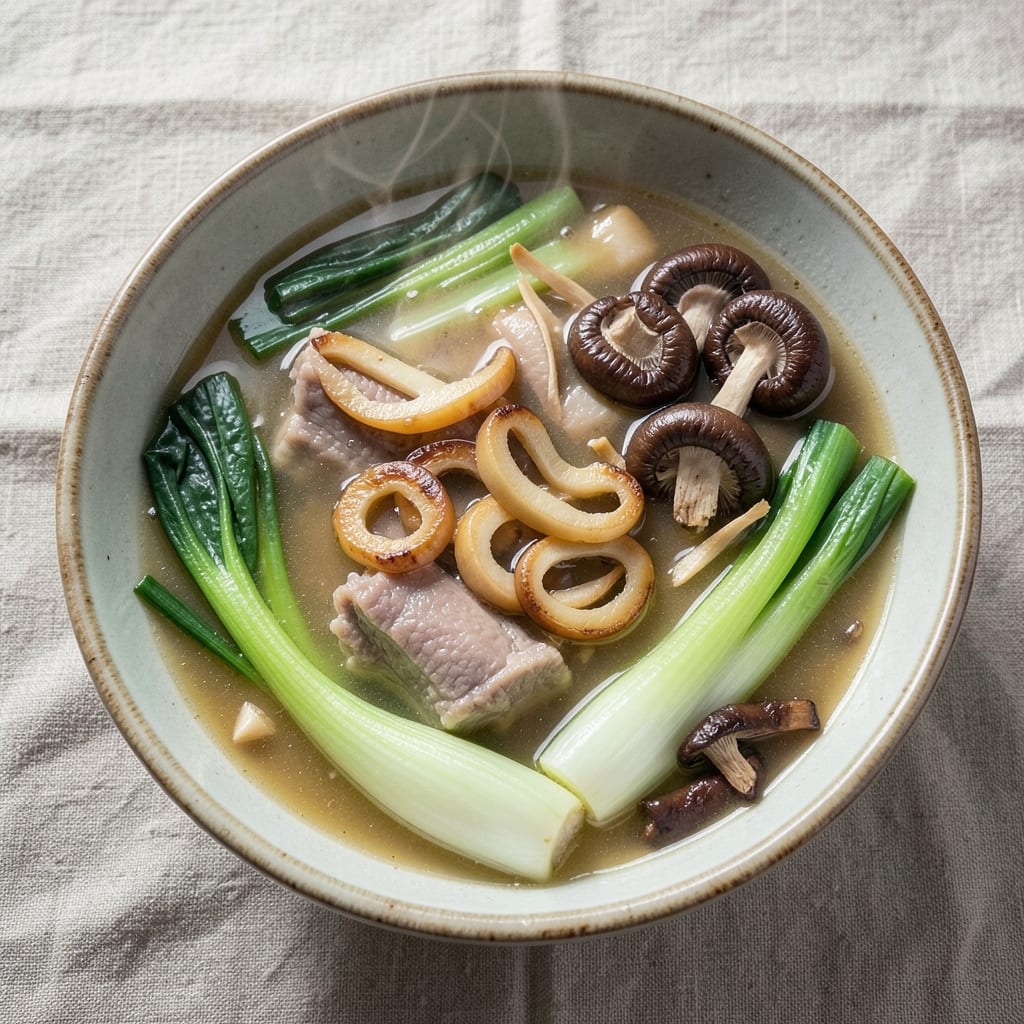
This Chinese bamboo shoot soup recipe transforms humble ingredients into a symphony of textures and flavors—crispy noodles floating in a silky broth infused with earthy bamboo shoots. The secret lies in balancing umami-rich pork, tender vegetables, and the subtle crunch of preserved bamboo shoots, all simmered until the broth develops a deep, savory complexity. What makes this dish truly special is how it marries traditional techniques with simple pantry staples, creating a bowl that feels both comforting and sophisticated.
The foundation of this soup is a robust broth, built by simmering pork bones and aromatics until the liquid becomes rich and fragrant. Preserved bamboo shoots add a unique, slightly salty crunch that cuts through the richness, while fresh vegetables like mushrooms and bok choy contribute brightness and texture. The noodles, stir-fried until crispy at the edges, provide the perfect contrast to the velvety broth.
What you'll achieve is a harmonious bowl where every spoonful delivers layers of flavor—crispy noodles, tender meat, and the earthy depth of bamboo shoots, all suspended in a broth that's both nourishing and deeply satisfying. This recipe is designed to be adaptable: swap pork for tofu or chicken, adjust spice levels, or add seasonal vegetables to make it your own.
Perfect for chilly evenings or as a light yet hearty meal, this soup captures the essence of Chinese comfort food—simple in ingredients, yet extraordinary in execution. Let's bring this traditional dish to your kitchen with a method that's both foolproof and deeply rewarding.
Ingredients for bamboo shoot soup recipe chinese
Earthy bamboo shoots and umami-rich pork bones form the soul of this silky Chinese soup.
| Ingredient | Amount | Notes |
|---|---|---|
| Pork Bones 🍖 | 2 lb | Marrow-rich for flavorful broth |
| Preserved Bamboo Shoots 🌿 | 1 cup | Rinsed to remove excess salt |
| Fresh Shiitake Mushrooms 🍄 | 8 whole | Stems removed, sliced |
| Bok Choy 🥬 | 2 whole | Baby size, halved lengthwise |
| Dried Shiitake Mushrooms 🍄 | 4 whole | Rehydrated for broth |
| Fresh Ginger | 1 inch | Peeled, sliced thinly |
| Green Onions 🧅 | 4 whole | White and green parts separated |
| Garlic Cloves 🧄 | 6 cloves | Smashed, not minced |
| Dried Wood Ear Mushrooms 🍄 | ½ oz | Rehydrated, torn |
| Chinese Egg Noodles 🍜 | 8 oz | Fresh or dried, uncooked |
| Sesame Oil 🫒 | 1 tbsp | For finishing, toasted |
| Light Soy Sauce 🧂 | 2 tbsp | For seasoning broth |
| Dark Soy Sauce 🧂 | 1 tbsp | For color and depth |
| Shaoxing Wine 🍷 | ¼ cup | Substitute with dry sherry |
| Salt 🧂 | 1 tsp | Adjust to taste |
The pork bones are non-negotiable for that deep, savory broth. Look for marrow-rich bones at your local Asian market—they'll give you the most flavor. If you can't find them, substitute with pork shoulder (2 lbs) and simmer it separately. Preserved bamboo shoots should be brined but not overly salty—rinse them well before using. For mushrooms, fresh shiitake adds meaty texture, while dried shiitake and wood ear contribute earthy depth to the broth. Gourmet Asian grocers often carry these dried varieties in bulk.
No bamboo shoots? Substitute with water chestnuts or extra mushrooms for texture. Fresh ginger is essential—substitute with 1 tsp ground ginger if needed, but the fresh version adds brightness. The green onions should be separated: whites go into the broth, greens are for garnish. For noodles, fresh egg noodles hold up best to stir-frying, but dried wheat noodles work in a pinch. The Shaoxing wine can be swapped for dry sherry or even white wine, though it loses some authenticity. If you're avoiding alcohol, a splash of apple cider vinegar adds acidity.
Broth keeps for 5 days in the fridge and freezes beautifully for 3 months. For extra crispy noodles, stir-fry them in sesame oil right before serving. Store bamboo shoots in their brine, mushrooms in paper bags, and ginger wrapped in damp paper towels. The wood ear mushrooms can be rehydrated ahead and stored in the fridge for 1 week. This soup tastes even better the next day as flavors meld—plan to make extra portions.
Why You'll Love This Recipe
- Here’s what sold me: this soup begs to be reheated. Pack it in thermoses the night before, and it’s still hearty and delicious at work. My kids actually ask for it in their lunches—no sad desk salads here.
- Pork Bones Shortcut: I swear by this trick—simmering pork bones first extracts so much richer broth than store-bought. Just toss them in cold water with a splash of vinegar, bring to a boil, then simmer until the bones are falling apart. That’s your flavor foundation, and it takes zero fancy technique.
- Umami Bomb Combo: Between the preserved bamboo shoots’ tangy crunch and dried shiitakes’ deep earthiness, this soup sings. Fresh shiitakes add that meaty chew, while bok choy brightens it up—like a party where every ingredient brings something special to the table.
- Lunchbox Hero: Here’s what sold me: this soup begs to be reheated. Pack it in thermoses the night before, and it’s still hearty and delicious at work. My kids actually ask for it in their lunches—no sad desk salads here.
Step-by-step instructions for bamboo shoot soup
Master this traditional Chinese soup where crispy noodles meet silky broth—every technique ensures perfect texture and depth.
Prepare the Pork Bone Broth
Rinse the 2 lb pork bones thoroughly under cold water and pat dry with paper towels. Place them in a large stockpot and cover with 8 cups cold water (double the weight of the bones). Bring to a boil over high heat, then immediately reduce to a gentle simmer—you should see small bubbles with no vigorous boiling. Skim off any foam that rises to the surface during the first 15 minutes of simmering.
Add the 4 whole dried shiitake mushrooms, 0.5 oz dried wood ear mushrooms, 1 inch sliced fresh ginger, and 6 smashed garlic cloves. Simmer uncovered for 2 hours, maintaining a low heat—this slow extraction builds rich umami. The broth should reduce slightly and develop a deep, golden color. Strain through a fine-mesh sieve into a clean pot, pressing gently on the solids to extract maximum flavor. Discard the solids.
Enhance the Broth with Aromatics and Preserved Ingredients
Return the strained broth to the pot and add 1 cup rinsed preserved bamboo shoots, 2 tbsp light soy sauce, 1 tbsp dark soy sauce, and 0.25 cup Shaoxing wine. Bring to a gentle boil over medium heat, then reduce to a low simmer for 10 minutes to allow the flavors to meld. Taste and adjust seasoning with 1 tsp salt—the broth should be savory but not salty. Keep warm while you prepare the remaining components.
In a separate bowl, soak the 8 oz Chinese egg noodles in warm water for 5 minutes if using dried noodles (fresh noodles can be used immediately). Drain and set aside. In another bowl, combine 8 whole fresh shiitake mushrooms (stems removed, sliced) and 2 whole bok choy (halved lengthwise) with 1 tbsp sesame oil and 1 tsp salt. Toss gently to coat.
Cook the Vegetables and Noodles
Heat a wok or large skillet over high heat until smoking. Add the sesame oil-coated shiitake mushrooms and bok choy, stirring-frying for 3-4 minutes until the mushrooms release their moisture and the bok choy begins to wilt. Remove from heat and set aside. In the same wok, add 4 whole green onions (white parts only, sliced) and 1 tbsp Shaoxing wine, stir-frying for 30 seconds until fragrant. Set aside the green onion whites and reserve for garnish.
In a separate pot, bring 4 cups fresh water to a boil. Add the 8 oz Chinese egg noodles and cook for 2-3 minutes (or per package instructions for al dente). Drain immediately and rinse under cold water to stop cooking. Toss the noodles with 1 tbsp sesame oil and set aside. The noodles should be tender but still slightly firm—they'll finish cooking in the hot broth.
Assemble and Finish the Soup
Return the broth to a gentle simmer over medium-low heat. Add the cooked shiitake mushrooms and bok choy, simmering for 2 minutes to warm through. Divide the 8 oz Chinese egg noodles evenly among 4 bowls, arranging them in a crispy, uneven pile—this creates the signature "crispy noodles" texture when served hot. Ladle the hot broth over the noodles, ensuring each serving gets an equal portion of vegetables.
Garnish each bowl with green onion whites and a drizzle of sesame oil. Serve immediately while the noodles are still crispy and the broth remains silky. The contrast between the crispy noodles and silky broth is what makes this dish exceptional—don't let the soup sit too long after assembly, or the noodles will soften.
Pro Tips For Making Bamboo Shoot Soup Recipe Chinese
- BLEACH THE BAMBOO SHOOTS: Preserved bamboo shoots taste like vinegar bombs if you skip this—rinse them thoroughly under cold water, then soak in a bowl of fresh water for 10 minutes to mellow the acidity. Drain and rinse again before adding to the pot. (Yes, even if the jar says "ready to eat.")
- SIMMER PORK BONES LOW: After the initial boil, drop the heat to a bare simmer—just enough to see tiny bubbles breaking the surface. High heat turns bones into glue; low heat extracts collagen for that silky broth. Cover and let it work for at least 45 minutes. (No, you can’t rush this.)
- SOAK DRY SHIITAKES FIRST: Toss dried shiitake mushrooms into warm water for 20 minutes—they’ll plump up and absorb less broth later. Slice the stems (they’re meaty!) and use them in the soup; discard the tough ends. Fresh shiitakes? Save them for the last 5 minutes to keep them crisp.
- ADD BOK CHOY LAST: Bok choy wilts faster than a politician at a press conference—toss it in only when the soup is done simmering. Stir gently and cook for 2 minutes max, or you’ll end up with sad, limp greens. (Pro move: Blanch it first if you’re really worried about texture.)
Regional styles of this recipe
Northern Chinese Style
In Beijing and surrounding regions, this soup often features thicker noodles like lamian (hand-pulled wheat noodles) instead of egg noodles. The broth tends to be lighter with a focus on pork shoulder instead of bones, creating a clearer but still rich base. I add pickled mustard greens for a tangy crunch that brightens the dish. For extra depth, a splash of black vinegar (just 1 tsp) at the end adds complexity. 🌶️
Southern Chinese Adaptation
Southern versions, especially in Guangdong, swap pork for chicken or shrimp and use rice noodles instead of wheat. The broth incorporates star anise and cinnamon sticks for warmth, giving it a spiced aroma. I like adding tender lotus root (sliced thin) and water chestnuts for texture. The noodles are often pre-cooked in the broth rather than stir-fried separately. 🌿
Cantonese Home-Style
In Cantonese households, this soup becomes a weeknight staple with simpler ingredients: less soy sauce, more fresh ginger, and extra mushrooms (including straw mushrooms). The noodles are lightly toasted in oil before being added to the broth to create crispy edges. I finish with a pinch of white pepper and extra green onions for aroma. This version is all about comforting simplicity. ✨
Modern Urban Twist
For a contemporary take, I blend traditional techniques with modern flavors: smoked paprika (just ½ tsp) for depth, kimchi (2 tbsp) for tang, and crispy fried shallots on top. The broth becomes slightly smoky while keeping the crispy noodle technique intact. This works especially well as a weekend brunch dish with a side of steamed dumplings. 🔥
Vegetarian Adaptation
To make this soup vegetarian, replace pork bones with shiitake mushroom stems and tofu skin (for umami). Use soy sauce (4 tbsp total) and mushroom broth as the base. Add extra preserved bamboo shoots and dried shiitake to compensate for lost richness. The noodles still get their crispy finish, but the broth gains a meaty texture from rehydrated wood ear mushrooms. 💚
Winter Comfort Version
For colder months, I boost the warming spices: 1 cinnamon stick, 3 star anise pods, and 1 tsp fennel seeds in the broth. The noodles are extra crispy (stir-fried twice), and I add thinly sliced daikon radish for crunch. A dash of chili oil (just ½ tsp) at the end adds heat without overpowering. Serve with pickled ginger on the side for balance. ❄️
Nutrition facts
Frequently asked questions
What makes preserved bamboo shoots different from fresh ones in this recipe?
Preserved bamboo shoots add a unique slightly salty, crunchy texture that fresh shoots can't replicate. Their firm bite contrasts beautifully with the silky broth, while their preserved flavor enhances the soup's depth. Always rinse them well first to remove excess salt. Fresh bamboo shoots would make the broth watery and lose that signature crunch.
Can I substitute pork bones with chicken or tofu for a vegetarian version?
Yes! For a vegetarian broth, use shiitake mushroom stems and tofu skin instead of pork bones, along with extra soy sauce (4 tbsp total) and mushroom broth. The noodles will still get crispy, but the broth gains umami from rehydrated wood ear mushrooms. For extra richness, add 1 tbsp miso paste to the broth.
Why do the noodles need to be crispy, and how do I achieve that?
The crispy texture is key to this dish! Cook noodles al dente (2-3 minutes), drain, rinse with cold water, and toss with 1 tbsp sesame oil. When serving, arrange them in an uneven pile—this creates crispy edges when the hot broth hits them. Serve immediately to maintain the texture. If they soften, reheat briefly in a dry pan.
How can I make this soup spicier or smokier?
For heat, add ½ tsp chili oil or 1 sliced red chili to the broth. For smokiness, stir in ½ tsp smoked paprika or 1 tsp liquid smoke (sparingly!) when assembling. A modern twist includes 2 tbsp kimchi for tangy depth. Adjust to taste—start small, as flavors intensify when reheated.
Can I prepare the broth ahead of time, and how long will it keep?
The broth keeps for 5 days in the fridge or 3 months in the freezer. Store it in airtight containers, and reheat gently before adding fresh ingredients. To enhance flavor, simmer the broth again for 10 minutes before using. The noodles and vegetables should always be prepared fresh for best texture.