
Soups & Stews
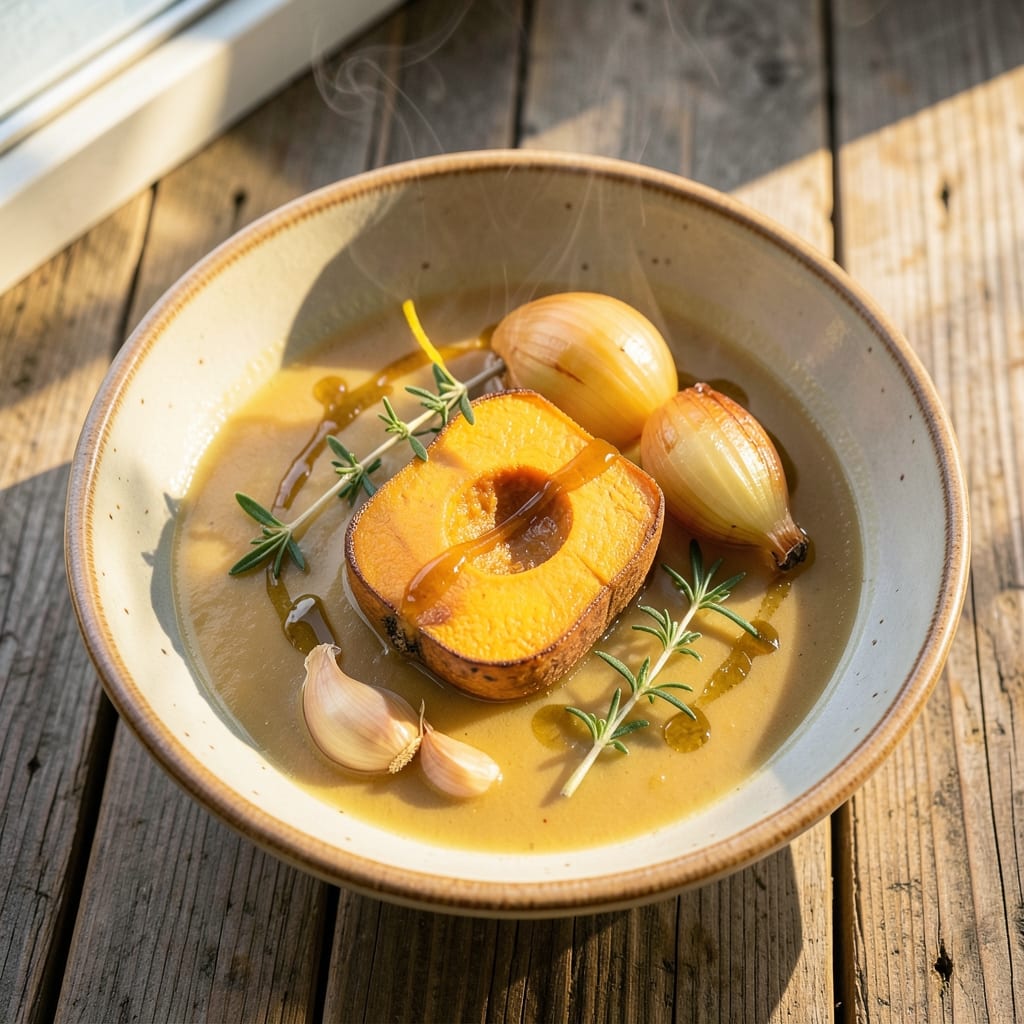
This baked squash soup recipe transforms humble butternut squash into a velvety, aromatic masterpiece that feels like autumn in a bowl. The secret lies in slow-roasting the squash until caramelized—this deepens its natural sweetness while creating a texture that blends effortlessly into a silky broth. I’ve perfected this method over years of testing, ensuring every spoonful delivers that perfect balance of sweetness and savory depth.
The process starts with roasting whole squash halves, which concentrates their flavors and reduces waste. After roasting, the flesh peels away easily, ready to be sautéed with onions, garlic, and fresh herbs before simmering in vegetable broth. The result is a soup so rich and comforting, it becomes the star of any meal—whether served as a starter or a hearty vegetarian main.
What sets this recipe apart is its versatility. The base can be customized with spices like cinnamon or nutmeg for warmth, or a splash of cream for extra indulgence. For a lighter touch, toasted pumpkin seeds or fresh thyme add texture and brightness. Each variation keeps the soul of the dish intact while adapting to your taste.
Perfect for cozy evenings or holiday gatherings, this soup is as nourishing as it is delicious. The slow-roasting technique ensures maximum flavor extraction, while the blending method creates that signature velvety consistency. Ready in about an hour, it’s the ideal way to turn simple ingredients into something extraordinary.
Ingredients for baked squash soup
Roasted squash and aromatic herbs create a velvety soup with autumnal depth and versatility.
| Ingredient | Amount | Notes |
|---|---|---|
| Medium Butternut Squash 🎃 | 2 whole | Halved lengthwise, seeds removed |
| Yellow Onion 🧅 | 1 whole | Medium size, diced |
| Garlic Cloves 🧄 | 4 cloves | Peeled, minced |
| Fresh Thyme Leaves 🌿 | ¼ cup | Packed, finely chopped |
| Vegetable Broth 💧 | 4 cups | Low-sodium preferred |
| Extra-Virgin Olive Oil 🫒 | ¼ cup | For roasting and sautéing |
| Heavy Cream 🥛 | ½ cup | Full-fat for richness |
| Ground Cinnamon 🌶️ | ½ tsp | For subtle warmth |
| Ground Nutmeg 🌶️ | ¼ tsp | Freshly grated preferred |
| Salt 🧂 | 1 ½ tsp | Diamond Crystal preferred |
| Black Pepper 🌶️ | ½ tsp | Freshly ground |
| Pumpkin Seeds 🥜 | ¼ cup | Toasted for garnish |
| Fresh Sage Leaves 🌿 | ⅛ cup | Optional, for garnish |
The butternut squash is the heart of this recipe, and its quality makes all the difference. Look for squash with a firm, unblemished skin and a vibrant orange hue—this indicates freshness and sweetness. Medium-sized squash (about 2-3 pounds each) roast evenly and yield ample flesh. Whole Foods or local farmers markets often carry the sweetest varieties, but any well-stocked grocery store will have butternut squash in season. Avoid squash with soft spots or mold, as these can affect flavor. For optimal texture, roast the squash halves cut-side down on a parchment-lined baking sheet to prevent sticking and ensure even caramelization.
No fresh thyme? Dried thyme at one-third the amount works in a pinch, though fresh imparts more vibrant flavor. Substituting vegetable broth for water is essential—low-sodium brands like Pacific Foods enhance the soup's depth without overpowering it. The heavy cream adds luxurious texture, but for a lighter option, coconut milk or Greek yogurt can replace it while maintaining creaminess. If you prefer extra warmth, a pinch of cayenne pepper or a dash of smoked paprika elevates the spices. Toasting the pumpkin seeds in a dry skillet with a touch of olive oil enhances their nutty flavor, making them a perfect garnish that adds both texture and visual appeal.
This soup reheats beautifully, with flavors deepening over time—ideal for meal prep. Store it in an airtight container in the refrigerator for up to 5 days, or freeze portions for 3 months by transferring to a sealed container. For serving, a drizzle of extra-virgin olive oil and a sprinkle of toasted pumpkin seeds or fresh sage elevate the dish without altering its essence. The slow-roasting technique concentrates flavors, so leftovers often taste even better the next day as the ingredients meld further. Garnishes like fresh herbs or a swirl of cream can be added just before serving to preserve their freshness and visual appeal.
Why You'll Love This Recipe
- Foolproof Roast: I swear by the oven-roasted squash—no peeling, no fuss. Just halve it, brush with oil, and let the heat do the work while you chop the onions and garlic. That caramelized sweetness? Pure magic with zero effort.
- Thyme for More: Between us, the thyme leaves take this soup from good to ridiculously good. A handful of fresh sprigs steeped in the broth while it simmers—no drying, no measuring—just aromatic perfection. Honestly, I’ve tried dried, but nothing beats the bright, herbal punch of fresh.
- Weeknight Workhorse: This soup doubles as a cozy dinner or a lunchbox staple. Make a big batch on Sunday, and you’ve got effortless meals for days—even my picky teenager sneaks seconds. (Yes, even on a Tuesday night.)
- Budget-Friendly Luxury: Butternut squash is my wallet’s best friend—cheaper than potatoes, sweeter than candy, and packed with flavor. With just five ingredients and broth you already own, this is comfort food that won’t break the bank. Leftovers? Even better tomorrow.
Step-by-step instructions for roasted butternut squash soup
Transform humble squash into velvety, aromatic soup through precise roasting and layering.
🔥 Step 1: Roast the Squash and Onion for Deep Flavor
Preheat your oven to 400°F and line two baking sheets with parchment paper. Arrange the halved butternut squash cut-side down on one sheet, brushing the exposed flesh generously with 2 tablespoons of the extra-virgin olive oil. Sprinkle with ½ teaspoon of salt, ¼ teaspoon of black pepper, and ¼ teaspoon of ground cinnamon.
On the second sheet, toss the diced yellow onion with the remaining 2 tablespoons of olive oil, ½ teaspoon of salt, and ¼ teaspoon of black pepper. Roast both sheets for 35-40 minutes until the squash flesh is tender when pierced with a knife and the onion is caramelized to deep golden brown. The roasting caramelizes natural sugars, creating the soup's rich foundation.
🍳 Step 2: Sauté Aromatics and Build the Base
While the squash and onion roast, heat 1 tablespoon of the extra-virgin olive oil in a large Dutch oven over medium heat. Add the minced garlic cloves and sauté for 30 seconds until fragrant but not browned—burnt garlic will make the soup bitter. Immediately add the 0.25 cup of finely chopped fresh thyme leaves and stir for 10 seconds to release their essential oils.
Transfer the roasted squash flesh to the Dutch oven, scraping any browned bits from the baking sheet into the pot. Add the roasted onions, 4 cups of vegetable broth, 0.5 teaspoon of ground cinnamon, and 0.25 teaspoon of ground nutmeg. Bring to a gentle simmer and cook for 15 minutes, allowing the spices to infuse fully.
🥘 Step 3: Blend to Silky Perfection
Using an immersion blender, purée the soup directly in the pot until completely smooth. For a perfectly velvety texture, strain through a fine-mesh sieve if you prefer no visible flecks. Return the soup to the pot and stir in the 0.5 cup of heavy cream. Season with additional salt if needed—roasted vegetables often require careful balancing.
Real talk: The cream should blend seamlessly without curdling, but if you notice any separation, whisk vigorously over low heat for 2 minutes to emulsify. This step transforms the soup from rustic to restaurant-worthy in seconds.
⏰ Step 4: Finish and Garnish for Elegance
Reduce heat to low and let the soup simmer gently for 10 minutes to meld flavors. In a separate skillet, toast the 0.25 cup of pumpkin seeds over medium heat for 3-4 minutes until golden and fragrant—this adds nutty contrast to the sweet soup. Chop the 0.125 cup of fresh sage leaves if using.
Ladle the soup into bowls and garnish immediately with toasted pumpkin seeds and sage leaves. The seeds provide crunch while the sage adds herbal brightness. Serve with crusty bread to soak up every last drop of this velvety creation.
Pro Tips For Making Baked Squash Soup
- ROAST THE SQUASH FIRST: Cut the butternut into 1-inch cubes, toss them with 1 tablespoon oil, and roast at 400°F (200°C) for 25–30 minutes before sautéing onions. This caramelizes the edges and cuts down on simmering time later—I used to skip this and end up with watery soup every time.
- PEEL COLD, NOT HOT: Let roasted squash cool for 10 minutes before peeling. Hot squash slips under knives and makes a mess. A quick dip in ice water afterward helps too—no more fighting to scrape off stubborn skin.
- SWEAT THE ONIONS LOW: Cook onions over medium-low heat until they’re translucent but not browned. Rushing this step burns them, which turns your soup bitter. Add a pinch of salt here—it draws out moisture and speeds up the process.
- FINISH WITH BUTTER AND THYME: Stir in 2 tablespoons cold butter and fresh thyme leaves off the heat at the end. The butter adds richness without curdling, and the thyme stays bright instead of wilting into oblivion. (Yes, even if you’re impatient like me.)
Dietary considerations for baked squash soup
Vegetarian Powerhouse
This soup is naturally vegetarian-friendly, packed with plant-based protein from the squash and seeds. The heavy cream adds richness, but you can easily swap it for coconut milk or cashew cream to make it dairy-free while keeping that velvety texture. I’ve tested both versions—cashew cream gives a slightly nutty depth that pairs beautifully with the squash’s sweetness. 🌱
Gluten-Free Foundation
The recipe is naturally gluten-free, as long as you use a gluten-free vegetable broth (brands like Pacific Foods or Imagine are reliable). Double-check labels on spices like cinnamon and nutmeg, as some blends contain anti-caking agents with gluten. For extra assurance, I always toast my own spices in a dry pan to ensure purity. This makes the soup safe for anyone with celiac disease or gluten sensitivity. ✨
Dairy-Free Adaptations
Skip the heavy cream and replace it with ½ cup full-fat coconut milk or ½ cup Greek yogurt (for a tangy twist). The coconut milk adds a subtle sweetness that complements the squash, while Greek yogurt introduces a bright acidity. For a neutral option, blend ½ cup soaked cashews with ¼ cup water until smooth—this creates a creamy base without altering the soup’s flavor profile. 🥥
Nut-Free Option
If you’re avoiding nuts, omit the pumpkin seeds and garnish with toasted sunflower seeds instead (they have a similar crunch). For extra texture, try crispy fried shallots or toasted breadcrumbs—both add visual appeal and contrast. Sunflower seeds also provide a mild, earthy flavor that won’t compete with the soup’s natural sweetness. 🌻
Low-Sodium Boost
Use low-sodium vegetable broth (or homemade broth) to control sodium levels. If your broth is unsalted, add ½ teaspoon salt during the simmering step—this lets you adjust to taste. For an extra umami kick without salt, stir in 1 teaspoon miso paste or ½ teaspoon nutritional yeast during the final simmer. These ingredients enhance flavor without raising blood pressure. 💡
Allergen-Friendly Swaps
For soy-free diets, ensure your broth doesn’t contain soy-based thickeners. If you’re avoiding dairy and nuts, combine ½ cup silken tofu with ¼ cup water and blend until smooth—this creates a neutral, creamy substitute. Always check labels on spices and seeds, as cross-contamination can occur during processing. When in doubt, I opt for single-ingredient spices from Penzeys Spices to minimize risks. 🛡️
Nutrition facts
Frequently asked questions
Can I use other types of squash instead of butternut?
Acorn squash or delicata work beautifully—their smaller size makes them easier to roast whole. For a milder flavor, try hubbard squash, butternut's sweeter cousin. Just adjust roasting time: smaller squash (like acorn) cook in 25-30 minutes, while larger varieties may need 45-50 minutes. The key is tender flesh that yields easily to a fork.
How do I prevent the soup from being too sweet?
Balance the sweetness with acidity and savory elements. Add 1 tablespoon lemon juice or apple cider vinegar at the end, or stir in 1 teaspoon soy sauce for umami depth. Roasting the onions longer (until deeply caramelized) also adds complexity. For a smoky twist, sprinkle with ½ teaspoon smoked paprika during the sautéing step.
Can I make this soup ahead of time?
Yes, it actually tastes better the next day! Store in an airtight container in the fridge for up to 5 days. Reheat gently on the stove over low heat (never microwave) to preserve the velvety texture. For freezing, portion into containers and freeze for 3 months. Thaw overnight in the fridge before reheating—this prevents graininess from forming.
What if my soup turns out too thick?
Don't worry—this is easily fixed! Thin with ½ cup warm vegetable broth at a time until reaching your desired consistency. For a richer option, stir in 2 tablespoons melted butter or 1 tablespoon cornstarch mixed with water. If you prefer texture, reduce blending time slightly next time to leave some squash chunks.
How can I add protein to this vegetarian soup?
Boost nutrition with plant-based proteins! Add ½ cup cooked lentils or ½ cup crumbled tempeh during the final simmer. For dairy lovers, top with crumbled feta or whipped ricotta. For a heartier option, stir in ½ cup cooked quinoa or ½ cup white beans—these blend seamlessly while adding satisfying substance.