
Soups & Stews
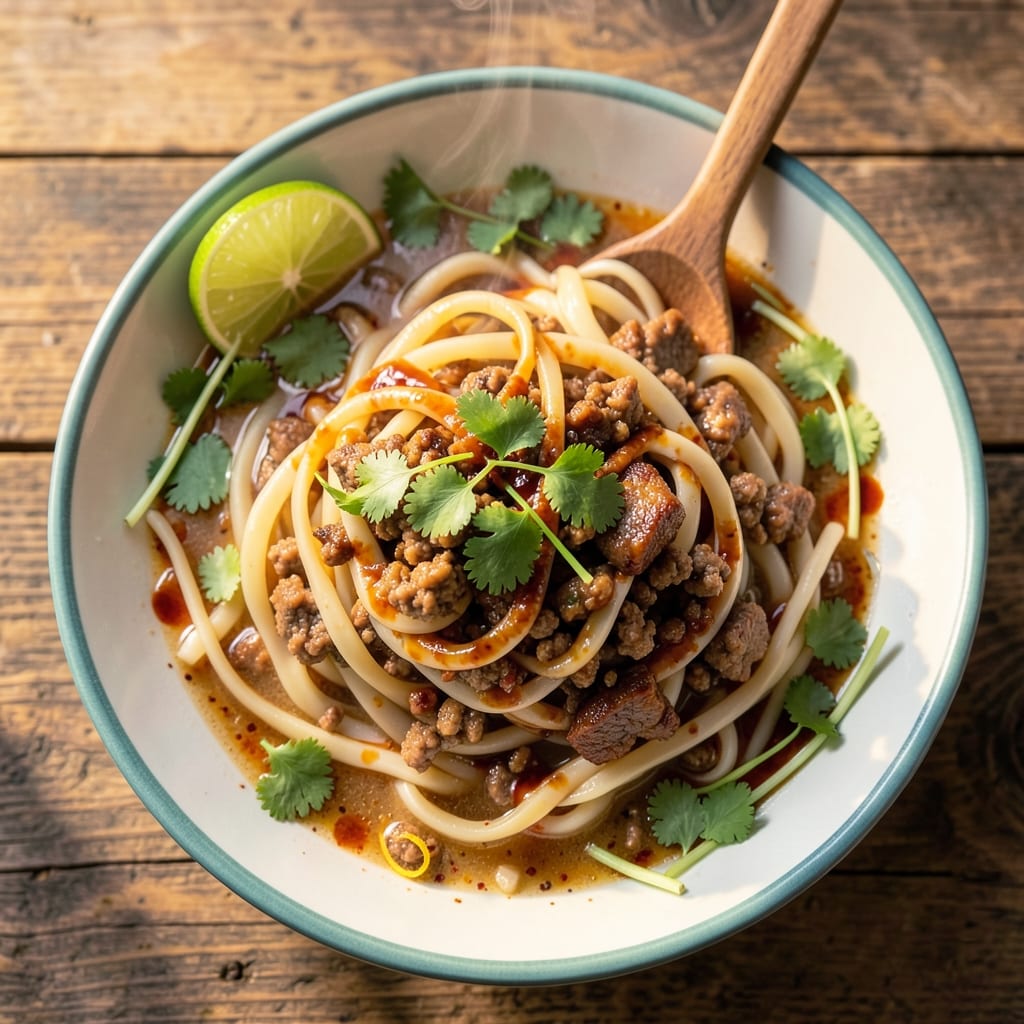
This bak chor mee soup recipe brings the bold flavors of Singaporean street food into your kitchen with its aromatic spiced broth and tender minced pork. The key lies in balancing sweet, savory, and spicy notes—just like the legendary dishes served in hawker centers. I've perfected this version to deliver that signature rich, fragrant broth that wraps around chewy wonton noodles and crisp bean sprouts in every spoonful.
What sets this recipe apart is the layered approach to flavor—starting with a fragrant spice paste that infuses the broth, then building depth with star anise, cinnamon, and a touch of soy sauce. The minced pork cooks low and slow until it's tender yet retains just enough bite, while the noodles soak up the essence of the broth. Traditional toppings like chili oil, lime wedges, and fresh cilantro elevate each bite with brightness and heat.
By the time you serve this steaming bowl, you'll have a dish that's restaurant-quality yet simple enough for weeknight dinners. The aroma alone will draw everyone to the table, and the first sip of that spiced broth will transport you straight to Singapore. This is comfort food at its finest—warm, satisfying, and packed with character.
Perfect for cold evenings or when you're craving something hearty yet flavorful, this bak chor mee soup is a crowd-pleaser that works as a main dish or even a light lunch when paired with a simple salad. The secret to its success lies in patience—letting the flavors meld and develop over time. Let's get cooking!
Ingredients for bak chor mee soup
These bold ingredients create the signature aromatic broth and tender pork of Singaporean bak chor mee.
| Ingredient | Amount | Notes |
|---|---|---|
| Wonton Noodles 🍜 | 1 lb | Dried, chewy variety preferred |
| Ground Pork 🐷 | 1 ½ lb | Freshly minced for texture |
| Fresh Bean Sprouts 🌱 | 4 cups | Crisp, untrimmed for crunch |
| Fresh Cilantro 🌿 | ½ cup | Chopped for garnish |
| Lime Wedges 🍋 | 4 whole | For serving |
| Chili Oil 🌶️ | ¼ cup | For serving |
| Star Anise 🌟 | 2 whole | Whole pods for infusion |
| Cinnamon Sticks 🌿 | 2 whole | For aromatic depth |
| Dried Shiitake Mushrooms 🍄 | 4 whole | Rehydrated for umami |
| Light Soy Sauce 🥄 | ½ cup | For savory balance |
| Dark Soy Sauce 🥄 | 1 tbsp | For color and depth |
| Oyster Sauce 🍲 | 2 tbsp | For richness |
| Sugar 🍚 | 1 tbsp | Balances flavors |
| Sesame Oil 🫒 | 1 tbsp | For aroma |
| Garlic Cloves 🧄 | 6 cloves | Minced for spice paste |
| Ginger Root 🌿 | 2 tbsp | Freshly grated |
| Vegetable Oil 🫒 | 2 tbsp | For cooking pork |
| Salt 🧂 | 1 tsp | Adjust to taste |
| Black Pepper 🌶️ | ½ tsp | Freshly ground |
| Chicken Broth 💧 | 4 cups | Homemade or quality store-bought |
The star anise and cinnamon sticks are non-negotiable—they give that signature hawker center aroma. Whole pods work best, and you can find them at Asian markets or the international aisle at Whole Foods. Fresh shiitake mushrooms? Trader Joe's sells them dried, and they're a game-changer for umami depth. The pork should be freshly minced—pre-ground loses texture fast. For the noodles, wonton noodles are key; avoid egg noodles—they're too soft. If you can't find them, rice vermicelli works in a pinch, but soak it longer.
No star anise? Anise seeds at double the amount get you close. Running short on shiitake? Dried porcini mushrooms work too—just rehydrate them first. The soy sauces matter—light soy for flavor, dark soy for color. No oyster sauce? Mushroom sauce or extra soy sauce bridges the gap. Fresh ginger and garlic can be swapped for paste, but fresh is better. The bean sprouts? Baby carrots or shredded cabbage work if you're out, but they won't have that same satisfying crunch. And for the chili oil, Sichuan peppercorn oil adds a tingling kick if you're feeling adventurous.
The broth is where the magic happens—let it simmer at least 30 minutes for full flavor development. Store leftovers in the fridge for 3-4 days, but save the noodles separate so they don't get soggy. Freeze the broth alone for up to 3 months—it reheats beautifully. I always make a double batch because this soup tastes even better the next day. The pork and noodles can be prepped ahead, but add them fresh when serving so they stay tender. Lime wedges and chili oil should be added just before eating to keep everything vibrant.
Why You'll Love This Recipe
- No-Chop Needed: I swear by this shortcut—just rinse the bean sprouts and cilantro, toss them in whole, and let the broth do the work. The noodles cook in minutes, and the pork? One pan, no fuss.
- Umami Bomb: That crispy pork crust with the soft center? Absolute magic. The lime wedges cut through the richness, and the cilantro adds this bright, herby finish that makes it taste like a street stall in seconds.
- Lunch or Dinner: Honestly, this soup is my go-to for both. Pack it for work—it reheats like a dream—or serve it steaming hot for a lazy weekend brunch. The noodles soak up the broth perfectly every time.
- Budget Win: Ground pork stretches far, and the ingredients cost pennies. I make a double batch on Sundays, and by Wednesday, I’m still eating it—no takeout, no regrets. Plus, the leftovers taste even better the next day.
Step-by-step instructions for fragrant wonton noodle soup
Here's how to build this aromatic Singaporean classic with rich layers of spice and texture.
Prepare the Spiced Broth and Pork Mixture
Heat the 2 tablespoons vegetable oil in a large pot over medium heat. Add the 6 cloves minced garlic and 2 tablespoons freshly grated ginger root, cooking for 1 minute until fragrant but not browned. This aromatic base forms the soul of your soup.
Add the 1.5 lb ground pork and cook for 5-6 minutes, breaking it apart with a wooden spoon until it loses its raw color. The pork should be fully cooked through but still retain its texture—don't overwork it or it'll turn rubbery. Stir in the 2 whole star anise, 2 whole cinnamon sticks, 1 tablespoon sugar, 1 teaspoon salt, and ½ teaspoon black pepper. Let these spices toast for 30 seconds to release their essential oils.
Build the Flavorful Base
Pour in the 4 cups chicken broth and bring to a gentle simmer. Add the 4 whole dried shiitake mushrooms (previously soaked in warm water for 20 minutes and drained), ½ cup light soy sauce, 1 tablespoon dark soy sauce, and 2 tablespoons oyster sauce. Let the mixture simmer uncovered for 10 minutes to allow the flavors to meld together.
Here's where the magic happens: the dark soy sauce will give your broth that signature deep mahogany color while the oyster sauce adds umami richness. Taste the broth now—it should be savory but not overly salty. If it needs more depth, add another ½ teaspoon salt or 1 teaspoon sugar to balance the flavors.
Cook the Wonton Noodles and Prepare Garnishes
While the broth simmers, prepare the 1 lb wonton noodles by boiling them in a separate pot of salted water according to package instructions (usually 4-5 minutes). They should be cooked until al dente—slightly firm to the bite. Drain and set aside, reserving ½ cup of the starchy pasta water. This liquid will help create a silky soup texture when added later.
For the garnishes, trim the 4 cups fresh bean sprouts by snapping off the root ends. Chop the ½ cup fresh cilantro into small pieces. Keep the 4 lime wedges and ¼ cup chili oil aside for serving—these bright, spicy elements will cut through the richness of the soup.
Combine and Finish the Soup
Return the cooked wonton noodles to the pot with the spiced pork broth. Add the ½ cup reserved pasta water and stir gently to combine. The noodles should absorb the flavorful broth while maintaining their chewy texture. Simmer together for 3-4 minutes—just enough time to heat through without overcooking the noodles.
Divide the hot soup among 4 bowls, then arrange the trimmed bean sprouts and chopped cilantro on top. Drizzle each serving with 1 tablespoon chili oil and serve immediately with the lime wedges on the side. The contrast of cool lime with the warm, spicy soup is what makes this dish truly special.
Serve with Confidence
Each bowl should be a perfect balance of textures—chewy noodles, tender pork, crisp bean sprouts, and fresh herbs—all swimming in a fragrant, aromatic broth. The chili oil adds a subtle heat that wakes up your palate, while the lime brightens the whole experience.
I like to serve this with extra chili oil on the side so everyone can adjust the spice level to their taste. The leftovers actually taste even better the next day as the flavors continue to develop. This soup delivers comfort in every spoonful—warm, satisfying, and packed with authentic Singaporean flavor.
Pro Tips For Making Bak Chor Mee Soup
- Cook Pork in Two Stages: I learned this the hard way—dumping all the ground pork into the pot at once makes it grey and greasy. Instead, sear half first on high heat until deeply browned (3-4 minutes), then push it aside and cook the rest. The second batch won’t stick as much, and you’ll get that caramelized flavor that makes the soup sing.
- Blanch Bean Sprouts Last: Fresh bean sprouts wilt in seconds when they hit hot broth. Keep them crisp by adding them just before serving—toss them in cold water first to remove any dirt, then drain well. They’ll stay crunchy and bright, not sad and limp at the bottom of your bowl.
- Don’t Overcrowd the Noodles: Wonton noodles clump like glue when overcooked or packed too tightly. Cook them in batches if needed, and rinse them under cold water immediately after boiling to stop the cooking. They’ll hold their shape better and soak up the broth without turning into a mushy mess.
- Use Lime Zest, Not Just Juice: The real magic in bak chor mee isn’t just the sour hit—it’s the bright aroma. Grate a little zest from the lime wedges and toss it into the broth while it simmers. It’s a tiny effort that makes the whole dish smell like a street stall, not just a home kitchen. (Yes, even if you’re impatient like me.)
Storing and reheating this dish
Broth Storage Secrets
The fragrant broth is where all the magic lives, so store it properly to preserve those deep flavors. After simmering, let it cool completely before transferring to airtight containers—I use glass Pyrex jars because they don’t absorb odors. Store in the refrigerator for up to 4 days or freeze for 3 months. The broth actually improves overnight as the spices continue to infuse. 💫
Noodle Prep Ahead
Cook the wonton noodles just before serving to maintain their perfect chewy texture, but you can prep them ahead. Boil them according to package instructions, drain, and rinse with cold water to stop cooking. Store in an airtight container in the fridge for up to 2 days. When reheating, simmer in fresh broth for 2-3 minutes—never microwave or they’ll turn mushy.
Pork Holding Technique
The minced pork stays tender when stored properly. After cooking, let it cool to room temperature, then transfer to an airtight container with a splash of 1 tablespoon light soy sauce to keep it moist. Refrigerate for up to 3 days or freeze for 2 months. When reheating, warm gently in the broth over low heat for 3-4 minutes—never high heat or it’ll dry out.
Garnish Freshness
Bean sprouts, cilantro, and lime wedges are best used fresh, but you can prep some elements ahead. Trim the bean sprouts and store in a damp paper towel inside a resealable bag in the fridge for 2 days. Chop the cilantro and store it in a small container with a splash of water (like a bouquet) for 3 days. Lime wedges keep well in the fridge for 5 days—just squeeze them before serving to brighten the dish.
Reheating Like a Pro
When reheating, never microwave the entire soup—it ruins the texture. Instead, transfer broth and pork to a pot and heat over medium-low until steaming. Add the noodles last and simmer for 2-3 minutes to warm through without overcooking. For extra richness, stir in 1 teaspoon sesame oil and a pinch of sugar to balance any dried-out flavors. 🔥
Freezer-Friendly Tips
For long-term storage, freeze the broth and pork separately in quart-sized freezer bags. Lay flat to save space and label with the date. When ready to serve, thaw overnight in the fridge, then reheat as directed. The noodles don’t freeze well, so cook them fresh when reheating. Garnishes like chili oil and lime can be added fresh after reheating for maximum brightness.
Nutrition facts
Frequently asked questions
Can I make bak chor mee with beef instead of pork?
Yes, but the flavor will differ slightly. For beef, use 1.5 lb ground beef (80/20 blend works best) and reduce cooking time to 4-5 minutes to avoid toughness. Swap the cinnamon sticks for 1 bay leaf and add 1 teaspoon smoked paprika for depth. The broth will have a richer, heartier profile but lose the classic Singaporean pork aroma.
Why does my bak chor mee broth taste bland?
Most likely, the spices didn't infuse long enough. Simmer the broth uncovered for at least 20-30 minutes to develop flavor. Check your soy sauce balance—too much light soy can overpower. Try adding 1 tablespoon fish sauce or ½ teaspoon MSG for umami depth. Also ensure you're using whole star anise and cinnamon sticks (not ground) for maximum aroma.
What's the best way to make this soup vegetarian?
Replace the pork with 1.5 lb mushrooms (shiitake + cremini) and add 1 tablespoon vegetarian oyster sauce or 2 tbsp hoisin sauce. Boost umami with 1 tbsp soy sauce + 1 tsp mushroom powder. For texture, stir in ½ cup cooked lentils after simmering. The bean sprouts and chili oil remain perfect toppings for a vibrant, meat-free version.
Can I use regular egg noodles instead of wonton noodles?
Technically yes, but the texture will be different. Egg noodles cook faster and become softer. For a closer match, try rice noodles (soak for 10 minutes in warm water before adding) or udon noodles (simmer for 5-6 minutes). The chewy quality of wonton noodles is key to authentic bak chor mee—it's worth seeking them out at Asian markets.
How do I adjust the spice level for kids?
Keep the chili oil on the side and serve it without. Reduce the garlic to 4 cloves and ginger to 1 tbsp. For extra mildness, swap the chili oil for 1 tbsp toasted sesame oil and add ½ teaspoon sugar to balance flavors. The broth's natural sweetness from the pork and soy sauce will still shine through.