
Soups & Stews
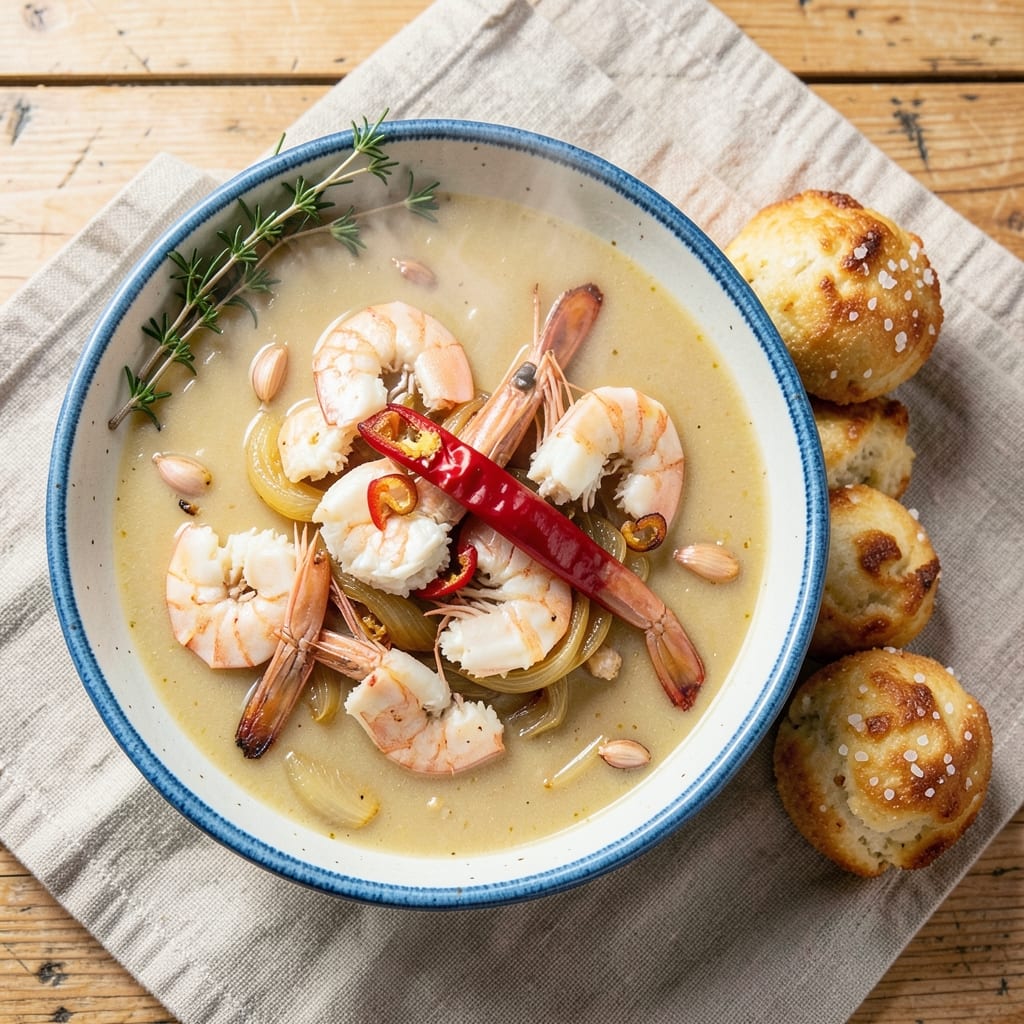
This Bahamian crab soup and dough recipe brings the vibrant flavors of the Bahamas to your kitchen with its aromatic blend of crab, coconut milk, and Scotch bonnet peppers. 🌊 The secret lies in slow-simmering the soup with fresh thyme and allspice, while the dough—whether crispy conch balls or tender dumplings—adds a satisfying texture that balances the rich broth. I developed this recipe after years of perfecting the harmony between the spiced seafood and the buttery dough, ensuring every bite delivers that island-inspired taste.
The soup begins with a fragrant base of onions, garlic, and Scotch bonnet peppers, which infuse the coconut milk with a subtle heat and depth. Fresh lump crab and shrimp are added later to preserve their delicate texture, while the dough component—whether fried in hot oil or baked—absorbs the soup’s flavors beautifully. The combination of tender seafood and crispy, golden dough creates a dish that’s both hearty and elegant, perfect for gatherings or a special weeknight dinner.
What makes this recipe truly special is its versatility. The dough can be adjusted to your preference—crispy fritters for a textural contrast or softer dumplings for a comforting bite. Served with a squeeze of lime and fresh cilantro, the dish bursts with Bahamian character. The slow-cooked broth ensures the flavors meld perfectly, while the dough adds a playful, interactive element that makes it a standout dish.
Whether you're introducing someone to Bahamian cuisine or recreating a taste of home, this recipe delivers restaurant-quality results with minimal fuss. The one-pot method simplifies the process, and the dough can be prepped ahead, making it ideal for busy hosts. Let’s dive into the steps that bring this island classic to life in your kitchen.
Ingredients for bahamian crab soup and dough
Sixteen ingredients for a Bahamian feast that balances spicy seafood with crispy, golden dough.
| Ingredient | Amount | Notes |
|---|---|---|
| Fresh Lump Crab Meat 🦀 | 1 ½ lb | Backfin or blue crab preferred |
| Large Shrimp 🦐 | 1 lb | Peeled, deveined, tails on |
| Scotch Bonnet Peppers 🌶️ | 2 whole | Seeds removed for mild heat |
| Yellow Onions 🧅 | 1 whole | Medium size, chopped fine |
| Garlic Cloves 🧄 | 6 cloves | Fresh, minced finely |
| Fresh Thyme 🌿 | ¼ cup | Stems removed, chopped |
| Ground Allspice 🌶️ | 1 tsp | Freshly ground preferred |
| Coconut Milk 🥥 | 2 cans | Full-fat, 13.5 oz each |
| Fresh Lime Juice 🍋 | ½ cup | Strained, no pulp |
| All-Purpose Flour 🌾 | 2 cups | For dough, sifted |
| Unsalted Butter 🧈 | ½ cup | Cold, cubed |
| Large Eggs 🥚 | 1 whole | Cold for dough |
| Vegetable Oil 🫒 | 2 cups | For frying dough |
| Fresh Cilantro 🌿 | ¼ cup | Chopped, for garnish |
| Sea Salt 🧂 | 1 ½ tsp | Diamond Crystal preferred |
| Black Pepper 🌶️ | ½ tsp | Freshly ground |
The crab and shrimp are the stars, so freshness is non-negotiable. Local seafood markets or trusted fishmongers are your best bet—ask for lump crab with minimal shell fragments. If shopping at Whole Foods or Trader Joe's, look for pre-packaged lump crab labeled 'backfin' or 'blue crab'. For shrimp, size matters: medium (21-25 count per pound) gives you that perfect balance of texture. The Scotch bonnet peppers are the flavor bomb—Caribbean markets often carry them fresh, but if you can't find them, a habanero with seeds removed works in a pinch. Just remember: these peppers pack serious heat, so handle with care. Fresh thyme and allspice add depth, but if you're using dried allspice, toast the whole berries in a dry pan first to unlock their aroma before grinding.
No Scotch bonnet? Habanero or red jalapeño with seeds removed will give you a similar kick, though the flavor profile shifts slightly. Swapping shrimp for scallops or white fish keeps it pescatarian—just adjust cooking time since fish cooks faster. For the dough, gluten-free flour blend works if needed, though the texture will be more delicate. The coconut milk should be full-fat for richness—light versions won't give the same creamy base. If you can't find fresh lime juice, bottled lime juice with no added sugars is fine, but add a pinch of salt to compensate. The dough can be prepped ahead and chilled for up to 24 hours, making it perfect for stress-free hosting. For extra crispiness, double-fry the dough balls—first at 325°F until set, then again at 375°F until golden.
The soup base keeps for 3 days in the fridge, but the dough is best fried fresh—though you can shape it ahead and refrigerate until ready to cook. Store leftover dough in an airtight container between parchment layers to prevent sticking. The fried dough stays crispy for about 2 hours at room temperature, so make it just before serving. For meal prep, consider making the soup base in advance and reheating gently with the seafood added later. The dough can be frozen for up to 3 months—just thaw completely before frying. Garnish with fresh cilantro right before serving to keep those bright, herbaceous notes alive. And trust me on the lime juice—always add it fresh at the end, not before, to preserve the soup's delicate balance.
Why You'll Love This Recipe
- I’ll be real: the second day is often my favorite. The flavors meld even more, and the dough gets that perfect chewy texture. Plus, it reheats like a dream—just warm it through, and it’s ready to go. (My freezer’s always stocked with this; it’s my secret weapon for lazy days.)
- One-Pot Magic: Honestly, I swear by this recipe because it’s actually one-pot—no fussing with multiple pans or cleanup. Just chop the onions, garlic, and Scotch bonnet (carefully!), toss in the shrimp and crab, let it simmer, and boom. The dough? You can boil it separately or even bake it in the same pot’s steam—minimal effort, maximum flavor.
- Scotch Bonnet Heat: Between us, that fiery Scotch bonnet pepper is the star—it wakes up the whole dish. The crab and shrimp soak up just enough spice to make every bite ridiculously good, but the dough soaks up the broth like a sponge, turning it into this creamy, slightly chewy cloud. (Yes, even on a Tuesday night.)
- Weeknight to Party: Here’s what sold me—this soup feels fancy enough for company but unfussy enough for a weeknight. Serve it with crusty bread for a casual dinner, or double the dough and make it a full spread for guests. The crab and shrimp make it feel special without requiring a 3-hour prep.
Step-by-step instructions for Bahamian crab soup and dough
Master this Bahamian classic with rich seafood soup and crispy conch balls.
🍳 Step 1: Sauté Aromatics for the Soup Base
Heat 2 tablespoons vegetable oil in a large pot over medium heat. Add the chopped yellow onions and cook for 5 minutes until soft and translucent. Add the minced garlic cloves and continue cooking for 1 minute until fragrant.
Stir in the 2 whole Scotch Bonnet peppers (seeds removed) and cook for 2 minutes until slightly softened. This step builds the aromatic foundation for your soup. The peppers add just enough heat without overwhelming the delicate seafood flavors. If you prefer milder heat, reduce cooking time slightly.
👨🍳 Step 2: Build the Spiced Coconut Milk Base
Add the 2 cans coconut milk, 0.25 cup fresh thyme, 1 tsp ground allspice, 1.5 tsp sea salt, and 0.5 tsp black pepper to the pot. Stir well and bring to a gentle simmer over medium-low heat. Let it cook for 10 minutes to allow the spices to bloom and the flavors to meld.
Here's the thing—don't rush this step. The coconut milk should be gently simmering, not boiling vigorously. This slow cook time ensures the spices infuse properly and the base develops depth. You'll know it's ready when the mixture smells rich and aromatic with a subtle spicy note from the Scotch Bonnet.
🍳 Step 3: Cook the Seafood
Add the 1 lb large shrimp (peeled and deveined) and 1.5 lb fresh lump crab meat to the pot. Gently stir to combine with the coconut milk mixture. Simmer for 5-7 minutes until the shrimp turn pink and the crab becomes opaque. Be careful not to overcook—the seafood should remain tender with just a hint of doneness.
Remove from heat and stir in the 0.5 cup fresh lime juice. This bright citrus note cuts through the richness of the coconut milk and seafood. Taste and adjust seasoning if needed—you might need a touch more salt or lime to balance the flavors. Keep the soup warm while you prepare the dough.
👨🍳 Step 4: Make the Conch Ball Dough
In a large bowl, combine the 2 cups all-purpose flour, 0.5 cup unsalted butter (cold and cubed), and 1 whole large egg. Use a pastry cutter or your fingers to work the butter into the flour until the mixture resembles coarse crumbs. Add 1 tablespoon cold water if needed to help the dough come together.
This dough should be firm but not sticky. If it feels too dry, add just a teaspoon more water. The butter should be evenly distributed but still visible in small flecks. Don't overwork the dough—just mix until it holds together when pressed. Chill in the refrigerator for 30 minutes to firm up before shaping.
🔥 Step 5: Fry the Conch Balls
Heat 2 cups vegetable oil in a deep skillet to 350°F. While the oil heats, roll the chilled dough into 1-inch balls (you should get about 12-15 balls). Carefully drop 2-3 balls at a time into the hot oil and fry for 2-3 minutes until golden brown on all sides.
Use a slotted spoon to remove the fried dough balls and drain on paper towels. The oil temperature is critical—too hot and they'll burn; too cool and they'll be greasy. You want them to puff up slightly and develop a crispy, golden exterior. Serve immediately with the warm soup for the ultimate Bahamian experience.
🍽️ Step 6: Serve and Garnish
Ladle the warm soup into bowls and top each serving with 2-3 conch balls. Garnish with 0.25 cup chopped fresh cilantro just before serving. The contrast of the crispy, buttery dough balls with the rich, spiced seafood soup is what makes this dish truly special.
For an authentic touch, serve with lime wedges on the side. Each bite should deliver a perfect balance of tender seafood, aromatic spices, and the satisfying crunch of the conch balls. Enjoy immediately while the dough is still crispy and the soup is steaming hot.
Pro Tips For Making Bahamian Crab Soup And Dough
- Sweat the Onions First: I learned this the hard way—Bahamian crab soup needs deep onion flavor, but if you rush it, you’ll taste raw onion. Cook the yellow onions in oil on medium-low for 10 minutes until they’re golden and caramelized, not just translucent. That’s where the sweetness comes from, and it’s non-negotiable for the broth.
- Peel Shrimp Like a Pro: Skip the messy peeling later—hold each shrimp at the head and gently pull backward while twisting. The shell will slide right off, leaving the tail intact. If you’re short on time, leave the shells on for the broth (they add flavor), but peel them before adding to the soup so they don’t turn rubbery.
- Control the Scotch Bonnet Heat: Bahamian soup needs that pepper kick, but too much burns the crab’s delicate flavor. Remove the white membrane and seeds, then finely chop just one pepper (or half if you’re sensitive). Toss it in last and let it steep for 2 minutes before serving—this gives you heat without overpowering the seafood.
- Simmer, Don’t Boil: The soup’s magic happens in a gentle simmer, not a rolling boil. Once everything’s in the pot, reduce heat to medium-low and keep it at a bare simmer—tiny bubbles, no splashing. Boiling turns the crab opaque and tough, and it’ll make the dough taste like it was cooked in the broth instead of fried.
Essential equipment for perfect results
Deep-Fryer Essentials
For authentic Bahamian conch balls, a deep-fryer like the Ninja Foodi 6-Quart is my go-to—it maintains consistent 350°F oil temperature and has a built-in thermometer to prevent burning. If you prefer stovetop frying, a heavy-bottomed cast-iron skillet (like Lodge 10.25-inch) distributes heat evenly and handles high heat without warping. 🔥
Thermometer Accuracy
Never fry without a thermometer—I swear by the Thermoworks Thermapen ONE for precision. The dough balls need 350°F oil to achieve that perfect golden crust without greasiness. A kitchen thermometer ensures you don’t overheat the oil (which causes burning) or underheat it (resulting in soggy dough). For stovetop frying, test the oil by dropping in a pinch of flour—it should sizzle and float.
Dough Prep Tools
A pastry cutter or fork works best for mixing the dough, but my secret weapon is a rolling pin for shaping the balls uniformly. For extra precision, I use a 1-inch round cookie cutter to create perfectly sized dough balls. If you don’t have one, a standard ice cube tray works in a pinch—just press the dough into the molds before frying.
Soup Pot Upgrade
The soup’s aromatic base requires a heavy Dutch oven (like Le Creuset 5.5-quart) to distribute heat evenly and prevent scorching. A stainless-steel pot with a tight-fitting lid also works—just avoid nonstick, as the high heat can degrade the coating. For simmering, a wire whisk helps prevent the coconut milk from curdling, and a fine-mesh strainer ensures smooth texture if you prefer no visible thyme stems.
Garnish Essentials
Fresh cilantro and lime wedges elevate the dish, so invest in a sharp chef’s knife (like Wüsthof Classic) for clean herb chopping. A microplane also works for zesting lime rinds if you want to add an extra layer of brightness. For presentation, a slotted spoon helps place conch balls neatly on top of the soup without dropping them into the broth.
Optional Extras
For a double-fry (to maximize crispiness), a second deep-fryer or a second skillet is ideal. If you’re short on space, fry the dough balls once at 325°F until set, then transfer to a wire rack to cool slightly before frying again at 375°F for color. A paper towel roll keeps fried dough balls warm and crispy while you finish serving.
Nutrition facts
Frequently asked questions
Can I substitute Scotch bonnet peppers in this recipe?
If you can't find Scotch bonnet peppers, use 1-2 habaneros with seeds removed for similar heat, or 1 red jalapeño for milder spice. Just remember—these peppers pack serious heat, so adjust to taste. For a completely different flavor profile, you could even try 1 teaspoon smoked paprika for depth without the heat.
How do I make the dough less greasy?
To keep the dough balls crispy but not greasy, ensure your oil is at 350°F and use a thermometer to monitor temperature. Drain fried dough on a wire rack instead of paper towels to prevent moisture buildup. Also, chill the dough for 30 minutes before shaping—this helps the butter solidify and reduces greasiness during frying.
Can I bake the dough instead of frying?
Yes! For a lighter version, roll the dough into balls and bake at 400°F for 12-15 minutes until golden. Brush with egg wash (1 egg + 1 tbsp water) before baking for extra crispiness. The baked version won't be as crispy as fried, but it's a great alternative for a healthier option. Just increase baking time by 2-3 minutes if needed.
How do I store leftovers?
Store the soup (without dough) in an airtight container in the fridge for 3 days, and the dough balls (if not fried) can be refrigerated for 24 hours before shaping. For fried dough, keep them in a single layer on a wire rack at room temperature for up to 2 hours to maintain crispiness. Reheat soup gently on the stove, adding fresh lime juice at the end.
What's the best way to serve this dish?
Serve the soup in deep bowls with 2-3 conch balls per serving, garnished with fresh cilantro and lime wedges. For a complete Bahamian meal, pair it with white rice or fried plantains. The dough balls are meant to be dipped into the soup, so encourage guests to enjoy the contrast of textures and flavors!