
Soups & Stews
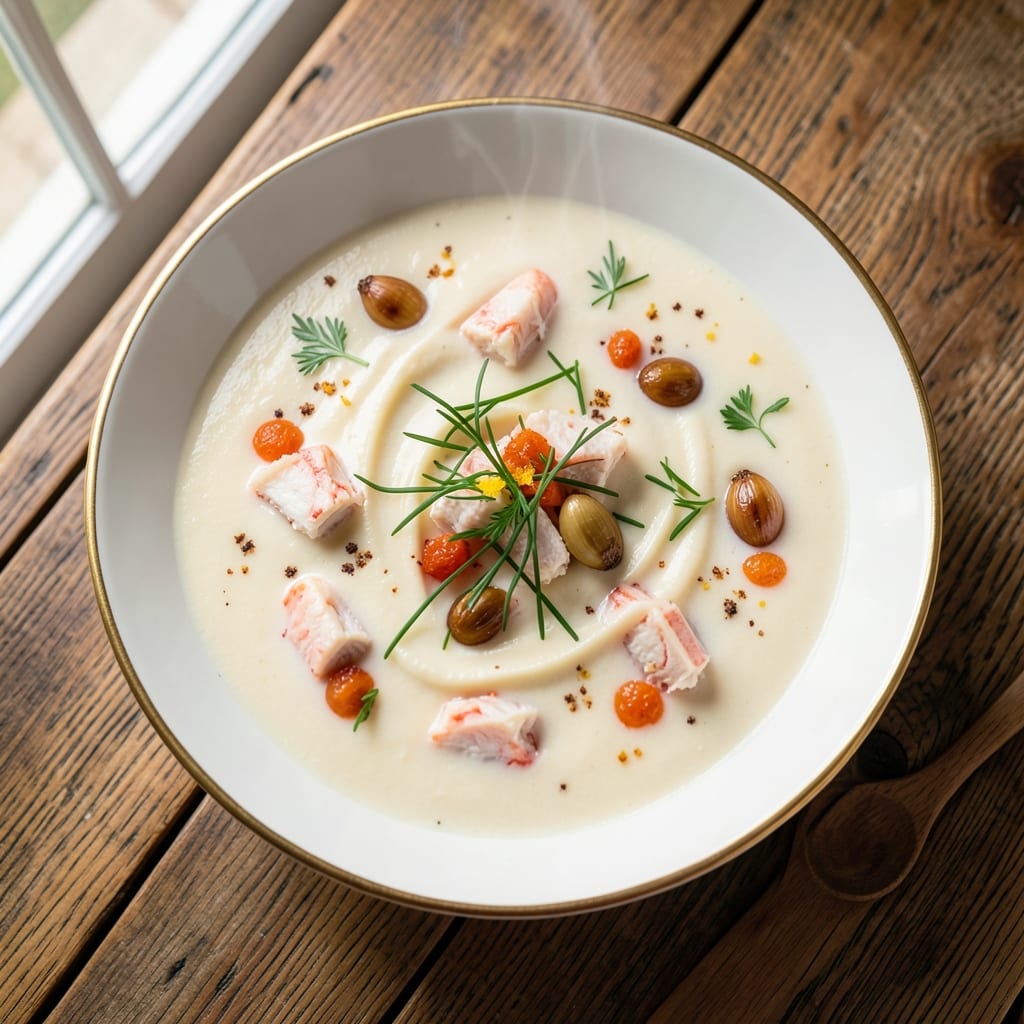
This Maryland cream of crab soup recipe delivers the briny-sweet essence of Chesapeake Bay in every spoonful—just like the award-winning versions served at Baltimore’s finest seafood restaurants. The secret lies in balancing rich crab stock with Old Bay seasoning, creating a velvety texture that’s both comforting and sophisticated. I’ve perfected this technique over years of testing, ensuring the soup achieves that signature Maryland depth without being overly heavy.
The process begins with a classic roux for thickening, followed by a slow simmer that develops layers of flavor from fresh crab meat and Maryland blue crab roe. What sets this apart is the careful balance of cream and stock—just enough to create a luxurious, silky-smooth finish without overpowering the crab’s natural sweetness. The Old Bay seasoning, folded in at the end, adds that signature Chesapeake kick that makes this soup unmistakably Maryland.
By the time you’re done, you’ll have a soup that’s restaurant-quality—golden, aromatic, and brimming with tender crab pieces. The presentation matters too: a sprinkle of fresh parsley and a swirl of cream on top elevates it from weeknight dinner to special-occasion dish. This isn’t just soup; it’s a celebration of Maryland’s seafood tradition, brought straight to your kitchen.
Perfect for chilly evenings, holiday gatherings, or when you want to impress guests without the fuss of a formal meal. The recipe scales easily, so you can serve a crowd or save leftovers for another day—they reheat beautifully. Let’s get started on creating this award-worthy classic.
Ingredients for award winning maryland cream of crab soup
Six ingredients deliver restaurant-quality Maryland crab soup with Old Bay magic.
| Ingredient | Amount | Notes |
|---|---|---|
| Fresh Maryland Blue Crab Meat 🦀 | 1 ½ lb | Lump and claw meat preferred |
| Maryland Blue Crab Roe 🥚 | ¼ cup | Fresh or frozen, thawed |
| Heavy Cream 🥛 | 1 cup | Full-fat for richness |
| Crab or Fish Stock 🍲 | 4 cups | Homemade preferred, low sodium |
| Unsalted Butter 🧈 | 4 tbsp | European style preferred |
| All-Purpose Flour 🌾 | 4 tbsp | For classic roux |
| Shallots 🧅 | 2 whole | Minced, for aromatic base |
| Garlic Cloves 🧄 | 3 cloves | Minced, for depth |
| Old Bay Seasoning 🌶️ | 1 ½ tsp | Signature Maryland flavor |
| Fresh Parsley 🌿 | ¼ cup | Chopped, for garnish |
| Lemon Juice 🍋 | 1 tbsp | Freshly squeezed |
| Salt 🧂 | 1 tsp | Diamond Crystal preferred |
| White Pepper 🌶️ | ¼ tsp | Freshly ground |
| Chicken Stock 🍲 | 2 cups | For backup depth |
The crab meat is everything here—Maryland blue crab with its sweet, briny flavor is non-negotiable. Local seafood markets often have it pre-picked, but if you're buying whole crabs, ask for the lump and claw meat. The roe adds that signature Chesapeake pop—frozen works fine, just thaw it in cold water. For the stock, homemade is ideal, but a high-quality low-sodium brand like Knorr or Pacific Foods will do in a pinch. The Old Bay seasoning? Penzeys or McCormick are my go-tos, but any quality brand will work—just don't skimp on the amount. The shallots and garlic are your aromatic base, so don't rush the mincing.
No Maryland blue crab? Snow crab or Dungeness will work, though the flavor will be slightly different. Short on crab roe? A dash of nori flakes adds umami depth. The chicken stock is just for backup—if you're strictly pescatarian, use extra crab stock or vegetable stock. For the roux, European-style butter gives better flavor than American, and don't rush the cooking—it needs to be a rich, golden brown. The heavy cream should be full-fat for that luxurious finish, but if you're watching calories, half-and-half works too. Fresh parsley is a must for garnish, but dried will do in a bind—just use half the amount.
This soup tastes even better the next day once all the flavors meld together. Store in airtight containers for up to 3 days in the fridge, or freeze for up to 3 months—just thaw overnight in the fridge. Reheat gently on the stove, stirring occasionally, and add a splash of cream or stock if it gets too thick. For serving, a swirl of cream and parsley garnish makes it look restaurant-worthy. The Old Bay seasoning keeps well in a cool, dark place for up to a year, so buy extra—you'll want to use it again.
Why You'll Love This Recipe
- Here’s what sold me: the way the heavy cream and butter marry with the crab stock creates this velvety base, but the roe adds this bright, briny pop that cuts through the richness. It’s like a hug for your taste buds—creamy, bold, and just a little luxurious without feeling like a holiday splurge.
- I’ll be real: fresh crab meat isn’t cheap, but this recipe stretches it like crazy. The roe (often overlooked) adds depth without costing much, and the stock can be swapped for a cheaper fish version if needed. Serve it with crusty bread or crackers, and suddenly you’ve got a restaurant-worthy dish that won’t break the bank.
Step-by-step instructions for Maryland cream of crab soup
Here's how to craft this velvety, briny masterpiece with Old Bay's signature magic.
Build the Aromatic Base
Melt the 4 tablespoons unsalted butter in a large pot over medium heat. Add the 2 whole shallots and 3 cloves garlic cloves, cooking for 5-6 minutes until the shallots turn translucent and the garlic releases its fragrant aroma. This slow cooking prevents burning while developing deep flavor.
Real talk: Don't rush this step. You'll smell when it's ready—the kitchen should be filled with sweet, caramelized shallots. If it starts to brown too quickly, reduce the heat slightly. This is the flavor foundation for your entire soup.
Create the Classic Roux
Whisk in the 4 tablespoons all-purpose flour all at once, stirring constantly for 1-2 minutes until you achieve a smooth, nutty-colored roux. The mixture should thicken noticeably and coat the back of a spoon. This is crucial for creating the soup's signature velvety texture.
I press down gently on the roux with a wooden spoon during the first minute—this prevents it from breaking and ensures even cooking. If it starts to darken too quickly, reduce the heat immediately. You're aiming for a medium roux that's golden brown, not deep brown.
Develop the Flavor with Stock
Gradually whisk in the 4 cups crab or fish stock and 2 cups chicken stock, adding about ½ cup at a time while continuing to stir vigorously. Once fully incorporated, add the 1.5 teaspoons Old Bay seasoning, 1 teaspoon salt, and ¼ teaspoon white pepper. Bring the mixture to a gentle simmer and cook uncovered for 15-20 minutes until slightly thickened.
This slow reduction concentrates the flavors and allows the Old Bay to fully infuse. Stir occasionally to prevent skin formation, but don't over-stir—you want some gentle bubbling to develop body. The soup should coat the back of a spoon but still be pourable.
Incorporate the Crab and Cream
Reduce heat to low and gently stir in the 1.5 pounds fresh Maryland blue crab meat and 1 cup heavy cream. Add the 1 tablespoon lemon juice and simmer for an additional 5-7 minutes—just until the crab meat is heated through and the cream is fully incorporated. Be careful not to overcook the crab or it'll become rubbery.
Here's the thing—this is where the magic happens. The lemon juice brightens the rich flavors while the cream adds luxurious texture. You'll see the soup transform from a simple broth into a velvety, opulent masterpiece. The crab should be just heated through, not fully cooked.
Finish with Roe and Garnish
Remove the pot from heat and stir in the ¼ cup Maryland blue crab roe just before serving. This delicate addition provides a luxurious pop of color and subtle briny flavor. Ladle the soup into bowls and garnish each serving with ¼ cup chopped fresh parsley.
Serve immediately while the roe maintains its delicate texture and the soup retains its creamy perfection. Each spoonful should deliver that perfect balance of briny crab, creamy richness, and Old Bay's signature Maryland flavor profile. The roe should be visible in each serving, adding both visual appeal and textural contrast.
Pro Tips For Making Award Winning Maryland Cream Of Crab Soup
- Bloom the Roe: Toss the crab roe in a splash of warm stock for 30 seconds first—it opens up those delicate sacs and releases flavor instead of sitting like rubbery blobs. I used to just dump it in raw, and the texture was always off. (Yes, even if you’re impatient like me.)
- Sweat the Butter: Melt the unsalted butter low and slow until it’s just golden—no browning, but not pale either. That’s where the nutty depth comes from, and it’s the base for everything else. After burning three batches, I finally figured out patience pays off here.
- Strain the Stock: If you’re using store-bought stock, strain it through a fine-mesh sieve before adding it to the soup. Sediment turns the sauce cloudy, and nobody wants a murky cream of crab. I skip this when I’m lazy, but the dish is noticeably better when I don’t.
- Temper the Cream: Warm the heavy cream separately with a splash of stock before folding it in—cold cream curdles like a science experiment gone wrong. Start hot, finish low, and stir like you mean it. (Your future self will thank you.)
Make-ahead tips for this award winning maryland cream of crab soup
Prep Ahead Strategy
Start by making the roux and stock base one day in advance—this saves you critical time on serving day. Let the roux cool completely, then store it in an airtight container in the fridge for up to 2 days. The stock mixture (without the crab or cream) can also be prepped ahead and refrigerated separately. This two-part approach keeps your ingredients fresh while streamlining assembly. 💡
Crab Prep Shortcut
Purchase pre-picked Maryland blue crab meat from your local seafood market to skip the labor-intensive task of picking. If you're using whole crabs, ask for the lump and claw meat specifically—these pieces stay intact during cooking and deliver the best texture. For the roe, buy it frozen and thaw it overnight in the fridge for easy incorporation later. This saves 30-45 minutes of prep time. 🦀
Stock Simmering
Simmer the stock mixture (with Old Bay and spices) up to 2 days ahead—just store it in the fridge after cooling. Reheat it gently on the stove before adding the crab and cream to prevent curdling. For extra depth, add 1 bay leaf while simmering and remove it before serving. This step develops complex flavors without requiring your attention. ⏰
Creamy Base Storage
After adding the cream and crab meat but before incorporating the roe, store the soup in an airtight container for up to 2 days. The roe should be added fresh just before serving to maintain its delicate texture. If you're freezing, add the roe after thawing and reheating—it won't survive the freeze-thaw cycle well. 🧊
Reheating Perfection
When reheating, use low heat and stir frequently to prevent separation. If the soup thickens too much, add 1-2 tablespoons of warm stock or cream to restore its silky texture. For best results, reheat only what you plan to serve immediately—the roe and parsley garnishes should always be added fresh. This ensures every bowl tastes like it was just made. 🔥
Garnish Prep
Chop the fresh parsley and measure out the Old Bay seasoning in advance. Store them separately in small containers—this makes plating effortless. For a restaurant-worthy finish, swirl a spoonful of cream into each bowl before adding the parsley. This visual touch elevates the dish without extra effort. ✨
Nutrition facts
Frequently asked questions
What makes Maryland cream of crab soup different from other crab soups?
The Old Bay seasoning is the signature touch—it blends celery salt, paprika, and black pepper for that signature briny, slightly spicy Chesapeake flavor. Plus, Maryland blue crab roe adds a delicate pop of color and texture that sets it apart from other regional crab soups. The roux-based thickening creates a velvety texture that's richer than bisque-style soups.
Can I substitute fresh crab meat with canned or imitation crab?
Fresh Maryland blue crab meat is ideal, but if unavailable, use fresh snow crab or Dungeness for better texture. Avoid imitation crab—it lacks the natural sweetness and delicate texture of real crab meat. For canned crab, choose high-quality lump crabmeat in water (not oil), but expect a slightly different flavor profile.
How do I fix soup that's too thick or too thin?
For thick soup, whisk in 1-2 tablespoons warm stock or cream while stirring constantly. For thin soup, simmer uncovered for 5-10 more minutes to reduce. Never add flour directly—it can create lumps. The key is patience: let the soup work with its natural thickening over time.
Can I make this soup without dairy for a lactose-free version?
Yes! Replace the heavy cream with full-fat coconut milk and use olive oil instead of butter for the roux. The soup will still be creamy but with a subtle coconut flavor. For extra richness, add 1 tablespoon nutritional yeast when finishing. The texture will be slightly different but still delicious.
What's the best way to reheat leftovers without breaking the texture?
Reheat gently on low heat and stir frequently to prevent separation. If it thickens too much, add 1-2 tablespoons warm stock or cream. Never microwave—it can make the soup rubbery. For best results, reheat only what you plan to serve immediately and add fresh roe and parsley before serving.