
Soups & Stews
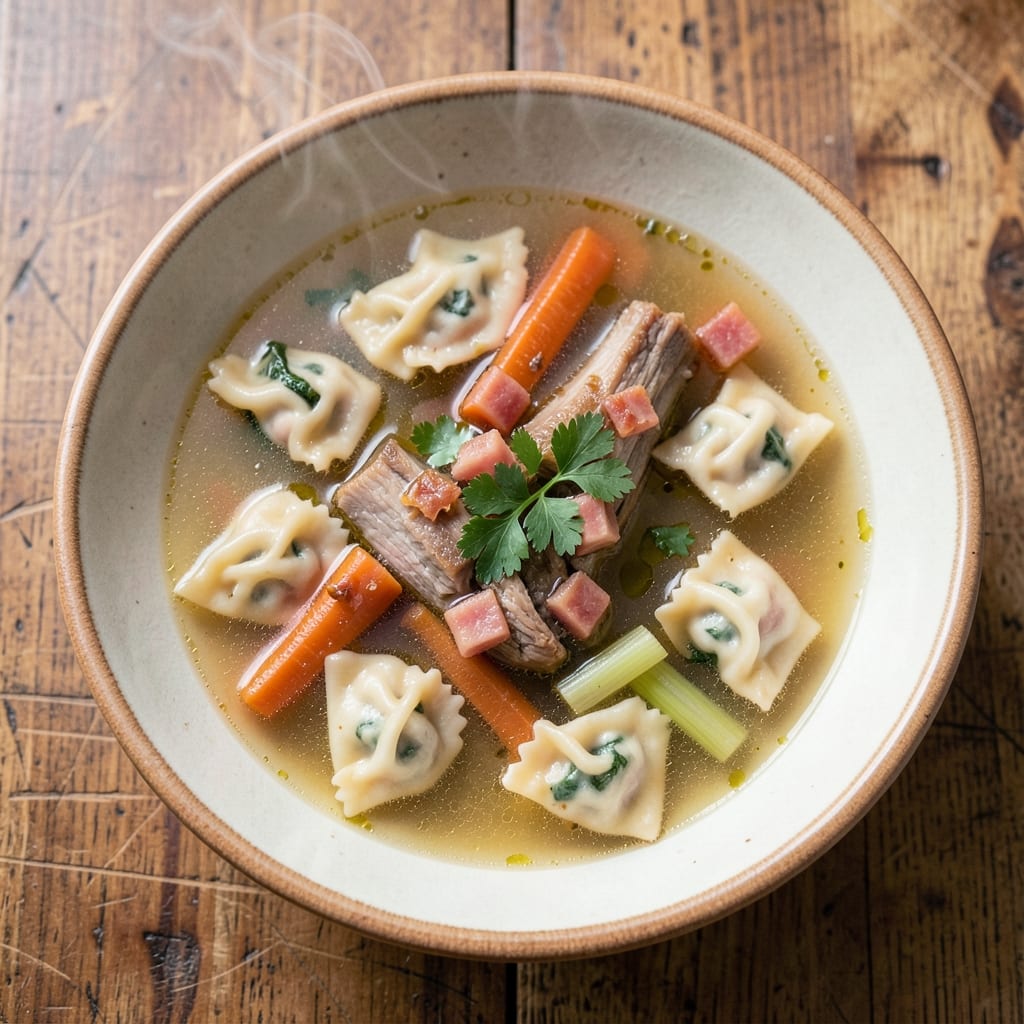
This authentic Italian tortellini soup recipe transports you straight to Emilia-Romagna with every spoonful—where handmade pasta meets deeply flavorful broth. The secret lies in the tortellini filling (traditional ricotta-spinach or savory meat) and a slow-simmered broth that reduces into rich, umami depth. I’ve perfected this version after years of studying nonna’s techniques, ensuring the pasta stays al dente while absorbing just enough broth to become irresistibly tender.
The foundation of an authentic tortellini soup is the broth—whether you choose a classic meat-based version with pork bones and pancetta or a lighter vegetable version with carrot, celery, and fennel. The tortellini themselves are the star: delicate parcels of dough filled with creamy ricotta, wilted spinach, and nutmeg, or hearty ground pork and Parmesan. Cooking them directly in the broth ensures they’re perfectly integrated, not soggy or overcooked.
What makes this recipe truly special is the balance of textures and flavors: the tender tortellini, the silky broth, and the fresh garnishes of grated Parmesan, crisp sage leaves, and a drizzle of olive oil. Each bite delivers layers of tradition—creamy filling, savory broth, and aromatic herbs—without ever feeling heavy. This is comfort food at its finest, a dish that feels both rustic and refined.
Serve it in deep bowls, garnished with extra cheese and fresh herbs, and pair it with a crisp Italian white wine. The leftovers reheat beautifully, making this the perfect meal for busy weeknights or weekend gatherings. Let’s bring a taste of Italy to your kitchen—authentic, hearty, and impossible to resist.
Ingredients for authentic italian tortellini soup
Sixteen ingredients, all chosen for authentic Italian flavor—where rich broth meets delicate tortellini perfection.
| Ingredient | Amount | Notes |
|---|---|---|
| Fresh Tortellini (Ricotta-Spinach or Pork) 🍝 | 24 pieces | Store-bought or homemade, al dente |
| Pork Bones (or Vegetable Broth Base) 🦴 | 3 lb | For meat broth, or 6 cups broth |
| Pancetta (or Smoked Bacon) 🥓 | ½ lb | Diced, for depth of flavor |
| Yellow Onion 🧅 | 1 whole | Chopped, for aromatic base |
| Carrot 🥕 | 2 whole | Sliced, for natural sweetness |
| Celery Stalks 🌿 | 3 whole | Chopped, for earthy notes |
| Garlic Cloves 🧄 | 4 cloves | Minced, for aromatic punch |
| Fresh Parsley 🌿 | ¼ cup | Chopped, for bright finish |
| Fresh Sage Leaves 🌿 | 8 pieces | Whole, for garnish |
| Extra-Virgin Olive Oil 🫒 | ¼ cup | For sautéing and finishing |
| Parmesan Cheese (Parmigiano-Reggiano) 🧀 | 1 cup | Freshly grated, for garnish |
| Nutmeg 🌶️ | ¼ tsp | Freshly grated, for warmth |
| Salt 🧂 | 1 ½ tsp | Kosher or sea salt |
| Black Peppercorns 🌶️ | ½ tsp | Freshly cracked |
| White Wine (optional) 🍷 | ½ cup | Dry, for deglazing |
The tortellini are the heart of this dish, so quality matters. For the filling, ricotta-spinach offers a lighter option, while pork-filled tortellini deliver deeper savory notes. Fresh pasta from Italian specialty stores like Eataly or De Cecco elevates the dish, but high-quality store-bought works too. The broth is where the magic happens—pork bones from local butchers or Costco create the richest base, but a good vegetable broth (like Pacific Foods) keeps it vegetarian-friendly. Pancetta adds that unmistakable Italian umami—avoid bacon, as it lacks the same depth. For the fresh herbs, Italian markets often have the best selection of parsley and sage, but grocery store varieties work in a pinch.
No pork bones? Chicken or turkey bones work for a lighter broth, or use a high-quality store-bought version like Imagine or Carnation. Swapping pancetta for bacon is a no-go—it lacks the Italian flavor profile. Fresh herbs are ideal, but dried parsley at half the amount works if you're out. The white wine is optional, but if you skip it, a splash of apple cider vinegar brightens the broth. For the tortellini, store-bought brands like Barilla or De Cecco are reliable, but homemade is worth the effort. If you can't find fresh sage, dried sage at a quarter the amount adds a similar earthiness. The nutmeg should be freshly grated—pre-ground loses its potency quickly.
Broth keeps for 4-5 days in the fridge, but it tastes even better the next day as flavors meld. Tortellini should be cooked directly in the broth to avoid sogginess—add them in the last 5 minutes of simmering. For storage, portion the soup into containers and freeze for up to 3 months. Garnish with extra Parmesan and olive oil before serving, and trust me—everyone will ask for seconds. The leftovers reheat beautifully, making this the ultimate meal-prep-friendly dish.
Why You'll Love This Recipe
- One-Pot Magic: I swear by this recipe—just toss everything into a pot and let it work its own magic. No extra bowls, no fussing with sauces. The pork bones (or broth) simmer down into this rich, golden broth while the pancetta renders its fat straight into the pot, where it crisps up the edges of the tortellini like a dream.
- Umami Bomb: That first bite? Pure satisfaction. The ricotta-spinach tortellini melts into the broth, while the pork bones (or even the vegetable base) infuse the liquid with deep, savory layers. Pancetta adds this smoky crunch that cuts through the creaminess—it’s the kind of flavor that makes you reach for another spoonful without thinking.
- Weeknight Workhorse: Between us, this is my go-to when I need something hearty but still feels special. Make a big batch on Sunday, and you’ve got lunch or dinner covered all week—just reheat and add a sprinkle of Parmesan. Honestly, it’s the only soup I’ll make when my kids beg for “real food” after a long day.
- Budget-Friendly Luxury: Pork bones might sound fancy, but they’re the secret to stretching this recipe into a full week’s worth of meals without breaking the bank. Swap in smoked bacon for pancetta, and it’s still just as rich—just cheaper. The carrot and onion add sweetness without costing a fortune, and fresh tortellini (homemade or store-bought) make it feel like a treat, not a chore.
Step-by-step instructions for authentic Italian tortellini soup
Here's how to craft a soup that captures the soul of Italian nonna cooking—rich, aromatic, and perfectly balanced.
Build the Meat Broth Foundation
Start by placing the 3 lb pork bones in a large stockpot and covering them with cold water by about 2 inches. Bring to a boil over high heat, then immediately reduce to a gentle simmer. Skim off any foam that rises to the surface for the first 15 minutes—this ensures a crystal-clear broth. The reason we use cold water is that hot water extracts impurities before the collagen can render properly.
Add the 1 whole yellow onion (cut into quarters), 2 whole carrots (cut into chunks), and 3 whole celery stalks (cut into 2-inch pieces). Simmer uncovered for 3 hours to extract maximum flavor from the bones. This long, slow cook transforms tough connective tissue into gelatinous richness that thickens the soup beautifully. If using vegetable broth instead, combine 6 cups with 8 cups water and proceed to the next step.
Develop the Aromatic Base
While the broth simmers, heat 0.25 cup extra-virgin olive oil in a large Dutch oven over medium heat. Add the 0.5 lb diced pancetta and cook for 5-6 minutes until the fat renders and the pancetta becomes golden and crispy. Remove the pancetta with a slotted spoon and set aside, leaving the fat in the pot.
In the same pot, add the 4 minced garlic cloves and cook for 30 seconds until fragrant but not browned. Add the 0.25 tsp freshly grated nutmeg and stir for 10 seconds to bloom the spice. Here's the thing—nutmeg adds a subtle warmth that's essential for authentic Italian flavor, but don't let it burn. Immediately pour in the 0.5 cup dry white wine (if using) and scrape up any browned bits from the bottom of the pot. Let it simmer for 2 minutes until the wine reduces by half.
Combine Broth and Season
Strain the bone broth through a fine-mesh sieve into the Dutch oven, pressing on the vegetables to extract all their flavor. Return the reserved pancetta to the pot. Add 1.5 tsp salt and 0.5 tsp freshly cracked black peppercorns and bring the broth to a gentle simmer. Taste the broth—it should be rich but not overly salty. If needed, adjust the seasoning now, as the tortellini will add its own flavor.
Here's where the magic happens: add 8 whole sage leaves and let them infuse for 10 minutes. The sage will release its piney aroma into the broth, creating that unmistakable Italian character. Remove the sage leaves before adding the pasta. This infusion step is what makes this soup taste authentically Italian rather than just another pasta dish.
Cook the Tortellini to Perfection
Add the 24 pieces fresh tortellini to the simmering broth. Cook for 8-10 minutes until they float to the surface and are al dente—they should have a slight resistance when bitten but be tender inside. The reason we cook them in the broth rather than boiling them first is that the broth's heat and seasoning penetrate the pasta more thoroughly, creating a more cohesive dish.
If the soup seems too thick after adding the tortellini, add ½ cup hot water to reach your desired consistency. The tortellini will absorb some of the broth as they cook, so don't be afraid to add a little more liquid if needed. The soup should coat the back of a spoon but still allow the tortellini to move freely.
Finish and Serve with Authentic Touches
Remove the pot from heat and stir in 0.25 cup chopped fresh parsley and 1 cup freshly grated Parmigiano-Reggiano. The parsley adds a bright finish that cuts through the richness of the broth, while the Parmesan adds umami depth and a luxurious mouthfeel. Let the soup sit off the heat for 5 minutes to allow the flavors to meld completely.
Ladle the soup into warm bowls, garnishing each serving with 2-3 additional sage leaves and a sprinkle of extra Parmesan. The sage leaves should be whole and slightly crisp to provide both visual appeal and a fresh herbal note with each bite. Serve immediately with crusty bread to soak up every last drop of that rich, aromatic broth.
Pro Tips For Making Authentic Italian Tortellini Soup
- CHAR THE PANCETTA LOW: I learned this the hard way—crispy pancetta is a must, but high heat burns it before the fat renders. Simmer the diced pancetta in the broth before adding onions and carrots, keeping the heat at a gentle simmer (small bubbles, not a boil). This extracts the flavor without turning it into bacon bits.
- SALT THE BROTH LATE: Pork bones release enough salt on their own—don’t rush to add any until the broth is almost done. Taste it at the end and adjust just enough to balance the tortellini’s filling. Over-salting early ruins the delicate harmony of flavors you’re working for.
- COOK TORTELLINI AL DENTE: Fresh tortellini cook faster than dried—test one immediately after the package’s suggested time. It should float but still have a slight bite; overcooking turns them mushy, and that’s a crime in this dish. The filling’s texture matters more than you’d think.
- ROAST THE ONIONS FIRST: Toss the diced onion (and carrot, if you’re using it) with a pinch of salt and roast at 375°F (190°C) for 20 minutes before adding to the broth. The caramelized depth cuts through the richness of the pork bones and pancetta—it’s the thing that makes homemade broth taste restaurant-worthy.
Best sauces and condiments for these flavors
Classic Broth Enhancers
Start with a pancetta-infused olive oil base—this is non-negotiable for authentic flavor. Cook 0.5 lb diced pancetta until golden and crispy, then remove it but leave the fat behind. The rendered fat carries all those savory, smoky notes that define Italian cooking. For an extra umami punch, deglaze the pot with 0.5 cup dry white wine after sautéing garlic—this reduces to a glossy, aromatic sauce that coats every tortellini. 🍷
Don’t skip the nutmeg—just 0.25 tsp freshly grated—it adds a subtle warmth that balances the richness. Bloom it in the oil with the garlic for 10 seconds to release its flavor without burning. The nutmeg’s earthy depth is what makes this soup taste like it came from a nonna’s kitchen, not a recipe book.
Herb Infusions
Fresh sage leaves are the secret weapon here. Add 8 whole leaves to the simmering broth and let them infuse for 10 minutes before removing them. This step releases their piney aroma into the broth, creating that unmistakable Italian character. For a lighter touch, you can use dried sage at a quarter the amount, but fresh is always better if you have it.
Finish with 0.25 cup chopped fresh parsley—this bright, herbaceous note cuts through the richness of the broth and adds a pop of color. Stir it in just before serving so it stays vibrant and fresh-tasting. If you’re feeling fancy, add a few thin slices of lemon zest for a citrusy lift that pairs beautifully with the savory tortellini.
Cheese Finishes
Freshly grated Parmigiano-Reggiano is a must—1 cup stirred into the soup at the end adds umami depth and a luxurious mouthfeel. The key is to grate it yourself; pre-shredded cheese lacks the same richness and often contains anti-caking agents that make it taste off. For an extra touch, reserve 2-3 extra sage leaves and a sprinkle of Parmesan for garnishing each bowl—this adds both visual appeal and another layer of flavor with every bite.
If you want to get creative, try adding a drizzle of aged balsamic glaze just before serving. The sweet-tart contrast with the savory tortellini and rich broth is divine. Start with 1 tablespoon and adjust to taste—it’s an easy way to elevate the dish without overpowering it.
Acid Balance
A splash of lemon juice or apple cider vinegar brightens the soup and balances the richness. Add 1 teaspoon at the end of cooking if the broth feels too heavy. The acidity also helps cut through the fat from the pancetta, making each spoonful more refreshing. If you’re using white wine in the broth, you might not need extra acid, but it’s always worth tasting and adjusting.
For a tangier finish, stir in 1 tablespoon of capers with the parsley. Their briny, salty flavor adds another dimension to the soup, making it taste even more complex. Just be mindful of the salt balance—capers are salty, so start with a small amount and adjust as needed.
Nutrition facts
Frequently asked questions
Can I use dried tortellini instead of fresh?
Fresh tortellini are ideal for this recipe, but you can use dried in a pinch. The cooking time will be slightly longer—simmer dried tortellini for 12-15 minutes until al dente. However, fresh tortellini absorb the broth's flavors better, creating a more cohesive dish. If using dried, add them 3 minutes earlier than fresh to account for the extra cooking time.
What's the best way to make this soup vegetarian?
Swap the pork bones for a high-quality vegetable broth base (like Imagine or Pacific Foods) and use mushroom or vegetable pancetta instead of traditional pancetta. For extra umami, add 1 tbsp soy sauce or 1 tsp miso paste when developing the aromatic base. The nutmeg and sage will still shine in a vegetarian version, keeping it authentically Italian.
Why does my tortellini soup taste bland?
Most likely, the broth needs more flavor development. Try these fixes:
- Simmer the broth longer (up to 4 hours for meat-based);
- Add a bay leaf during cooking;
- Finish with a splash of white wine or lemon juice to brighten flavors;
- Use more pancetta (or bacon as a substitute) for depth. Remember, Italian soups rely on slow-cooked richness—don't rush the process!
Can I make this soup ahead of time?
This soup actually tastes better the next day as flavors meld. Store in an airtight container in the fridge for up to 4 days or freeze for 3 months. Reheat gently on the stove—never microwave—to preserve the tortellini's texture. Add a splash of water or broth if it thickens too much during reheating. The leftovers reheat beautifully, making this a perfect meal-prep dish!
What wine pairs best with tortellini soup?
A crisp Italian white wine like Pinot Grigio or Vermentino complements the dish beautifully. For red wine lovers, a light Chianti or Sangiovese works well with the rich broth. Avoid heavy reds—they can overpower the delicate tortellini flavors. If you prefer beer, a light lager or wheat beer balances the richness without competing.