
Soups & Stews
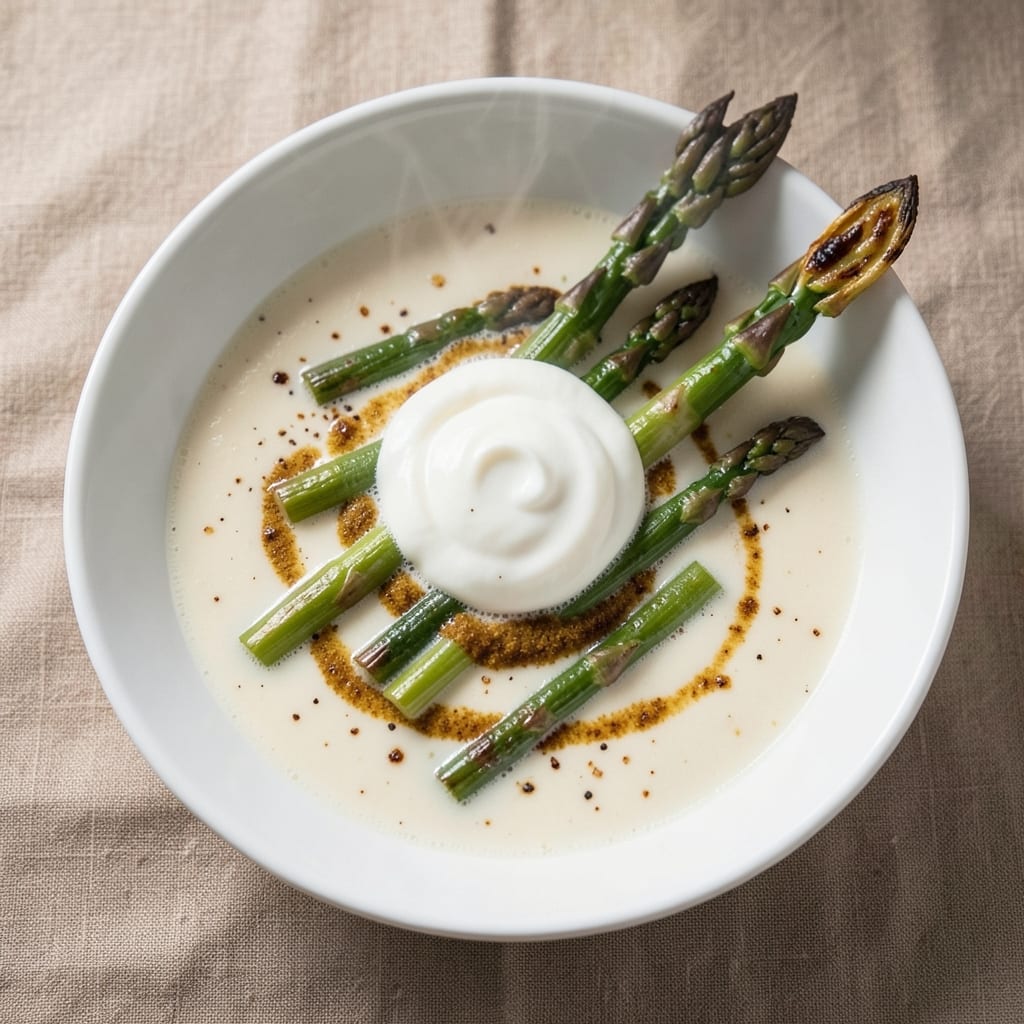
This asparagus velouté soup delivers restaurant-quality silkiness with a depth of flavor that comes from roasted asparagus and a classic roux base. The secret lies in proper technique—starting with a well-developed roux and blending the soup until completely smooth, with no visible specks of vegetable. I've perfected this recipe after years of experimenting with different thickening methods, and the result is a velvety soup that's both elegant and comforting.
The process begins with roasting asparagus to concentrate its natural sweetness and develop caramelized depth before blending it into the soup. A proper roux, cooked until it reaches a light golden color, forms the foundation for that signature velouté texture. This method ensures the soup remains rich and velvety without relying on excessive cream or heavy cream substitutes. The final touch is a garnish that elevates the presentation—perhaps a swirl of cream, a sprinkle of fresh herbs, or a drizzle of high-quality olive oil.
What you'll end up with is a soup that's smooth as silk, with a vibrant green hue and a flavor profile that balances the earthy sweetness of asparagus with the richness of the roux. The texture is unmistakably velouté—creamy yet light, with a mouthfeel that's impossible to resist. This recipe is perfect for spring and summer when asparagus is at its peak, but it also works beautifully as a comforting meal during cooler months.
Whether you're serving this asparagus velouté at a dinner party or simply enjoying it as a weeknight meal, the technique remains the same. The key is patience—allowing the roux to develop fully and blending the soup until it's completely smooth. The result is a dish that's both impressive and satisfying, proving that even classic French techniques can be mastered at home with the right approach.
Ingredients for asparagus veloute soup
The foundation of this velouté lies in roasted asparagus, a well-developed roux, and precise blending for restaurant-quality silkiness.
| Ingredient | Amount | Notes |
|---|---|---|
| Fresh Asparagus 🌱 | 1 ½ lb | Trimmed, tough ends removed |
| Unsalted Butter 🧈 | ½ cup | Cold, cubed for roux |
| All-Purpose Flour 🌾 | ½ cup | For light golden roux |
| Vegetable Stock 💧 | 4 cups | Low-sodium preferred |
| Heavy Cream 🥛 | 1 cup | Full-fat for richness |
| Shallots 🧅 | 2 whole | Minced, 2 tbsp total |
| Garlic Cloves 🧄 | 2 cloves | Peeled, minced |
| Extra-Virgin Olive Oil 🫒 | 2 tbsp | For roasting asparagus |
| Salt 🧂 | 1 ½ tsp | Kosher or sea salt |
| Black Pepper 🌶️ | ½ tsp | Freshly ground |
| Fresh Chives 🌿 | 2 tbsp | Chopped for garnish |
| Lemon Juice 🍋 | 1 tbsp | Freshly squeezed |
The asparagus is non-negotiable—fresh, firm stalks with vibrant green tips. Whole Foods or local farmers markets carry the best quality, especially in spring. Roasting caramelizes the natural sugars, giving depth that raw asparagus can't match. For the roux, European-style butter (like Plugrá) and all-purpose flour (like King Arthur) create that signature velouté texture. The vegetable stock should be homemade if possible—Pacific Foods or Imagine brands are solid store-bought options. Heavy cream adds richness, but don't skimp on quality; Organic Valley or Horizon brands deliver the best flavor.
No fresh asparagus? Frozen asparagus works in a pinch, but thaw and drain well first. Substituting butter? Olive oil roux gives a different flavor profile but works if you're avoiding dairy. For the stock, chicken stock can replace vegetable stock, though it will alter the flavor slightly. The shallots and garlic can be swapped for 1/4 cup finely chopped yellow onion if needed. Lemon juice can be omitted, but the acidity brightens the soup—bottled lemon juice works if fresh isn't available. For a vegan version, replace the butter with olive oil and the heavy cream with coconut cream.
Roasted asparagus keeps 3-4 days in the fridge, but blend it into the soup immediately for best results. The finished soup reheats beautifully—simmer gently to avoid breaking the emulsion. Store in airtight containers for 4-5 days or freeze for up to 3 months. To reheat, warm over medium-low heat, adding a splash of water or stock if it thickens too much. Garnish with chives just before serving—they wilt quickly, so add them last. This soup tastes even better the next day as flavors meld.
Why You'll Love This Recipe
- No Chopping Struggle: The asparagus cuts itself—just snap off the woody ends and slice the rest. No knife skills required, just a quick trim and you’re golden.
- Velouté Magic: That roux of butter and flour? It turns the soup silky smooth, while the heavy cream adds a luscious finish. The asparagus gives it a fresh, bright edge that keeps you reaching for seconds.
- Lunch or Dinner: Too fancy for lunch? Too light for dinner? Nah—this soup works for both. Serve it with crusty bread for a light meal or pair it with grilled chicken for a heartier dinner.
- Budget-Friendly Luxury: Heavy cream might sound indulgent, but a little goes a long way. Plus, asparagus is in season and affordable—this soup feels like a splurge without breaking the bank.
Step-by-step instructions for asparagus velouté soup
Here's how to create a velvety asparagus velouté with deep roasted flavor and perfect texture.
Roast the Asparagus for Maximum Flavor
Preheat your oven to 425°F. Toss the trimmed 1.5 lb fresh asparagus with 2 tbsp extra-virgin olive oil, 0.75 tsp salt, and 0.25 tsp black pepper on a baking sheet. Spread the asparagus in a single layer, ensuring the tips aren't touching.
Roast for 15-20 minutes until the asparagus is tender and the edges are deep golden brown. The high heat caramelizes the natural sugars, creating that rich roasted depth we want in the soup. You'll know it's done when you can easily pierce the thickest stalks with a fork.
Build the Roux for Smooth Texture
While the asparagus roasts, melt the 0.5 cup unsalted butter in a large pot over medium heat. Add the 0.5 cup all-purpose flour and whisk constantly for 2-3 minutes until the mixture turns a light golden brown color. This is your roux - don't let it darken or it'll taste bitter.
Watch carefully as the roux cooks - it should smell nutty and toasty. This step is crucial for creating that velvety texture in your velouté. If the roux starts to smell burnt, immediately remove it from heat and start over with fresh butter and flour.
Develop the Flavor Base
Add the minced 2 whole shallots and 2 cloves garlic cloves to the roux and cook for 1-2 minutes until fragrant. Pour in the 4 cups vegetable stock all at once, whisking constantly to prevent lumps from forming. Bring the mixture to a gentle simmer.
Let it cook uncovered for 8-10 minutes until slightly thickened. This is where all the flavors meld together. You'll notice the soup will reduce slightly and develop a more concentrated asparagus aroma from the roasted vegetables we added earlier.
Blend and Finish the Soup
Using an immersion blender, carefully blend the soup until completely smooth. For best results, work in batches if needed to avoid splattering. The soup should be completely free of any asparagus pieces - this is what gives it that signature velouté texture.
Stir in the 1 cup heavy cream and bring the soup back to a gentle simmer. Season with the remaining 0.75 tsp salt and 0.25 tsp black pepper. Taste and adjust seasoning - you might need a bit more salt to balance the creaminess.
Garnish and Serve
Remove the soup from heat and stir in the 1 tbsp lemon juice and chopped 2 tbsp fresh chives. The acidity from the lemon brightens the flavors while the chives add a fresh finish. Ladle the soup into bowls and garnish with additional chives if desired.
Serve immediately while hot. The velouté should coat the back of a spoon with a luxurious, silky texture. Each spoonful should deliver that perfect balance of roasted asparagus depth, creamy richness, and bright acidity from the lemon.
Pro Tips For Making Asparagus Veloute Soup
- Trim the Tough Ends: Use a sharp knife to snap off the woody bottoms—don’t just eyeball it. The break should sound clean, not mushy. I learned this the hard way when my first batch turned out gritty and chewy.
- Sweat the Asparagus First: Cook the chopped asparagus in butter for 3-4 minutes before adding flour. This draws out moisture and prevents the roux from turning into a gluey mess when you add stock. (Yes, even if you’re impatient like me.)
- Whisk Like Your Life Depends on It: When combining stock with the butter-flour mix, stir vigorously for 2 full minutes over medium heat. Lumpy roux = grainy soup. I used to rush this, and the texture always paid the price.
- Salt the Stock Early: Season the vegetable stock before adding it to the roux—don’t wait until the end. The soup will taste flat if you rely on salt later, especially with heavy cream mellowing the flavors. (Your future self will thank you.)
Best sauces and condiments for this dish
Creamy Cream Variations
For a richer velouté, swap the heavy cream for crème fraîche or sour cream—just reduce the amount to ¾ cup since these are thicker. The tanginess cuts through the sweetness beautifully. I love adding 1 tbsp crème fraîche at the end for a luxurious finish. For a lighter option, use ½ cup Greek yogurt mixed with ½ cup whole milk—it adds protein without heaviness. 🥛
Herb-Infused Oils
Drizzle 1 tbsp chilled extra-virgin olive oil infused with 1 tsp fresh tarragon or thyme just before serving. To make infused oil, gently heat ½ cup olive oil with 1 tbsp chopped herbs for 5 minutes, then strain. The aromatic oil enhances the soup’s depth without overpowering. A lemon-infused oil (zest + juice) adds brightness too. 🫒
Spicy Kick Options
Add ½ tsp smoked paprika or ¼ tsp cayenne to the roux for warmth. For a smoky depth, stir in 1 tsp miso paste with the stock. A dash of hot honey (like Chimichurri) at the end balances creaminess with a sweet-spicy contrast. Start with ¼ tsp—you can always add more. 🌶️
Umami Boosters
Sauté 1 tbsp finely chopped mushrooms with the shallots to deepen the flavor. Or, add 1 tsp fish sauce or ½ tsp soy sauce to the stock for a subtle umami punch. A splash of white wine (like Sauvignon Blanc) deglazed into the pot adds complexity. 🍄
Acid Balance
Beyond lemon juice, try 1 tsp rice vinegar or ½ tsp apple cider vinegar to brighten the soup. A squeeze of ½ lime at the end adds zesty contrast. For a tangy twist, stir in 1 tbsp crème fraîche mixed with ½ tsp lemon zest as a garnish. 🍋
Crunchy Toppings
Add toasted breadcrumbs (toast 2 tbsp panko in olive oil until golden) for texture. Or, sprinkle crispy fried shallots (store-bought or homemade) for a gourmet touch. A few crumbled bacon bits or toasted pumpkin seeds add savory crunch. 🌾
Nutrition facts
Frequently asked questions
Can I make this asparagus velouté without a roux?
The roux is essential for that signature velvety texture, but you can try a cornstarch slurry as a shortcut. Mix 1 tbsp cornstarch with 2 tbsp cold water, then whisk into the simmering soup until thickened. The texture won't be as rich, but it'll still be smooth. For best results, use ½ cup heavy cream instead of the full amount to balance the difference.
How do I fix a velouté that's too thick or too thin?
If your soup is too thick, whisk in 1-2 tbsp warm stock or water gradually until smooth. For a thinner soup, simmer uncovered for 5-10 minutes to reduce excess liquid. Remember, velouté should coat the back of a spoon but still flow easily—aim for a pudding-like consistency. Stirring constantly prevents lumps when adjusting thickness.
What's the best way to store leftover asparagus velouté?
Store in an airtight container in the fridge for 4-5 days or freeze for up to 3 months. Reheat gently on the stove over low heat, adding a splash of stock if it thickens too much. Never microwave—it can break the emulsion and make the soup grainy. For best texture, reheat just until warmed through.
Can I substitute asparagus with another green vegetable?
Yes, but the flavor will change. Try fennel or celery root for a similar earthy sweetness, or zucchini for a milder taste. Roast the substitute first to develop depth, just like the asparagus. Avoid leafy greens like spinach—they'll turn the soup watery when blended. For a brighter flavor, add ½ tsp lemon zest to compensate for the missing asparagus sweetness.
Why does my velouté look curdled or separated?
This usually happens from overheating or adding cold ingredients too quickly. Always stir constantly when reheating, and never boil. If it separates, whisk in 1 tbsp cold butter or 1 tbsp heavy cream to re-emulsify. For prevention, let the soup cool slightly before adding cold cream, and avoid sudden temperature changes. A splash of lemon juice can also help stabilize the emulsion.