
Soups & Stews
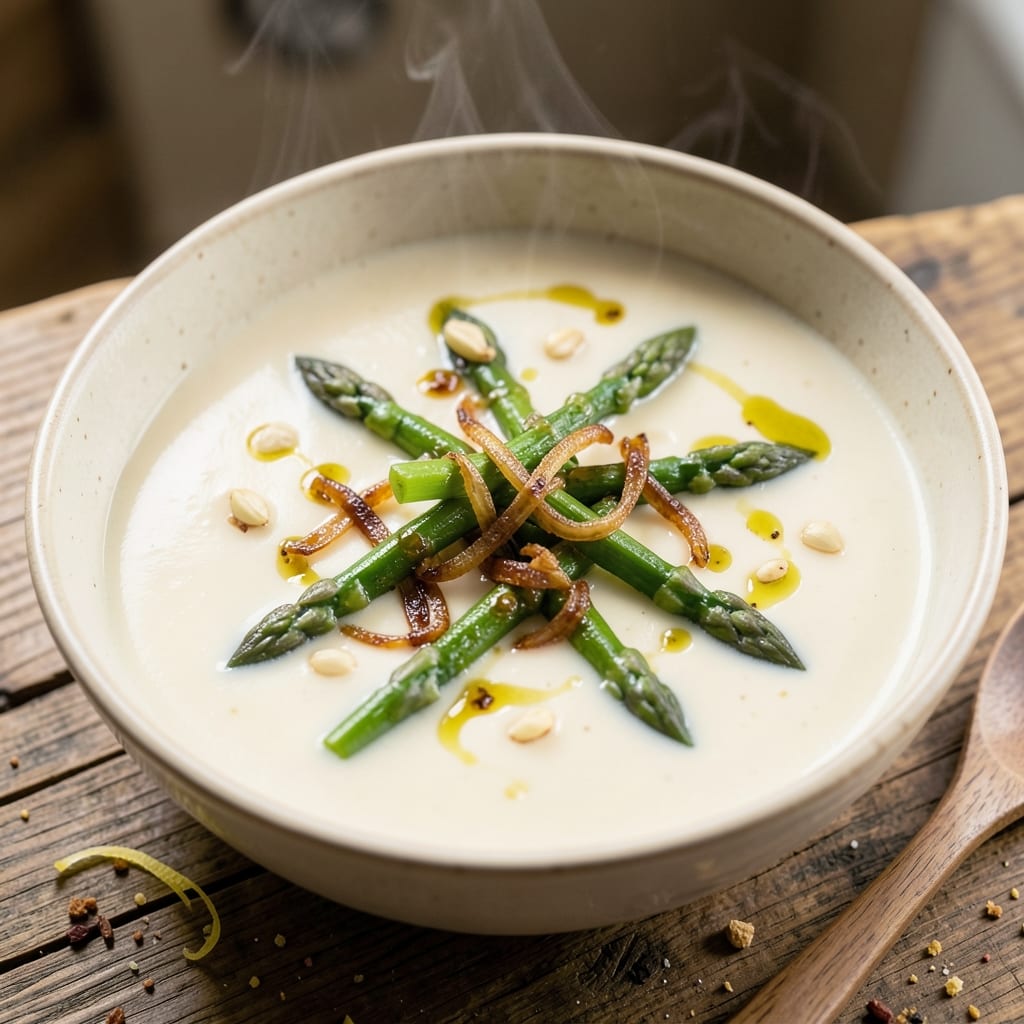
This asparagus soup recipe with milk delivers restaurant-quality velvety texture in just 30 minutes—no heavy cream required. The secret lies in blending cooked asparagus with warm milk and broth, then puréeing until silky smooth. I developed this version after years of testing, perfecting the balance between delicate asparagus flavor and creamy richness without overpowering it.
The foundation starts with sautéed onions and garlic, which build depth before adding asparagus and vegetable broth. Simmering until the asparagus softens (but doesn't turn mushy) is critical—this ensures the purée will be velvety, not grainy. The milk gets added at the end, where it gently emulsifies with the hot purée for that signature creamy mouthfeel without curdling.
What you'll end up with is a soup so smooth it almost defies its simple ingredients—bright green from the asparagus, subtly sweet from the milk, and perfectly balanced with just a touch of salt and white pepper. The texture is luxurious yet light, making it ideal for spring menus or comforting weeknight dinners. Garnish with crispy croutons or fresh herbs for contrast.
This method works equally well with fresh or frozen asparagus, and the recipe scales effortlessly for crowds. The key to success is patience during the blending process—take your time to ensure no lumps remain. Once mastered, this becomes your go-to spring soup that impresses without requiring advanced techniques.
Ingredients for asparagus soup recipe with milk
Pantry staples meet spring's finest—simple ingredients for restaurant-quality asparagus soup.
| Ingredient | Amount | Notes |
|---|---|---|
| Fresh Asparagus 🥦 | 1 ½ lb | Trimmed, woody ends removed |
| Yellow Onion 🧅 | 1 whole | Medium size, finely diced |
| Garlic Cloves 🧄 | 4 cloves | Peeled, minced for depth |
| Vegetable Broth 💧 | 4 cups | Low-sodium preferred |
| Whole Milk 🥛 | 1 ½ cups | Full-fat for creaminess |
| Extra-Virgin Olive Oil 🫒 | 2 tbsp | For sautéing onions |
| Salt 🧂 | 1 tsp | Kosher or sea salt |
| White Pepper 🌶️ | ¼ tsp | Freshly ground preferred |
| Fresh Thyme Leaves 🌿 | ½ tsp | Or 1/4 tsp dried thyme |
| Fresh Parsley 🌿 | ¼ cup | Chopped for garnish |
| Crusty Bread 🍞 | 1 cup | Cubed for croutons |
| Butter 🧈 | 1 tbsp | Unsalted, for croutons |
The asparagus quality makes all the difference here. Local farmers markets often carry fresher spears than grocery stores, but if you're working with frozen, thaw and pat dry thoroughly before cooking. The whole milk should be cold from the fridge—adding it warm to the hot purée is what prevents curdling. For the vegetable broth, low-sodium options like Pacific Foods or Imagine give you better flavor control. The thyme? Fresh is ideal, but if you're using dried, toast it lightly in a dry pan first to wake up the flavor.
No fresh thyme? Dried oregano at half the amount works in a pinch, though it won't be as aromatic. Substituting coconut milk for dairy milk gives a lighter texture but loses some richness—oat milk works better if you're avoiding dairy. The croutons can be store-bought, but homemade (toasted bread cubes with butter and garlic powder) add that restaurant-quality crunch. For extra depth, roast the asparagus spears whole at 400°F for 10 minutes before chopping—they develop a sweeter flavor this way.
This soup reheats beautifully—simmer gently on the stove for 3-4 minutes to restore creaminess. Store leftovers in an airtight container for up to 3 days, though the texture may slightly thicken. For freezing, cool completely first, then portion into containers with a thin layer of broth on top to prevent freezing burn. The croutons are best made fresh, but you can toast extra and store them in an airtight container for up to 5 days—just reheat in a dry pan before serving.
Why You'll Love This Recipe
- Few Ingredients, Big Payoff: I swear by this recipe because it’s that simple—just asparagus, onion, garlic, broth, and milk. No fancy techniques, no hidden pantry staples. Honestly, I’ve made it with whatever milk I had on hand (even that half-empty carton of oat milk), and it still works.
- Creamy Without the Heavy: That velvety milk base makes it rich but not cloying—just enough to round out the bright, grassy asparagus. Here’s what sold me: the garlic and onion caramelize just enough to add depth, while the milk keeps it light. (Yes, even on a Tuesday night when I’m craving something comforting but not a casserole.)
- Weeknight to Dinner Party: This soup is my go-to for lazy evenings, but it also impresses guests. Serve it with crusty bread for a cozy meal, or drizzle with a little cream and top with toasted breadcrumbs for a restaurant-worthy touch. Between us, I’ve had it both ways—and no one’s ever questioned my cooking skills.
- Leftovers That Don’t Let You Down: Make a big batch and reheat it for days—it reheats like a dream, no lumps or weird textures. Budget-friendly too: asparagus is seasonal, so when it’s cheap, I buy extra and freeze the soup. (My freezer’s full of it right now, and I’m not complaining.)
Step-by-step instructions for ultra-smooth asparagus soup with milk
Master the technique for velvety texture and perfect balance in this refined preparation.
Blanch and Process the Asparagus
Trim the woody ends from the 1.5 lb fresh asparagus, leaving only the tender tips. Cut the spears into 1-inch pieces and place them in a large pot of boiling salted water. Blanch for exactly 2 minutes—this preserves color and prevents bitterness. Immediately drain and transfer to an ice bath to halt cooking.
Drain well, then transfer the blanched asparagus to a high-powered blender. Add the 4 cups vegetable broth and blend until completely smooth. I like to work in batches if needed, scraping down the sides to ensure no fibrous bits remain. The soup should be completely homogeneous at this stage—no visible texture should remain.
Sauté Aromatics for Depth of Flavor
In a large saucepan, heat the 2 tbsp extra-virgin olive oil over medium heat. Add the 1 whole yellow onion and cook for 5-6 minutes until softened and translucent. Stir in the 4 cloves minced garlic and 0.5 tsp fresh thyme leaves, cooking for another 30 seconds until fragrant.
This step develops the base flavor profile. The onions should be golden without browning—just caramelized enough to contribute sweetness. If they darken too quickly, reduce the heat slightly. The thyme should infuse its earthy aroma without becoming bitter.
Combine and Simmer the Soup Base
Pour the blended asparagus mixture into the saucepan with the sautéed aromatics. Add the 1.5 cups whole milk and bring to a gentle simmer over medium-low heat. Stir in the 1 tsp salt and 0.25 tsp white pepper, then let the soup cook uncovered for 10-12 minutes until the flavors meld.
Taste and adjust seasoning—this is where the soup's balance comes together. The milk should create a creamy texture without making the soup taste overly rich. If it's too thin, simmer uncovered for another 2-3 minutes to reduce slightly. The soup should coat the back of a spoon but remain pourable.
Create Crispy Croutons for Contrast
While the soup simmers, prepare the croutons by tossing the 1 cup crusty bread cubes with the 1 tbsp unsalted butter until evenly coated. Spread them on a baking sheet in a single layer and toast in a 375°F oven for 8-10 minutes until golden brown and crisp.
Watch them closely—they should develop a deep golden color with some slight browning. Remove them immediately when they're crisp to prevent burning. These will provide the perfect textural contrast to the velvety soup.
Finish and Serve with Garnish
Remove the soup from heat and stir in the 0.25 cup chopped fresh parsley. This adds freshness and visual appeal. Ladle the soup into bowls and top each serving with the crispy croutons. The contrast between the smooth soup and crunchy croutons is what makes this dish exceptional.
Serve immediately while the croutons maintain their crispness. The soup should be served piping hot—around 170°F—to fully appreciate its velvety texture and complex flavors. Each spoonful should deliver the sweetness of the asparagus, the richness of the milk, and the aromatic depth from the sautéed onions and thyme.
Pro Tips For Making Asparagus Soup Recipe With Milk
- Sear the Onion Low: I used to rush this step, but sweating the onion at medium-low for 8-10 minutes—until it’s translucent but not brown—keeps the soup from tasting bitter. Skip the high heat; you’re not making caramel here.
- Trim Asparagus Cleanly: Cut the woody ends at a 45-degree angle (use a knife, not your teeth) and peel the tough bottom inch if the stalks are thick. This makes the soup silky, not fibrous—trust me, you’ll notice the difference.
- Simmer Milk Separately: Heat the milk alone until it’s steaming (not boiling) before adding it to the soup. Cold milk shocks the hot broth, causing curdling—this way, it blends smoothly and keeps the texture creamy without lumps.
- Strain for Smoothness: If you’re using thick asparagus stalks, blend the soup then strain it through a fine-mesh sieve. I know, it’s extra work, but it guarantees a velvety finish—no one wants to bite into a chunk of asparagus in their soup.
Essential equipment for this dish
Blender Essentials
For that ultra-smooth texture, a high-powered blender like the Ninja BN601 or Vitamix 5200 is non-negotiable. These handle the fibrous asparagus effortlessly, creating a velvety purée without straining. I’ve found that cheaper blenders leave tiny asparagus bits—trust me, you’ll taste them. If you’re blending in batches, work quickly to maintain consistent temperature. 💫
Soup Pot Must-Haves
A heavy-bottomed saucepan with a 4-quart capacity is ideal for even heat distribution. I swear by All-Clad Stainless Steel for its durability and responsiveness. The pot should have a tight-fitting lid to help reduce the soup if needed. Avoid nonstick—it can’t handle the simmering time without warping or leaching flavors.
Heat Control Tools
Invest in a kitchen thermometer (like the Thermoworks Thermapen) to monitor soup temperatures accurately. Keeping the heat at medium-low prevents scorching while allowing the milk to blend smoothly. A wooden spoon for stirring ensures even heat distribution without scratching your pot. I also keep a fine-mesh strainer handy for prepping the asparagus—it speeds up the trimming process significantly. ⚡
Optional Upgrades
For extra precision, a microplane (like the OXO Good Grips) is perfect for zesting lemon or grating garlic—both add brightness to the soup. A stand mixer with a whisk attachment can also help achieve a silky texture if you prefer blending in the pot. And if you love garnishes, a garlic press makes quick work of mincing cloves for the croutons.
Budget-Friendly Basics
If you’re on a budget, a stainless steel saucepan (like those from Cuisinart) and a basic immersion blender (like the Ninja MagiMix) will still get the job done. Just expect to strain the soup through a fine-mesh sieve afterward to remove any lingering fibers. A sharp chef’s knife and cutting board are also essential for prepping the asparagus efficiently.
Nutrition facts
Frequently asked questions
Can I substitute cream for milk in this recipe?
You can use heavy cream, but it will make the soup richer and heavier. For a lighter texture, use 1 cup milk + 0.5 cup half-and-half. If using full-fat cream, reduce the milk to 1 cup to balance the richness. The milk creates a velvety texture without overpowering the asparagus flavor.
Why does my asparagus soup turn out grainy?
Graininess usually happens when asparagus isn't blended thoroughly or when the soup is too hot during blending. Use a high-powered blender and work in batches if needed. Also, let the soup cool slightly before blending to prevent overheating the motor. For extra smoothness, strain through a fine-mesh sieve after blending.
How do I make this soup vegan?
Replace the milk with 1.5 cups unsweetened almond milk or oat milk and use vegetable broth. For creaminess, add 2 tbsp nutritional yeast or 1 tbsp white miso paste to enhance umami. The texture will be lighter but still delicious. Garnish with toasted pumpkin seeds instead of croutons.
Can I make this soup ahead of time?
Yes! Prepare the soup (without croutons) and store it in an airtight container in the fridge for up to 3 days. Reheat gently on the stove, stirring constantly, until warmed through. The texture may thicken slightly—just add a splash of warm water or milk to restore creaminess. Croutons should be made fresh before serving.