
Soups & Stews
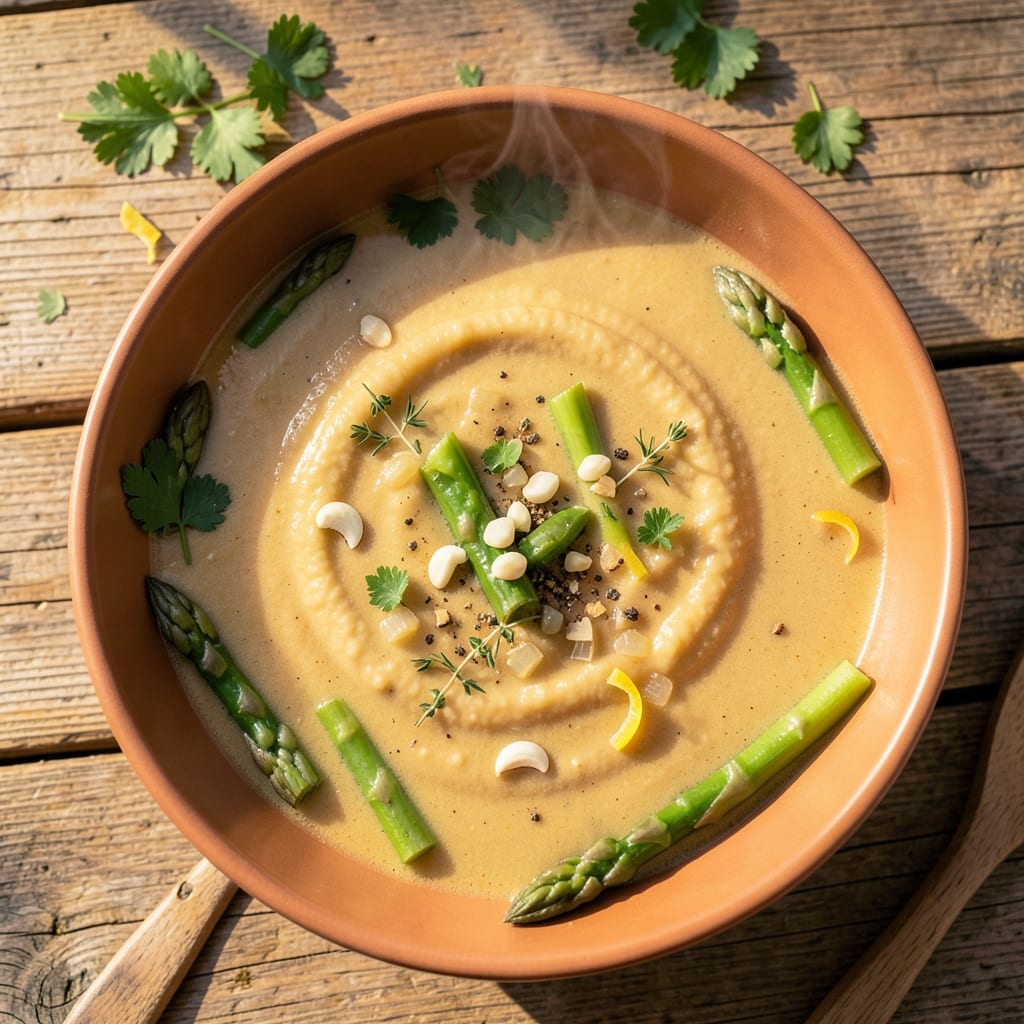
This dairy-free asparagus soup delivers silky smoothness and herb-infused depth without a single drop of dairy. The secret lies in blending roasted asparagus with cashew cream, creating a velvety texture that rivals traditional versions while keeping it completely plant-based. What sets this recipe apart is the caramelized asparagus base, which builds rich, savory depth that stands up to bright lemon and fresh herbs.
We begin by roasting the asparagus until tender and slightly caramelized, then blending it with cashew cream for that signature smooth texture. Fresh thyme and parsley add aromatic complexity, while a touch of nutritional yeast provides that familiar umami depth without dairy. The recipe maintains the soup's elegant simplicity while delivering restaurant-quality results at home.
The final product is a velvety, golden-hued soup with just the right balance of earthy asparagus flavor and bright herbal notes. Each spoonful offers that luxurious mouthfeel without heaviness, making it perfect for spring menus or elegant gatherings. The recipe serves four generously, with leftovers that reheat beautifully while maintaining their silky texture.
For serving, we recommend garnishing with toasted pumpkin seeds for crunch and a drizzle of olive oil for extra richness. This soup pairs beautifully with crusty bread or as a light starter before heartier dishes. The method is straightforward but yields professional results that will impress even dairy-free skeptics.
Ingredients for asparagus soup recipe dairy free
Silky texture comes from roasted asparagus and cashew cream—no dairy needed. These ingredients deliver restaurant-quality depth with fresh herbs and bright citrus.
| Ingredient | Amount | Notes |
|---|---|---|
| Fresh Asparagus Spears 🌱 | 1 ½ lb | Trimmed, tough ends removed |
| Raw Cashews 🥜 | ½ cup | Unsalted, soaked 2 hours |
| Yellow Onion 🧅 | 1 whole | Medium, diced |
| Garlic Cloves 🧄 | 3 cloves | Fresh, minced |
| Fresh Thyme Leaves 🌿 | ¼ cup | Stems removed, loosely packed |
| Fresh Parsley Leaves 🌿 | 0.2 cup | Flat-leaf, loosely packed |
| Nutritional Yeast 🧀 | 2 tbsp | Fortified, for umami depth |
| Extra-Virgin Olive Oil 🫒 | ½ cup | High-quality, fruity |
| Fresh Lemon Juice 🍋 | 2 tbsp | From 1 small lemon |
| Vegetable Broth 💧 | 3 cups | Low-sodium, homemade preferred |
| Salt 🧂 | 1 tsp | Diamond Crystal kosher |
| Black Peppercorns 🌶️ | ½ tsp | Freshly cracked |
| Pumpkin Seeds 🥜 | ¼ cup | Raw, for garnish |
The asparagus is the star—look for bright green spears with tight tips at the market. Whole Foods or local farmers markets often carry the freshest varieties. Trim the woody ends carefully, leaving the tender tips intact for maximum flavor. For the cashews, unsalted raw cashews from Trader Joe's or bulk bins work best—they soak up the flavors beautifully. If you're short on time, you can use pre-soaked cashews from the refrigerated section, but they won't be as flavorful. The nutritional yeast is non-negotiable here—it's what gives that classic cheesy umami without any dairy at all.
No fresh thyme? Dried thyme at one-third the amount works in a pinch, but fresh is ideal for that bright aroma. Substitute parsley with cilantro or basil if needed, though parsley's mild flavor pairs best. Running low on vegetable broth? Mushroom broth or even water with a bouillon cube will work, but you'll lose some depth. The lemon juice can be adjusted to taste—add more if you want extra brightness, or a pinch of maple syrup if you prefer it slightly sweeter. For the pumpkin seeds, pepitas from the bulk section are perfect—they toast up beautifully and add that satisfying crunch.
This soup reheats beautifully—simply warm on the stove with a splash of water or broth to restore its silky texture. Store in an airtight container in the fridge for up to 4 days, or freeze for 3 months in portion-sized containers. For best results, toast the pumpkin seeds in a dry pan over medium heat for 3-4 minutes until golden—just enough time to smell that nutty aroma. The soup's golden hue comes from the caramelized asparagus, so don't rush the roasting step. Each batch yields about 4 generous servings, perfect for a light lunch or elegant starter.
Why You'll Love This Recipe
- No Blender Hassle: I swear by this method—just soak the cashews overnight, then blend them with steamed asparagus and a splash of water. No fancy appliances, no waiting for the blender to catch up. The texture comes out silky without a single lump, and honestly? That’s half the battle won.
- Umami Bomb: Between us, the cashews and thyme do something magical here. The garlic and onion caramelize just enough to add depth, while the raw cashews bring this creamy, nutty richness that feels luxurious—no dairy needed. It’s the kind of flavor that makes you pause mid-sip and think, “Wait, is this supposed to taste this good?”
- Leftover Goldmine: This soup only gets better the next day. The asparagus holds its shape, the cashew cream thickens just right, and it reheats like a dream. I make a big batch on Sundays and freeze portions—perfect for lazy mornings or when I’m too tired to cook. (Yes, even on a Tuesday night.)
- Budget-Friendly Luxe: Fresh asparagus might seem pricey, but this recipe stretches it far. A single bunch feeds four, and the cashews add richness without breaking the bank. Plus, the onion and garlic are pantry staples, so you’re not scrambling for obscure ingredients. It’s fancy enough for company but cheap enough for weekly meals.
Step-by-step instructions for creamy dairy-free asparagus soup
Transform fresh asparagus into a velvety, herb-infused soup using cashew-based richness and vibrant garden flavors.
Prepare the Asparagus and Aromatics
Trim the tough ends from the 1.5 lb fresh asparagus spears by snapping them at their natural break points. This ensures you remove only the fibrous portions while preserving the tender tips. Cut the spears into 1-inch pieces and set aside half for garnish later—keeping those bright green tips visible adds visual appeal to your finished soup.
In a large pot, heat 0.25 cup extra-virgin olive oil over medium heat. Add the diced 1 whole yellow onion and cook for 5 minutes until softened and translucent. Add the minced 3 cloves garlic and the 0.25 cup fresh thyme leaves, stirring constantly for 1 minute until fragrant. The thyme should release its piney aroma—this is your cue that the aromatics are properly infused.
Blend the Cashew Base for Creaminess
While the aromatics cook, drain and rinse the 0.5 cup soaked raw cashews thoroughly. Transfer them to a high-speed blender along with 2 tbsp nutritional yeast, 2 tbsp fresh lemon juice, 0.2 cup fresh parsley leaves, and 1 cup vegetable broth. Blend until completely smooth, scraping down the sides as needed. This cashew mixture will replace dairy while providing a luxurious, velvety texture.
Real talk: The cashews must be fully soaked for at least 2 hours—this prevents a gritty texture in your soup. If you're short on time, soak them in hot water for 30 minutes instead. The resulting blend should be pale yellow and completely smooth, with no visible cashew particles.
Simmer and Develop the Soup's Depth
Add the remaining 2 cups vegetable broth to the pot with the cooked aromatics. Bring to a gentle boil, then reduce heat to medium-low and add the asparagus pieces. Simmer uncovered for 12-15 minutes until the asparagus is fork-tender but still vibrant green. You want it to hold its shape slightly—overcooking will turn it mushy.
Stir in the cashew blend and continue simmering for another 8-10 minutes until the soup thickens slightly. Season with 1 tsp salt and 0.5 tsp freshly cracked black peppercorns, adjusting to taste. The soup should have a rich, herby aroma with bright lemon notes—this is where the flavors come together. If it's too thick, add 2-3 tablespoons water to reach your desired consistency.
Finish with Fresh Herbs and Garnish
Carefully transfer the soup to a blender in batches, blending each batch until completely smooth. For extra-silky results, strain through a fine-mesh sieve if you prefer a completely smooth texture. Return the soup to the pot and stir in the reserved asparagus tips for visual contrast and a subtle crunch.
To serve, ladle the soup into bowls and garnish each with 1 tablespoon pumpkin seeds and an additional sprinkle of fresh parsley leaves. The pumpkin seeds add a satisfying crunch while the parsley brightens the dish with freshness. Serve immediately while still steaming hot—this dairy-free soup shines when enjoyed fresh from the pot.
Pro Tips For Making Asparagus Soup Recipe Dairy Free
- BLEND CASHEWS FIRST: Soak your raw cashews for at least 2 hours—or overnight if you’re in a rush—but don’t skip this. Blending dry cashews straight into soup turns them into gritty, chalky sludge. After soaking, drain and rinse them well, then blend with a splash of hot broth before adding to the pot. Trust me, your soup won’t taste like wallpaper.
- TRIM ASPARAGUS AT THE END: Peeling asparagus is tedious, and snapping off the tough ends is a pain, but here’s the trick: reserve the woody bottoms. After roasting or sautéing the spears, chop those fibrous ends into tiny pieces and toss them into the soup at the end. They’ll soften completely and add depth without wasting good asparagus.
- SAUTÉ ONIONS LOW AND SLOW: Onions caramelize best when they’re not rushed. Cook yours over medium-low heat for 10-12 minutes, stirring occasionally, until they’re golden and sweet—not browned or bitter. If your pan gets too hot, back it off. I learned this the hard way—burnt onions turn your soup into a sad, bitter mess.
- SALT THE CASHEW MILK: After blending soaked cashews with broth, taste it before adding to the soup. Raw cashews absorb salt like a sponge, and if you forget, your finished soup will taste bland. A pinch of salt here makes a real difference—especially if you’re using unsalted cashews. It’s an easy fix that saves you from over-salting later.
Essential equipment for this dish
High-Speed Blender
This is the most critical tool for achieving that silky texture without dairy. I use a Ninja BN601 high-speed blender—it handles the cashew blend effortlessly and creates a completely smooth consistency. If you don't have one, a Vitamix or Blendtec will work just as well. The key is blending in batches if needed, but never overfill—leave at least 1 cup of headspace for optimal performance. 💫
Immersion Blender
For those who prefer blending directly in the pot, an immersion blender like the Hamilton Beach 58346 is a game-changer. It eliminates the need to transfer hot soup to a separate blender, reducing cleanup and preventing potential spills. I find it works best for this recipe when the soup is already partially blended—just pulse a few times to break up any remaining chunks. The 1200-watt motor handles the cashew mixture beautifully.
Fine-Mesh Sieve
A stainless steel fine-mesh sieve (like the OXO Good Grips) is perfect for achieving that ultra-smooth texture if you prefer no visible asparagus specks. I use it after blending to strain out any remaining fibers, which gives the soup that restaurant-quality finish. For extra insurance, I press the soup through with a wooden spoon—this ensures every last bit of silky goodness makes it into your bowl.
Chef's Knife Set
Precision is key when prepping asparagus and aromatics. I rely on my Wüsthof Classic 8-inch chef's knife for trimming asparagus ends and dicing onions with clean, even cuts. A sharp knife makes this process effortless—never dull your blade before using it. For the garlic, I use a microplane to create a fine, fragrant paste that infuses the soup beautifully. A good knife set is an investment that pays off in every dish.
Medium-Large Pot
Choose a 5-6 quart pot with a heavy bottom—I love my All-Clad Stainless Steel—to ensure even heat distribution while simmering. The pot should have a lid to help concentrate flavors during cooking. If your pot is too small, the soup may boil over or cook unevenly. For extra insurance, I always use a pot holder when handling hot lids to avoid burns. 🔥
Toasting Pan
For that perfect garnish, a small non-stick skillet—like my GreenPan Ceramic—is ideal for toasting the pumpkin seeds. Heat it over medium heat and stir constantly for 3-4 minutes until golden brown. The seeds should smell nutty and toasted—this is your cue they're ready. Keep the heat low to prevent burning, which can make them bitter. A wire whisk helps distribute them evenly in the pan.
Nutrition facts
Frequently asked questions
Can I substitute cashews for another nut or seed?
Yes! For a similar creamy texture, try soaked almonds (use 0.6 cup instead) or silken tofu (1 cup blended with 1 tbsp lemon juice)—both work well. Tahini (0.25 cup) adds richness but has a stronger flavor. Just adjust liquid as needed to reach your desired consistency.
How do I make this soup extra creamy without dairy?
Blend in 1 tbsp coconut cream (from a can of full-fat coconut milk) or add 1 tsp cornstarch mixed with water to thicken while simmering. For maximum creaminess, strain the soup through a fine-mesh sieve after blending to remove any remaining fibers. The cashew base already provides richness, but these tweaks elevate it further.
Can I use frozen asparagus instead of fresh?
Fresh asparagus gives the best flavor, but frozen works in a pinch. Thaw and drain it well first, then proceed with the recipe. For extra depth, add 1 tsp white miso paste to the broth—it mimics the umami of fresh asparagus. The texture will be slightly less vibrant, but the soup will still be delicious.
Why does my soup taste bitter?
Bitterness usually comes from overcooked asparagus or under-soaked cashews. Simmer asparagus for 12-15 minutes max—it should be tender but still bright green. For cashews, soak them for at least 2 hours (or 30 minutes in hot water). A splash of lemon juice or a pinch of sugar can also balance bitterness.
How can I make this soup spicier?
Add 0.5 tsp smoked paprika or a pinch of cayenne pepper to the aromatics. For depth, stir in 1 tsp sriracha or 0.5 tsp chili flakes at the end. Garnish with red pepper flakes or a drizzle of hot sauce for extra heat. Start with small amounts—you can always add more!