
Soups & Stews
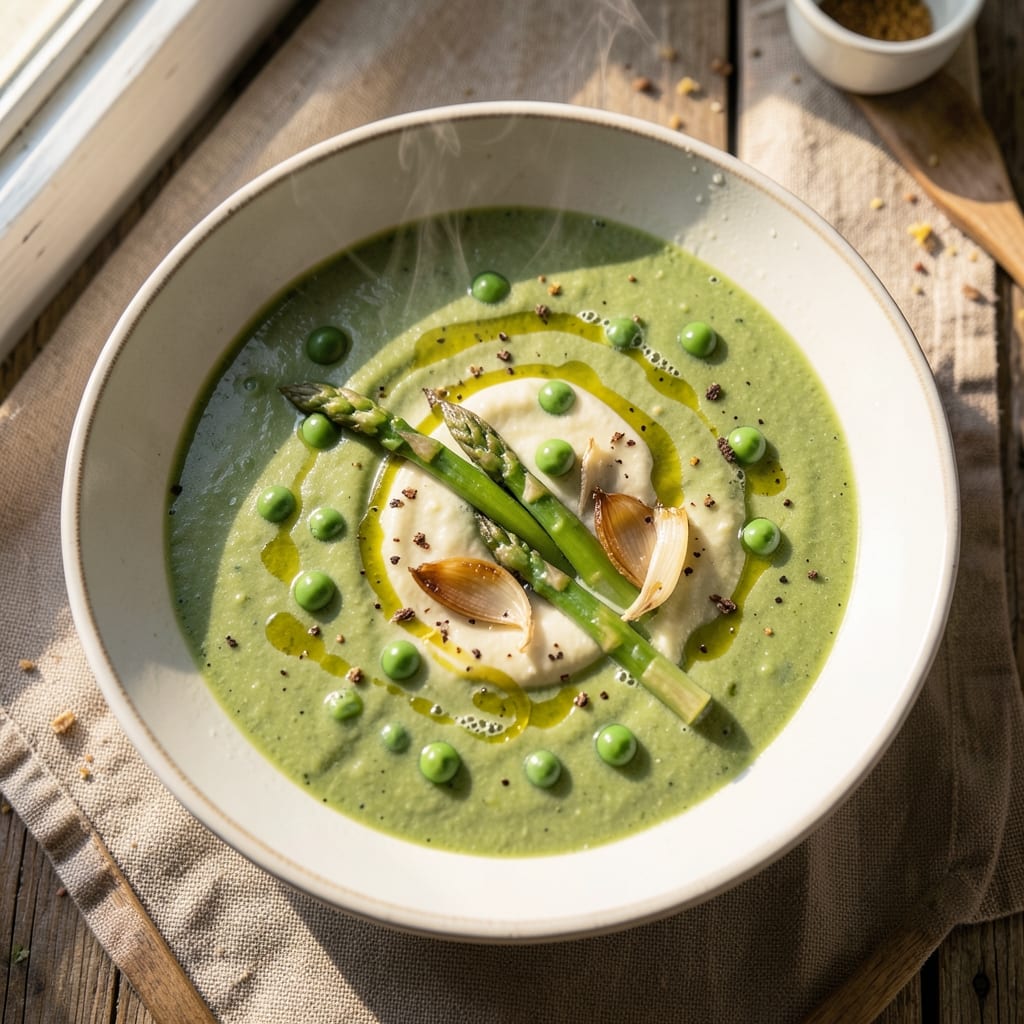
This asparagus and pea soup captures spring's brightest flavors in a single pot, transforming humble vegetables into a velvety, herb-infused masterpiece. The secret lies in balancing tender asparagus and sweet peas with aromatic shallots and fresh dill, creating a soup that's both comforting and refreshing. What makes this recipe special is its versatility—it works as a light vegetarian starter or a hearty main when paired with crusty bread or a poached egg.
With just 30 minutes of active time and minimal prep, this soup delivers restaurant-quality results without the fuss. The technique is straightforward: sauté aromatic vegetables, simmer with fresh peas and asparagus until tender, then blend until silky smooth. A touch of cream (or coconut milk for a vegan version) adds richness while preserving the soup's natural brightness. The best part? Every spoonful tastes like a spring garden in a bowl.
Perfect for spring menus or as a light lunch, this soup's vibrant green color and delicate flavor make it equally at home on casual weeknight tables or elegant dinner settings. Garnish with fresh herbs, a drizzle of olive oil, or crispy croutons to elevate it further. Whether you're serving it to guests or treating yourself, this recipe proves that spring's freshest ingredients deserve center stage.
The beauty of this asparagus and pea soup lies in its adaptability—add a splash of lemon for brightness, stir in smoked salmon for protein, or keep it purely vegetarian for a plant-based delight. The instructions are clear, the techniques foolproof, and the results consistently impressive. Let's create a bowl of springtime goodness that's as simple to make as it is delicious to enjoy.
Ingredients for asparagus and pea soup
Spring's freshest vegetables and aromatic herbs create this velvety asparagus and pea soup masterpiece.
| Ingredient | Amount | Notes |
|---|---|---|
| Fresh Asparagus 🌱 | 1 lb | Trimmed, tough ends removed |
| Fresh Peas 🌿 | 1 ½ cups | Shelling peas preferred |
| Yellow Onion 🧅 | 1 whole | Medium size, finely diced |
| Shallots 🧅 | 2 whole | Small, minced finely |
| Garlic Cloves 🧄 | 4 cloves | Fresh, peeled, minced |
| Extra-Virgin Olive Oil 🫒 | ½ cup | High-quality, fruity |
| Vegetable Stock 💧 | 4 cups | Homemade or quality store-bought |
| Heavy Cream 🥛 | ½ cup | Full-fat for richness |
| Fresh Dill 🌿 | ¼ cup | Chopped, stems removed |
| Fresh Lemon Juice 🍋 | 1 tbsp | Freshly squeezed |
| Salt 🧂 | 1 ½ tsp | Diamond Crystal preferred |
| Black Pepper 🌶️ | ½ tsp | Freshly ground |
| Fresh Thyme 🌿 | 2 sprigs | Leaves only, stems removed |
| Coconut Milk 🥥 | ½ cup | Full-fat, for vegan option |
The asparagus and peas are the heart of this soup, so prioritize freshness. Local farmers markets often have the best spring produce—look for asparagus with tightly closed tips and bright green color. If using frozen peas, thaw them first for even cooking. Shallots add delicate sweetness; Whole Foods carries pre-minced shallots in a jar, saving prep time. For the dill, fresh is non-negotiable—dried simply can't replicate its bright, citrusy notes. Store-bought vegetable stock works fine, but homemade elevates the flavor significantly. When selecting thyme, choose sprigs with vibrant green leaves rather than brown stems for maximum aroma.
No fresh dill? Fresh parsley at double the amount offers a milder alternative, though it lacks the signature flavor. Substituting coconut milk for cream creates a vegan version—just ensure it's full-fat for proper texture. Short on shallots? Extra yellow onion at half the amount works, though the flavor will be slightly more robust. The lemon juice can be omitted if you prefer a neutral taste, but it brightens the soup beautifully. For a smoother blend, roast the asparagus and peas for 10 minutes before adding to the pot—this deepens their natural sweetness. If you're serving this as a vegetarian main, consider adding crispy chickpeas for extra protein and texture.
This soup tastes even better the next day as flavors meld. Store in an airtight container in the fridge for up to 5 days, though the texture may slightly break down after 3 days. Freeze for 3 months by portioning into individual containers. For best results, reheat gently on the stove with a splash of water or stock to restore creaminess. Garnish with extra dill, a drizzle of olive oil, or toasted breadcrumbs just before serving to enhance presentation. The vibrant green color indicates freshness—if it looks dull, add a pinch more salt or a squeeze of lemon to revive it.
Why You'll Love This Recipe
- Spring in a Bowl: I swear by this when asparagus is at its peak—those bright peas and tender spears turn the pot into a celebration. The shallots and garlic caramelize just enough to add depth without overpowering, while the peas keep it light and fresh-tasting.
- One-Pot Magic: Honestly, this is the kind of recipe where you chop, simmer, and forget about the clock. The asparagus and peas cook right in the broth, so no extra pots or pans to wash. I’ve made it on nights when I was too tired to even think about cleanup—it’s that simple.
- Leftovers That Don’t Suffer: Between us, most soups turn sad the second day. Not this one. The asparagus holds its snap, the peas stay sweet, and the onion-garlic base only gets richer. I’ll reheat a bowl for lunch the next day, and no one ever guesses it’s not fresh off the stove.
- Budget Brightener: Fresh peas and asparagus might sound fancy, but they stretch far in this recipe. A single bunch of asparagus and a small bag of peas feed four people easily, and the onion/shallot/garlic combo adds layers of flavor without breaking the bank. It’s my go-to when I want to feel fancy without spending much.
Step-by-step instructions for asparagus and pea soup
Transform spring garden harvests into velvety, aromatic soup with this refined technique.
🍳 Step 1: Sauté Aromatics Until Fragrant
Heat the 0.5 cup extra-virgin olive oil in a large pot over medium heat. Add the 1 whole yellow onion and 2 whole shallots, cooking for 5-6 minutes until softened and translucent. The onions should release their sweet aroma and begin to caramelize slightly at the edges.
Add the 4 cloves garlic and 2 sprigs fresh thyme (leaves only), stirring constantly for 30 seconds until the garlic becomes fragrant but doesn't brown. This foundational step develops the soup's complex flavor profile. If you notice the garlic starting to darken too quickly, reduce the heat slightly to prevent bitterness.
👨🍳 Step 2: Cook Vegetables Until Tender
Add the 1 lb fresh asparagus (trimmed and cut into 1-inch pieces) and 1.5 cups fresh peas to the pot. Stir to combine with the aromatics, then pour in the 4 cups vegetable stock. Bring to a gentle boil, then reduce heat to medium-low and simmer for 10-12 minutes until the asparagus is fork-tender and the peas are bright green.
You'll know the vegetables are perfectly cooked when they easily collapse under gentle pressure with a fork. The soup should have a rich, verdant color from the vegetables. If you notice the soup reducing too quickly, add a splash of water to maintain the proper consistency for blending.
🍳 Step 3: Blend Until Silky Smooth
Remove the pot from heat and allow the soup to cool slightly for 5 minutes. Using an immersion blender, blend until completely smooth. For a perfectly velvety texture, blend in 30-second bursts, scraping the sides of the pot between each burst to ensure all ingredients are incorporated. If you prefer a slightly thicker consistency, blend for slightly less time.
After blending, return the soup to the stove over low heat. Stir in the 0.5 cup heavy cream and 0.5 cup coconut milk, allowing them to warm gently. This combination creates a luxurious, creamy base while maintaining the soup's vibrant vegetable character. The coconut milk adds subtle sweetness that balances the earthy asparagus and peas.
🥘 Step 4: Finish with Fresh Herbs and Brightness
Stir in the 0.25 cup fresh dill and 1 tbsp fresh lemon juice, seasoning with 1.5 tsp salt and 0.5 tsp black pepper. Taste and adjust the seasoning, remembering that the lemon juice will brighten the flavors as it sits. The soup should be perfectly balanced—savory from the stock, sweet from the vegetables, and bright from the lemon and herbs.
Simmer gently for 3-4 minutes to allow all the flavors to meld together. The dill should infuse its distinctive aroma, while the lemon juice prevents the cream from becoming overly rich. For the best texture, serve immediately while still warm, garnished with additional fresh dill and a drizzle of olive oil.
Pro Tips For Making Asparagus And Pea Soup
- Trim Asparagus at Angles: Cut the woody ends off asparagus spears first, then slice the rest at a 45-degree angle—this makes them look prettier and cook faster. I used to waste time with straight cuts, but angled pieces release flavor into the soup sooner.
- Blanch Peas First: Toss fresh peas in boiling water for 30 seconds before adding them to the soup—this stops them from turning mushy. I learned this after one batch turned into a sad, watery pea purée.
- Sweat Onions Low and Slow: Cook onions and shallots over medium-low heat until they’re translucent, not browned—this builds flavor without bitterness. High heat burns them before they soften properly, and nobody wants burnt onion soup.
- Reserve Some Pea Water: Strain peas after blanching, but save a splash of their cooking liquid—it’s packed with natural starch and brightens the soup’s color. I used to ignore this, then realized how much richer the texture became.
Perfect pairings for asparagus and pea soup
Crusty Bread Pairing
This soup pairs beautifully with crusty sourdough or baguette—the perfect vehicle for soaking up every last drop of velvety broth. I recommend toasting your bread with garlic-infused olive oil and a sprinkle of flaky sea salt before serving. For extra flair, try pumpernickel for a heartier bite that complements the soup's delicate flavors. 🥖
Protein Additions
For a pescatarian option, stir in 4 oz of smoked salmon just before serving—its smoky depth elevates the dish without overpowering. I also love adding poached eggs for a luxurious touch, or crispy chickpeas for a plant-based protein boost. Each addition transforms the soup into a complete meal while keeping prep simple.
Wine Pairings
A crisp Sauvignon Blanc from New Zealand or Loire Valley is ideal—its citrusy brightness mirrors the lemon and dill in the soup. For something lighter, a dry Riesling adds a touch of sweetness that balances the creaminess. Avoid heavy reds; they'll clash with the soup's delicate vegetable notes. 🍷
Herb Garnish Ideas
Fresh dill sprigs and chopped chives add vibrant color and aroma, while toasted pumpkin seeds provide a nutty crunch. For a pop of color, try edible flowers like nasturtiums. I also love a drizzle of high-quality extra-virgin olive oil and a pinch of crushed red pepper for subtle heat. Garnish just before serving to keep everything fresh.
Seasonal Accompaniments
Spring calls for radish slices or thinly shaved fennel on the side—their peppery bite contrasts perfectly with the creamy soup. In summer, add chilled cucumber ribbons for a refreshing touch. For a heartier meal, serve with warm polenta or roasted asparagus to complement the soup's flavors while adding texture. 🌿
Beverage Pairings
A sparkling water with lemon cleanses the palate between bites, while a light lager like Peroni adds effervescence. For non-alcoholic options, try hibiscus iced tea—its tartness enhances the soup's brightness. Avoid overly sweet drinks; they'll compete with the natural flavors of the vegetables. 🥤
Nutrition facts
Frequently asked questions
Can I substitute frozen peas for fresh?
Yes, but thaw them first for even cooking. Frozen peas work well, though fresh peas add a brighter, sweeter flavor. If using frozen, add them to the pot 2 minutes before the asparagus to prevent overcooking. The texture difference is minimal when blended into soup.
How do I make this soup vegan?
Replace the heavy cream with coconut milk (already included in the recipe) and use vegetable stock. For extra richness, stir in 2 tablespoons nutritional yeast after blending. The coconut milk adds natural sweetness that balances the earthy vegetables beautifully.
Why does my soup taste bitter?
Overcooked asparagus or garlic turning brown are common culprits. Simmer vegetables for exactly 10-12 minutes and remove from heat immediately when garlic is fragrant. A splash of lemon juice or pinch of sugar can also brighten the flavor. Always taste as you go!
Can I make this soup ahead of time?
Store in an airtight container in the fridge for up to 5 days. The flavors actually improve overnight. Reheat gently on the stove with a splash of water or stock to restore creaminess. For freezing, portion into containers for 3 months of quality.
What's the best way to serve leftovers?
Transform into a creamy dip by blending with a splash of cream and serving with toasted bread. Or make mini soup shots in ramekins with a poached egg on top. For a lighter option, chill and serve with crispy croutons and extra herbs.