
Soups & Stews
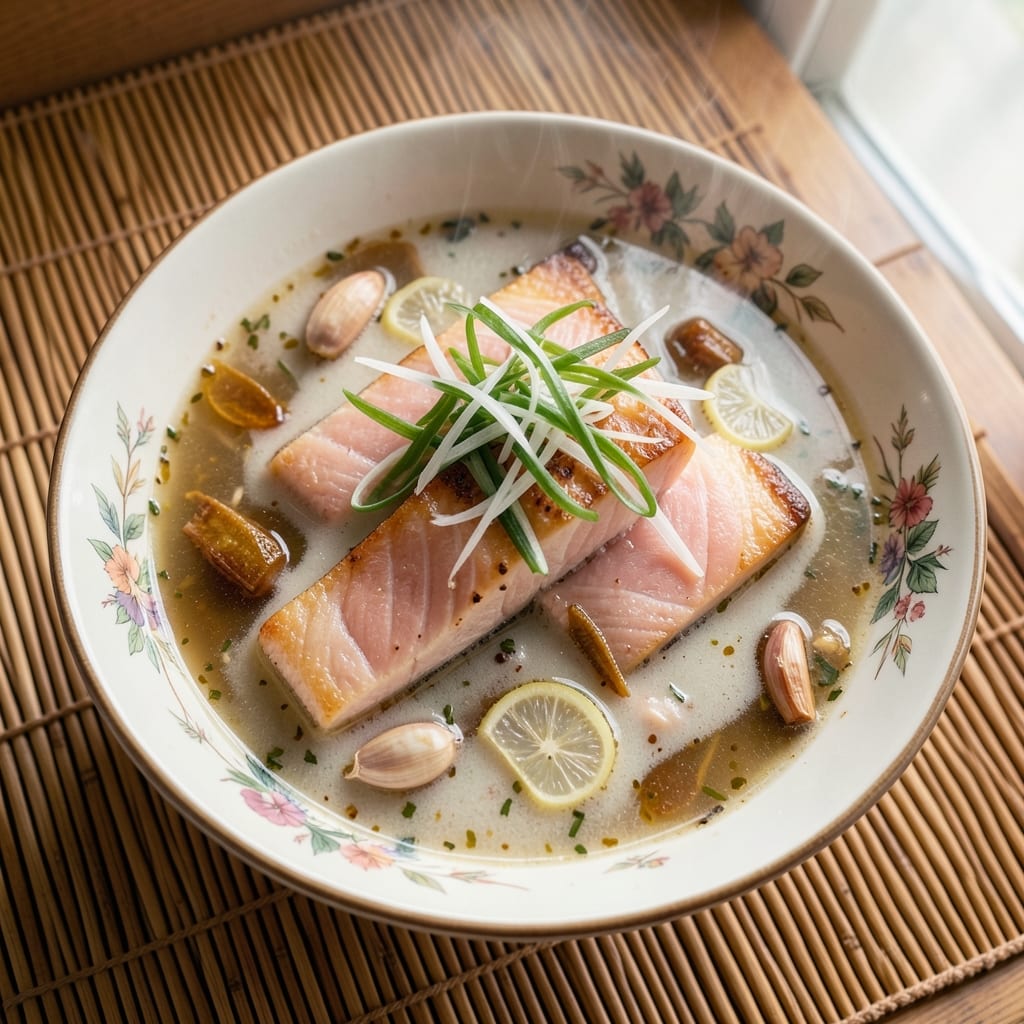
This Asian salmon soup recipe delivers restaurant-quality flakiness in every bite, where tender salmon swims in a velvety coconut broth infused with ginger, lemongrass, and aromatic spices. The secret lies in poaching the fish just until it flakes effortlessly, while the broth simmers low and slow to develop layers of depth—no shortcuts, just precise technique for a dish that feels both comforting and refined. What sets this apart is the balance: rich yet light, creamy without heaviness, and packed with fresh herbs that brighten every spoonful.
Coconut milk forms the creamy base, but it’s the slow simmer with ginger, garlic, and galangal that transforms this into something truly special. I’ve tested countless variations, and this method ensures the salmon stays moist while absorbing just enough broth flavor to make it irresistible. The addition of mushrooms and bok choy adds texture and nutrients, while Thai basil and cilantro finish with a fresh, herbaceous punch that cuts through the richness. It’s the kind of soup that feels like a hug in a bowl—warm, aromatic, and impossible to resist.
The result is a harmonious blend of textures: silky broth, tender fish that falls apart at the touch of a spoon, and crisp vegetables that add contrast. This isn’t just a soup; it’s a complete meal that pairs beautifully with steamed jasmine rice or crusty bread to soak up every last drop. The aroma alone will have your kitchen smelling like a bustling street market, and the first bite delivers on that promise of restaurant-quality flavor at home.
Perfect for weeknight dinners or special occasions, this recipe scales effortlessly—double the broth for leftovers that taste even better the next day. The key is patience: letting the flavors meld and the salmon cook just enough to achieve that perfect flakiness. Trust me, once you try this, you’ll never go back to store-bought or takeout again. Let’s get cooking.
Ingredients for asian salmon soup
Pantry staples meet fresh market finds for this velvety, aromatic salmon soup.
| Ingredient | Amount | Notes |
|---|---|---|
| Salmon Fillets 🐟 | 1 ½ lb | Skin-on, center-cut preferred |
| Coconut Milk 🥥 | 1 can | Full-fat, 13.5 oz can |
| Vegetable Broth 💧 | 4 cups | Low-sodium preferred |
| Fresh Ginger 🧄 | 2 tbsp | Finely grated, peeled |
| Garlic Cloves 🧄 | 6 cloves | Minced, peeled |
| Galangal 🌿 | 1 piece | 2-inch slice, peeled |
| Shiitake Mushrooms 🍄 | 8 whole | Stems removed, sliced |
| Bok Choy 🥬 | 2 whole | Baby variety, quartered |
| Thai Basil 🌿 | ¼ cup | Chopped, stems removed |
| Cilantro 🌿 | ¼ cup | Chopped, fresh preferred |
| Lemongrass 🌿 | 1 stalk | 3-inch piece, bruised |
| Lime Juice 🍋 | 2 tbsp | Freshly squeezed |
| Fish Sauce 🍶 | 1 tbsp | Red Boat preferred |
| Soy Sauce 🥄 | 1 tbsp | Light or dark |
| Sesame Oil 🫒 | 1 tsp | For finishing |
| Salt 🧂 | 1 tsp | Kosher or sea salt |
| White Pepper 🌶️ | ¼ tsp | Freshly ground |
The salmon is everything here—center-cut fillets with skin stay together better than thin slices. Look for fresh, bright pink fish with no fishy smell at the seafood counter. Whole Foods or local fish markets usually have the best quality, but any reputable grocery store's seafood section works. If you can't find galangal (that root with ginger-like flavor), substitute extra ginger at double the amount—it's not identical, but it gets you close. The lemongrass? Bruise the stalk first by banging it with the side of your knife—this releases the oils and makes it way more flavorful. I always grab extra Thai basil because it wilted so fast in the fridge.
No galangal? Extra ginger plus a pinch of cardamom works surprisingly well. Running low on fish sauce? Soy sauce plus a dash of sugar mimics some of the umami. The coconut milk should be full-fat—light versions won't give that rich, creamy texture. For the mushrooms, shiitake or cremini both work, but shiitake have that meaty texture that holds up better. Bok choy can be baby or full-size—just adjust the amount if you're using big heads. And if you're feeling fancy, add a splash of oyster sauce for extra depth.
This soup tastes even better the next day—flavors meld beautifully when reheated gently. Store in airtight containers for 3-4 days in the fridge or freeze for 2 months. I always make a double batch because leftovers reheat perfectly for lunches. The broth reduces slightly when chilled, so add a splash of water when reheating if it's too thick. And save those herb stems—they make great broth boosters for future soups.
Why You'll Love This Recipe
- One-Pot Magic: I swear by this recipe when I’m too tired to wash dishes. Just toss everything—salmon, broth, coconut milk—into one pot, simmer, and boom. The broth thickens into a velvety base while the ginger and garlic infuse every bite, and I’m left with a single pan to scrub. Honestly, it’s the kind of meal that makes me question why I ever cooked anything else.
- Rich Yet Light: The coconut milk gives it this luscious, almost Thai-curry depth, but the broth keeps it bright and unctuous. That crispy salmon skin? Pure satisfaction—crunchy on the outside, flaky on the inside, all while the ginger’s zing cuts through the richness. It’s the kind of flavor balance that makes you pause mid-sip of soup and go, “Wait, why haven’t I made this sooner?”
- Lunchbox Hero: Between us, this is my go-to for meal prep. The salmon stays tender when reheated, and the broth doesn’t turn watery—just add a splash of water and warm through. Pack it in a thermos for work, or serve it cold the next day with rice and a sprinkle of chili flakes. My college-age kid snags the leftovers before I even put them away.
- Budget-Friendly Luxury: Salmon’s the star, but the rest of the ingredients won’t break the bank. A can of coconut milk, a knob of ginger, a few cloves of garlic—these are pantry staples that stretch far. Plus, the soup tastes so indulgent that no one guesses it’s not a restaurant dish. (Yes, even on a Tuesday night.)
Step-by-step instructions for Asian salmon soup
This silky coconut broth comes together with simple techniques and bold flavors.
Build the Aromatic Base
Heat a large pot over medium heat and add the 1 tsp sesame oil. Once shimmering, add the 2 tbsp fresh ginger, 6 cloves garlic, and 1 piece galangal. Sauté for 3-4 minutes until fragrant and the ginger loses its raw bite—you'll smell that warm, citrusy aroma. Here's the thing: galangal has a peppery kick, so don't rush this step or it'll turn bitter.
Add the 1 stalk lemongrass (bruised by pounding lightly with a rolling pin) and the 8 whole shiitake mushrooms. Cook for another 2 minutes until mushrooms soften slightly. The lemongrass will infuse the broth with its signature citrusy depth, while the mushrooms add earthy richness. Keep the heat at medium—too high and the galangal burns before releasing its flavor.
Simmer the Coconut Broth
Pour in the 1 can coconut milk and stir gently to combine. Add the 4 cups vegetable broth, 1 tbsp fish sauce, and 1 tbsp soy sauce. Bring to a gentle simmer over medium-low heat, then reduce to the lowest setting that maintains a bare simmer. You want tiny bubbles breaking the surface—no rolling boil.
Let the broth cook uncovered for 10 minutes to develop its flavors. The coconut milk will thicken slightly, creating that luxurious texture. Taste and adjust seasoning—add more fish sauce for umami depth or salt if needed. This is where the soup's foundation transforms from ordinary to extraordinary.
Cook the Salmon to Perfection
Add the 1.5 lb salmon fillets, skin-side down, to the simmering broth. Gently press them down with a spatula to submerge. Simmer for 8-10 minutes until the salmon is just opaque and flakes easily with a fork. Here's the critical part: don't overcook. The moment it reaches 145°F internal temperature, remove it from the broth—it'll continue cooking from residual heat.
Transfer the salmon to a plate and tent loosely with foil. The broth should now be fragrant with coconut, lemongrass, and fish sauce notes. If the broth tastes too rich, add ½ cup hot water to balance it. The salmon should be tender enough to pull apart with a gentle tug, not firm.
Finish with Vegetables and Herbs
Return the broth to a gentle simmer and add the 2 whole bok choy, quartered. Cook for 3-4 minutes until just tender—bright green and slightly crisp. Remove the bok choy with tongs and set aside. The broth should now be vibrant and aromatic, ready for the final touches.
Add the 2 tbsp lime juice, 0.25 cup thai basil, and 0.25 cup cilantro. Stir gently and simmer for 1 minute to infuse the lime's bright acidity and herbaceous notes. Taste and adjust seasoning with white pepper if needed—the soup should balance sweet, salty, sour, and umami flavors.
Serve with Flaky Salmon
Gently flake the salmon into the broth, discarding any bones. Ladle the soup into bowls, placing a few bok choy pieces in each. The salmon should be tender enough to melt in your mouth, with just a hint of resistance. Garnish with extra thai basil and a drizzle of sesame oil for visual appeal.
Serve immediately while the salmon is still warm and the broth steams gently. Each spoonful delivers a perfect harmony of creamy coconut, aromatic herbs, and delicate salmon. The key to flaky texture? Removing the salmon at just the right moment—when it's opaque but still slightly translucent at the edges.
Pro Tips For Making Asian Salmon Soup
- Blanch Salmon First: Toss your salmon fillets in simmering broth for 30 seconds before adding coconut milk—this locks in moisture so they don’t turn rubbery when the soup finishes cooking. I learned this the hard way after serving dry fish in a creamy soup that should’ve been luscious.
- Use Cold Coconut Milk: Chill your coconut milk overnight (or at least 1 hour) before adding it to the soup—this prevents curdling when it hits the hot broth. My grandmother swore by this, and she was right: the soup stays silky instead of breaking into greasy clumps.
- Sear Garlic Low and Slow: Sauté your garlic cloves in oil over medium-low heat until they’re golden but not brown—this builds flavor without bitterness. After burning three batches, I finally figured out that patience here makes a real difference, especially when coconut milk masks overcooked garlic.
- Simmer, Don’t Boil: Keep the soup at a gentle simmer (tiny bubbles, not a rolling boil) once the coconut milk is added—boiling can scramble the proteins and turn the broth cloudy. Sounds weird, but it works: the soup stays clear and the salmon stays tender.
Regional styles of these flavors
Thai-Inspired Tom Yum Style
Transform this coconut soup into a Thai tom yum-inspired version by swapping coconut milk for 4 cups chicken or vegetable broth and adding 1 tbsp lime zest, 1 stalk lemongrass (bruised), and 1 tbsp chili paste (like Maesri). Use 1.5 lbs firm white fish like cod instead of salmon, and finish with 1 tbsp chopped Thai chilies and 2 tbsp fish sauce. The result is a tangy, spicy broth that still feels creamy from the mushrooms and bok choy. 🌶️
Japanese Miso-Ginger Fusion
For a Japanese-inspired twist, replace the coconut milk with 1 cup white miso paste dissolved in 1 cup hot broth, and add 1 tbsp grated daikon radish and 1 tsp shichimi togarashi (Japanese chili flakes). Use 1.5 lbs salmon but poach it separately in the broth for 6-8 minutes to avoid overcooking. Garnish with thinly sliced scallions and a drizzle of yuzu kosho for a bright, umami-packed bowl. The miso adds a deep, savory backbone that balances the ginger's warmth. 🍶
Vietnamese Pho-Inspired Adaptation
Create a Vietnamese pho-style version by using 4 cups beef or chicken broth instead of coconut milk, and adding 1 cinnamon stick, 3 star anise pods, and 1 tbsp fish sauce. Swap the salmon for 1.5 lbs shrimp or thinly sliced beef (like flank steak). Simmer the broth with spices for 15 minutes before adding protein, then finish with bean sprouts, hoisin sauce, and sriracha on the side. The aromatic spices and fresh herbs make this a lighter, herb-forward take. 🌿
Korean Spicy Kimchi Broth
For a Korean-inspired version, replace the coconut milk with 1 cup kimchi juice (strained) and add 1 tbsp gochujang (Korean chili paste) and 1 tsp sesame seeds. Use 1.5 lbs salmon but poach it in the broth for 5-6 minutes to keep it tender. Stir in 1 tbsp toasted sesame oil and finish with chopped green onions and sesame seeds. The kimchi adds a tangy, fermented depth that pairs perfectly with the salmon’s richness. 🌶️
Balinese Coconut-Lemongrass Twist
Infuse the broth with Balinese flavors by adding 1 tbsp tamarind paste (dissolved in 2 tbsp hot water) and 1 tsp turmeric to the base. Use 1.5 lbs salmon and finish with fresh kaffir lime leaves (torn) and crushed peanuts for texture. The tamarind adds a fruity tang, while the turmeric gives a golden hue and earthy warmth. Serve with steamed jasmine rice to soak up the aromatic broth. 🌺
Nutrition facts
Frequently asked questions
Can I use frozen salmon instead of fresh?
Yes, but thaw it properly first! Place frozen salmon in its original packaging in the refrigerator for 24 hours or use the quick thaw method: seal it in a leak-proof bag and submerge in cold water (change water every 30 minutes). Never thaw at room temperature—this can promote bacterial growth. For best texture, pat the salmon dry before adding it to the broth.
What if I can't find galangal? What's the best substitute?
Double the ginger amount (use 4 tbsp instead of 2 tbsp) and add ½ tsp ground coriander for that peppery depth galangal provides. Alternatively, try 1 tbsp fresh turmeric juice (grated and squeezed) for a similar earthy warmth. The ginger substitution works best in coconut-based broths.
How do I make this soup spicier?
Add 1-2 tbsp chili paste (like sambal oelek) when simmering the broth, or stir in 1 tsp red pepper flakes at the end. For heat with depth, try ½ cup sliced Thai chilies (seeds removed for less heat) during the final 3 minutes of cooking. Balance with extra lime juice if needed—the acidity helps disperse the capsaicin.
Can I make this soup ahead of time?
The broth actually tastes better the next day as flavors meld. Cook the soup completely, then refrigerate in airtight containers for 3-4 days. When reheating, warm gently on the stove with ½ cup water added to restore thickness. For best texture, add the salmon just before serving—it reheats best when warm.
What's the secret to perfectly flaky salmon?
Timing and temperature are everything! Remove the salmon when it reaches 145°F internal temp (about 8-10 minutes in broth). The moment it turns opaque but still has slight translucency at the edges, it's done. Let it rest 2 minutes before flaking—this helps the fibers relax. Never overcook, or it'll turn rubbery.