
Soups & Stews
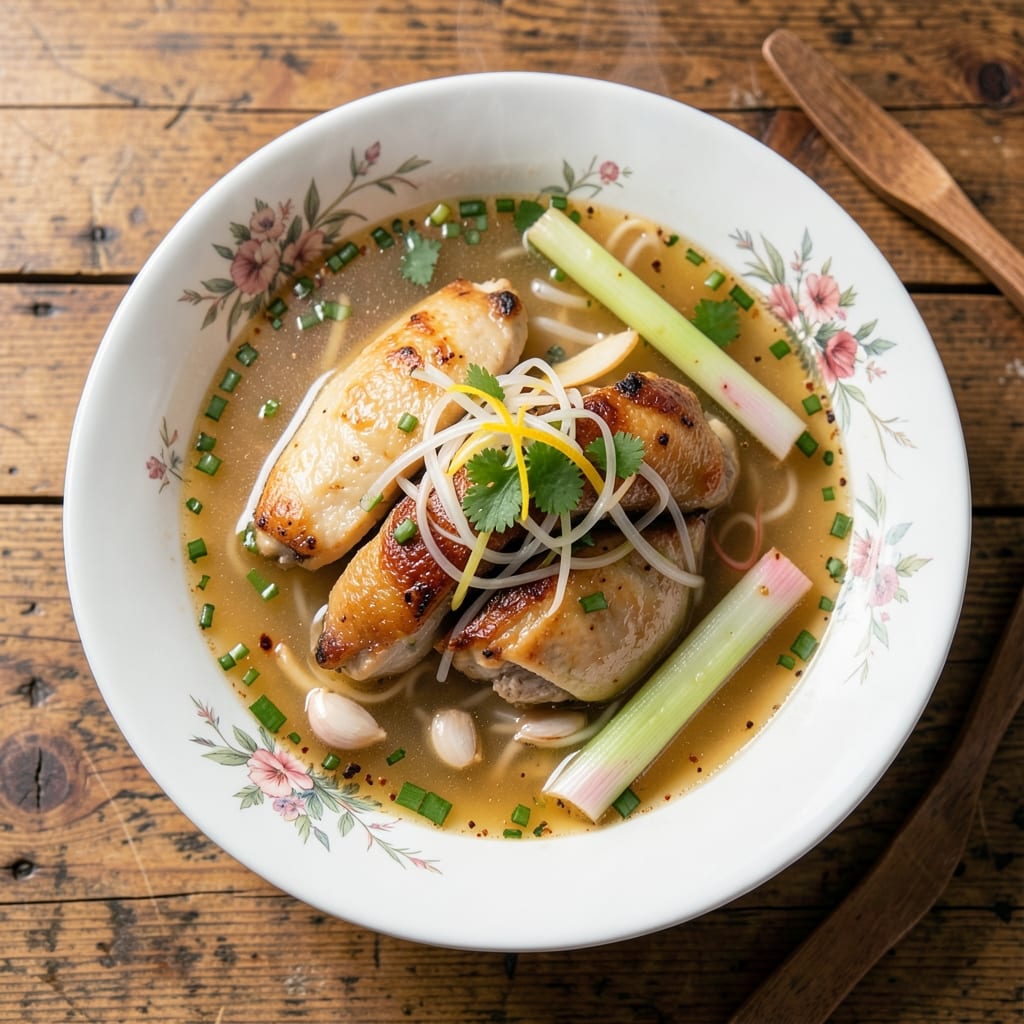
This Asian clear chicken soup recipe delivers the delicate balance of fragrant ginger-lemongrass broth that defines Vietnamese bún gà and Japanese tori ramen—light yet deeply flavorful. The secret lies in clarifying the broth through simmering, which creates that signature crystal-clear appearance while preserving the aromatic essence of fresh herbs and citrus. I developed this version after years of refining the technique to achieve restaurant-quality results at home, where every spoonful feels both comforting and refined.
The foundation of this soup is a silky ginger-lemongrass broth that forms the backbone of the dish, infused with just enough garlic and fish sauce for umami depth without overpowering the delicate flavors. Chicken thighs are poached until tender, then shredded for hearty texture, while rice noodles soak up the fragrant liquid to create the perfect al dente bite. What sets this recipe apart is the balance—each ingredient plays its part without competing, resulting in a soup that’s light enough for summer but warming enough for any season.
What you’ll end up with is a bowl of crystal-clear soup where the broth shimmers like sunlight through water, the chicken is melt-in-your-mouth tender, and the rice noodles hold their shape just long enough to provide structure. The aroma alone—bright with lemongrass, zesty with ginger, and subtly savory—will have everyone at the table anticipating the first sip. This is the kind of soup that feels like a hug in a bowl, yet is elegant enough for company.
Serve it with fresh herbs like Thai basil or cilantro, a squeeze of lime, and a sprinkle of crushed peanuts for texture if you’re feeling adventurous. The beauty of this recipe is its versatility—it’s simple enough for a weeknight dinner but impressive enough for guests. Let’s get started on creating a broth so clear and fragrant, it feels like liquid gold.
Ingredients for asian clear chicken soup
Here’s what transforms simple pantry staples into restaurant-quality Asian clear chicken soup.
| Ingredient | Amount | Notes |
|---|---|---|
| Chicken Thighs 🍗 | 1 ½ lb | Bone-in, skin-on preferred |
| Lemongrass Stalks 🌿 | 3 whole | Bruised for flavor release |
| Fresh Ginger 🧅 | ½ cup | Julienned, skin removed |
| Garlic Cloves 🧄 | 6 cloves | Smashed, not minced |
| Fish Sauce 🍶 | 2 tbsp | Red Boat preferred |
| Rice Noodles 🍜 | 8 oz | Flat, medium-width |
| Chicken Broth 💧 | 4 cups | Homemade, low-sodium |
| Lime Juice 🍋 | 2 tbsp | Freshly squeezed |
| Green Onions 🧅 | ¼ cup | Sliced, white and green |
| Thai Basil Leaves 🌿 | ¼ cup | Whole, for garnish |
| Crushed Peanuts 🥜 | ¼ cup | Toasted, optional |
| Salt 🧂 | 1 tsp | Diamond Crystal preferred |
| White Peppercorns 🌶️ | ¼ tsp | Crushed, for finish |
| Sesame Oil 🫒 | 1 tsp | Toasted, for aroma |
The broth is where magic happens. Red Boat fish sauce is non-negotiable—it’s the umami backbone of the dish. For lemongrass, look for fresh stalks at Asian markets (they’ll bruise it for you) or the frozen section at Trader Joe’s if fresh isn’t available. Ginger should be organic and knobby—the thicker the root, the more flavor. Chicken thighs with skin and bone create the richest broth, but boneless works in a pinch. The broth needs to simmer uncovered for 45 minutes to clarify properly—don’t rush this step.
No fish sauce? Soy sauce at half the amount gets you close, though the flavor won’t be identical. Fresh lemongrass unavailable? Substitute 1 tbsp lemongrass paste (found in Asian grocery freezers) or 1 tsp lemongrass extract, but reduce other aromatics slightly. For the noodles, rice vermicelli works too, but flat noodles hold their shape better. The crushed peanuts are optional but add that perfect crunch—toast them in a dry pan for 2 minutes before crushing. Lime juice should be fresh; bottled won’t cut through the broth’s richness.
Broth keeps 5 days refrigerated or 3 months frozen—freeze in ice cube trays for easy portioning. Chicken thighs can be poached ahead and stored 3 days refrigerated or 2 months frozen. Noodles should be soaked just before serving (they’ll turn mushy if pre-soaked). Garnishes like Thai basil and green onions stay fresh 5 days wrapped in damp paper towels. This soup tastes even better the next day as flavors meld—double the batch and freeze half for lazy weeknights.
Why You'll Love This Recipe
- Pantry-Friendly Staples: I swear by this soup because it uses ingredients I always have—chicken thighs stay juicy, lemongrass adds that bright aroma without fuss, and fish sauce? That’s my secret umami boost. No specialty shopping needed.
- Lemongrass-Garlic Magic: The moment I crush those garlic cloves with fresh ginger and toss in the lemongrass stalks, the kitchen smells like a Thai street cart. That first sip? Clean, herbal, and packed with depth—no heavy cream or weird aftertaste.
- Lunchbox Hero: Between us, this soup is my go-to for meal prep. Simmer a big batch, let it cool, and it stays crisp and flavorful for days. Toss in rice or noodles, and suddenly you’ve got a week’s worth of lunches that don’t taste like last night’s leftovers.
- Budget Booster: Chicken thighs are cheap, fish sauce is a steal, and ginger lasts forever. I make this for $10 and feed four people—no fancy cuts or overpriced herbs. Plus, the leftovers taste even better the next day. (Yes, even on a Tuesday night.)
Step-by-step instructions for fragrant ginger-lemongrass chicken soup
This aromatic broth builds layer by layer—start with the aromatic base, then develop the chicken, and finish with delicate noodles.
Prepare the Aromatic Base
In a large pot, combine the 4 cups chicken broth, 3 whole lemongrass stalks (bruised by pounding gently with a rolling pin), 0.5 cup julienned fresh ginger, and 6 smashed garlic cloves. Bring to a boil over medium-high heat, then immediately reduce to a simmer. Let it cook uncovered for 10 minutes—you'll notice the broth develop a vibrant golden color and an intoxicating aroma from the lemongrass and ginger.
This simmering step is critical. It extracts all the essential oils from the aromatics, infusing the broth with their natural flavors. If you smell the broth and it's still faintly vegetal, simmer for another 2-3 minutes—the longer it cooks, the more complex the flavor becomes. Strain out the lemongrass and ginger after simmering, but leave the garlic in for now—it'll continue to mellow and deepen the flavor.
Cook the Chicken Thighs
Add the 1.5 lb chicken thighs (skin-on for extra richness) to the simmering broth. Increase heat to medium-high and bring back to a boil. Once boiling vigorously, reduce heat to medium-low and let it simmer uncovered for 25-30 minutes, turning the thighs occasionally. You'll know they're done when they're fork-tender and the meat separates easily from the bone.
Here's the thing about chicken thighs—they release their juices gradually, which is why we want them to cook slowly. When the meat is fully cooked, remove the thighs from the broth and let them rest on a cutting board for 5 minutes before shredding. This resting period ensures the meat stays juicy when you slice it. Use two forks to shred the chicken into bite-sized pieces, then return them to the broth.
Season and Prepare the Noodles
Strain the broth through a fine-mesh sieve into a clean pot, pressing down gently on the solids to extract all the flavor. Return the strained broth to medium heat and add 2 tbsp fish sauce, 1 tsp salt, and 0.25 tsp crushed white peppercorns. Stir well and let it simmer for 5 minutes to meld the seasonings. Taste and adjust—you want a balance of umami from the fish sauce, saltiness from the salt, and a hint of peppery heat.
While the broth simmers, prepare the 8 oz rice noodles according to package instructions. I like to use a separate pot for this—bring 4 cups fresh water to a boil, add the noodles, and cook for 3-4 minutes until just tender but still slightly firm. Drain immediately and rinse under cold water to stop the cooking process. The noodles should be silky and translucent, not mushy.
Assemble and Finish the Soup
Add the cooked noodles to the seasoned broth and stir gently to combine. Let the soup simmer together for 2-3 minutes—this allows the noodles to absorb some of the broth's flavor without becoming soggy. Remove from heat and stir in 2 tbsp lime juice and 1 tsp toasted sesame oil. The lime brightens the dish, while the sesame oil adds a nutty aroma that ties everything together.
Ladle the soup into bowls and garnish each serving with 0.25 cup sliced green onions, 0.25 cup whole Thai basil leaves, and a sprinkle of 0.25 cup crushed peanuts (if using). The peanuts add a satisfying crunch, the basil brings freshness, and the green onions contribute a mild onion flavor. Serve immediately while the noodles are still warm and the broth is steaming—this is when the soup shines brightest.
Pro Tips For Making Asian Clear Chicken Soup
- Char the Aromatics: Toss your lemongrass, ginger, and garlic into a dry, smoking-hot wok or pot first—no oil needed. The blackened bits (yes, they look scary) pack layers of flavor that dissolve into the broth later, giving it depth without bitterness. I used to skip this, and the soup always tasted flat until I saw how much richer it got after charring.
- Cut Ginger Thin: Slice that ginger into paper-thin pieces—no, not just "thin." Use a sharp knife or mandoline for sheets you can almost see through. They’ll infuse the broth beautifully without turning it into a ginger slurry. I learned this the hard way when my first batch turned into soup with a muddy bottom.
- Simmer, Don’t Boil: Once the chicken is in, keep the heat low enough that bubbles rise slowly—just a gentle simmer. Boiling shreds the chicken and clouds the broth faster. My grandmother swore by this, and she was right: the broth stays clear, and the chicken stays tender.
- Strain Twice: First strain through a fine-mesh sieve to catch all the solids. Then, for real clarity, pour the broth through a coffee filter or cheesecloth-lined strainer. It takes 10 extra minutes, but the result is a soup so clear it looks like liquid gold. I know, I know—it’s annoying, but trust the process.
Storing and reheating your leftovers
Refrigerator Storage
Store your clear chicken soup in airtight glass containers for up to 5 days in the refrigerator. I prefer Pyrex with snap-on lids because they’re durable and don’t absorb odors. Let the soup cool completely before transferring—this prevents condensation that can dilute flavors. The broth will actually deepen in complexity overnight, so leftovers often taste even better the next day. 💛
Freezer Storage
For longer storage, freeze the soup in quart-sized freezer bags or glass containers with tight seals. Leave 1-inch headspace to account for expansion. I recommend freezing the broth and chicken separately—this lets you customize portions later. The broth alone keeps for 3 months, while the chicken stays good for 2 months. Thaw overnight in the fridge before reheating for best texture. ❄️
Reheating Broth
Reheat the broth on the stovetop over medium-low heat—never boil it vigorously, as this can make it cloudy again. Add 2-3 tablespoons of water if it looks too thick. For microwave reheating, use 50% power in 1-minute intervals, stirring between each. The broth should reach 165°F before serving. Taste and adjust seasoning—reheated broth often needs a pinch more salt or a splash of lime juice. 🔥
Reheating Chicken
If you froze the chicken separately, thaw it in the fridge overnight. Reheat gently in the broth or a skillet with 1 tablespoon of water over low heat for 5-7 minutes until warmed through. Never microwave chicken directly—it’ll dry out. For best results, reheat the entire soup together on the stovetop for 5-7 minutes after adding noodles. This keeps everything silky and cohesive. 💡
Reviving Noodles
Noodles don’t reheat well, so I recommend cooking fresh ones when serving leftovers. If you must reheat, add them to the hot broth for just 1-2 minutes—any longer and they’ll turn mushy. For a quick fix, serve the broth over cold rice noodles and let diners soak them individually. This keeps the texture perfect while enjoying the flavorful broth. 🍜
Garnish Refresh
Fresh herbs like Thai basil and green onions lose their vibrancy when reheated, so add them right before serving. Toast crushed peanuts fresh in a dry pan for 2 minutes before sprinkling—they’ll taste crispier than store-bought. A squeeze of fresh lime juice brightens reheated soup instantly. The key is to treat leftovers like you’re making a fresh batch—just with shortcuts! ✨
Nutrition facts
Frequently asked questions
Why does my broth turn cloudy instead of crystal clear?
The clarity comes from simmering uncovered for 45 minutes—this allows impurities to rise and evaporate. If your broth stays cloudy, try straining it through a cheesecloth-lined sieve after simmering, or add 1 egg white to the broth while heating (it will coagulate and trap particles). For Vietnamese-style soups, a slightly cloudy broth is traditional, but this recipe aims for that signature shimmer.
Can I use chicken breast instead of thighs?
Yes, but thighs are ideal—they stay juicier and add more fat for richness. If using breast, poach for 15-20 minutes (instead of 25-30) and shred immediately to prevent drying. For extra flavor, marinate the breasts in 1 tbsp fish sauce + 1 tsp ginger for 30 minutes before cooking. The broth will still be delicious, just slightly lighter.
What if I don’t have fresh lemongrass or ginger?
For lemongrass, use 1 tbsp lemongrass paste (found frozen in Asian markets) or 1 tsp lemongrass extract (reduce other aromatics by half). For ginger, substitute 1 tsp ground ginger (though fresh is preferred) or 1/2 tsp ginger powder + 1/4 tsp turmeric for color. The flavor won’t be identical, but it’ll still taste aromatic.
How do I make this soup spicier?
Add 1/2 tsp chili flakes or 1-2 thin slices of fresh chili (like Thai bird’s eye) to the broth while simmering. For heat without spice, stir in 1/4 tsp cayenne or 1 tsp sambal oelek at the end. Garnish with extra chili slices or a dash of Sriracha on the side for customizable heat.
Can I make this soup vegetarian?
Swap chicken for shiitake mushrooms (sliced) or tofu (firm, pressed). Replace fish sauce with 2 tbsp soy sauce + 1 tsp mushroom powder for umami. Use vegetable broth and add 1 tbsp miso paste** to deepen flavor. The broth will still be clear, but the texture will be more earthy.