
Soups & Stews
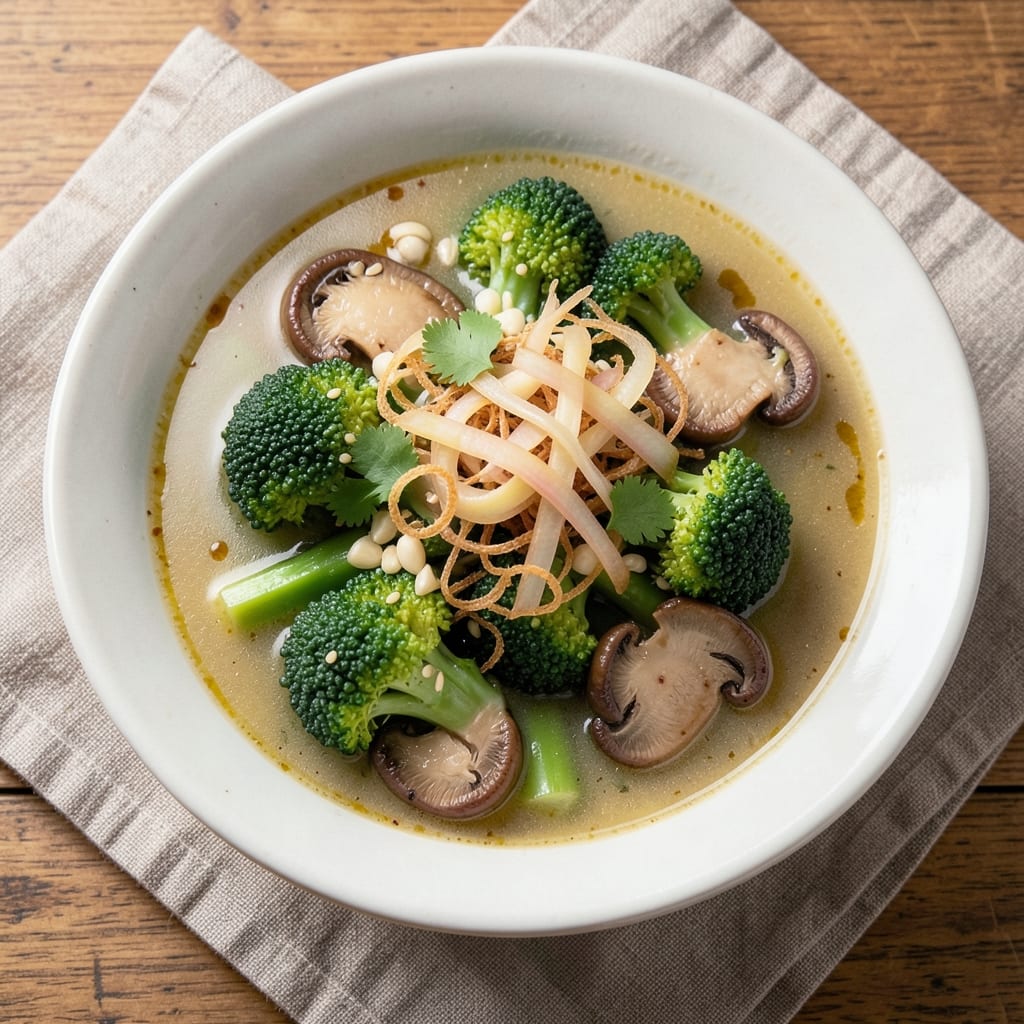
This Asian broccoli soup recipe transforms simple ingredients into a fragrant, silky broth that captures the essence of traditional East Asian flavors. The foundation lies in a ginger-garlic base that infuses the broth with aromatic depth, while tender broccoli florets and mushrooms create satisfying texture contrasts. What sets this dish apart is the balance of umami from soy sauce and miso, creating a flavor profile that's both comforting and sophisticated.
The preparation begins with stir-frying aromatic vegetables to develop their natural sweetness before building the silky broth through slow simmering. This method ensures maximum flavor extraction while maintaining the broccoli's vibrant green color and crisp-tender texture. The recipe serves as a versatile vegetarian base that can easily accommodate optional protein additions like tofu or shrimp for those seeking extra substance.
What you'll achieve is a restaurant-quality soup that's light yet deeply flavorful, with each spoonful delivering layers of aromatic ginger, savory soy notes, and the natural sweetness of fresh broccoli. The silky broth clings beautifully to every floret, creating an experience that's both nourishing and elegant. Perfect for chilly evenings or as a comforting meal any time of year, this soup comes together in under an hour.
Serve with steamed rice and a sprinkle of sesame seeds for added texture, or enjoy as a standalone dish with crusty bread on the side. The recipe's flexibility makes it ideal for meal prep, as the flavors develop and deepen when reheated. Whether you're serving a family dinner or preparing for a gathering, this Asian broccoli soup delivers professional-quality results with minimal effort.
Ingredients for asian broccoli soup
Transform simple vegetables and aromatic roots into a restaurant-quality Asian broccoli soup with this fragrant ginger-garlic base.
| Ingredient | Amount | Notes |
|---|---|---|
| Fresh Broccoli Florets 🥦 | 4 cups | Large florets for texture contrast |
| Shiitake Mushrooms 🍄 | 8 oz | Fresh or rehydrated dried |
| Fresh Ginger Root 🌿 | 2 tbsp | Finely grated, aromatic |
| Garlic Cloves 🧄 | 4 cloves | Minced for aromatic depth |
| Onion 🧅 | 1 whole | Yellow, thinly sliced |
| Vegetable Oil 🫒 | 2 tbsp | High smoke point preferred |
| Vegetable Broth 💧 | 4 cups | Low-sodium preferred |
| White Miso Paste 🥄 | 1 tbsp | High-quality miso preferred |
| Soy Sauce 🍶 | 2 tbsp | Light or dark variety |
| Sesame Oil 🫒 | 1 tsp | Toasted for aroma |
| Green Onions 🧅 | 2 whole | Sliced for garnish |
| Toasted Sesame Seeds 🌰 | 1 tbsp | For garnish |
| Rice Vinegar 🍶 | 1 tsp | Balances flavors |
| Sea Salt 🧂 | 1 tsp | Diamond Crystal preferred |
| Black Pepper 🌶️ | ½ tsp | Freshly ground |
The ginger and garlic form the aromatic foundation of this dish. Fresh ginger root is essential—peeled and grated just before use to preserve its vibrant flavor. Whole Foods or Trader Joe's carry excellent quality, or look for organic options at your local market. For the garlic, elephant garlic adds a milder, sweeter note if you're feeling adventurous. Shiitake mushrooms should be firm and plump, with no sliminess. If using dried, rehydrate in hot water for 20 minutes—this concentrated flavor is key to the umami profile.
No fresh ginger? Powdered ginger at half the amount works in a pinch, though it lacks the same depth. Substitute shiitake mushrooms with cremini or white mushrooms, but increase to 10 oz for comparable texture. The miso paste can be white, red, or awase—each brings different complexity. For a lighter broth, reduce the soy sauce to 1 tbsp and add 1 tsp of mirin instead. Broccoli can be swapped for bok choy or gai lan for a more traditional Asian vegetable profile, though the color contrast will differ.
The aromatics develop best when made fresh, but the broth can be prepped ahead and reheated. Store the finished soup in an airtight container for up to 4 days in the refrigerator, though the flavors intensify after 24 hours. For freezing, portion into individual containers—this soup reheats beautifully, making it ideal for meal prep. Garnish with sesame seeds and green onions just before serving to preserve their freshness and vibrant colors.
Why You'll Love This Recipe
- I swear by this trick: buy pre-sliced shiitake mushrooms and baby broccoli florets (they’re everywhere now). Honestly, I’ve made this soup after work with just a knife for the onion—no mandoline, no stress. The ginger? Just grate a thumb-sized piece. That’s it.
- No-Chop Shortcuts: I swear by this trick: buy pre-sliced shiitake mushrooms and baby broccoli florets (they’re everywhere now). Honestly, I’ve made this soup after work with just a knife for the onion—no mandoline, no stress. The ginger? Just grate a thumb-sized piece. That’s it.
- Umami Bomb Combo: The shiitake mushrooms and garlic? They’re the MVP here. When the mushrooms soften, they soak up the ginger like a sponge, and that first sip hits with this deep, savory punch—like a hug for your taste buds. (Yes, even on a Tuesday night.)
- Leftovers That Don’t Suck: This soup actually improves the next day. The flavors meld, the broccoli gets that perfect al dente-to-tender transition, and it’s still warm enough to reheat in minutes. I pack it for lunch three times a week—no sad, soggy salads here.
Step-by-step instructions for Asian broccoli soup
This method delivers a silky, aromatic broth with perfect texture contrast every time.
Prepare the Aromatic Base
Heat the 2 tablespoons vegetable oil in a large pot over medium heat. Add the 1 whole onion, sliced into thin half-moons, and cook for 5-6 minutes until translucent and just beginning to soften. This foundational step builds flavor depth through the Maillard reaction.
Add the 4 cloves garlic cloves, minced, and 2 tablespoons fresh ginger root, finely grated. Cook for 1-2 minutes until fragrant but not browned - this prevents bitterness while maximizing aromatic compounds. Stir constantly to avoid burning the delicate garlic. The moment you smell that bright, citrusy aroma, you're ready for the next ingredient.
Develop the Umami Foundation
Increase heat to medium-high and add the 8 oz shiitake mushrooms, sliced. Cook for 4-5 minutes until mushrooms release their moisture and begin to brown at the edges. This step concentrates their earthy umami flavor through dehydration.
Reduce heat to medium-low and stir in the 1 tablespoon white miso paste and 2 tablespoons soy sauce. Let the mixture simmer for 2 minutes while stirring constantly - this prevents the miso from separating and allows its fermented complexity to bloom. The broth should develop a rich, savory aroma with subtle sweetness.
Build the Silky Broth
Pour in the 4 cups vegetable broth and bring to a gentle simmer. Add the 4 cups fresh broccoli florets and 1 teaspoon sea salt. Let the soup cook for 8-10 minutes until broccoli is tender-crisp - it should offer slight resistance when pierced with a fork but remain vibrant green.
Here's the secret: Add 1 teaspoon rice vinegar and 1 teaspoon sesame oil now. The vinegar brightens the broth while the sesame oil adds nutty depth. Simmer for an additional 2 minutes to allow flavors to meld completely. The broth should coat the back of a spoon with a velvety texture.
Finish and Garnish
Remove from heat and stir in 0.5 teaspoon black pepper. This final seasoning step ensures balanced seasoning throughout each serving. Ladle soup into bowls immediately to preserve its delicate texture.
Garnish each serving with 2 whole green onions, sliced on the bias, and 1 tablespoon toasted sesame seeds. The green onions add fresh contrast while the sesame seeds provide a toasty finish. Serve with crispy rice crackers on the side for texture contrast and additional umami.
Pro Tips For Making Asian Broccoli Soup
- STIR-FRY MUSHROOMS FIRST: I learned this the hard way—don’t toss shiitake mushrooms straight into the broth. Sauté them in a dry pan for 3-4 minutes until they release their moisture and develop a golden edge. This concentrates their umami flavor before they even hit the soup, making every spoonful richer.
- SLICE GINGER THINLY: Skip the grating unless you’re aiming for a smooth texture. Instead, julienne that ginger root into matchsticks—it infuses flavor without turning the soup into a paste. (Yes, even if you’re impatient like me, resist the urge to mince it.)
- DON’T BOIL THE BROCCOLI: Broccoli florets lose their crisp-tender bite fast in hot liquid. Add them to the soup only when the broth is simmering gently, then cook for no more than 2-3 minutes. Pull them out early if you’re serving with noodles—they’ll finish cooking in the heat.
- SAUTÉ ONIONS LOW AND SLOW: Onions caramelize best at a steady simmer, not a sear. Let them cook for 8-10 minutes in the broth until they’re translucent and sweet—not crispy. This builds depth without burning, especially if you’re using a mild onion variety. (Your future self will notice the difference.)
Troubleshooting great asian broccoli soup
Broth Too Thin?
If your soup ends up too watery, don't panic—simmer uncovered for an additional 5-10 minutes to reduce excess liquid. For a quicker fix, stir in 1 tbsp cornstarch mixed with 2 tbsp cold water and simmer for 2 minutes until thickened. I've found that using homemade vegetable broth (instead of store-bought) naturally yields richer, thicker results due to its concentrated flavor. 💧
Broccoli Overcooked?
Broccoli turning mushy? The issue is usually overcooking. Start checking doneness at 6 minutes—it should be tender-crisp with vibrant green color. To salvage overcooked broccoli, drain most of the broth, then blend the remaining liquid with 1 tbsp miso paste and 1 tsp sesame oil for a creamy, flavorful sauce. Serve over rice for a quick fix. 🥦
Miso Separating?
Miso paste can separate if added to hot liquids too quickly. Always reduce heat to medium-low before stirring it in, and whisk continuously for 2 minutes to fully incorporate. For extra insurance, mix the miso with 1 tbsp cold water first to create a smooth paste. This technique prevents clumping and ensures even distribution throughout the broth. 🥄
Lacking Depth?
Need more umami? Boost the flavor by adding ½ tsp fish sauce (if vegetarian, use ½ tsp soy sauce + ¼ tsp mushroom powder). For a smoky note, stir in ¼ tsp smoked paprika. If your broth tastes flat, try adding 1 tsp oyster sauce. The key is balancing these additions—start with small amounts and adjust to taste. 🌶️
Ginger Too Bitter?
Fresh ginger can turn bitter if cooked too long. Remove it after 1-2 minutes. For milder flavor, use young ginger. If you prefer a sweeter taste, add ½ tsp honey. Pro tip: Peel ginger just before grating to preserve its freshness and vibrant flavor. 🌿
Broth Too Salty?
If your soup tastes overly salty, balance it with 1 tsp rice vinegar. For a more substantial fix, add ½ cup coconut milk*. The natural sweetness of coconut milk helps dilute the salt while adding creaminess. If you prefer not to dilute, serve with extra green onions or sesame seeds to cut through the saltiness. 🧂
Nutrition facts
Frequently asked questions
Can I make this soup spicier?
Add ½ teaspoon red pepper flakes during the final seasoning step for gentle heat, or stir in 1 teaspoon gochujang (Korean chili paste) with the miso for deeper spice. For a smoky kick, include ¼ teaspoon smoked paprika when sautéing the aromatics. Adjust to taste—start small since spices intensify when reheated.
What's the best way to store leftovers?
Transfer to an airtight container and refrigerate for up to 4 days. The flavors actually improve overnight as the ingredients meld! For freezing, portion into individual containers and freeze for up to 3 months. Thaw in the fridge overnight—never microwave directly from frozen to preserve texture. Reheat gently on the stove with a splash of water.
Can I use frozen broccoli?
Yes, but thaw it first under cold running water to maintain texture. Use 4 cups thawed frozen florets (about 12 oz unfrozen weight) and add them to the simmering broth when the mushrooms are cooked. Frozen broccoli works well but may release more water, so reduce cooking time by 2 minutes to prevent mushiness.
How do I make this gluten-free?
Replace the soy sauce with 2 tbsp gluten-free tamari and ensure your miso paste is certified gluten-free. Check vegetable broth labels for hidden gluten additives. For extra umami, add ½ tsp nutritional yeast when stirring in the final seasoning. All other ingredients are naturally gluten-free.
What's the secret to restaurant-quality texture?
Three key techniques:
- Cook broccoli in batches if needed to avoid overcrowding,
- Use shiitake mushrooms for their meaty texture, and
- Finish with sesame oil and rice vinegar to brighten flavors. The broth should coat a spoon with silky thickness—simmer uncovered to reduce if needed.