
Main Courses
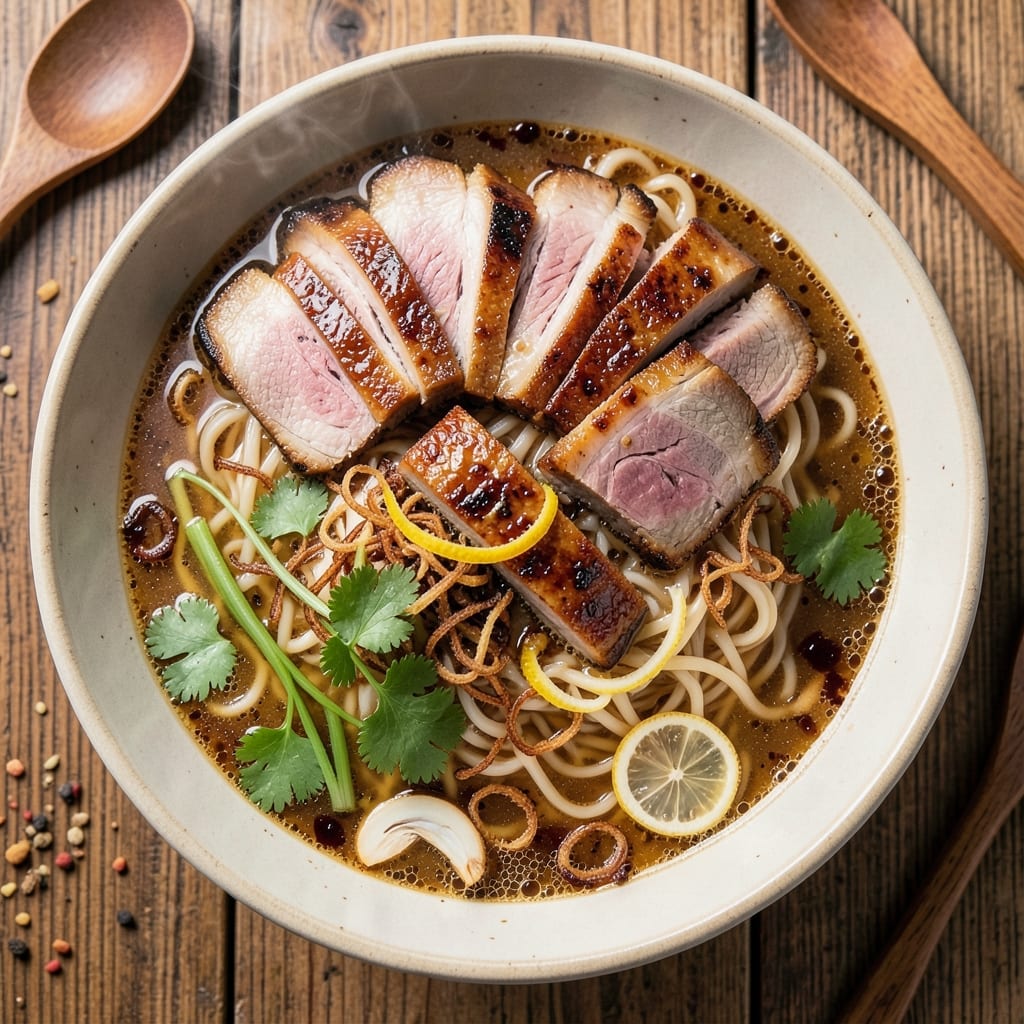
This Asian BBQ pork noodle soup recipe delivers the perfect balance of smoky, sweet, and savory flavors in every bowl. 🔥 As a pitmaster who's spent years perfecting the art of slow-cooked meats, I've developed a technique that transforms simple pork into tender, caramelized slices that fall apart in the broth. The secret lies in charring the pork over indirect heat before braising it low and slow—this creates layers of depth that take your soup from ordinary to extraordinary.
The broth is where the magic happens, built with a combination of soy sauce, brown sugar, and aromatic spices that simmer until they develop a rich, caramelized sweetness. I use wide rice noodles because they absorb the flavorful broth beautifully while maintaining that perfect chewy texture—no mushy noodles here. The key to balancing the flavors is patience; letting the broth reduce and develop its complex taste profile makes all the difference.
What you'll end up with is a steaming bowl of restaurant-quality noodle soup that's packed with tender BBQ pork, fragrant herbs, and silky noodles in a deeply flavorful broth. The aroma alone will have everyone gathering at the table, and the first bite delivers that perfect harmony of smoky, sweet, and umami notes that keep you coming back for more. This is comfort food at its finest, elevated by professional techniques you can easily recreate at home.
Whether you're serving a crowd or treating yourself to a cozy weeknight meal, this recipe scales beautifully and tastes even better the next day. The leftovers keep well in the fridge, and the flavors only deepen as the broth continues to meld. Let's get cooking—your taste buds will thank you.
Ingredients for asian bbq pork noodle soup
Six servings of smoky-sweet perfection—pork so tender it melts, noodles chewy just right, and broth packed with depth.
| Ingredient | Amount | Notes |
|---|---|---|
| Pork Shoulder 🐷 | 2 lb | Cut into 1-inch thick slices |
| Wide Rice Noodles 🍜 | 12 oz | Uncooked, chewy variety |
| Soy Sauce 🥫 | ½ cup | Kikkoman preferred |
| Brown Sugar 🍯 | ½ cup | Packed tightly |
| Garlic Cloves 🧄 | 8 cloves | Minced for marinade |
| Fresh Ginger 🌿 | 2 tbsp | Grated, aromatic |
| Sesame Oil 🫒 | 1 tbsp | Toasted for aroma |
| Green Onions 🧅 | 4 whole | Sliced, for garnish |
| Fresh Cilantro 🌿 | ¼ cup | Chopped, bright flavor |
| Chili Crisp 🌶️ | 2 tbsp | For smoky heat |
| Chicken Broth 💧 | 4 cups | Low-sodium preferred |
| Red Chili Flakes 🔥 | 1 tsp | Adjust for heat |
| Black Peppercorns 🌶️ | ½ tsp | Freshly cracked |
| Vegetable Oil 🫒 | 2 tbsp | For charring pork |
| Lime Wedges 🍋 | 3 whole | For serving |
The pork shoulder is non-negotiable here—look for well-marbled cuts at the butcher counter. Costco or Whole Foods usually have the best quality, but any grocery store's pork shoulder works if it's fresh. I like to ask the butcher to cut it into 1-inch slices myself for even cooking. For the noodles, Thai Kitchen brand is my go-to—they're widely available and hold up perfectly. If you can't find wide rice noodles, egg noodles work in a pinch, but they'll be less authentic. The soy sauce? Kikkoman is the gold standard—it's what I use in my pit every time.
No sesame oil? Toasted sesame seeds plus neutral oil gives you that nutty depth. Running out of ginger? Galangal is the authentic substitute, but fresh ginger is a must-have in my kitchen. The chili crisp can be swapped for sriracha plus a dash of smoked paprika if you're in a hurry. For the broth, low-sodium is crucial—we're building flavor here, not drowning it in salt. The garlic and ginger should be minced finely—I pulse them in my food processor for perfect consistency. And that brown sugar? Pack it tightly—don't scoop it loosely or you'll end up with less sweetness.
This soup tastes even better the next day—the flavors meld beautifully when refrigerated. Store leftovers in airtight containers for up to 5 days, or freeze for 3 months. I like to portion the noodles separately and reheat them in the broth for that perfect texture. The pork stays tender when reheated if you cover it with a splash of broth. For serving, keep those lime wedges and chili crisp on the table—everyone customizes their own bowl. Garnish with fresh cilantro right before serving, or it'll wilt in the hot broth.
Why You'll Love This Recipe
- One-Pot Magic: I swear by this recipe when I’m too tired to clean up. The pork shoulder slow-cooks into tender shreds right in the broth, and the noodles just soak up all the flavor—no extra bowls, no fuss.
- Sweet-Savory Bomb: That balance of soy sauce and brown sugar? It’s what makes this dish ridiculously good. The garlic cloves sizzle just enough to wake up every bite, and the pork stays juicy—no dry, sad meat here.
- Meal Prep MVP: Between us, this is my go-to for busy weeks. I double the batch, store it in jars, and reheat portions all week. The noodles stay al dente if you keep them separate until serving—no mushy disappointments.
- Budget-Friendly Feast: Pork shoulder stretches forever, and wide rice noodles cost next to nothing. A single recipe feeds four for under $10, and the leftovers? Even better the next day. Honestly, it’s the kind of meal that makes grocery day feel like a win.
Step-by-step instructions for Asian BBQ pork noodle soup
Here's how to create a restaurant-quality bowl with perfectly charred pork and aromatic broth!
🔥 Step 1: Char the Pork Shoulder for Smoky Depth
Slice the 2 lb pork shoulder into 1-inch thick slices and set aside. Heat 2 tablespoons vegetable oil in a large skillet over high heat until shimmering. Add the pork slices in a single layer and let them sear undisturbed for 2-3 minutes per side until deeply browned and caramelized with grill marks.
Here's the thing—this charring step is everything. The Maillard reaction creates that irresistible smoky-sweet flavor. Once the pork is golden and slightly crispy, remove it from the skillet and set aside. You'll add it back later, but first, we need to build that incredible broth.
🍳 Step 2: Build the Flavor-Packed Broth
In the same skillet (no need to clean it—the browned bits are pure flavor), add 8 cloves minced garlic and 2 tablespoons grated fresh ginger. Sauté for 1 minute until fragrant and the garlic turns golden. Pour in 4 cups chicken broth, scraping up all those delicious browned bits from the bottom of the pan.
Add 0.5 cup soy sauce, 0.5 cup packed brown sugar, 1 teaspoon red chili flakes, and 0.5 teaspoon cracked black peppercorns. Bring to a simmer over medium-high heat and let it cook uncovered for 10 minutes until slightly reduced and deeply aromatic. This is where all the magic happens—the sweet, savory, and spicy flavors meld together perfectly.
🥘 Step 3: Finish with Aromatics and Noodles
Return the charred pork slices to the simmering broth and let them cook for 5 minutes to absorb all those incredible flavors. Meanwhile, prepare the 12 oz wide rice noodles according to package instructions—usually soaking in hot water for 10-15 minutes until tender but still chewy. Drain and set aside.
Reduce the heat to low and stir in 1 tablespoon toasted sesame oil and 2 tablespoons chili crisp. This adds that signature smoky heat and rich depth. Taste and adjust seasoning if needed—you want a perfect balance of sweet, salty, and spicy. The broth should coat the back of a spoon with a glossy sheen.
🍽️ Step 4: Assemble and Garnish
Divide the cooked noodles among 6 bowls. Ladle the hot pork and broth over the noodles, making sure each serving gets plenty of pork slices. Garnish with 4 sliced green onions and 0.25 cup chopped fresh cilantro for freshness and color. Serve immediately with 3 whole lime wedges on the side—squeeze some over each bowl to brighten the flavors and cut through the richness.
This dish tastes even better the second time around, so make extra if you can! The combination of chewy noodles, tender pork, and that complex, aromatic broth is pure comfort food perfection. Don't forget to save some of that delicious broth for leftovers—it makes an amazing quick soup base!
Pro Tips For Making Asian Bbq Pork Noodle Soup
- SEAR THE PORK FIRST: Skip the slow cooker shortcut—browning the pork shoulder in a hot pan or wok with a splash of oil first builds deep flavor. I learned this the hard way when my first batch tasted bland; now I always sear until the edges are caramelized before braising.
- MINCE GARLIC FINE: Chop those garlic cloves into tiny, almost paste-like pieces—they’ll dissolve into the sauce instead of sitting as chunks. I used to cut them into slivers, and they’d linger like little flavorless ghosts in every bite.
- SIMMER LOW AND LONG: After the initial sear, reduce heat to a gentle simmer and cover the pot. Rushing this step turns the pork tough; let it cook for at least 90 minutes, stirring occasionally, until it shreds easily with a fork.
- SOAK NOODLES JUST BEFORE SERVING: Wide rice noodles turn mushy if soaked too early. Instead, keep them dry until the last 2 minutes of cooking—toss them straight into the hot broth and stir until they soften. Trust me, this keeps them perfect every time.
Essential equipment for perfect results
Skillet Essentials
You don't need a fancy kitchen to make this soup—I swear by my 12-inch cast iron skillet from Lodge for that perfect char on the pork. The heavy material holds heat beautifully and develops those rich fond flavors that make the broth sing. If you don't have cast iron, a heavy stainless steel skillet works just fine, but avoid nonstick—it won't give you that caramelized crust we need. 🔥
For the noodles, I use a large pot with a lid (like my All-Clad Stainless Steel) to hold the noodles while they soak. The wide rice noodles expand significantly, so a 6-quart pot is perfect for this recipe. If you're short on space, a deep baking dish works in a pinch, but keep an eye on them—they cook faster than you'd expect!
Broth Building Tools
A wooden spoon is my go-to for stirring the broth—it won't scratch your skillet like metal utensils. I also keep a fine-mesh strainer handy for rinsing the noodles after soaking, which removes excess starch and prevents them from turning gummy. A microplane for the ginger and garlic is a game-changer—it gives you that perfect fine texture without the bitterness of pre-minced garlic.
Garnish Prep Station
Fresh herbs deserve special attention! I use a sharp chef's knife (my Wüsthof Ikon) to finely chop the cilantro and green onions. For the lime wedges, I like to use a small serrated knife to cut them cleanly—just roll the lime on the counter first to soften it slightly. A small bowl for the chili crisp keeps it ready to drizzle at the table without making a mess.
Optional Upgrades
If you're feeling fancy, a small saucepan for making your own chicken broth from scratch will elevate this soup to new heights. I like to use homemade broth for its deeper flavor, but store-bought low-sodium works perfectly fine. For extra smokiness, a small cast iron grill pan can give the pork those beautiful grill marks without a full outdoor setup. 💫
Don't forget a ladle for serving—it makes plating the noodles and broth so much easier. I like to use a slotted spoon for the pork slices so everyone gets a perfect portion. And trust me, a small bowl for each person's lime wedges keeps things organized and prevents cross-contamination when people squeeze their own.
Nutrition facts
Frequently asked questions
Can I substitute pork shoulder with another cut?
For this recipe, pork loin or pork tenderloin work well—just slice them into ½-inch thick pieces since they're more tender. If you prefer something fattier, try pork belly (trim excess fat first), which adds incredible richness to the broth. The key is to keep the slices thin enough to cook through quickly but thick enough to hold their shape.
How do I make the broth less sweet?
Reduce the brown sugar to ¼ cup and add 1 extra tablespoon soy sauce for umami depth. For a tangier broth, stir in 1 teaspoon rice vinegar at the end. If you prefer savory over sweet, you can also increase the chicken broth to 4.5 cups—this dilutes the sweetness while keeping the flavors balanced.
Why did my noodles turn mushy?
Wide rice noodles need precise timing—overcooking is the #1 culprit! Drain them 1 minute early and rinse with cold water to stop the cooking process. Also, avoid reheating them in broth—always cook them fresh. If you're using store-bought noodles, check the package for soaking times (usually 10-15 minutes in hot water).
Can I make this gluten-free?
Yes! Swap the soy sauce for tamari (gluten-free soy sauce) and use gluten-free chicken broth. For extra umami, add 1 tablespoon coconut aminos. Double-check your noodles—many wide rice noodles are naturally gluten-free, but verify the package. The chili crisp may contain gluten, so opt for a homemade version with chili oil and crushed peanuts instead.
How can I make this spicier?
Add 1 extra tablespoon chili crisp or ½ teaspoon cayenne pepper to the broth. For heat lovers, stir in 1 teaspoon gochujang (Korean chili paste)**strong> with the soy sauce. Serve with extra sliced jalapeños or a side of sriracha for customizable heat.