
Soups & Stews
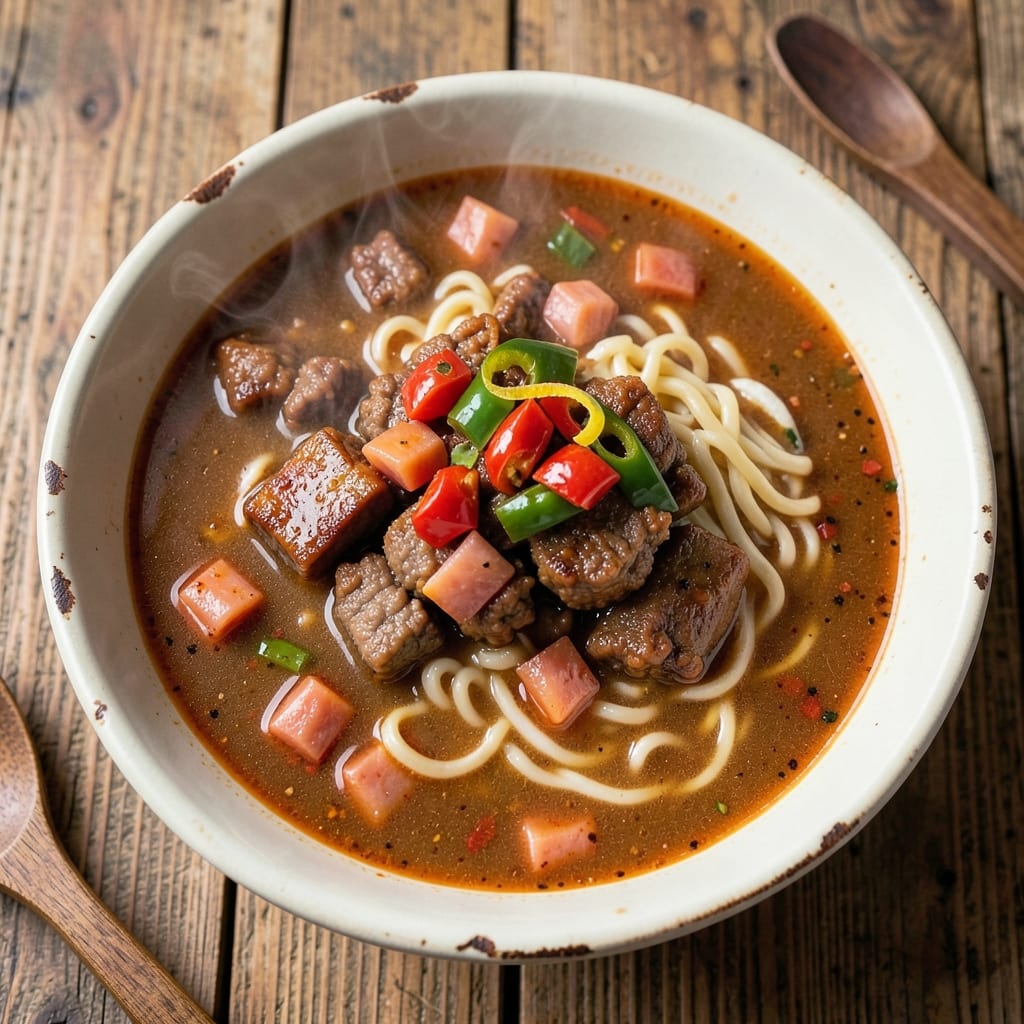
This Army Soup Korean recipe delivers the bold, smoky depth of budae jjigae—a dish born from wartime ingenuity and now a beloved modern comfort food. 🔥 The magic lies in its layers of umami from miso, fermented kimchi, and spicy gochujang, all simmered with tender meat and hearty vegetables into a rich, hearty broth.
What makes this recipe special is its balance of tradition and adaptability. Originally created by Korean soldiers using instant ramen, Spam, and whatever ingredients were available, today's version keeps that resourceful spirit while elevating it with premium ingredients. The slow simmer develops deep flavors, while the combination of miso, soy sauce, and fish sauce creates a complex, savory base that's impossible to resist.
The result is a steaming bowl of smoky, spicy, and satisfying Army Soup that's perfect for cold evenings or game day gatherings. Each spoonful delivers tender meat, crisp vegetables, and a broth so flavorful it disappears in minutes. This isn't just soup—it's a taste of Korean culinary resilience and creativity.
Pair it with steamed rice and pickled vegetables for the full experience. The beauty of this recipe is its flexibility—easily adjust the heat level or swap in vegetarian proteins without sacrificing flavor. Let's bring this iconic dish to your table!
Ingredients for army soup korean
Six servings of smoky, umami-rich Army Soup—where wartime resourcefulness meets modern Korean flavors.
| Ingredient | Amount | Notes |
|---|---|---|
| Ground Pork 🥓 | 1 ½ lb | 80% lean, finely chopped |
| Spam (Diced) 🥓 | 1 can | Or substitute with diced ham |
| Kimchi 🥬 | 2 cups | Fermented, chopped |
| White Miso Paste 🧈 | 2 tbsp | High-quality, fermented |
| Gochujang 🌶️ | 1 ½ tbsp | Korean chili paste |
| Instant Ramen Noodles 🍜 | 2 packages | Separate seasoning packets |
| Carrots 🥕 | 2 medium | Peeled, sliced into rounds |
| Onion 🧅 | 1 medium | Yellow, sliced into wedges |
| Garlic Cloves 🧄 | 6 cloves | Minced, fresh preferred |
| Soy Sauce 🍶 | 2 tbsp | Light or all-purpose |
| Fish Sauce 🐟 | 1 tbsp | Red Boat preferred |
| Sesame Oil 🫒 | 1 tbsp | Toasted, for finishing |
| Green Onions 🧅 | 4 whole | Thinly sliced, for garnish |
| Water 💧 | 6 cups | For broth base |
| Salt 🧂 | 1 tsp | Diamond Crystal preferred |
The ground pork and Spam form the heart of this dish—Costco or H Mart have the best cuts for authentic texture. Look for white miso paste with visible fermentation (the deeper the color, the richer the flavor). Gochujang varies in heat; Maesil brand offers consistent spice levels. For kimchi, freshly fermented (not watery) is ideal—Mother-in-Law brand delivers that tangy crunch. The ramen noodles should be separated from their seasoning packets (save those for later).
No Spam? Diced ham or hot dogs work in a pinch (drain well). Red miso can replace white, but adjust to half the amount for color. Gochujang shortages? Mix 1 tbsp tomato paste + 1 tsp chili flakes for a quick substitute. Sesame oil can be omitted if unavailable, but the aroma is essential. For extra umami, add 1 tbsp soy sauce to the broth. Green onions can be swapped for chives if preferred—just slice thinly for that fresh bite.
This soup tastes even better the next day as flavors meld. Store in an airtight container for up to 5 days in the fridge. Freeze portions for up to 3 months—just thaw overnight in the fridge. Double the batch and freeze half; it’s perfect for lazy weeknight dinners. Garnish with extra sesame seeds and crushed peanuts for texture if desired.
Why You'll Love This Recipe
- No-Pantry Panic Fix: I’ll never stress over empty cabinets again. That jar of kimchi and can of Spam? Pantry staples I already own. The miso and gochujang add depth without needing a specialty store haul.
- Umami Bomb Combo: The white miso and gochujang team up like old friends—sweet, funky, and just spicy enough. Toss in the ground pork and Spam, and suddenly you’ve got a broth that’s ridiculously satisfying, even on its own.
- Lunchbox Legend: Between us, this soup tastes better the next day. Pack it in thermoses for work—no sad desk lunches here. The flavors meld overnight, and the kimchi gets even tangier. (My coworkers keep asking for the recipe.)
- Budget Hero: Spam and ground pork stretch this soup into a full meal for under $10. Honestly, it’s the kind of dish that makes me feel like I’m feeding a crowd without breaking the bank. Leftovers? Even better with rice or toast.
Step-by-step instructions for army soup Korean recipe
This hearty Korean army soup delivers deep umami and smoky complexity through precise layering of flavors.
🍳 Step 1: Build the Umami Base with Pork and Spam
Heat a large Dutch oven over medium-high heat and add the 1.5 lb ground pork. Cook for 5-6 minutes, breaking it apart with a wooden spoon until it loses its raw color and begins to brown. This step develops the meat's natural flavors through the Maillard reaction.
Push the pork to one side of the pot and add the 1 can diced Spam. Cook for another 3-4 minutes until the Spam is heated through and slightly crispy around the edges. You'll notice the pork releases its juices—don't drain these, as they'll form the foundation of your broth. The combination of pork and Spam creates a meaty backbone that carries the soup's rich flavor profile.
🍳 Step 2: Develop the Broth with Aromatics and Fermented Elements
Add the 1 medium onion (sliced into wedges) and 6 cloves minced garlic to the pot. Cook for 2-3 minutes until the onion softens and becomes translucent. This step builds the aromatic base while preventing the garlic from burning, which would create bitterness.
Stir in the 2 cups kimchi, 2 tbsp white miso paste, and 1.5 tbsp gochujang. Cook for 1 minute to meld these flavors with the meat. The kimchi adds tangy fermented notes, while the miso and gochujang contribute deep umami and subtle heat. Pour in the 6 cups water and bring to a gentle boil, then reduce heat to medium-low and let it simmer for 10 minutes to allow the flavors to develop.
🥘 Step 3: Incorporate Vegetables and Seasonings
Add the 2 medium carrots (sliced into rounds) and 1 tsp salt to the simmering broth. Cook for 5-6 minutes until the carrots are tender but still hold their shape. The salt enhances all the flavors while balancing the acidity from the kimchi.
Stir in the 2 tbsp soy sauce and 1 tbsp fish sauce. These ingredients add depth and complexity to the broth. Taste and adjust seasoning—you may need a touch more salt or gochujang depending on the fermented intensity of your kimchi. The soup should be rich but not overly salty, with a harmonious balance of sweet, sour, umami, and spicy notes.
🍳 Step 4: Cook the Ramen Noodles Separately
While the soup simmers, prepare the 2 packages instant ramen noodles according to package instructions but use only half the recommended cooking time (about 1-1.5 minutes). This ensures the noodles are al dente when added to the soup. Drain and rinse briefly under cold water to stop the cooking process immediately.
Here's the thing—adding fully cooked noodles to the soup would turn it into a mushy mess. By cooking them separately and only partially, you preserve their texture while allowing them to absorb the flavorful broth when combined. This technique is crucial for achieving the perfect texture in army soup.
🥘 Step 5: Combine and Finish with Sesame Oil
Add the partially cooked ramen noodles to the soup and gently stir to combine. Simmer for an additional 2-3 minutes until the noodles are fully heated through and the broth has thickened slightly. The noodles should be tender but still have a slight bite.
Remove the pot from heat and stir in the 1 tbsp toasted sesame oil. This adds a nutty aroma and subtle richness that ties all the flavors together. Ladle the soup into bowls and garnish each serving with thinly sliced green onions. The sesame oil will create a beautiful sheen on the surface, signaling that your army soup is ready to be enjoyed.
Pro Tips For Making Army Soup Korean
- Sear the Pork First: I learned this the hard way—just tossing raw ground pork into the broth makes the soup taste flat. Instead, cook the pork in a dry pan over medium-high heat until it’s deeply browned (about 4-5 minutes), then break it into crumbles. That Maillard reaction is what gives army soup its rich, meaty depth, not just the seasoning.
- Rinse the Kimchi: Yes, even if it’s fermented, kimchi needs a quick rinse before adding it to the soup. The excess brine can make the broth watery and dilute the flavors. Pat it dry with a paper towel—this keeps the texture intact and lets the gochujang and miso shine without competition.
- Simmer Low and Slow: After everything’s in the pot, resist the urge to boil it hard. A gentle simmer (small bubbles, not rolling) for 20-30 minutes lets the miso and gochujang meld into the broth instead of curdling or separating. I used to rush this, and the soup always tasted one-dimensional.
- Use Spam Judiciously: Diced Spam is convenient, but it’s also fatty and can make the soup greasy if overused. Stick to about 100g (3.5 oz) per serving—it’s enough for that salty, umami punch without overpowering. If you’re worried about texture, drain it on paper towels first to absorb some of the fat.
Pro cooking tips for army soup korean
Umami Layering Technique
This soup's depth comes from layering umami sources in the right order. Start with ground pork and Spam to build a meaty base, then add kimchi and miso paste to introduce fermented tang and richness. The soy sauce and fish sauce finish by adding complexity. I always add fish sauce last—it's potent, so you can adjust to taste at the end. 🌶️
Noodle Texture Secret
Cooking ramen noodles separately for only half the package time preserves their texture when added to the broth. Fully cooked noodles turn mushy in the soup's liquid. For extra authenticity, use shin ramen (thicker noodles) if available. Rinse them briefly after cooking to stop the process immediately—this prevents overcooking. 🍜
Broth Development Time
Simmer the broth for at least 10 minutes after adding water to let flavors meld. This is where the miso and gochujang truly integrate with the meat and kimchi. I've found that skipping this step makes the soup taste flat. If you're short on time, bring it to a boil first to extract flavors faster, then reduce to a simmer. ⏱️
Heat Control Tips
Use medium-low heat when simmering to prevent the broth from boiling vigorously. A gentle simmer keeps the carrots intact and prevents the noodles from overcooking when added later. If your broth reduces too quickly, add hot water (not cold) to maintain temperature. 🔥
Sesame Oil Finish
Add toasted sesame oil off the heat—it burns easily at high temperatures. Stir gently to create a fragrant sheen on the surface. For extra aroma, lightly toast 1 tsp sesame seeds in a dry pan before adding them to the oil. This step elevates the dish from good to restaurant-quality. 🫒
Kimchi Adjustments
Use freshly fermented kimchi (not watery) for the best flavor. If your kimchi is too salty, rinse it briefly before adding. For extra heat, add 1 tsp gochugaru (Korean chili flakes) when serving. I've found that Mother-in-Law brand kimchi gives the most consistent results. 🥬
Nutrition facts
Frequently asked questions
Can I make this Korean Army Soup vegetarian?
Yes! Replace the pork and Spam with 1 lb extra-firm tofu (pressed and cubed) or mushrooms (shiitake or oyster work best). Use vegetable broth> instead of water and add 1 tbsp soy sauce> for umami. For protein, include 1 can chickpeas> or 1 cup seitan>. The miso and kimchi will still provide that signature depth.
How spicy is this recipe, and can I adjust it?
The gochujang adds mild heat, but you can control spice levels easily. For milder soup, reduce gochujang to 1 tbsp> and skip the chili flakes. For extra heat, add 1 tsp gochugaru> (Korean chili flakes) when serving. Fresh kimchi also contributes acidity—rinse it if it's too tangy.
Why does the recipe call for separate noodle cooking?
Cooking ramen noodles separately for only half the package time> prevents them from turning mushy in the broth. The broth's liquid would overcook them if added fully done. This technique keeps the noodles al dente> while allowing them to absorb all that rich, smoky flavor. Pro tip: Rinse them briefly after cooking to stop the process immediately.
What's the best way to store leftovers?
Store in an airtight container> in the fridge for up to 5 days>. The flavors actually improve overnight! For freezing, portion into single servings> and freeze for up to 3 months>. Thaw in the fridge overnight—never microwave directly from frozen. Reheat gently on the stove with a splash of water to restore texture.
Can I use different types of ramen noodles?
Yes! For extra authenticity, try shin ramen> (thicker noodles) or chicken-flavored ramen> (the seasoning packet adds depth). Avoid instant noodles with too much seasoning>—stick to plain varieties. The key is cooking them only halfway**> before adding to the soup.