
Soups & Stews
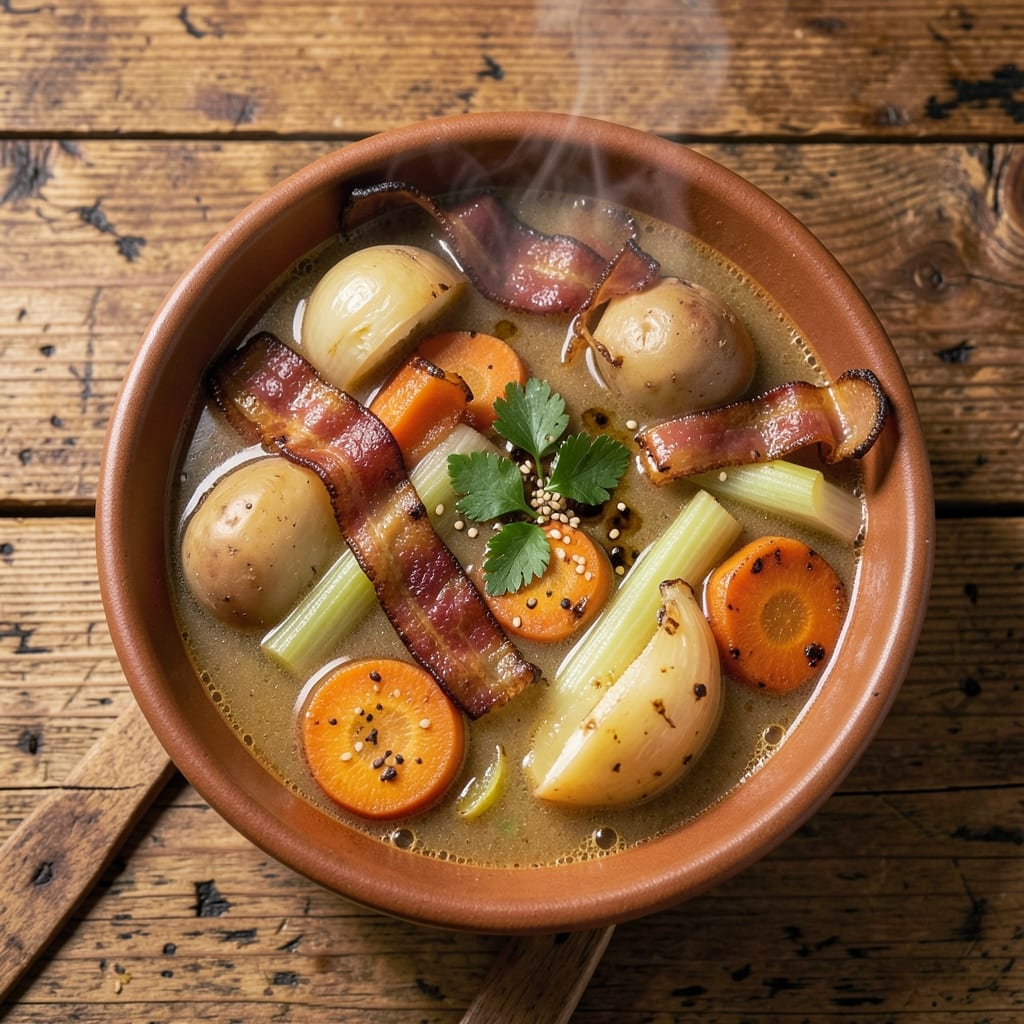
This applewood farmhouse vegetable soup transforms humble ingredients into a deeply comforting bowl of rustic richness. The key lies in applewood's smoky embrace—whether infused through broth or smoked vegetables—adding layers of warmth that turn a simple soup into something extraordinary. What makes it special is the balance: tender root vegetables, leafy greens, and herbs simmered until perfectly harmonized, with just enough cream to round out the flavors.
The secret to achieving that authentic farmhouse taste is patience. Simmering the vegetables low and slow allows their natural sweetness to develop while the applewood infuses the broth with a subtle, smoky depth. Unlike quick soups, this one rewards time with complex flavors—each spoonful tells a story of cozy kitchens and long winter evenings. The result is a soup that's hearty enough to satisfy but light enough to enjoy any time of year.
By the time you're ready to serve, you'll have a bowl brimming with velvety texture and rustic charm. The vegetables should be tender but still hold their shape, while the broth carries that signature applewood aroma. Top it with fresh herbs, a drizzle of cream, or a sprinkle of crispy bacon bits for added depth—each element elevating the soup to something truly special.
Perfect for meal prep or a last-minute dinner, this soup scales beautifully and tastes even better the next day. The flavors meld and deepen, making it an ideal dish for feeding a crowd or savoring a quiet evening at home. Here's how to bring the farmhouse to your table.
Ingredients for applewood farmhouse vegetable soup
Applewood's smoky whisper meets humble vegetables in this hearty bowl of rustic comfort.
| Ingredient | Amount | Notes |
|---|---|---|
| Applewood Smoked Bacon 🥓 | 8 oz | Thick-cut, chopped for garnish |
| Yellow Onion 🧅 | 1 whole | Medium size, chopped |
| Carrots 🥕 | 1 ½ lb | Medium size, peeled and chopped |
| Celery Stalks 🧆 | 4 whole | Medium size, chopped |
| Russet Potatoes 🥔 | 2 lb | Medium size, peeled and cubed |
| Sweet Potatoes 🍠 | 1 ½ lb | Medium size, peeled and cubed |
| Garlic Cloves 🧄 | 6 cloves | Fresh, minced |
| Applewood Smoked Broth 💧 | 6 cups | Homemade or high-quality store-bought |
| Heavy Cream 🥛 | ½ cup | Full-fat for richness |
| Fresh Thyme 🌿 | ¼ cup | Leaves only, chopped |
| Fresh Parsley 🌿 | ¼ cup | Chopped for garnish |
| Applewood Chips 🌲 | 1 tbsp | For smoky infusion |
| Salt 🧂 | 1 ½ tsp | Diamond Crystal preferred |
| Black Pepper 🌶️ | ½ tsp | Freshly ground |
| Bay Leaves 🍃 | 2 whole | For depth of flavor |
The applewood is non-negotiable here—Costco or local butcher sections carry the best smoked bacon and chips. For broth, Imagine or Pacific Foods brands deliver that authentic smoky depth without artificial additives. Sweet potatoes? Orange-fleshed varieties like Beauregard hold their shape best. Fresh thyme and parsley from the grocery store's produce section (not the sad plastic containers) make all the difference—Trader Joe's has the best selection. If you're prepping ahead, chop all vegetables the night before and store in airtight containers in the fridge.
No smoked bacon? Substitute smoked paprika (1 tsp) plus extra salt—it won't be identical, but close. Sweet potatoes too expensive? Regular russets work perfectly. Fresh herbs wilt fast, so if you're making this ahead, dried thyme at half the amount gets you by. The applewood chips can be skipped if you can't find them, but a pinch of smoked salt adds that smoky backbone. For extra richness, swap half the broth for coconut milk—creamy without dairy.
Broth keeps 5 days in the fridge or 6 months frozen. The vegetables hold up well for 3 days refrigerated, but the cream should be added fresh before serving. For meal prep, portion into containers without the cream, then stir in when reheating. The flavors actually deepen overnight—trust me on the next-day taste. Garnish with crispy bacon right before serving to keep it crunchy.
Why You'll Love This Recipe
- One-Pot Magic: I swear by this recipe because it’s the kind of dish where you dump, simmer, and forget—until the smell pulls you back. The bacon renders down while you chop (which, honestly, takes all of five minutes), and the potatoes and carrots soften just enough to melt in your mouth without turning to mush.
- Smoky Depth: Between us, that applewood bacon is the MVP—crispy enough to snack on but soft enough to fold into every spoonful. The onions caramelize right in the pot, and the celery adds this bright, herbal punch that makes it taste like a hug from your grandma’s kitchen.
- Weeknight Workhorse: I make this when I have a houseful of people and zero time. It’s the kind of soup that doubles easily—just throw in another potato or two—and tastes even better the next day. (Yes, even on a Tuesday night.)
- Budget-Friendly Luxury: You’re getting restaurant-quality flavor for pennies—smoky, savory, and satisfying—without breaking the bank. The bacon makes it feel special, but the veggies stretch it into a full meal that leaves you feeling like you treated yourself.
Step-by-step instructions for applewood farmhouse vegetable soup
This rustic soup builds flavor layer by layer—smoky bacon, sweet vegetables, and aromatic herbs create comfort in every spoonful.
Render the Bacon and Build the Flavor Base
Place the 8 oz applewood smoked bacon in a large Dutch oven over medium heat. Let it cook undisturbed for 8-10 minutes until the fat renders out and the edges turn deep golden brown. This is your flavor foundation—don't rush it.
Once the bacon is crispy, remove it from the pot with a slotted spoon and set aside, leaving the rendered fat in the pot. Add the 1 whole yellow onion, 1.5 lb carrots, and 4 whole celery stalks to the pot. Cook for 8-10 minutes, stirring occasionally, until the vegetables begin to soften and the onion becomes translucent. You'll smell that irresistible caramelization developing—this is where the magic starts.
Add Potatoes and Broth for Deep Flavor Infusion
Increase the heat to medium-high and add the 2 lb russet potatoes and 1.5 lb sweet potatoes, all cubed to even size. Pour in the 6 cups applewood smoked broth and bring the mixture to a gentle boil. Once boiling, reduce heat to low and add the 1 tbsp applewood chips, 2 whole bay leaves, 1.5 tsp salt, and 0.5 tsp black pepper. Stir gently to combine.
Let the soup simmer uncovered for 30 minutes, stirring occasionally. This slow cook allows the potatoes to absorb the smoky broth while developing a rich, velvety texture. The sweet potatoes will begin to soften and release their natural sugars, creating a subtle sweetness that balances the smokiness. Here's where the applewood chips work their magic—infusing the broth with deep, woodsy notes.
Finish with Aromatics and Cream for Richness
After 30 minutes, add the 6 cloves minced garlic and the reserved crispy bacon. Stir well to distribute the bacon throughout the soup. Cook for another 10 minutes until the garlic is fragrant but not browned—this prevents bitterness and adds a subtle sweetness.
Reduce the heat to low and stir in the 0.5 cup heavy cream and 0.25 cup chopped fresh thyme. Let the soup simmer for an additional 5 minutes, just until the cream is fully incorporated and the flavors meld together. The cream adds a luxurious finish while keeping the soup light enough to balance the hearty vegetables.
Garnish and Serve with Fresh Herbs
Remove the 2 whole bay leaves before serving. Ladle the soup into bowls and garnish each serving with 0.25 cup chopped fresh parsley and any remaining crispy bacon. The parsley adds a bright, fresh contrast to the rich, smoky flavors, while the bacon bits deliver a satisfying crunch with every spoonful.
Serve immediately while hot—this soup tastes best fresh from the pot, with all the flavors at their peak. The combination of smoky bacon, sweet potatoes, and aromatic herbs creates a rustic, comforting dish that's perfect for chilly days or family gatherings. Each bowl delivers a perfect balance of hearty vegetables, smoky depth, and creamy richness.
Pro Tips For Making Applewood Farmhouse Vegetable Soup
- CRISP THE BACON RIGHT: I used to cook the applewood bacon too fast and end up with grease instead of crispy bits. Get a cold pan, add the bacon in a single layer, and let it sizzle low and slow for 8-10 minutes—flip once. The smoke will mingle with the onions later, and you’ll get that perfect balance of crunch and flavor.
- CUT POTATOES UNIFORM: Russets break apart when overcooked, so cut them into 1.5-inch chunks—no smaller. Big pieces stay intact longer, and you’ll have hearty, fork-tender potatoes instead of a mushy mess. (Yes, even if you’re impatient like me.)
- SWEAT, DON’T BURN: Onions and celery turn bitter if they brown too quickly. After cooking the bacon, reduce heat to medium-low, add the veggies, and let them sweat for 5 minutes before adding any liquid. This builds flavor without the harshness.
- SALT THE WATER HARD: Don’t skimp on the soup’s salt—use at least 1.5 teaspoons for 4 quarts of water. The potatoes absorb flavor, and you’ll taste the difference when they’re done. (Your future self will thank you for not guessing.)
Storing and reheating your leftovers
Refrigerator Storage
Let your soup cool to room temperature for 30 minutes before transferring to airtight containers—I use glass Pyrex with snap-on lids for best results. Store at 40°F or below for up to 4 days. The flavors actually deepen overnight as the applewood and herbs meld together beautifully. Just
Freezer Prep Tips
For long-term storage, portion the soup into quart-sized freezer bags or airtight containers, leaving 1 inch headspace for expansion. Freeze for up to 3 months—the vegetables maintain their texture surprisingly well, though the cream may separate slightly. I recommend storing without the garnishes and adding them fresh when serving. Label containers with the date to track freshness! ⏰
Stovetop Reheating
My preferred method is stovetop reheating for that restaurant-quality texture. Transfer soup to a heavy-bottomed pot and heat over medium-low heat for 10-15 minutes, stirring occasionally. Add 1-2 tablespoons of water or broth if it looks too thick. The gentle heat helps restore the creamy consistency while preserving all that smoky depth. Taste and adjust seasoning—you might need a pinch more salt after reheating. 🔥
Microwave Revival
For quick meals, microwave individual portions covered with a damp paper towel. Heat on 70% power for 3-4 minutes, stirring halfway through. The damp towel prevents drying out. If the soup separates, whisk vigorously before eating. I find this works best for single servings when you're in a hurry—just don't expect the same velvety texture as stovetop reheating. 💫
Garnish Fresh
Always add fresh garnishes after reheating—they make all the difference! Sprinkle with crispy bacon bits and chopped parsley right before serving. The bacon adds that satisfying crunch, while the parsley brightens up the rich flavors. Pro tip: Toast the bacon bits in a dry pan for 1-2 minutes before adding to enhance their flavor. 🥓
Broth Boost
If your soup tastes flat after reheating, boost it with 1-2 tablespoons of applewood smoked broth or even a splash of heavy cream. The smoky notes help restore that farmhouse character. I also keep a small jar of applewood chips in my freezer for emergencies—just add 1 tsp to reheated soup for an instant smoky revival. 🌲
Nutrition facts
Frequently asked questions
Can I make this soup without applewood products?
For the bacon, substitute regular bacon and add 1 teaspoon smoked paprika to the broth. Skip the applewood chips and use 1/2 teaspoon liquid smoke (just a drop or two) or 1/4 teaspoon smoked salt in the broth. The flavor will be different but still delicious—just less pronounced smokiness.
How can I make this soup vegetarian?
Swap the bacon for smoked tofu or tempeh (pan-fry until crispy) and use vegetable broth instead of smoked. Add 1/2 teaspoon liquid smoke to the broth for depth. For creaminess, use coconut milkstrong> instead of heavy cream. The sweet potatoes and carrots will still shine!
Why does my soup taste bland after reheating?
Reheating can mute flavors, especially the smoky notes. Boost it with 1-2 tablespoons of applewood smoked broth or a splash of heavy cream. Stir in fresh herbs (parsley or thyme) or a pinch of smoked salt right before serving. The cream also helps restore richness.
Can I use frozen vegetables instead of fresh?
Yes! Use frozen mixed vegetables (like peas, carrots, and corn) but add them in the last 10 minutes of cooking to prevent mushiness. Skip the applewood chips with frozen veggies—infuse the broth with 1/2 teaspoon liquid smoke instead. The texture won't be identical, but it's a great shortcut.
How do I adjust the thickness of the soup?
For a thicker soup, simmer uncovered for 5-10 extra minutes to reduce the broth. If it's too thick, add 1/2 cup water or broth at a time until it reaches your desired consistency. The cream also adds body—reduce it by 1-2 tablespoons if the soup is already rich. Stir well after adding liquid.