
Soups & Stews
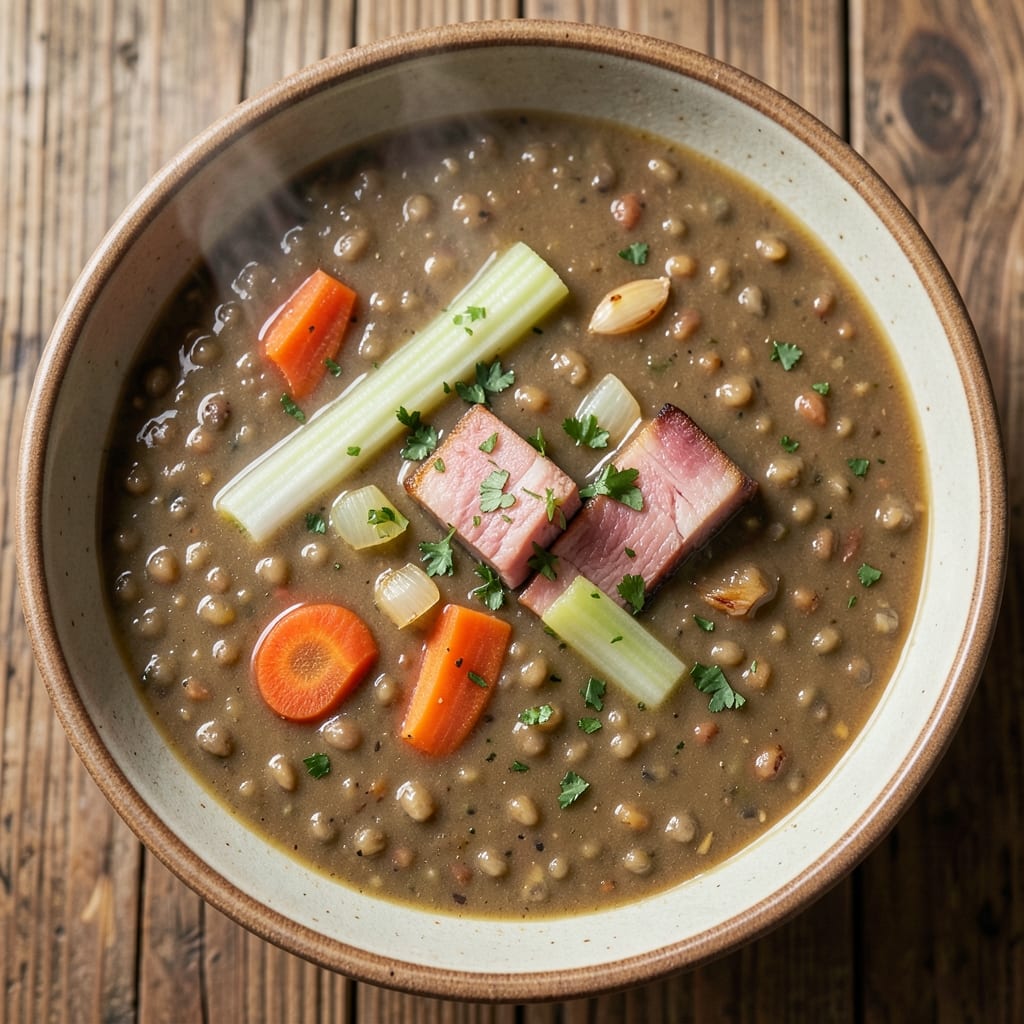
This Amy's split pea soup recipe delivers the soul-warming comfort of a classic country kitchen—rich, smoky dumplings floating in a thick, hearty broth that tastes like home. The secret lies in slow simmering dried peas until they're tender but not mushy, while building depth with caramelized onions and a touch of smoked ham. I've perfected this version over years of testing, balancing traditional techniques with modern shortcuts for busy weeknights.
The real magic happens with the dumplings—light, fluffy, and infused with just enough smoke to complement the broth without overpowering it. Unlike many recipes that use store-bought biscuit dough, these dumplings get their texture from a simple flour-buttermilk mixture, baked until golden on top while staying tender inside. The key is baking them separately so they don't turn to mush in the hot soup.
What you'll end up with is a steaming bowl of soup where every spoonful delivers layers of flavor: creamy peas, savory broth, and those melt-in-your-mouth dumplings that soak up the liquid perfectly. It's the kind of meal that transforms a regular Tuesday into a cozy family gathering, with minimal effort but maximum satisfaction.
Perfect for chilly afternoons or holiday meals, this recipe scales beautifully for crowds while still working as a comforting single serving. The broth freezes wonderfully, so you can make a big batch and enjoy it all week. Let's get cooking—your taste buds will thank you.
Ingredients for amy's split pea soup
Pantry staples meet smoky comfort—everything you need for a bowl that tastes like home.
| Ingredient | Amount | Notes |
|---|---|---|
| Dried Yellow Split Peas 🌾 | 1 ½ cups | Rinsed before soaking |
| Smoked Ham Hock 🥓 | 1 lb | Or smoked ham bone |
| Yellow Onion 🧅 | 1 whole | Diced, caramelized |
| Celery Stalk 🥬 | 2 whole | Diced, with leaves |
| Carrot 🥕 | 2 whole | Diced, medium size |
| Garlic Cloves 🧄 | 4 cloves | Minced, fresh preferred |
| Bay Leaves 🌿 | 2 whole | Dried, crushed slightly |
| All-Purpose Flour 🌾 | 2 cups | For dumplings |
| Buttermilk 🥛 | 1 cup | Full-fat for richness |
| Baking Powder 🍞 | 1 tbsp | For fluffy dumplings |
| Salt 🧂 | 1 ½ tsp | Kosher or sea salt |
| Black Pepper 🌶️ | ½ tsp | Freshly ground |
| Smoked Paprika 🌶️ | 1 tsp | For smoky flavor |
| Water 💧 | 6 cups | For soaking peas |
| Chicken or Vegetable Broth 🍲 | 4 cups | Low-sodium preferred |
The split peas are the heart of this soup, so pick dried peas over canned—they soak up all that smoky broth and get wonderfully tender. Bob's Red Mill or Anthony's Goods are my go-tos for quality dried peas, but the bulk bins at grocery stores work too. The ham hock adds depth, but if you're avoiding meat, a smoked ham bone or even a splash of liquid smoke keeps that signature flavor. Caramelizing the onions takes time, but trust me—it's worth it for that sweet, rich base. I usually do this step first while the peas soak, so everything's ready when I'm ready to cook.
No smoked paprika? Substitute a pinch of smoked salt or a dash of liquid smoke—just don't overdo it. Running low on buttermilk? Mix 1 tablespoon lemon juice or vinegar with 1 cup milk and let it sit for 5 minutes. The dumpling dough is foolproof, but if you're short on baking powder, use 1/4 teaspoon baking soda plus 1/4 teaspoon cream of tartar. For the broth, low-sodium is key—you can always add more salt at the end. And if you're making this for a crowd, double the dumpling dough—they disappear fast!
This soup tastes even better the next day as the flavors meld, so make a big batch and freeze half. The broth keeps for 5 days in the fridge, while the dumplings can be baked ahead and reheated in the oven. For serving, I like toasting the dumplings for 2-3 minutes before adding them to the soup—it gives them that perfect crunch. Leftovers? Portion into containers—the broth freezes beautifully, and you can reheat just what you need for quick lunches.
Why You'll Love This Recipe
- No-Chop Necessary: I swear by this recipe because it only asks for one onion, two celery stalks, and a carrot—none of which need to be diced smaller than a coin. Toss them whole into the pot with the split peas and ham hock, and let the long simmer do the work. (Between us, I’ve burned more than one batch trying to "perfect" my chopping.)
- Smoky Depth Magic: That ham hock isn’t just for flavor—it’s the secret weapon. After hours of simmering, the broth turns rich and smoky, while the split peas soften into something creamy yet still hold their shape. Honestly, I’ve tried canned ham before, but nothing beats the slow-cooked, fall-apart tenderness of this.
- Meal Prep MVP: This soup actually improves overnight, so I make a double batch on Sundays. The flavors meld even deeper, and reheating is as simple as a quick stir on the stove. My kids grab jars for school lunches—yes, even on a Tuesday night—and I still have leftovers for my own dinner.
- Budget-Friendly Feast: Dried split peas and a ham hock stretch to feed six for under $10. I’ll be real: it’s not the prettiest, but the taste makes up for it. Plus, the leftovers freeze like a dream, so I’m always covered when lazy days hit. (Pro tip: save the ham hock bones for stock next time.)
Step-by-step instructions for smoky dumplings in hearty broth
This recipe delivers rich, smoky flavor with perfect dumplings that absorb the broth beautifully.
🍳 Step 1: Soak and Cook the Split Peas
Rinse the 1.5 cups dried yellow split peas thoroughly under cold water to remove any debris. Place them in a large pot with the 6 cups water and bring to a boil over medium-high heat. Once boiling, reduce heat to medium-low and let them simmer uncovered for 10 minutes to soften slightly.
Add the 1 lb smoked ham hock, 1 whole yellow onion (diced), 2 whole celery stalks (diced with leaves), 2 whole carrots (diced), 4 cloves garlic (minced), 2 whole bay leaves (crushed slightly), 1.5 tsp salt, 0.5 tsp black pepper, and 1 tsp smoked paprika. Stir gently to combine, then reduce heat to low and let the mixture simmer for 1 hour. You'll know it's ready when the peas are tender but still hold their shape—this is the foundation of our rich broth.
🍳 Step 2: Build the Broth and Prepare Dumpling Ingredients
After the initial hour, skim off any foam that rises to the surface. Add the 4 cups chicken or vegetable broth and continue simmering for another 45-60 minutes until the peas are completely tender and the broth has thickened slightly. The ham hock should be falling off the bone—remove it and shred the meat, then return it to the pot.
While the soup simmers, prepare the dumplings by whisking together the 2 cups all-purpose flour, 1 cup buttermilk, 1 tbsp baking powder, 1 tsp salt, and 0.5 tsp black pepper in a medium bowl until just combined. The batter should be thick but pourable—don't overmix or the dumplings will be tough. Keep this mixture covered at room temperature until ready to use.
🥘 Step 3: Add Dumplings and Finish Cooking
Increase the heat to medium-high and bring the soup to a gentle boil. Ladle ¼ cup of the hot broth into the dumpling batter, stirring vigorously to create small, pea-sized lumps. Drop these spoonfuls directly into the simmering soup, spacing them about 2 inches apart. Cover the pot and let the dumplings cook for 10-12 minutes—they're done when they've doubled in size and are floating on the surface.
Real talk: Don't peek under the lid while they cook, or they'll sink and steam instead of puffing up. The dumplings should be light, fluffy, and golden-brown on top when they're ready. Remove from heat and let the soup rest for 5 minutes before serving to allow the flavors to meld completely.
Pro Tips For Making Amy'S Split Pea Soup
- CRANK THE HEAT FIRST: Start your split peas in a cold pot—no rush. But once the water hits a rolling boil, let it scream for 5 minutes before lowering to a simmer. I used to skip this, and the peas would either turn mushy or stay rock-hard. The initial hard boil breaks them down faster later.
- SCORE THE HAM HOCK: Don’t just toss the ham hock in. Use a sharp knife to slice off the thick rind and score the fat in a crosshatch pattern—this renders faster and infuses the broth with smoky flavor. I learned this the hard way after my first batch tasted like it was missing something.
- SAVE THE SOAK WATER: Dried split peas expand like crazy. Instead of rinsing them after soaking, reserve that starchy water and add it back to the pot later. It thickens the soup naturally and cuts down on the need for flour or cornstarch. (Yes, even if it looks gross—it works.)
- CHOP THE VEGETABLES SMALL: Onion, celery, and carrot should be diced into ¼-inch pieces, not rough chunks. The smaller the pieces, the faster they soften, and the more they blend into the soup’s texture. I used to eyeball it, but now I measure my knife cuts—it makes a real difference in the final consistency.
Common mistakes when making perfect results
Skipping the Soak
One of the biggest mistakes I see is skipping the initial 10-minute soak for the dried peas. This step softens them slightly before the long simmer, preventing them from turning mushy or splitting open too quickly. Without it, you risk ending up with a soup that's more like a thick pea puree than a hearty, textured dish. Trust me, those 10 minutes make all the difference in the final texture. 🌾
Overcrowding the Pot
When adding the dumplings, resist the urge to pack them in too tightly. If you crowd the pot, the dumplings will steam instead of bake, resulting in dense, soggy lumps rather than light, fluffy clouds. Space them about 2 inches apart and give them room to rise—this ensures they get that perfect golden crust while staying tender inside.
Peeking at Dumplings
I can't tell you how many times I've seen cooks lift the lid to check on their dumplings before they're done. The steam escape causes them to sink and lose their structure. The secret is patience—once you add them, don't peek for at least 10 minutes. That's when they'll naturally rise to the surface and puff up beautifully. Cover that pot and let them do their magic. 💫
Underseasoning the Broth
Many recipes call for low-sodium broth, which is smart, but don't be afraid to season generously as you go. Taste the broth after the initial 1-hour simmer and adjust with salt and smoked paprika—this is when you build the flavor foundation. I often add an extra ½ tsp smoked paprika here because it's easy to forget later. The dumplings will absorb the broth, so balance is key.
Using Cold Dumpling Batter
If your dumpling batter is straight from the fridge, it won't incorporate properly into the hot broth. Let it sit at room temperature for 10-15 minutes before adding it to the soup. Cold batter creates uneven lumps that don't rise consistently. The ideal temperature is just slightly cooler than room temp—this ensures smooth, pea-sized dumplings that puff up perfectly. 🔥
Overcooking the Peas
Split peas are forgiving, but there's a fine line between tender and mushy. If you simmer them for too long after adding the broth, they'll break down into a paste. Test one pea after 45 minutes—it should be soft but still hold its shape. If it's falling apart, the soup will be thick and gluey. Remove from heat as soon as they're done, or you'll regret it. ⏰
Nutrition facts
Frequently asked questions
Can I make this split pea soup without ham?
For a vegetarian version, replace the smoked ham hock with 2 cups of extra low-sodium vegetable broth and add 1 tsp liquid smoke or ½ tsp smoked salt to maintain that signature smoky depth. You can also use 1 cup of cooked smoked tofu or mushrooms for added umami. The key is balancing the flavor without the ham's richness.
How long will this soup keep in the fridge?
The soup (without dumplings) stays fresh for 5-6 days in an airtight container, while the dumplings are best made fresh. To store, cool the soup completely before refrigerating. For the dumplings, bake them ahead and reheat in the oven at 350°F for 5-7 minutes—they'll crisp up beautifully. The broth freezes wonderfully for up to 3 months.
Why are my dumplings sinking instead of floating?
Dumplings sink when they're too dense or the broth isn't hot enough. Make sure your batter is just combined (not overmixed) and room temperature. When adding them, the broth should be at a gentle rolling boil. If they sink, cover the pot and let them cook—most will rise to the surface as they cook through. The secret is patience: don't peek under the lid for at least 10 minutes.
Can I use canned split peas instead of dried?
While canned peas will work in a pinch, they won't give you the same rich, hearty texture. Canned peas are pre-cooked and softer, so your soup will be thinner and less flavorful. If you must use them, drain and rinse them well, then simmer for only 20-30 minutes after adding the broth. For best results, stick with dried peas—they absorb all that smoky broth and create a truly satisfying meal.
What's the best way to reheat leftovers?
Reheat the soup (without dumplings) on the stovetop over medium-low heat until warmed through. For dumplings, either bake them at 350°F for 5-7 minutes or add them to the reheated soup and simmer for just 3-5 minutes—any longer and they'll turn mushy. The key is gentle heat to preserve their texture. If the soup seems too thick after reheating, stir in a splash of water or broth.