
Soups & Stews
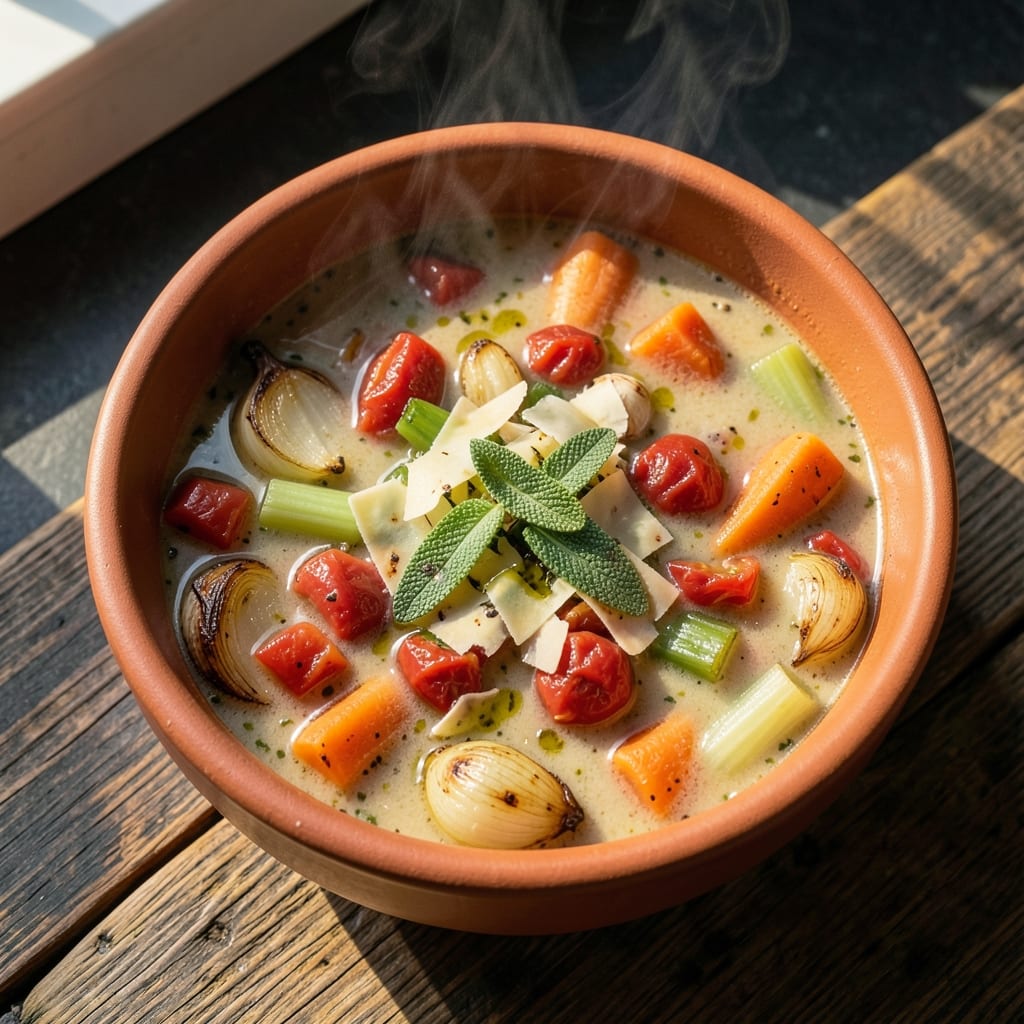
This Amy's rustic Italian vegetable soup brings the warmth of a Tuscan kitchen to your table with its rich tomato-basil broth and al dente pasta. The secret lies in a traditional soffritto base—slow-cooked onions, carrots, and celery—that forms the flavorful backbone of the soup. I developed this recipe after years of perfecting the balance between hearty vegetables, aromatic herbs, and a touch of dairy for creaminess.
The beauty of this soup is its versatility—it’s naturally vegetarian but can be elevated with optional Parmesan or butter for extra richness. What sets it apart is the technique of roasting some vegetables first, which deepens their flavor and adds a subtle caramelized sweetness to the broth. Simmering everything together creates a harmonious blend of textures and tastes, from tender pasta to vibrant herbs.
By the time you finish this recipe, you’ll have a bowl of soup that’s comforting yet light, packed with vegetables yet satisfyingly filling. The aroma alone—tomato, basil, and garlic—will have everyone gathering around the table. It’s the kind of dish that tastes even better the next day, making it perfect for meal prep or feeding a crowd.
Whether you’re serving it as a starter or a main course, this rustic Italian vegetable soup delivers restaurant-quality results with minimal effort. The instructions are straightforward, and the ingredients are simple yet impactful. Let’s get cooking!
Ingredients for amy's rustic italian vegetable soup
Six hearty vegetables plus aromatic herbs and al dente pasta—this is Italian comfort food at its finest.
| Ingredient | Amount | Notes |
|---|---|---|
| Yellow Onions 🧅 | 2 whole | Yellow or red, halved and caramelized |
| Carrots 🥕 | 4 whole | Medium size, peeled and chopped |
| Celery Stems 🌿 | 4 whole | Trimmed and chopped |
| Garlic Cloves 🧄 | 6 cloves | Peeled and minced |
| Canned Crushed Tomatoes 🍅 | 2 cups | San Marzano preferred |
| Vegetable Broth 💧 | 4 cups | Low-sodium preferred |
| Zucchini 🍆 | 2 medium | Peeled and diced |
| Mushrooms 🍄 | 8 oz | Cremini or white, sliced |
| Fresh Basil Leaves 🌿 | ½ cup | Packed, chopped |
| Ditalini Pasta 🍝 | 1 cup | Uncooked, al dente |
| Extra-Virgin Olive Oil 🫒 | ½ cup | For roasting vegetables |
| Parmesan Cheese 🧀 | ¼ cup | Freshly grated, optional |
| Salt 🧂 | 1 ½ tsp | Diamond Crystal kosher |
| Freshly Ground Black Pepper 🌶️ | ½ tsp | Freshly cracked |
| Red Pepper Flakes 🔥 | ½ tsp | Optional for heat |
The soffritto base—onions, carrots, and celery—is where all the magic happens. Look for organic produce at Trader Joe's or your local farmers market for the freshest flavors. The carrots should be vibrant orange, not dull or rubbery, and the celery crisp with no brown spots. If you're roasting the vegetables first, Costco's bulk olive oil is perfect for this step—it's affordable and holds up to high heat. The mushrooms? Cremini have a deeper flavor than white, but either works. Just make sure they're firm and dry when you buy them.
No San Marzano tomatoes? Any good-quality canned tomatoes will work—just drain the excess liquid. Fresh basil wilt fast, so grab a bunch and use half now, half later. The Parmesan is optional but adds serious richness; Parmigiano-Reggiano is the gold standard, but any good-quality vegetarian Parm will do. Short on time? Swap the ditalini for any short pasta shape—orzo or penne both work. Need to skip the roasting? Sauté the veggies instead—just add an extra splash of broth to compensate.
This soup tastes even better the next day as flavors meld. Store in an airtight container for 4-5 days in the fridge or freeze for 3 months. I always double the batch—one for dinner, one for lunch. The pasta stays al dente longer if you undercook it slightly and finish in the soup. For extra richness, stir in a pat of butter or a splash of cream when serving, but keep it vegetarian-friendly with plant-based alternatives.
Why You'll Love This Recipe
- No-Fuss Staples: I swear by this soup because it uses ingredients I always have—yellow onions, carrots, celery—stuff that sits in my fridge until it’s sad and limp. No fancy shopping list, no last-minute panic at the store.
- Garlic-Tomato Magic: That crushed tomato base with garlic cloves? It’s the secret weapon. The tomatoes add depth while the garlic roasts into a rich, almost sweet aroma—like a hug in a bowl.
- Weeknight to Potluck: I make this when I’m wiped but still need to feed people. It’s the same for a quick dinner or a crowd at a holiday gathering (yes, even on a Tuesday night). Just scale up the pot.
- Budget-Friendly Leftovers: A single batch feeds me for days, and the flavors only get better as the veggies soften. Honestly, I’ll take this over takeout any day—my wallet thanks me too.
Step-by-step instructions for Amy's rustic Italian vegetable soup
Here's where the magic happens—simple ingredients transform into a soul-warming bowl of comfort.
Roast the Vegetables for Deep Flavor
Preheat your oven to 400°F and line a large baking sheet with parchment paper. Halve the 2 whole yellow onions (keeping the roots intact) and toss them with ½ cup extra-virgin olive oil, ½ teaspoon salt, and ¼ teaspoon black pepper. Spread them cut-side down on the baking sheet. Cut the 4 whole carrots and 4 whole celery stems into ½-inch chunks and toss them with the same oil mixture, then arrange them around the onions.
Roast for 25-30 minutes until the edges are deep golden brown and caramelized—this is where the sweet, concentrated flavors develop. Real talk: don't skip this step. Raw vegetables will never give you the same depth of flavor as roasted ones. Stir them once halfway through for even browning.
Build the Tomato-Basil Base
While the vegetables roast, heat 2 tablespoons extra-virgin olive oil in a large Dutch oven over medium heat. Add the 6 cloves minced garlic and cook for 30 seconds until fragrant—you should smell that aromatic punch. Pour in the 2 cups canned crushed tomatoes and stir to combine. Let it simmer for 5 minutes to meld the flavors.
Add the roasted vegetables to the pot along with the 4 cups vegetable broth, 1 teaspoon salt, and ½ teaspoon black pepper. Bring to a gentle boil, then reduce heat to medium-low and let it simmer for 15 minutes. This gives the broth time to absorb all those roasted flavors. Taste and adjust seasoning—you want it to be rich but not overwhelmingly salty.
Add the Remaining Vegetables and Simmer
Peel and dice the 2 medium zucchini into ½-inch cubes and slice the 8 oz mushrooms into ¼-inch pieces. Add them to the simmering broth along with the ½ teaspoon red pepper flakes (if using). Let everything cook together for 10-12 minutes until the zucchini is tender but still holds its shape—you want al dente texture, not mushy.
Here's the thing—don't overcook the zucchini. It should still have a slight bite to it. If the soup starts to reduce too much, add a splash of water or broth to maintain the perfect consistency. Stir in the ½ cup chopped fresh basil leaves just before removing from heat—this preserves their bright flavor and vibrant color.
Cook the Pasta and Finish the Soup
Bring a separate pot of well-salted water to a boil. Add the 1 cup ditalini pasta and cook for 1 minute less than the package instructions (it'll finish cooking in the soup). Reserve ½ cup pasta water before draining. Add the cooked pasta to the vegetable broth and simmer together for 2-3 minutes to absorb all those beautiful flavors.
If the soup seems too thick, add a splash of the reserved pasta water to loosen it to your desired consistency. Taste and adjust seasoning one final time—this is your chance to make it perfect. Ladle the soup into bowls and top each serving with 1 tablespoon freshly grated parmesan cheese. The cheese adds a nice salty contrast to the rich tomato broth.
Serve and Enjoy Immediately
This soup tastes best fresh from the pot, so serve it immediately while the pasta is still al dente and the broth is steaming hot. The aroma alone will make your kitchen smell like an Italian countryside trattoria. Each spoonful delivers that perfect balance of sweet roasted vegetables, tangy tomatoes, and fresh basil.
I like to serve it with crusty bread on the side—perfect for soaking up every last drop of that flavorful broth. The pasta should be coated in the sauce but still hold its shape, and the vegetables should be tender with just a hint of bite. That's the mark of a truly rustic Italian vegetable soup done right.
Pro Tips For Making Amy'S Rustic Italian Vegetable Soup
- Sweat the Veggies First: Don’t rush the onion, carrot, and celery—cook them low and slow for 10-12 minutes until they’re soft and the onions turn golden. I learned this the hard way: skipping this step leaves your soup tasting raw and dull, no matter how much garlic or tomato you add later.
- Use a Knife, Not a Grater: Dice those carrots and celery into even ¼-inch pieces instead of shredding them. Smaller bits cook faster and blend better into the soup’s texture, while big chunks just sit there like stubborn guests at a party.
- Don’t Dump the Garlic: Mince the garlic after the veggies have sweated, then cook it just until fragrant—about 30 seconds. Burnt garlic ruins everything, and if you add it too early, it turns bitter before the tomatoes even hit the pot.
- Simmer, Don’t Boil: Once the tomatoes go in, keep the heat at a gentle simmer (tiny bubbles, not a rolling boil). High heat breaks down the tomatoes too fast, making your soup taste thin and one-dimensional. Let it bubble quietly for at least 20 minutes—patience pays off.
Regional styles of this recipe
Tuscan Farmhouse Style
In Tuscany, this soup becomes even heartier with the addition of cannellini beans—about 1 cup drained and rinsed—tossed in during the final simmer. The beans add protein and a creamy texture without needing dairy. I also swap the ditalini for borlotti beans when available, a traditional Tuscan variety that holds its shape beautifully. Finish with a drizzle of extra-virgin olive oil and a sprinkle of fresh rosemary instead of basil for that classic Tuscan touch. 🌿
Roman Minestrone Twist
Roman cooks often include cabbage and potatoes for extra heartiness. Add 1 cup chopped green cabbage and 2 medium Yukon Gold potatoes (diced) with the zucchini and mushrooms. Romans also prefer small pasta shapes like stelline instead of ditalini. For an authentic finish, stir in 1 tablespoon tomato paste with the garlic at the beginning to deepen the tomato flavor. The result is a soup with more body and texture. 🥬
Sicilian Sun-Dried Tomato
Sicily takes this soup to another level with sun-dried tomatoes—soak ¼ cup oil-packed sun-dried tomatoes in warm water for 10 minutes, then chop and add them with the fresh basil. Sicilian cooks also use eggplant instead of zucchini, adding 1 cup diced eggplant with the mushrooms. The eggplant absorbs the broth beautifully, creating a rich, velvety texture. Finish with a sprinkle of crumbled feta cheese for a tangy contrast. 🍅
Northern Italian Alpine
For a cooler climate version, Northern Italian cooks often add kale or Swiss chard—about 2 cups chopped greens—toward the end of cooking. The bitterness balances the sweetness of the roasted vegetables perfectly. Use barley or farro instead of pasta for a nuttier, chewier texture. Add 1 teaspoon nutmeg when simmering the broth for a warm, earthy note that reminds me of Alpine winters. Serve with crusty pumpernickel bread for dipping. ❄️
Modern Fusion Adaptation
Want to give this soup a contemporary twist? Swap the tomatoes for roasted red peppers—about 1 cup jarred roasted red peppers—and add ½ cup coconut milk at the end for a creamy, dairy-free option. Top with toasted pine nuts and crispy chickpeas for crunch. This version keeps the rustic soul while feeling fresh and innovative. Perfect for modern palates craving something familiar yet exciting. 🌟
Nutrition facts
Frequently asked questions
Can I make this soup without roasting the vegetables?
If you're short on time, sauté the onions, carrots, and celery in olive oil until softened (8-10 minutes) instead of roasting. The flavor won't be as deep, but it'll still be delicious. Just add an extra splash of broth to compensate for any moisture loss from skipping the roasting step.
How can I make this vegetarian soup even heartier?
Add 1 cup cooked beans (cannellini or white beans work best) during the final 10 minutes of simmering. For extra protein, stir in ½ cup cooked lentils or 1 cup chopped potatoes when adding the zucchini and mushrooms. These additions will make it a complete meal in a bowl!
Can I use fresh tomatoes instead of canned?
Yes, but you'll need 4 large ripe tomatoes (about 2 cups chopped) and they'll require more prep. Peel, seed, and chop them before adding to the pot. Fresh tomatoes add brightness but can make the soup more watery—reduce the broth to 3 cups if using fresh. For best results, roast the tomatoes first with the other vegetables.
Why does my soup taste bland after refrigerating?
This happens when flavors need more time to develop. Let the soup sit at room temperature for 30 minutes before reheating, and add a splash of red wine vinegar or lemon juice (just 1 teaspoon) to brighten flavors. For extra depth, stir in 1 tablespoon tomato paste while reheating. The soup should taste even better the next day!
What's the best pasta shape for this soup?
Ditalini is ideal because it's small and holds its shape, but you can use any short pasta like orzo, penne, or stelline. For a rustic feel, try farro or barley instead of traditional pasta. Just