
Soups & Stews
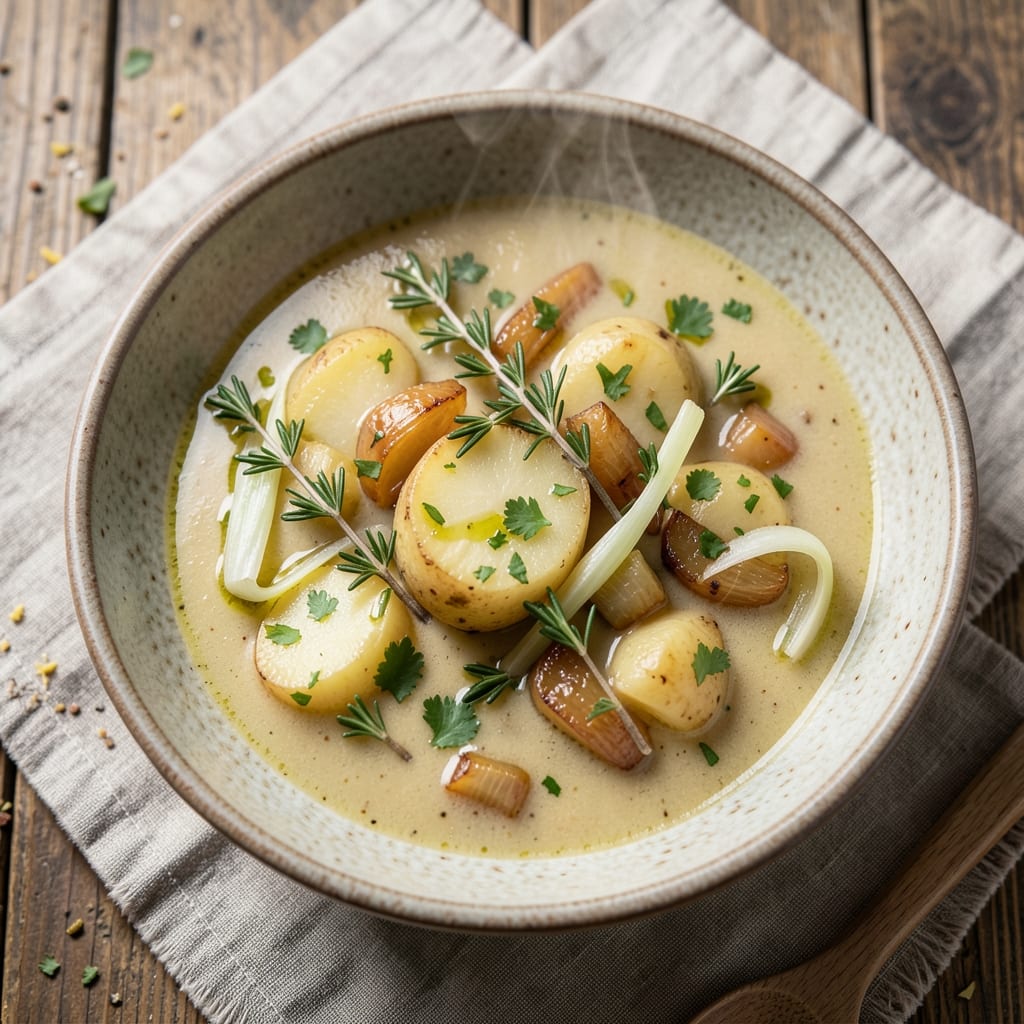
This Alpine soup recipe transforms humble potatoes and leeks into a velvety, herb-infused masterpiece that warms the soul. Born in the Swiss Alps, this hearty dish relies on slow simmering and simple ingredients to create a rich, comforting broth that's perfect for chilly evenings. The secret lies in properly sautéing the aromatics and letting the soup develop its depth over time.
What makes this recipe special is its balance of earthy flavors and creamy texture. Potatoes provide substance, leeks add delicate sweetness, and fresh herbs bring brightness to each spoonful. Unlike many soups, this one builds flavor gradually through gentle simmering rather than relying on heavy cream or complex techniques.
By the time you finish cooking, you'll have a soup that's restaurant-quality at home—golden, aromatic, and so satisfying it disappears from bowls faster than you can say "Alpine winter." The perfect pairing is crusty bread for soaking up every last drop of that velvety broth.
Whether you're preparing for a family dinner or meal prepping for the week, this soup delivers consistent results. The method is straightforward but yields professional-quality outcomes. Ready to create this comforting classic?
Ingredients for alpine soup
Sixteen ingredients transform into a restaurant-quality Alpine masterpiece with velvety richness.
| Ingredient | Amount | Notes |
|---|---|---|
| Yukon Gold Potatoes 🥔 | 2 ½ lb | Peeled and cubed evenly |
| Leeks 🧅 | 3 whole | White and light green parts only |
| Yellow Onion 🧅 | 1 whole | Diced finely for depth |
| Garlic Cloves 🧄 | 4 cloves | Minced for aromatic base |
| Fresh Thyme 🌿 | ¼ cup | Leaves only, finely chopped |
| Fresh Parsley 🌿 | ¼ cup | Flat-leaf, chopped for brightness |
| Fresh Tarragon 🌿 | ⅛ cup | Finely chopped, Alpine signature |
| Chicken Stock 💧 | 6 cups | Homemade or high-quality store-bought |
| Heavy Cream 🥛 | ½ cup | Full-fat for velvety texture |
| Unsalted Butter 🧈 | 2 tbsp | European-style preferred |
| Extra-Virgin Olive Oil 🫒 | ¼ cup | For sautéing aromatics |
| Kosher Salt 🧂 | 1 ½ tsp | Diamond Crystal preferred |
| Freshly Ground Black Pepper 🌶️ | ½ tsp | For finishing |
| Bay Leaves 🍃 | 2 whole | For subtle depth |
The Yukon Gold potatoes are non-negotiable here—their waxy texture and natural creaminess make them ideal for this dish. Look for firm, unblemished tubers at Whole Foods or your local specialty market, as they hold up better during long simmering than russets. Leeks should be crisp with clean white and pale green layers; avoid any that feel rubbery or have dark spots. For the herbs, fresh thyme and tarragon are essential—dried won't deliver the same Alpine character. Penzeys Spices carries excellent quality for these if you prefer to purchase them pre-chopped, though fresh is always superior. The chicken stock should be rich and well-seasoned; Pacific Foods or Kitchen Basics brands are excellent choices for store-bought options.
No tarragon? Fresh dill at half the amount provides a similar brightness, though it won't be identical. Short on thyme? Fresh marjoram works in a pinch, but reduce to one-quarter the quantity to avoid overpowering the delicate flavors. For the cream, coconut cream makes an excellent vegan alternative, though the texture will be slightly lighter. The butter can be swapped for olive oil if you prefer a dairy-free version, though the richness will differ. If you're using pre-minced garlic, toast it first in the olive oil to deepen its flavor—this small step makes a noticeable difference. The bay leaves can be omitted entirely if you dislike their subtle bitterness, but they add a sophisticated depth that's worth including.
This soup develops its full flavor over time, so reheat gently on the stove with a splash of water or stock to preserve its velvety consistency. It keeps beautifully in the refrigerator for up to 5 days, though the texture may slightly thicken—simply stir in a bit of water or stock to restore it. For longer storage, portion into airtight containers and freeze for up to 3 months. When reheating from frozen, add a splash of stock to prevent separation. The herbs can be added fresh after reheating to maintain their vibrant flavor. Crusty sourdough or a baguette is the perfect accompaniment, soaking up every last drop of that golden broth.
Why You'll Love This Recipe
- Here’s what sold me: the Yukon Golds get buttery just from the broth and thyme, no heavy cream needed. That crispy edge on the potatoes? Chef’s kiss, and it’s light enough to eat all week.
- One-Pot Magic: I swear by this recipe when I’m too tired to scrub pots—just toss everything in one pot, simmer, and walk away. The leeks and onions caramelize right in the broth, so you don’t even need to fuss with separate pans.
- Creamy Without Cream: Here’s what sold me: the Yukon Golds get buttery just from the broth and thyme, no heavy cream needed. That crispy edge on the potatoes? Chef’s kiss, and it’s light enough to eat all week.
- Leftover Goldmine: Between us, this soup begs for seconds—and thirds. I make a double batch on Sundays because it reheats beautifully, and the flavors only deepen overnight. (Yes, even on a Tuesday night.)
Step-by-step instructions for herbed potato and leek velvety richness
This Alpine-inspired soup delivers deep herbal complexity and velvety texture through precise technique.
Sauté Aromatics Until Fragrant
Heat the extra-virgin olive oil in a large Dutch oven over medium heat. Add the diced yellow onion and cook for 5-6 minutes until softened and translucent. The onion should release its natural moisture and begin to caramelize slightly at the edges.
Add the white and light green parts of 3 whole leeks, sliced thinly, and continue cooking for another 5 minutes until they're tender and the moisture has evaporated. This step builds the soup's aromatic foundation—don't rush it. The leeks should be just beginning to soften but still retain their shape. Stir occasionally to prevent browning.
Develop the Herb Base
Push the leeks and onions to one side of the pot and add the 2 tbsp unsalted butter to the empty space. When the butter foams, add the 4 cloves minced garlic and cook for 30 seconds until fragrant—this prevents burning while maximizing flavor.
Return the vegetables to the center, then add the 0.25 cup finely chopped fresh thyme, 0.125 cup finely chopped fresh tarragon, and 0.25 cup chopped fresh parsley. Stir well to coat the aromatics with the herbed butter. The pot should smell intensely herbal at this point—this is your quality checkpoint. Cook for 1-2 minutes to allow the herbs to release their essential oils.
Simmer Potatoes in Stock
Add the 2.5 lb cubed Yukon Gold potatoes and 6 cups chicken stock to the pot. Bring to a gentle boil, then immediately reduce heat to medium-low to maintain a simmer. Add the 2 whole bay leaves and 1.5 tsp kosher salt. The soup should bubble gently with occasional small bubbles breaking the surface.
Cover and simmer for 20-25 minutes until the potatoes are fork-tender with a slight resistance. You'll know they're ready when a knife slides in easily but the potato doesn't fall apart. The soup should have reduced slightly, concentrating the flavors. If it looks too thin at this stage, you can continue simmering uncovered for another 5 minutes to thicken slightly.
Finish with Cream and Season
Remove the bay leaves and stir in the 0.5 cup heavy cream and 0.5 tsp freshly ground black pepper. Simmer gently for 3-4 minutes until the soup reaches your desired consistency—it should coat the back of a spoon but still be light enough to pour easily. The cream will create that signature Alpine velvety texture while adding richness.
Taste and adjust seasoning with additional salt if needed. The soup should be well-balanced with bright herbal notes, sweet potato flavor, and a creamy finish. For maximum freshness, serve immediately with additional chopped parsley sprinkled on top. The soup will continue to develop in flavor as it sits, so timing your serving is ideal.
Pro Tips For Making Alpine Soup
- SWEAT THE LEEKS FIRST: Don’t rush this step—cut the leeks into ¼-inch slices and cook them in butter over medium-low heat for 8-10 minutes until fully softened. I used to skip this, and the soup always tasted raw and bitter afterward.
- CUT POTATOES UNIFORM: Slice the Yukon Golds into ½-inch chunks, not random sizes—consistent pieces mean even cooking. I learned this the hard way when half my potatoes turned to mush while the others stayed rock-hard.
- SALT THE POTATOES BEFORE BOILING: Toss the raw potato chunks in a pinch of salt and let them sit for 10 minutes before adding to the broth. This keeps them from turning gluey later—trust me, it’s a game-changer.
- USE A SPLASH OF CREAM AT THE END: Stir in 2 tablespoons of heavy cream or whole milk just before serving—it smooths out the texture and balances the earthy flavors. (Yes, even if the recipe doesn’t say it.)
Make-ahead tips for alpine soup
Prep Ahead Strategy
Start by prepping all your vegetables the night before—peel and cube the Yukon Gold potatoes and slice the leeks and yellow onion. Store them in separate airtight containers in the fridge. This saves 30 minutes of prep time on cooking day. I like using glass Pyrex containers because they stack neatly and keep the veggies crisp. 🥔
Herb Prep Shortcut
Chop all your fresh herbs—thyme, tarragon, and parsley—and store them in a small bowl covered with plastic wrap. Place this herb bowl in the fridge for up to 2 days. This keeps them fresh and ready to toss directly into your pot. I find this especially helpful when hosting dinner parties where timing is tight.
Stock Prep
Make a big batch of chicken stock (or use store-bought) and freeze it in 1-cup portions using silicone ice cube trays. Thaw just the 6 cups you need for this recipe by placing the frozen cubes in a bowl of cool water for 10 minutes. This method keeps your stock fresh without watering down the flavor. 💧
Potato Pre-Cooking
For an extra time-saving trick, parboil the potatoes for 5 minutes before adding them to the soup. Drain well and store in the fridge until ready to use. This reduces the simmering time by 10 minutes while maintaining the same creamy texture. Just be sure to pat them completely dry to prevent a watery soup.
Make-Ahead Assembly
Assemble the soup up to 2 days in advance—just skip adding the heavy cream until reheating. Store the soup base (with potatoes, stock, and herbs) in an airtight container. When ready to serve, gently reheat on the stove and stir in the cream. This preserves the velvety texture while allowing flavors to meld further. 🔥
Freezer-Friendly
This soup freezes beautifully for up to 3 months. After cooking (but before adding cream), let it cool completely, then portion into quart-sized freezer bags. When ready to eat, thaw overnight in the fridge, then reheat on the stove with a splash of water or stock. The cream can be added fresh after reheating for the best texture.
Nutrition facts
Frequently asked questions
Can I make this Alpine soup vegetarian?
Replace the chicken stock with 6 cups vegetable stock and swap the heavy cream for coconut cream or cashew cream (blend soaked cashews with water). Add 1 tbsp nutritional yeast for a cheesy depth. The potatoes and leeks will still shine while keeping it plant-based.
Why does my soup look watery after adding cream?
This happens when the potatoes release too much starch. Simmer uncovered for 5 extra minutes before adding cream to thicken the base. If it's still thin, stir in 1 tbsp cornstarch mixed with 2 tbsp cold water and simmer 2 minutes until thickened. The cream should create velvety texture, not dilute it.
What's the best way to reheat leftovers?
Gently reheat on the stove over low heat with a splash of water or stock to prevent curdling. Never microwave—it breaks the creamy texture. For best results, stir in 1 tbsp fresh cream at the end to restore richness. If the soup seems too thick after reheating, thin with a little stock.
Can I substitute tarragon with another herb?
Yes! Try fresh dill (½ the amount) for brightness or fresh marjoram (¼ the amount) for warmth. Avoid basil or oregano—they'll overpower the delicate Alpine flavors. If using dried herbs, reduce to ⅓ the fresh amount and add them later in cooking.
How do I know when the potatoes are perfectly cooked?
They should be fork-tender with a slight resistance—like when a knife slides in easily but doesn't make the potato fall apart. Cut one open: the center should be soft but not mushy. Overcooking releases starch, making the soup gluey. Aim for 20-25 minutes simmering time.