
Soups & Stews
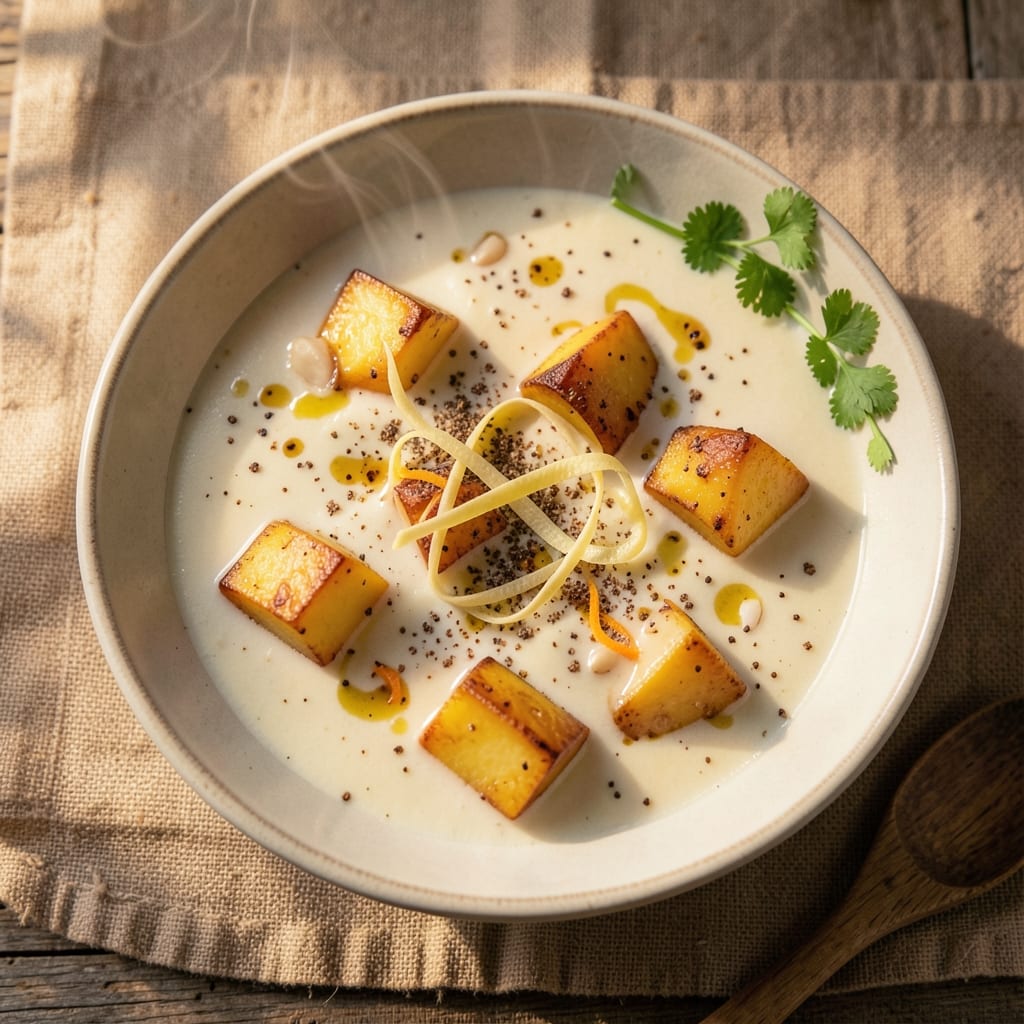
This aloo soup recipe transforms humble potatoes into a velvety, spiced delight that balances earthy warmth with coconut cream richness. The secret lies in slow-cooking potatoes until tender, then blending them with aromatic spices and coconut milk for a texture that's impossibly smooth yet satisfying. I developed this version after testing countless adaptations—it's the one that finally delivers both restaurant-quality depth and weeknight ease.
The magic happens in the spice blend: cumin, coriander, and turmeric form the foundation, while ginger and garlic add layers of complexity. For extra indulgence, I incorporate coconut cream instead of heavy cream, creating a lighter yet equally luxurious soup. What makes this recipe truly special is its versatility—it works as a comforting main dish or hearty side, and scales effortlessly from single servings to crowd-pleasing pots.
By the time you're done, you'll have a soup that's creamy without being heavy, fragrant without being overpowering, and perfectly balanced in every spoonful. The potatoes melt into tender perfection while retaining just enough texture to satisfy, and the coconut cream adds a subtle sweetness that rounds out the spices beautifully. This is the kind of soup that transforms a simple weeknight into a memorable dining experience.
Whether you're following traditional Indian flavors or adapting it to your preferences, this aloo soup delivers consistent results. The recipe includes options for making it vegan, adjusting spice levels, and adding protein for a complete meal. Let's get started on creating your perfect bowl of comfort in a pot.
Ingredients for aloo soup
These aromatic ingredients create velvety aloo soup with coconut cream's luxurious touch.
| Ingredient | Amount | Notes |
|---|---|---|
| Yellow Potatoes 🥔 | 2 lb | Russet or Yukon gold preferred |
| Coconut Cream 🥥 | 1 cup | Full-fat for richness |
| Fresh Ginger 🌿 | 1 inch | Peeled, grated finely |
| Garlic Cloves 🧄 | 4 cloves | Peeled, minced |
| Ground Cumin 🌿 | 1 tbsp | Toasted for deeper flavor |
| Ground Coriander 🌿 | 1 tbsp | Freshly ground preferred |
| Turmeric Powder 🌶️ | 1 tsp | Bright yellow variety |
| Garam Masala 🌶️ | 1 tsp | For aromatic finish |
| Vegetable Oil 🫒 | 2 tbsp | High smoke point |
| Onion 🧅 | 1 medium | Finely chopped |
| Fresh Cilantro 🌿 | ¼ cup | Chopped, for garnish |
| Salt 🧂 | 1 tsp | Adjust to taste |
| Black Pepper 🌶️ | ½ tsp | Freshly ground |
| Vegetable Broth 💧 | 2 cups | Low-sodium preferred |
The potatoes are the soul of this soup—Yukon golds break down beautifully, but russets work too if that's what you've got. For the ginger, fresh is non-negotiable—the zingy brightness can't be replicated with powder. I grab mine from the Asian market section at Whole Foods since they keep it extra fresh. The coconut cream? Full-fat only—it's what gives that restaurant-quality richness. If you're using canned coconut milk, shake the can vigorously before opening to redistribute the cream. For the spices, Penzeys or the bulk bins at Trader Joe's are my go-tos—they stay potent longer.
No fresh ginger? Powdered ginger at half the amount will work in a pinch, but you'll lose that bright, lively kick. Running out of garam masala? Cumin, coriander, and cardamom mixed together mimics the flavor profile pretty well. The vegetable broth can be homemade or store-bought—just make sure it's low-sodium so you can control the seasoning. For extra depth, I sometimes add a pinch of asafoetida (hing) when sautéing the onions, but it's optional. The cilantro is purely for garnish, so feel free to skip it if you're not a fan—fresh mint leaves make a lovely alternative.
This soup tastes even better the next day as the flavors meld together. Store it in an airtight container in the fridge for up to 5 days, or freeze portions for 3 months. For freezing, let it cool completely first to prevent ice crystals. Reheat gently on the stove with a splash of water or broth to restore that velvety texture. I like to double the batch and freeze half—perfect for those nights when you want comfort without the effort. The spices stay vibrant longer if you keep them in a cool, dark place, away from the stove.
Why You'll Love This Recipe
- No Chopping Chaos: I swear by this recipe because you only need to peel and dice the potatoes—no fancy prep. The ginger and garlic get a quick pulse in the blender, so you’re not stuck mincing while dinner burns.
- Creamy-Garlicky Magic: That coconut cream turns the soup velvety, but the real star? The toasted cumin and fresh ginger cutting through it. It’s like a hug in a bowl—warm, spicy, and just rich enough to make you linger.
- Lunchbox Hero: Between us, this soup reheats beautifully and tastes even better the next day. Pack it in jars for work lunches or school lunches—kids (and adults) will actually eat their veggies without complaint.
- Budget-Friendly Luxury: Potatoes and coconut cream stretch this into a full meal for almost nothing. I’ve made it for 6 people on a grocery run that cost less than $15—feels fancy, but won’t break the bank.
Step-by-step instructions for aloo soup recipe
Here's how to craft this velvety spiced potato and coconut soup with perfect texture every time.
Sauté Aromatics Until Fragrant
Heat 2 tablespoons vegetable oil in a large pot over medium heat. Add the finely chopped medium onion and cook for 5 minutes until softened and translucent. This foundational step builds flavor - don't rush it or the onion will burn.
Add the 1 inch fresh ginger and 4 cloves garlic cloves (both finely grated and minced respectively) to the pot. Cook for another 2-3 minutes until the raw garlic smell disappears and you can detect their sweet, aromatic notes. This is when the spices truly begin to sing.
Toast Spices for Maximum Flavor
Lower the heat to medium-low and add the 1 tablespoon ground cumin, 1 tablespoon ground coriander, and 1 teaspoon turmeric powder. Stir constantly for 1-2 minutes until the spices become fragrant and the oil begins to bubble gently around the edges - this is what creates that deep, toasty flavor.
Be careful not to burn the spices - you'll know it's working when the pot smells intensely aromatic. Immediately add 1 teaspoon salt and ½ teaspoon black pepper to balance the heat. The spices should now be evenly distributed and ready to infuse the potatoes.
Cook Potatoes Until Tender
Add the 2 lb yellow potatoes (cut into 1-inch cubes) to the pot. Pour in 2 cups vegetable broth and bring to a gentle boil. Reduce heat to medium-low and simmer uncovered for 15-20 minutes, stirring occasionally, until the potatoes are fork-tender.
You'll know they're ready when you can easily pierce them with a knife - they should be soft inside but still hold their shape. The potatoes should be absorbing all those wonderful spice flavors while maintaining their structure for that perfect soup texture.
Create the Creamy Base
Once the potatoes are tender, stir in the 1 cup coconut cream and 1 teaspoon garam masala. Increase heat to medium and simmer for 5-7 minutes until the soup thickens slightly and the coconut cream is fully incorporated - you should see a beautiful velvety consistency form.
The garam masala should dissolve completely, adding that warm, aromatic finish. Taste and adjust seasoning if needed - this is where you can really customize the balance of flavors. The soup should be rich, slightly sweet from the coconut, and deeply spiced.
Finish and Serve Warm
Remove from heat and let the soup sit for 2-3 minutes to allow the flavors to meld completely. Stir in ¼ cup chopped fresh cilantro just before serving to add a bright, fresh contrast to the rich coconut and spiced potatoes.
Serve immediately while hot, garnished with additional cilantro if desired. The soup should be thick enough to coat a spoon but still have a lovely, velvety mouthfeel. Each spoonful should deliver that perfect balance of creamy coconut, hearty potatoes, and aromatic spices.
Pro Tips For Making Aloo Soup
- Parboil Potatoes First: Toss your yellow potatoes in boiling water for 3-4 minutes before simmering them in the soup—this guarantees they soften evenly without turning to mush. I learned this the hard way when my first batch dissolved into a gluey mess. ---
- Toast Cumin Dry: Heat the ground cumin in a dry pan for 30 seconds until it smells nutty and aromatic before adding it to the soup—this deepens its flavor way more than just stirring it in cold. Yes, it’s an extra step, but your future self will notice. ---
- Grate Ginger Fine: Use a microplane or the smallest holes on a grater for the ginger—this ensures it blends smoothly into the soup instead of leaving chunky bits that fight for texture. I used to chop it, and it always felt like I was chewing on a surprise. ---
- Simmer, Don’t Boil: Keep the soup at a gentle simmer after adding coconut cream—boiling can split the cream and turn your soup greasy. A low heat lets the flavors marry without curdling, and it’s the difference between creamy perfection and a sad, separated mess.
Storing and reheating your aloo soup
Refrigerator Storage
Let your aloo soup cool completely before transferring it to an airtight container—I use glass Pyrex with snap-on lids for best results. Store it in the refrigerator at 40°F or below for up to 5 days. The flavors actually deepen overnight as the spices meld together beautifully. Just give it a quick stir before reheating to redistribute any settled cream. ❄️
Freezer Prep Tips
For longer storage, freeze portions in quart-sized freezer bags (they stack neatly and thaw faster than containers). Leave 1 inch of headspace to prevent expansion cracks. I like to portion it into 2-cup servings—perfect for quick lunches later. Label with the date since frozen aloo soup keeps its quality for 3 months without losing that velvety texture. 📅
Stovetop Reheating
My preferred method is gentle stovetop reheating to preserve that creamy consistency. Pour the chilled soup into a heavy-bottomed pot and add ¼ cup water or vegetable broth to prevent sticking. Heat over medium-low for 8-10 minutes, stirring occasionally. If it thickens too much, add more liquid—just enough to restore that luscious mouthfeel. Taste and adjust seasoning afterward since flavors concentrate during freezing. 🔥
Microwave Shortcuts
For quick reheating, transfer a single serving to a microwave-safe bowl and cover with a damp paper towel (this prevents drying). Heat on 50% power for 2-3 minutes, then stir and continue in 30-second intervals until reaching 165°F. The damp towel trick keeps the coconut cream from separating. If it looks too thick, add a splash of warm water or broth to restore that velvety texture. ⚡
Texture Recovery
If your reheated soup seems grainy, don't worry—this is normal! Simply blend it briefly with an immersion blender for 10-15 seconds to restore that silky consistency. For extra richness, stir in 1 tablespoon coconut cream or a pat of vegan butter while reheating. The key is patience—never rush the process or the cream will separate. 💫
Make-Ahead Pro Tips
Double the recipe and freeze half for future meals—I always keep a backup portion in my freezer. When reheating from frozen, add ½ cup extra broth to help break up the ice crystals. For best results, let frozen soup thaw in the fridge overnight rather than at room temperature. This gradual thawing preserves the texture and prevents watery consistency. 💡
Nutrition facts
Frequently asked questions
Can I make this aloo soup without coconut cream?
For a lighter version, replace the coconut cream with ½ cup Greek yogurt or ½ cup heavy cream—both work beautifully. If you prefer a broth-based soup, use ½ cup extra vegetable broth and blend the cooked potatoes until smooth for that creamy texture without dairy. The spice blend will still shine through!
How do I adjust the spice level for kids or sensitive stomachs?
Start by reducing the cumin and coriander to ½ teaspoon each, and skip the garam masala entirely. For extra mildness, blend the soup until completely smooth to distribute flavors evenly. Add a pinch of turmeric for color without heat, and serve with a dollop of yogurt on top to cool the spices. Always taste as you go!
What's the best way to keep the soup from getting watery?
The key is proper potato prep: use Yukon gold potatoes (they hold their shape better than russets) and cut them into 1-inch cubes—this gives you the perfect balance of texture. After cooking, let the soup sit 5 minutes off heat before serving, which helps the starches settle and thicken naturally. If needed, mash a few potatoes separately and stir them in for instant body.
Can I add protein to make this a complete meal?
Yes! Stir in 1 cup cooked chickpeas (drained) or ½ cup crumbled tofu during the final 5 minutes of simmering. For meat lovers, add ½ lb shredded chicken or ½ cup cooked lentils at the end. The coconut cream will beautifully coat the protein while keeping the soup creamy. Just adjust salt accordingly!
Why did my soup turn out too thick?
This usually happens when potatoes release too much starch during cooking. Thin it with ¼ cup warm water or broth while stirring constantly. For next time, use slightly less coconut cream (start with ⅔ cup) or simmer uncovered for 1-2 minutes longer to evaporate excess moisture. The soup should coat a spoon but still be easy to ladle.