
Soups & Stews
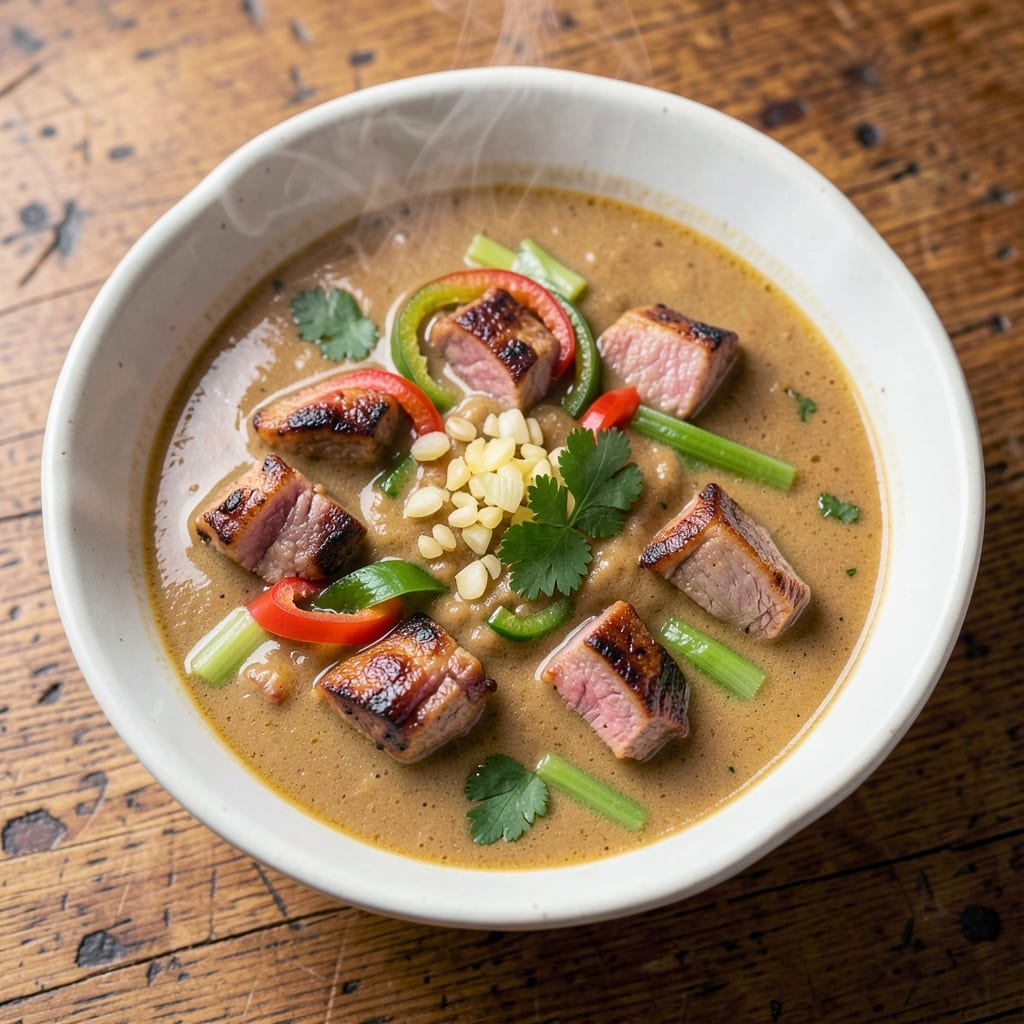
This alligator soup recipe brings the flavors of Louisiana bayous to your kitchen with its rich, velvety broth and tender meat. The secret lies in slow simmering alligator pieces until they're fork-tender while building layers of Cajun-inspired spices that create a complex, aromatic base. What makes this version special is the toasted corn crunch topping that adds both texture and a subtle sweetness to contrast the deep, savory flavors.
Traditional Creole techniques form the foundation, but we've adapted it with modern touches like a touch of cream for richness and fresh herbs for brightness. The soup starts with a deep, dark roux that forms the soul of the dish, then builds with vegetables that soak up all those flavorful juices while the alligator meat becomes melt-in-your-mouth tender. This isn't just another seafood soup—it's a full flavor experience that transports you to the swamps of Louisiana.
The result is a soup that's creamy yet not heavy, with perfectly balanced flavors where each component shines. The alligator meat falls apart at the touch of a fork, the broth is rich and aromatic with just the right amount of spice, and that toasted corn topping adds a delightful crunch that contrasts beautifully with the velvety soup. This is comfort food at its finest, with the added excitement of alligator meat that delivers a texture and flavor unlike any other protein.
Perfect for special occasions or when you want to impress dinner guests with something truly unique. The recipe scales beautifully, making it ideal for gatherings or meal prep. Let's get started on creating this Louisiana classic that's sure to become a family favorite.
Ingredients for alligator soup
Gather these rich ingredients for a Louisiana classic that balances tender alligator meat with velvety broth and toasted corn crunch.
| Ingredient | Amount | Notes |
|---|---|---|
| Alligator Meat 🐊 | 1 ½ lb | Fresh or frozen, cut into 1-inch pieces |
| All-Purpose Flour 🌾 | ½ cup | For dark roux base |
| Unsalted Butter 🧈 | ½ cup | Cold, for roux development |
| Yellow Onion 🧅 | 1 whole | Diced, for flavor base |
| Green Bell Pepper 🌶️ | 1 whole | Diced, for color and crunch |
| Celery Stalks 🥬 | 3 whole | Diced, for classic holy trinity |
| Garlic Cloves 🧄 | 4 cloves | Minced, for aromatic depth |
| Canned Diced Tomatoes 🍅 | 1 can | San Marzano preferred, for sweetness |
| Heavy Cream 🥛 | 1 cup | Full-fat for velvety texture |
| Chicken Stock 💧 | 4 cups | Homemade or quality low-sodium |
| Cajun Seasoning 🌶️ | 2 tbsp | Homemade or store-bought blend |
| Bay Leaves 🌿 | 2 whole | Fresh for subtle aroma |
| Thyme Sprigs 🌿 | 4 whole | Fresh, for earthy notes |
| Salt 🧂 | 1 ½ tsp | Diamond Crystal preferred |
| Black Pepper 🌶️ | ½ tsp | Freshly ground for heat |
| Sweet Corn Kernels 🌽 | 1 cup | Fresh or frozen, for topping |
| Butter 🧈 | 2 tbsp | Melted, for corn toasting |
| Green Onions 🧅 | 3 whole | Sliced, for garnish |
The alligator is the star, so freshness matters most. If buying frozen, thaw it overnight in the fridge—never under running water. Local Cajun markets or specialty seafood shops often carry it, but check with butchers too. For the roux, low and slow is key—rush it and you'll get burnt flour, not deep flavor. The Cajun seasoning should have paprika, garlic powder, onion powder, and cayenne—Penzeys or Tony Chachere's are solid brands. If you can't find alligator, chicken thighs work in a pinch, but the texture won't be the same.
No Cajun seasoning? Mix 1 tbsp paprika, 1 tsp each garlic powder, onion powder, and ½ tsp cayenne. Fresh thyme? Dried works at half the amount. The corn topping can be made ahead—just store it separately until serving. For extra richness, add ¼ cup heavy cream to the soup at the end. The bell pepper and celery should be crisp—no limp veggies here. If using frozen corn, thaw and pat dry before toasting. The green onions add freshness, but skip them if you prefer milder flavor—they're just for garnish.
This soup tastes even better the next day—make extra and reheat gently. Store in airtight containers for 3-4 days in the fridge. The corn topping keeps for 2 days in the fridge, so make it fresh if possible. For gatherings, double the batch—the roux and broth scale perfectly. The alligator meat can be pre-cooked and frozen for up to 3 months before adding to the soup. Always reheat slowly to preserve that velvety texture.
Why You'll Love This Recipe
- Five-Ingredient Magic: I swear by this recipe because it’s that simple—just alligator, flour, butter, onion, and bell pepper. No fancy prep, no hidden pantry items, just honest, satisfying flavor with minimal effort.
- Butter-Rich Comfort: That velvety butter and flour roux? It turns this into a rich, almost creamy soup without heavy cream. The alligator’s natural richness pairs perfectly with the slight sweetness of the bell pepper—trust me, it’s dangerously addictive.
- Weeknight to Dinner Party: Serve it with crusty bread for a laid-back weeknight dinner, or dress it up with a garnish for a Cajun-inspired main course. Honestly, it’s the one dish that works for both lazy nights and when you’re cooking for company.
- Leftovers That Don’t Suffer: Unlike some soups, this one actually tastes better the next day. The flavors meld, and the texture gets even more tender—perfect for packing lunches or reheating for a quick meal when you’re short on time.
Step-by-step instructions for alligator soup with creamy corn crunch
Let's build this rich, flavorful soup with a perfect dark roux foundation and a satisfying crunchy corn topping.
Develop the Dark Roux for Depth of Flavor
In a heavy-bottomed soup pot, melt the 0.5 cup unsalted butter over medium-low heat. Add the 0.5 cup all-purpose flour all at once and whisk vigorously to combine into a smooth paste. This is your starting point for the roux that will form the soup's velvety base.
Cook the roux, stirring constantly with a wooden spoon, until it turns a deep, chocolate-brown color—this should take about 15-20 minutes. The scent will become nutty and rich, and the mixture will thicken noticeably. If it starts to smoke excessively, reduce the heat slightly. A properly developed dark roux is the secret to this soup's incredible flavor—don't rush this step.
Sauté the Holy Trinity for Flavor Foundation
Once your roux has reached that beautiful dark brown color, immediately add the diced 1 whole yellow onion, 1 whole green bell pepper, and 3 whole celery stalks. Stir well to coat the vegetables in the roux, then increase the heat to medium. Cook for 8-10 minutes, stirring occasionally, until the vegetables soften and release their juices.
Next, add the 4 cloves minced garlic and cook for another 1-2 minutes until fragrant. The garlic should be just starting to turn golden—don't let it burn, as this will make the soup bitter. This aromatic base forms the flavor foundation for your entire soup, so take your time and let the vegetables develop a nice caramelization.
Brown the Alligator and Build the Soup Base
Push the vegetable mixture to one side of the pot and add the 1.5 lb alligator meat in a single layer. Cook undisturbed for 3-4 minutes until the meat develops a nice brown crust on all sides. This browning step adds incredible depth of flavor to the soup.
Stir the alligator meat back into the vegetables, then add the 1 can diced tomatoes, 4 cups chicken stock, 2 tbsp Cajun seasoning, 2 whole bay leaves, and 4 whole thyme sprigs. Bring the mixture to a gentle boil, then reduce the heat to low, cover, and let it simmer for 45-60 minutes until the alligator meat is fork-tender and easily pulls apart.
Finish with Cream and Season to Perfection
Once the alligator is tender, stir in the 1 cup heavy cream and 1.5 tsp salt. Let the soup simmer uncovered for an additional 10 minutes to allow the flavors to meld together. Taste and adjust the seasoning with additional salt or 0.5 tsp black pepper if needed. The soup should be rich, flavorful, and perfectly balanced.
Remove the bay leaves and thyme sprigs before serving. For the best texture, ladle the soup into bowls and top each serving with 1 cup sweet corn kernels that have been toasted in 2 tbsp melted butter until golden. Garnish with sliced 3 whole green onions for a fresh finish.
Serve with Crispy Corn Topping
In a separate skillet, melt the 2 tbsp butter over medium heat. Add the 1 cup sweet corn kernels and toast for 3-4 minutes, stirring frequently, until they're golden brown and slightly crispy. This adds a delightful textural contrast to the creamy soup.
Serve the alligator soup immediately, topped with the toasted corn and green onions. The combination of tender alligator, rich cream sauce, and crispy corn creates a perfect balance of textures and flavors that will transport you straight to the swamps of Louisiana.
Pro Tips For Making Alligator Soup
- Trim the Fat First: Alligator meat’s fat renders fast and can make your soup greasy if you skip this. Pat the meat dry, then trim any visible fat—it’ll keep your broth clear and your roux from breaking. (Yes, even if the butcher says it’s lean.) ---
- Sear in Batches: High heat. Seriously, crank it up. Alligator turns tough if it steams instead of sears. Cook the meat in 2-inch chunks, no more than 2 pounds at a time, until deep brown—about 3-4 minutes per side. Crowd the pan, and you’ll regret it. ---
- Bloom the Flour Slowly: I used to dump the flour all at once, and my roux always turned sandy. Instead, whisk in the flour to the butter a tablespoon at a time, stirring like your life depends on it. Keep the heat low—this isn’t a race, and a burnt roux ruins everything. ---
- Deglaze with Cider: Skip the water. After searing the alligator, deglaze the pan with ½ cup apple cider instead—it cuts through the richness and adds depth. Scrape every last bit off the bottom; those browned bits are flavor gold. (Your future self will thank you.)
Essential equipment for this dish
Heavy-Bottomed Pot
This is your most critical piece of equipment for alligator soup. A 5-6 quart heavy-bottomed Dutch oven like the Le Creuset Signature or All-Clad D5 prevents hot spots that can burn your dark roux. I’ve ruined many soups with thin-bottomed pots—the roux sticks and burns. If you don’t have one, a Lodge cast iron works perfectly too. 🔥
Wooden Spoon
Never use metal utensils when making the roux—it can scratch the pot and react with the butter. A long-handled wooden spoon (like the OXO Good Grips) is ideal for constant stirring. I keep one dedicated to roux-making to avoid cross-contamination with other dishes. The grain should be tight to prevent splintering from heat.
Immersion Blender
For a silky-smooth finish, an immersion blender like the Ninja CB101 is a game-changer. It lets you blend the soup directly in the pot without transferring hot liquid to a blender (which can be dangerous). Pulse for 10-15 seconds after adding cream to achieve that velvety texture without over-blending.
Fine-Mesh Strainer
A stainless steel fine-mesh strainer (like the OXO Good Grips) is handy for removing bay leaves and thyme sprigs before serving. I also use it to drain the alligator meat if you prefer a cleaner presentation. The small holes ensure you catch all the aromatic herbs while keeping the broth smooth. 🌿
Separate Skillet
Toasted corn needs a dedicated non-stick skillet (like Calphalon Classic) to achieve that perfect golden crunch. A heavy skillet distributes heat evenly, preventing burnt spots. If you don’t have non-stick, a well-seasoned cast iron works, but monitor closely—corn burns faster than you’d think.
Measuring Spoons
Precision matters with spices like Cajun seasoning and black pepper. Use stainless steel measuring spoons (like OXO Steel) for accurate measurements. A pinch too much cayenne can overpower the dish, while too little leaves it bland. I keep my spices organized in amber glass jars to preserve freshness—light degrades flavor over time.
Nutrition facts
Frequently asked questions
What's the best way to prepare alligator meat before cooking?
Always rinse fresh alligator meat under cold water and pat it completely dry with paper towels. For extra tenderness, score the meat in a crosshatch pattern with a sharp knife before browning. If using frozen alligator, thaw it overnight in the refrigerator—never at room temperature—to maintain texture. This preparation ensures the meat cooks evenly and absorbs flavors beautifully.
Can I substitute alligator with another protein?
For authentic flavor, alligator is ideal, but you can use chicken thighs or duck breast in a pinch. Remove skin first and cut into similar-sized pieces. Chicken will be milder, while duck adds richness. The cooking time will be shorter—20-25 minutes instead of 45-60 minutes. For texture, add 1 extra tablespoon of Cajun seasoning to compensate for the difference.
Why does my roux burn so easily?
Roux burns when heat is too high or stirring isn't constant. Always use medium-low heat and stir with a wooden spoon every 1-2 minutes to prevent scorching. A heavy-bottomed pot helps distribute heat evenly. If it starts smoking, reduce heat immediately and keep stirring until the smell subsides. Patience is key—rushing this step ruins the deep, nutty flavor.
How can I make this soup spicier?
Add ½ teaspoon cayenne pepper to the Cajun seasoning or stir in 1 tablespoon hot sauce (like Crystal or Tabasco) at the end. For heat lovers, include 1 sliced jalapeño with the vegetables during cooking. Remove seeds for milder heat. Always taste as you go—you can adjust, but you can't remove excess spice easily.
Can I make this soup ahead of time?
This soup tastes even better the next day. Let it cool completely, then store in airtight containers in the fridge for 3-4 days. Reheat gently on low heat, stirring frequently to prevent scorching. The corn topping should be made fresh before serving to maintain its crispiness. The flavors meld beautifully overnight, making it perfect for meal prep.