
Soups & Stews
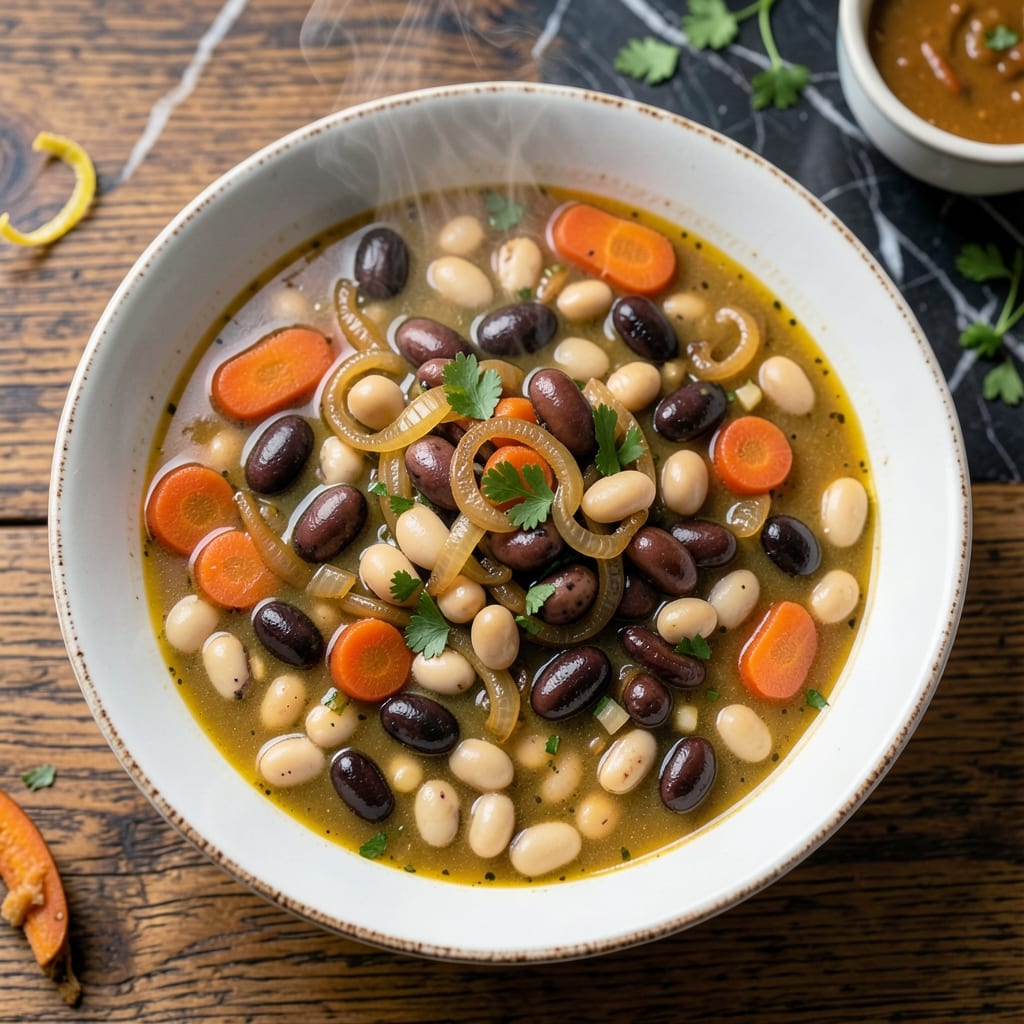
This all bean soup recipe transforms pantry staples into a rich, satisfying stew that tastes like a hug in a bowl. The secret lies in layering flavors—smoky paprika, earthy beans, and aromatic vegetables—simmered until every ingredient melds into a hearty, comforting broth. I developed this recipe during a particularly chilly winter when I needed something nourishing that wouldn’t require last-minute grocery runs.
The beauty of this soup is its versatility—it’s hearty enough to stand alone but flexible enough to adapt to dietary needs. Swap chicken broth for vegetable broth to make it vegan, or add a splash of vinegar for brightness if you prefer tang. With just 30 minutes of active prep and 1 hour of simmering, you’ll have a pot of soup that’s perfect for meal prep, potlucks, or a cozy weeknight dinner.
What makes this recipe special is the texture contrast: creamy white beans, tender carrots, and crispy edges from the simmering process. The broth reduces to a rich, savory depth, while herbs like thyme and bay leaves infuse subtle, complex flavors. Each spoonful delivers warmth, protein, and that unmistakable satisfaction of a well-made stew.
Serve it with crusty bread to soak up every last drop, or pair it with a simple green salad for balance. The leftovers taste even better the next day—proof that simplicity and comfort go hand in hand. Let’s get cooking!
Ingredients for all bean soup
Pantry staples meet cozy comfort in this all-bean soup that's perfect for chilly evenings.
| Ingredient | Amount | Notes |
|---|---|---|
| Chicken or Vegetable Broth 💧 | 6 cups | Low-sodium preferred for flavor control |
| Dried White Beans 🌾 | 1 ½ cups | Soaked overnight or quick-soaked |
| Dried Kidney Beans 🌿 | 1 cup | Soaked overnight for best texture |
| Dried Black Beans 🌿 | 1 cup | Soaked overnight or quick-soaked |
| Yellow Onion 🧅 | 1 whole | Diced into small pieces |
| Carrots 🥕 | 3 medium | Peeled and chopped into bite-sized pieces |
| Celery Stalks 🧅 | 3 whole | Chopped into small dice |
| Garlic Cloves 🧄 | 4 cloves | Minced for aromatic depth |
| Smoked Paprika 🌶️ | 1 tbsp | For smoky depth (adjust to taste) |
| Ground Cumin 🌿 | 1 tsp | Toasted for enhanced flavor |
| Bay Leaves 🍃 | 2 whole | Removed before serving |
| Fresh Thyme 🌿 | ¼ cup | Chopped or use 1 tsp dried |
| Tomato Paste 🍅 | 2 tbsp | For richness and depth |
| Olive Oil 🫒 | 2 tbsp | Extra-virgin for best flavor |
| Salt 🧂 | 1 ½ tsp | Adjust to taste |
| Black Pepper 🌶️ | ½ tsp | Freshly ground preferred |
The beans are the heart of this soup, so don’t skimp on quality. Dried beans from bulk bins at stores like Whole Foods or Trader Joe's have the best texture—just make sure they’re not past their prime. Soak them overnight for the creamiest result, or use the quick-soak method if you're in a hurry. I always buy a mix of white, kidney, and black beans for that perfect texture contrast. If you can’t find dried, canned beans work in a pinch (just rinse them well). The broth is non-negotiable—low-sodium versions give you more control over the final flavor.
No smoked paprika? Regular paprika plus a pinch of liquid smoke works in a bind. Fresh thyme is ideal, but dried thyme at one-third the amount gets you close. The tomato paste can be swapped for crushed tomatoes if you prefer—just use the same amount. For extra richness, stir in 1 tbsp nutritional yeast (it adds a cheesy depth without dairy). The carrots and celery can be swapped for other veggies like zucchini or bell peppers if you’re feeling experimental. And if you’re making this vegan, just swap the chicken broth for vegetable broth—no other changes needed.
This soup tastes even better the next day as the flavors meld together. Store it in the fridge for up to 5 days or freeze for 3 months—it reheats beautifully. I always make a double batch because it’s perfect for meal prep. The beans thicken as they cool, so add a splash of broth if it seems too thick when reheating. Serve it with crusty bread or over rice to soak up every last drop of that comforting broth.
Why You'll Love This Recipe
- Throw-In-The-Pantry Magic: I swear by this recipe when I forget to meal prep. Just toss in the dried beans (no soaking!), a chopped onion, and broth—then walk away. The broth does all the work while you handle whatever life throws at you.
- Three-Bean Symphony: Honestly, the texture contrast is what makes it special. Creamy white beans, hearty black beans, and slightly chewy kidney beans—each one adds its own note. I’ll be real: my picky-eater husband goes back for seconds just for the black beans.
- Leftovers That Beg for More: This soup only gets better the next day. The flavors meld into something richer, and it’s the ultimate lazy lunch. I make a big batch on Sundays and freeze portions—my go-to for those "I can’t even" days.
- Budget-Friendly Powerhouse: Between us, this is my wallet’s favorite recipe. Dried beans are cheaper than canned, and they bulk up a meal without breaking the bank. A single batch feeds four for under $5, and I still feel like I’m serving something special.
Step-by-step instructions for all bean soup
This hearty stew comes together in one pot with minimal prep—just follow these simple steps.
Soak the Beans for Maximum Tenderness
Place all 1.5 cups dried white beans, 1 cup dried kidney beans, and 1 cup dried black beans in a large bowl. Cover them with plenty of cold water—at least 2 inches above the beans—then let them soak overnight in the refrigerator. This overnight soak guarantees perfectly tender beans without any gummy texture.
If you're short on time, you can quick-soak them: boil the beans for 2 minutes, then remove from heat, cover, and let them sit for 1 hour. Drain and rinse them thoroughly before using. The key here is removing all the soaking liquid—it contains compounds that can make beans taste bitter if left in the pot.
Sauté the Aromatics for Deep Flavor
Heat the 2 tablespoons olive oil in a large pot over medium heat. Add the diced yellow onion, chopped carrots, and celery stalks, stirring occasionally for 8-10 minutes until the vegetables soften and the onion becomes translucent. This step builds the foundation of your soup's flavor—don't rush it.
Add the minced garlic cloves, 1 tablespoon smoked paprika, and 1 teaspoon ground cumin, stirring for 30 seconds until fragrant. The paprika adds that signature smoky depth while the cumin brings warm, earthy notes. Here's where the magic happens—these aromatics infuse the oil, creating layers of flavor that will carry through the entire soup.
Build the Base with Tomato Paste and Broth
Stir in the 2 tablespoons tomato paste and cook for 1-2 minutes until it darkens slightly and becomes fragrant. This step deepens the soup's richness and balances the earthy bean flavors. Pour in the 6 cups chicken or vegetable broth, scraping up any browned bits from the bottom of the pot—those bits are packed with flavor.
Add the drained beans, 2 whole bay leaves, and 0.25 cup fresh thyme. Bring everything to a gentle boil, then reduce the heat to low and let it simmer uncovered for 45-60 minutes. You want the beans to soften completely—test one by mashing it with a fork. It should break down easily but still hold some shape.
Season and Simmer to Perfection
After the initial simmer, taste the soup and adjust the seasoning with the 1.5 teaspoons salt and 0.5 teaspoon black pepper. The beans should be tender, and the broth should have a rich, savory depth. If the soup is too thick, add a little more broth—you want it to coat the back of a spoon but still be easy to ladle.
Continue simmering for another 15-20 minutes to let all the flavors meld together. Remove the bay leaves before serving—they're great for flavor but can be tough to chew. The soup should have a hearty, comforting texture with a perfect balance of smoky, earthy, and slightly sweet notes from the vegetables and beans.
Serve Warm with Crusty Bread
Ladle the soup into bowls and serve immediately with crusty bread or over rice. The aroma alone will make your kitchen smell like a cozy home. Each spoonful should deliver tender beans, rich broth, and a perfect blend of spices that warm you from the inside out.
For extra richness, top each serving with a drizzle of olive oil and a sprinkle of fresh thyme. This soup tastes even better the next day as the flavors continue to develop, so make extra if you can—it's the kind of dish that gets better with time and reheats beautifully.
Pro Tips For Making All Bean Soup
- SOAK BEANS OVERNIGHT: I learned this the hard way—rushing the soak with dried beans leaves them tough and gummy. Skip the quick-soak hack for this soup; just toss them in cold water with a bay leaf the night before. The next morning, drain and rinse, then start cooking. Your beans will break down smoothly, not fight you for texture.
- SIMMER LOW AND LONG: This isn’t the time to speed things up. After the beans hit the broth, keep the heat at a gentle simmer—not a rolling boil—so they absorb flavor without falling apart. I used to crank the heat, and the soup ended up mushy. Trust me, 90 minutes at low heat makes all the difference.
- SKIP THE ONION BURN: Onions are the flavor base, but they’ll turn bitter if you let them brown too fast. Sauté them in a splash of broth (not oil) over medium-low heat until translucent, then add the garlic or spices. No need to rush—this step guarantees the soup won’t taste like charred regret.
- USE TWO BROTH BATCHES: I skip this when I’m lazy, but the dish is noticeably better when I don’t. Start with half the broth, simmer the beans until tender, then add the rest. This keeps the soup from getting watery while letting the beans soak up flavor without drowning. Works every time.
Essential equipment for this recipe
Pot Essentials
A 6-quart Dutch oven is my go-to for this soup—its deep sides prevent spills when stirring, and the heavy base distributes heat evenly. I swear by the Le Creuset Signature (it’s pricey but lasts forever) or the Cuisinart MultiClad Pro for a budget-friendly alternative. The lid helps trap steam, which speeds up the simmering process and keeps flavors concentrated. 🔥
Bean Prep Tools
Start with a fine-mesh colander for draining soaked beans—it catches even the smallest seeds. I use the OXO Good Grips because the handles stay cool and the mesh doesn’t clog. For quick-soaking, a small saucepan with a tight-fitting lid works best. Pro tip: Label your beans in small glass jars with masking tape and a marker if you frequently cook with different varieties—this saves time during prep.
Knife and Cutting
A sharp 8-inch chef’s knife is non-negotiable for dicing onions, carrots, and celery efficiently. My current favorite is the Wüsthof Classic—it holds its edge and feels balanced. For mincing garlic, a garlic press (like the OXO Good Grips) is faster than chopping, but I still prefer the texture control of a knife. A cutting board with non-slip feet (I use John Boos End Grain) prevents the board from sliding while you chop.
Measuring and Spices
Precision matters with spices like smoked paprika and ground cumin, so I recommend a stainless steel measuring spoon set (like OXO’s). For olive oil, a glass measuring cup lets you see the level clearly. Store spices in airtight containers—I repurpose mason jars with labels to keep them fresh. A mortar and pestle isn’t required, but it’s perfect for toasting cumin seeds before grinding them for extra depth.
Simmering Setup
Simmering requires patience, so a timer (I use my phone’s alarm) helps track the 45-60 minutes of low heat. A wooden spoon with a long handle prevents burns and stirs the pot evenly. For testing bean tenderness, keep a fork nearby—it’s faster than tasting raw beans! If you’re reheating leftovers, a heavy-bottomed saucepan prevents scorching when adding broth to thin the soup.
Nutrition facts
Frequently asked questions
Can I use canned beans instead of dried?
Yes! Canned beans work perfectly if you're short on time. Use 3 (15-ounce) cans total (about 5 cups drained and rinsed) to replace the dried beans. Just be sure to rinse them well to remove excess sodium. The texture will be slightly softer, but the soup will still be hearty and delicious.
How do I make this soup vegan?
Swap the chicken broth for vegetable broth and skip any animal-based ingredients like butter or bacon. The recipe already works with vegetable broth, so no other changes are needed. The beans and spices provide plenty of flavor without any dairy or meat.
Why do my beans taste bitter?
Bitter beans usually mean they weren’t soaked long enough or had soaking liquid left in the pot. Always drain and rinse soaked beans thoroughly, and never reuse soaking water. If using canned beans, rinse them well to remove sodium and preservatives that can add bitterness.
Can I add meat to this soup?
Brown ½ pound ground beef or ½ pound smoked sausage with the onions for extra richness. Add it during Step 2 when sautéing the aromatics. For a lighter option, try diced ham or shredded rotisserie chicken at the end of cooking.
How long will leftovers keep?
Store in an airtight container in the fridge for up to 5 days or freeze for 3 months. The flavors actually improve overnight! When reheating, add a splash of broth if the soup thickens too much. Never reheat above 165°F to maintain food safety.