
Soups & Stews
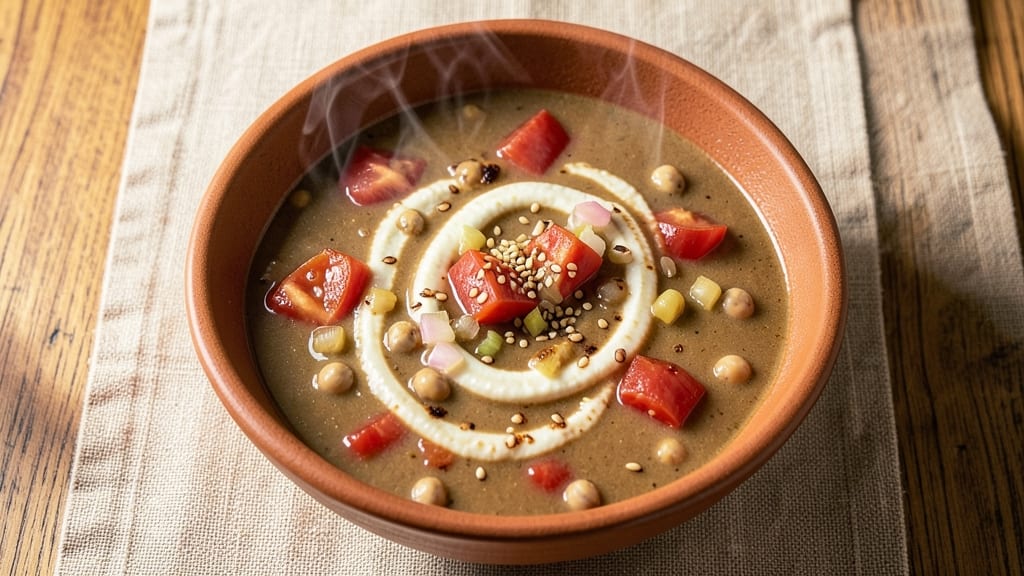
This African soup recipe delivers the rich, aromatic depth of West African cuisine in one comforting bowl. The marriage of tomatoes, peanuts, and spiced chickpeas creates a hearty stew that balances earthy, nutty, and tangy flavors—perfect for feeding a crowd or savoring on a chilly evening.
What makes this dish special is its versatility: it works as a standalone meal or pairs beautifully with jollof rice or crusty bread.
The foundation lies in a slow-simmered tomato base infused with garlic, ginger, and scotch bonnet peppers, which builds layers of complexity. Peanut butter adds creaminess while keeping the dish authentically African, while chickpeas provide protein and texture.
The key technique? Letting the spices bloom in hot oil before adding liquids—this unlocks their full potential and ensures every bite is packed with flavor.
By the time you serve this stew, you’ll have a deeply satisfying dish with tender chickpeas, velvety peanut-infused broth, and a perfect balance of heat and richness. The aroma alone will draw everyone to the table, while the first spoonful delivers that unmistakable taste of home.
This recipe is designed to impress, whether you're cooking for family gatherings or simply craving a taste of Africa.
Serve it with a side of fluffy rice or warm flatbread to soak up every last drop of that flavorful broth. The beauty of this stew is its adaptability—swap in your favorite vegetables or adjust the spice level to suit your taste.
Let’s bring this comforting tradition to your kitchen today.
Ingredients for african soup
Pantry staples meet bold African flavors—just a handful of ingredients for a stew that tastes like home.
| Ingredient | Amount | Notes |
|---|---|---|
| Canned Diced Tomatoes 🍅 | 2 cans | 28 oz each, San Marzano preferred |
| Peanut Butter 🥜 | ½ cup | Natural, unsweetened preferred |
| Chickpeas 🥜 | 2 cups | Cooked or canned, drained |
| Yellow Onion 🧅 | 1 whole | Medium, finely diced |
| Garlic Cloves 🧄 | 6 cloves | Fresh, minced |
| Fresh Ginger 🌿 | 2 tbsp | Grated, fresh preferred |
| Scotch Bonnet Pepper 🌶️ | 1 whole | Seeds removed, finely chopped |
| Vegetable Oil 🫒 | ¼ cup | For sautéing |
| Ground Cumin 🌿 | 1 tbsp | Toasted for depth |
| Ground Coriander 🌿 | 1 tbsp | Freshly ground preferred |
| Dried Thyme 🌿 | 1 tsp | Or 1 tbsp fresh thyme |
| Salt 🧂 | 1 ½ tsp | Kosher or sea salt |
| Black Pepper 🌶️ | ½ tsp | Freshly ground |
| Vegetable or Chicken Broth 💧 | 3 cups | Low-sodium preferred |
| Fresh Cilantro 🌿 | ¼ cup | Chopped, for garnish |
The tomatoes are non-negotiable here. San Marzano cans from Trader Joe's or your local Italian market make all the difference—they're sweeter and less watery. For peanut butter, natural unsweetened is key (the kind with oil separation). Smucker's Natural or store-brand natural is perfect. Ginger and scotch bonnet peppers should be fresh—no dried substitutes here. The African or Caribbean markets often carry scotch bonnet peppers, but any hot pepper in a pinch works. Just remove seeds for less heat. For the spices, Penzeys or bulk bins give the best flavor, but regular grocery store brands work if they're recent.
No peanut butter? Peanut powder mixed with a little oil works in a bind. Short on chickpeas? White beans or lentils swap right in. The broth can be homemade or store-bought—just check for low sodium. For the scotch bonnet, jalapeño or habanero are decent substitutes if you can't find it. Fresh thyme is ideal, but dried at one-third the amount gets you close. The cilantro garnish is optional, but it brightens everything up—skip it if you're sensitive to fresh herbs. For a quicker version, use pre-minced garlic and ginger from the refrigerated section at Whole Foods or Costco.
This stew tastes even better the next day as flavors meld. Keeps 5-6 days in the fridge, freezes for 3 months. Double the batch—it reheats beautifully. I like to portion it into glass containers for easy leftovers. The broth reduces as it sits, so add a splash of water or broth when reheating if it gets too thick. Serve with steamed rice or crusty bread to soak up all that rich flavor.
Why You'll Love This Recipe
- I’ll be real: the peanut butter and tomatoes create a sauce that’s dangerously addictive. That creamy richness from the peanut butter? It gets balanced by the tomatoes’ tangy bite, while the chickpeas add satisfying bite—every spoonful is a flavor party.
- Peanut Butter Powerhouse: I’ll be real: the peanut butter and tomatoes create a sauce that’s dangerously addictive. That creamy richness from the peanut butter? It gets balanced by the tomatoes’ tangy bite, while the chickpeas add satisfying bite—every spoonful is a flavor party.
- One-Pot Weeknight Win: Between chopping the onion and simmering, this is done in under an hour. I toss the onion in while prepping the rest, and the spices toast in minutes—no fancy techniques, just hands-off cooking once it’s in the pot.
- Feeds a Crowd (or Leftovers): This stew stretches for days. I double it for game nights and still have leftovers for lunch. Freezes beautifully too—just reheat and serve. My roommates always ask for seconds, and I don’t blame them.
Step-by-step instructions for African tomato and peanut stew
Here's how to create a rich, flavorful stew that balances creamy peanut sauce with spicy tomato depth.
Sauté the Aromatic Base
Heat the ¼ cup vegetable oil in a large pot over medium heat. Add the 1 finely diced yellow onion and cook for 5 minutes until softened and translucent. This foundational step builds flavor—don't rush it.
Add the 6 minced garlic cloves, 2 tbsp grated fresh ginger, and 1 finely chopped Scotch bonnet pepper (seeds removed). Cook for 2 minutes until fragrant—you should smell the garlic's sharpness and ginger's warmth. This is where the stew's signature spice profile begins to develop.
Stir in the 1 tablespoon ground cumin, 1 tablespoon ground coriander, and 1 teaspoon dried thyme. Toast the spices for 30 seconds until aromatic. This quick toasting awakens the spices' flavors, preventing them from tasting raw or bitter in the finished dish.
Build the Peanut-Tomato Sauce
Pour in the 2 cans canned diced tomatoes (with juices) and stir to combine with the spices. Let the mixture simmer uncovered for 5 minutes to allow the tomatoes to break down slightly. This step develops the sauce's natural sweetness and acidity balance.
Reduce heat to low and gradually whisk in the ½ cup peanut butter until completely smooth. Here's the thing—whisking is crucial to prevent lumps. If you see any peanut butter clinging to the pot, add 2 tbsp of the vegetable or chicken broth to help emulsify it. The sauce should thicken slightly as it simmers.
Add the 3 cups vegetable or chicken broth, 1½ teaspoons salt, and ½ teaspoon black pepper. Stir well to combine all ingredients. The broth should just cover the sauce mixture—this ensures the flavors meld properly without making the stew too thin.
Simmer with Chickpeas
Add the 2 cups chickpeas (drained if canned) to the pot. Bring the mixture to a gentle boil, then reduce heat to low-medium and let it simmer uncovered for 25-30 minutes. Stir occasionally to prevent sticking—this is especially important with peanut butter-based sauces.
During this time, the flavors will deepen and the stew will thicken naturally. You'll notice the peanut butter's richness blending with the tomatoes' acidity, creating a complex, satisfying base. The chickpeas will soften slightly but maintain their texture.
Taste the stew and adjust seasoning if needed. You might need a touch more salt to balance the peanut butter's natural sweetness, or a pinch more black pepper to enhance the Scotch bonnet's heat. This is your chance to personalize the dish to your preference.
Finish and Garnish
Once the stew reaches your desired consistency (it should coat the back of a spoon but still be spoonable), remove it from heat. Let it sit for 5 minutes to allow flavors to settle—this resting period makes a noticeable difference in how balanced the dish tastes.
Stir in the ¼ cup chopped fresh cilantro just before serving. The cilantro adds a bright, fresh contrast to the rich peanut-tomato base. Here's the final touch: taste again and adjust seasoning one last time if needed. The cilantro's freshness should cut through the stew's richness beautifully.
Serve the stew immediately, accompanied by crusty bread or over steamed rice. The combination of textures and temperatures makes each bite satisfying—creamy peanut sauce, tender chickpeas, and aromatic spices all working together.
Pro Tips For Making African Soup
- TOAST YOUR SPICES FAST: That 30-second toast for the cumin and coriander isn’t just fluff—it’s where their flavors wake up. Skip it, and you’ll taste raw, bitter notes instead of warm, earthy depth. Use medium-low heat here; high heat burns spices before they release their magic.
- WHISK PEANUT BUTTER LIKE YOUR LIFE DEPENDS ON IT: I learned this the hard way—adding peanut butter too fast or without whisking means lumps that turn into gritty bits. Start with a splash of broth to loosen it first, then whisk in slow circles until the sauce is silky. If it still clings, add another tablespoon of broth and keep moving.
- DON’T SKIP THE 5-MINUTE TOMATO SIMMER: Those 5 minutes uncovered after adding tomatoes aren’t optional—they let the acidity mellow and the natural sweetness bloom. Rush this, and your stew will taste sharp and underdeveloped. Covering too soon traps steam and dulls the flavors.
- STIR CHICKPEAS IN COLD: Adding chickpeas straight from the fridge (or canned, drained) keeps them from breaking apart during the simmer. If they’re warm, they’ll soften too fast and turn mushy. A quick rinse in cold water if using canned ones also removes any residual starch that makes the stew gluey.
Regional styles of this african soup
West African Peanut Stew
This version hails from Ghana and Nigeria, where peanut stews are a staple—think of it as a nutty, tomato-rich cousin of the classic tomato and peanut soup. The key difference? Locally sourced peanuts are often roasted and ground fresh, giving it an extra depth.
I love how the Scotch bonnet pepper here is balanced with coconut milk (swap ½ cup of the broth for ½ cup coconut milk for authenticity). The stew gets its signature texture from blended peanuts instead of peanut butter, creating a silky finish. 🌍
Ethiopian Misir Wot
Ethiopia’s spiced red lentil stew (Misir Wot) is a bold, berbere-spice-infused dish that pairs beautifully with injera flatbread. To adapt this regional style, replace chickpeas with 1½ cups cooked red lentils and swap the tomato base for 1 cup tomato paste mixed with 4 cups water.
Add 2 tbsp berbere spice blend (find it at Ethiopian markets or online) during the sauté step. The result? A smoky, spicy stew with a deep, earthy flavor profile that’s completely different from the peanut stew but just as comforting. This version is perfect for spice lovers! 🌶️
South African Bobotie-Inspired Stew
Inspired by South Africa’s iconic bobotie (a baked spiced meat dish), this stew version swaps meat for chickpeas and adds a mildly sweet, citrusy twist. After simmering the stew, stir in zest of 1 orange and 2 tbsp honey for a subtle sweetness.
Top with a spiced egg custard (beat 2 eggs with ¼ cup milk and ½ tsp turmeric, then bake at 350°F for 10 minutes) before serving. The custard adds a creamy, slightly golden finish that’s uniquely South African. This version is a crowd-pleaser! 🍊
Caribbean Jerk-Infused Stew
For a fiery, aromatic twist, embrace Caribbean flavors by adding 2 tbsp jerk seasoning (like McCormick Caribbean Jerk Seasoning) to the sautéed aromatics. The jerk spices—think allspice, thyme, and Scotch bonnet—elevate the stew’s heat and complexity.
I also recommend adding 1 cup diced plantains or sweet potatoes during the final 10 minutes of simmering for a touch of sweetness. Serve with fried plantains or rice and peas for an authentic Caribbean meal.
This version is bold, sweet, and spicy—perfect for those who love a kick! 🌴
Moroccan-Inspired Harissa Stew
Morocco’s harissa (a fiery red chili paste) adds a smoky, fruity heat that transforms this stew into a North African gem. Stir in 1 tbsp harissa paste (like Bouillon Harissa) during the tomato simmering step, and finish with 1 tsp cumin and 1 tsp paprika for extra depth.
Add ½ cup chopped preserved lemon (find it in Middle Eastern markets) for a bright, tangy contrast. This stew is rich, spicy, and complex, with layers of flavor that’ll transport you to a Moroccan souk. Serve with crusty bread or couscous for the full experience. 🌿
Nutrition facts
Frequently asked questions
Why does this stew need to rest after cooking?
The 5-minute rest lets all the flavors meld together seamlessly. When you remove the stew from heat, the flavors continue to develop—this resting period ensures every spoonful is perfectly balanced between the nutty peanut sauce, tangy tomatoes, and aromatic spices.
Can I make this stew ahead of time?
This stew tastes even better the next day as flavors deepen. It keeps 5-6 days in the fridge and freezes beautifully for up to 3 months. Just reheat gently on the stove, adding a splash of broth if it thickens too much.
What if I don’t have Scotch bonnet pepper?
No problem! Use jalapeño or habanero instead, but remove the seeds first for less heat. If you can't find fresh peppers, 1-2 teaspoons of cayenne pepper will give you similar spicy kick while keeping the dish authentic.
How can I adjust the spice level?
Start by tasting before adding more salt or pepper—this stew’s heat comes from the Scotch bonnet and spices. For milder versions, reduce the pepper to ½ teaspoon or skip it entirely. If you love heat, add ½ teaspoon extra cayenne at the end.
What’s the best way to serve this stew?
Pair it with steamed rice or crusty bread to soak up the creamy peanut sauce. For extra authenticity, serve with injera flatbread (common in Ethiopian cuisine) or plantains if you're going for a Caribbean twist.