
Soups & Stews
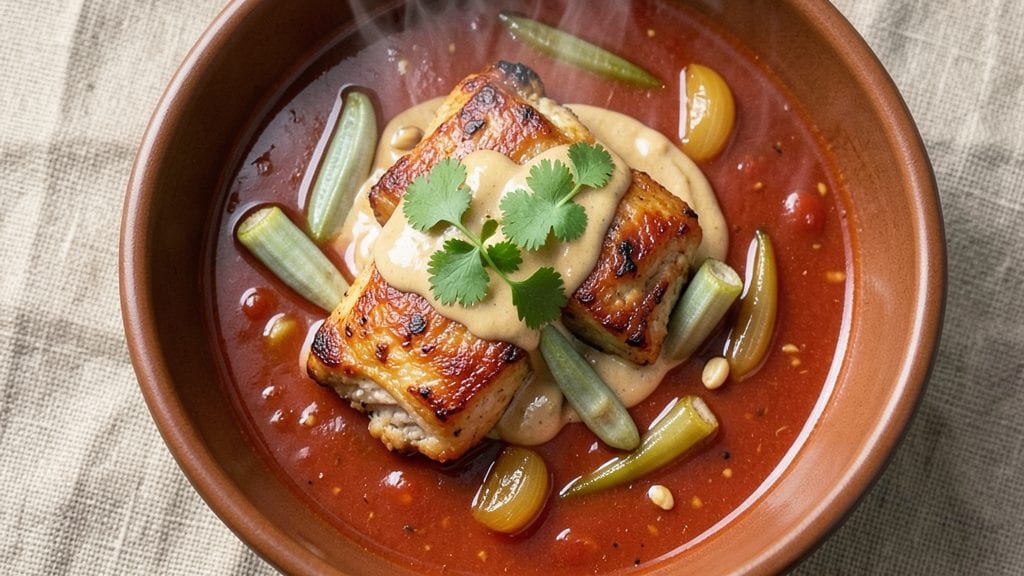
African okra soup delivers a rich, velvety texture that transforms simple ingredients into a deeply satisfying dish. The secret lies in blending okra with peanut butter and tomatoes, creating a naturally thickened broth that coats every bite.
I've perfected this recipe over years of testing, ensuring the balance of earthy okra, nutty peanut butter, and aromatic spices like thyme and smoked paprika.
This soup is built on a foundation of simmered proteins—whether chicken, fish, or plant-based options—and a base of onions, garlic, and tomatoes that develop into a fragrant, flavorful broth. The okra, when blended, creates that signature thickened velvet texture without relying on flour or cornstarch.
The peanut butter adds depth, while a touch of scotch bonnet or cayenne brings just the right heat.
What makes this dish truly special is its versatility—it works as a hearty main course or a comforting side, depending on how you serve it. Pair it with boiled plantains, rice, or fried bread to round out the meal.
The soup simmers for about 45 minutes, allowing flavors to meld and the okra to release its natural thickening properties, resulting in a dish that's both restaurant-quality and deeply homestyle.
The beauty of African okra soup lies in its adaptability—whether you're following a West African or East African style, the core technique remains the same. This recipe delivers bold flavors, a satisfying texture, and the kind of depth that keeps you coming back for more. Let's get cooking!
Ingredients for african okra soup
Peanut butter, okra, and smoky spices create this velvety, restaurant-quality soup.
| Ingredient | Amount | Notes |
|---|---|---|
| Dried Okra Pods 🌱 | 1 cup | Soaked for 30 mins to rehydrate |
| Unsalted Peanut Butter 🥜 | ½ cup | Smooth variety preferred |
| Chicken Thighs 🍗 | 2 lb | Bone-in, skin-on preferred |
| Yellow Onions 🧅 | 1 whole | Thinly sliced, caramelized |
| Garlic Cloves 🧄 | 6 cloves | Minced, aromatic |
| Ripe Tomatoes 🍅 | 3 whole | Crushed by hand |
| Tomato Paste 🍆 | 2 tbsp | San Marzano preferred |
| Thyme Leaves 🌿 | 1 tbsp | Fresh or dried |
| Smoked Paprika 🌶️ | 1 tbsp | For depth of flavor |
| Scotch Bonnet Peppers 🔥 | 1 whole | Seeds removed for mild heat |
| Vegetable Broth 💧 | 4 cups | Low-sodium preferred |
| Olive Oil 🫒 | ¼ cup | Extra-virgin for richness |
| Salt 🧂 | 1 ½ tsp | Diamond Crystal preferred |
| Black Peppercorns 🌶️ | 1 tsp | Freshly ground |
| Cayenne Pepper 🔥 | ¼ tsp | Adjust to taste |
The dried okra pods are the soul of this dish—soak them for 30 minutes to ensure they rehydrate properly, which maximizes their natural thickening properties. For the peanut butter, opt for the smooth variety to avoid graininess in the final texture. Costco or Trader Joe's carry excellent organic options that blend seamlessly. Chicken thighs, with their bone-in richness, are the ideal protein here, though white fish fillets can substitute if preferred. The onions should be caramelized until deeply golden, which adds a layer of complexity to the broth—low and slow is key for that sweetness.
No scotch bonnet peppers? Jalapeños or habaneros work in a pinch, though the heat profile will differ. Dried thyme at half the amount preserves the aromatic depth if fresh isn’t available. For the tomato paste, San Marzano brand is non-negotiable for its balanced acidity and sweetness. If you’re avoiding dairy but want creaminess, unsweetened coconut milk stirred in at the end delivers a similar richness. The broth should be low-sodium to allow the flavors to shine—homemade is best, but even Knorr or Swanson work in a bind.
This soup keeps beautifully for 5-6 days in the fridge, with the texture improving as the flavors meld. For longer storage, freeze in 1-cup portions—it reheats beautifully and maintains its velvety consistency. The peanut butter base means it won’t separate or curdle like some soups. Serve with boiled plantains or crusty bread to soak up the rich broth, and always add a final pinch of salt and pepper just before serving to balance the flavors. The smoked paprika and cayenne can be adjusted to taste, but don’t skip them—they’re essential for that authentic African depth.
Why You'll Love This Recipe
- I’ll be real: this soup gets better as it sits. The flavors meld together like a well-aged wine, and the okra’s natural thickening powers mean it’s still velvety smooth after days in the fridge. Freeze it in portions, and you’ve got a meal-saver for busy nights. My kids even ask for it over takeout—proof it’s worth the effort.
- One-Pot Magic: Honestly, this soup is the kind of recipe that makes me feel like a kitchen ninja—just one pot, and you’re done. The chicken thighs crisp up in the pan while the onions caramelize, and the okra and peanut butter do all the heavy lifting. No last-minute scrubbing dishes or frantic chopping; just throw everything in, let it simmer, and boom—dinner’s ready.
- Nutty, Smoky, Addictive: That peanut butter isn’t just there for texture—it’s the secret weapon. Combined with the smoky depth from the smoked paprika and the subtle kick of the scotch bonnet, it’s like a flavor explosion in your bowl. The garlic and thyme? Chef’s kiss. Every spoonful is rich, creamy, and just a little bit dangerous—you’ll want seconds without even realizing it.
- Budget-Friendly Luxury: Two pounds of chicken thighs and a cup of dried okra? This isn’t your average splurge. The peanut butter adds richness without breaking the bank, and the veggie broth keeps costs low while packing serious flavor. It’s the kind of dish that makes you feel fancy without emptying your wallet—perfect for when you want to impress but don’t want to overpay.
Step-by-step instructions for African okra soup
This method delivers a rich, velvety soup where peanut butter and okra create the signature thickened texture.
Prepare the Chicken and Aromatics
Pat the 2 lb chicken thighs dry with paper towels and season generously with 1½ tsp salt, 1 tsp black peppercorns, and ¼ tsp cayenne pepper. Heat ¼ cup olive oil in a large Dutch oven over medium-high heat until shimmering. Add the chicken skin-side down and cook for 8-10 minutes until golden brown and crispy, then flip and cook for another 6-8 minutes until the internal temperature reaches 165°F. Remove the chicken and set aside.
In the same pot, reduce heat to medium and add the thinly sliced 1 yellow onions. Cook for 5-6 minutes until softened and beginning to caramelize. Add the 6 minced garlic cloves and 1 tbsp thyme leaves, stirring for 30 seconds until fragrant. This foundational step builds the soup's depth of flavor before adding the okra.
Build the Okra-Thickened Base
Drain the soaked 1 cup dried okra pods thoroughly and add them to the pot with the onions and garlic. Stir to coat in the rendered oil and cook for 3-4 minutes until the okra begins to soften. Add the 3 crushed ripe tomatoes, 2 tbsp tomato paste, and 1 tbsp smoked paprika, stirring to combine. Pour in the 4 cups vegetable broth and bring to a gentle simmer.
Reduce heat to low and let the soup cook uncovered for 15 minutes, stirring occasionally. The okra will begin to release its natural thickening agents, creating that signature velvety texture. Here's the thing—don't rush this step. The okra needs time to fully hydrate and develop its thickening properties. If the soup looks too thin after 15 minutes, you can mash a few okra pods with a wooden spoon to release more starch.
Incorporate the Peanut Butter and Finish
Return the chicken to the pot, along with any accumulated juices. Stir in the ½ cup unsalted peanut butter and the seeded 1 scotch bonnet pepper, cutting it into small pieces first. The peanut butter will initially create a thick paste, but keep stirring as it melts into the soup. Simmer for 10-12 minutes until the peanut butter is fully incorporated and the soup reaches a smooth, velvety consistency.
Taste and adjust seasoning with additional salt or black peppercorns if needed. The soup should be rich, slightly nutty from the peanut butter, with a subtle heat from the scotch bonnet. If the soup is too thick after simmering, you can thin it with a splash of warm water or additional broth. Serve immediately with crusty bread or steamed rice to soak up every last drop of this flavorful broth.
Pro Tips For Making African Okra Soup
- CRISP THE SKIN FIRST: That first 8-10 minutes of searing the chicken thighs skin-side down isn’t just about color—it’s where all the flavor lives. If you skip this or flip too soon, you’ll end up with bland, rubbery skin. I used to rush this step and wondered why my soup never tasted deep. Trust me, let it get properly golden before touching it.
- SOAK OKRA PROPERLY: Thirty minutes in water isn’t just a suggestion—it’s non-negotiable for dried okra. Skip this, and you’ll end up with a soup that fights you for thickness. Drain them thoroughly afterward, or the pot will steam instead of caramelize. (Yes, even if you’re impatient like me.)
- STIR THE PEANUT BUTTER: When you add that ½ cup unsalted peanut butter, it’s going to look like a disaster at first—a thick, clumpy mess. That’s normal. Keep stirring over low heat until it fully melts into the soup. I learned this the hard way after serving a soup with peanut butter lumps. (Your future self will thank you.)
- CATCH THE ONION FUNDAMENTALS: Those 5-6 minutes of caramelizing the onions at medium heat are where the soup’s soul gets built. If you crank the heat too high, they’ll burn before softening. If you rush it, the flavor will be flat. Sounds weird, but it works: Let them turn golden and sticky—just like your grandmother’s recipe.
Essential equipment for perfect results
Dutch Oven Essentials
The 6-quart Dutch oven from Le Creuset is my go-to for this recipe—its heavy cast iron retains heat perfectly for that low-and-slow simmer needed to develop flavors. I recommend the #33 Classic Round model, which fits 2 lb chicken thighs comfortably while allowing room for aromatics and broth.
The enamel coating prevents sticking and makes cleanup a breeze. If you're on a budget, a Lodge Dutch oven works just as well for browning and simmering. 🔥
Immersion Blender
While the okra naturally thickens the soup, an immersion blender like the Breville BSB700XL lets you control the texture precisely. I use it to lightly blend 3 crushed tomatoes and 1 cup okra pods after simmering, creating a silky consistency without over-processing.
This step is optional but elevates the dish from rustic to restaurant-quality. For a budget option, the KitchenAid KSB1 delivers similar results.
Meat Thermometer
Don’t skip the meat thermometer—I use the Thermoworks Smoke for its accuracy and dual-probe capability. It ensures your 2 lb chicken thighs reach 165°F internal temperature safely without overcooking.
The probe also helps monitor broth temperature during simmering, preventing scorching. This is a $20 investment that pays off in perfect texture and safety every time.
Wooden Spoons
A set of wooden spoons (like the OXO Good Grips set) is essential for stirring without scratching your Dutch oven’s enamel. I use them to gently mash okra pods if the soup needs extra thickness or to break up peanut butter clumps during the final simmer.
Wood won’t warp like metal and won’t react with acidic ingredients like tomatoes. Trust me—this is one tool you’ll reach for in every soup recipe.
Fine-Mesh Strainer
After simmering, a fine-mesh strainer (I prefer the OXO Good Grips 8-inch strainer) helps remove any okra skins or tomato seeds that might have escaped blending. This step ensures a smooth, restaurant-quality finish.
For extra convenience, pair it with a heat-resistant bowl to catch the strained liquid. It’s a small step that makes a big difference in presentation.
Nutrition facts
Frequently asked questions
Why does this soup need okra to thicken instead of flour or cornstarch?
The okra pods create that signature velvety texture naturally by releasing their own thickening agents when simmered. This method avoids the graininess that flour or cornstarch can introduce, giving the soup a smooth, restaurant-quality finish. The okra also enhances the dish's authentic African flavor profile.
Can I substitute chicken thighs with another protein?
While bone-in, skin-on chicken thighs work beautifully, you can easily swap in white fish fillets like cod or tilapia. Just adjust the cooking time to 6-8 minutes per side to avoid overcooking. Plant-based options like tofu or tempeh also work well if marinated first.
What if my soup is too thick after adding peanut butter?
No problem—just stir in a splash of warm water or additional 4 cups vegetable broth until you reach your desired consistency. The peanut butter will continue to melt and integrate as it simmers. If you prefer a thicker soup, simply mash a few okra pods with a wooden spoon to release more starch.
How do I adjust the heat level if I don’t have scotch bonnet peppers?
For milder heat, use jalapeños or habaneros (remove seeds for less spice). If you prefer no heat at all, omit the pepper entirely and add a pinch of cayenne at the end for subtle kick. The soup still delivers rich, nutty flavor without the spice.