
Soups & Stews
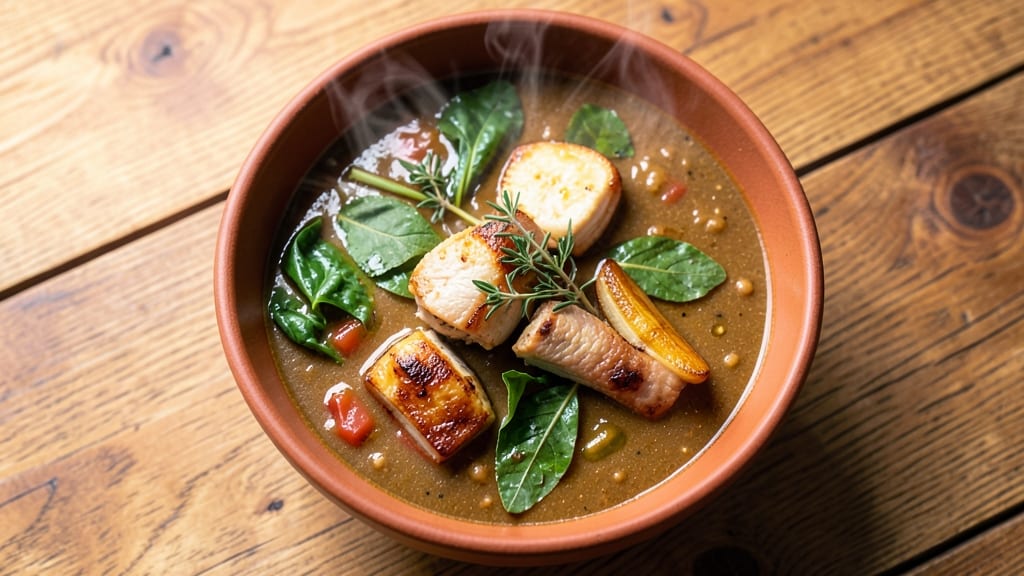
This African groundnut soup recipe delivers the rich, nutty depth of West African cuisine in every spoonful, where earthy peanut paste meets aromatic spices and tender vegetables. The foundation—groundnut paste simmered with tomatoes and onions—creates a velvety base that transforms simple ingredients into something deeply satisfying.
What sets this dish apart is the balance of smoky, spicy, and savory notes, achieved through slow cooking and careful seasoning with thyme, bay leaves, and a touch of Scotch bonnet for heat.
The beauty of this soup lies in its versatility—it works as a hearty vegetarian meal or pairs beautifully with protein like chicken, fish, or tofu. Traditional West African versions often include pumpkin leaves, but carrots and cabbage make a wonderful substitute for those with limited access to specialty ingredients.
The key to success is patience; letting the flavors meld over 45-60 minutes at a gentle simmer ensures each component shines without overpowering the others.
What you’ll end up with is a deeply aromatic, nutty, and slightly smoky soup that’s both comforting and complex—perfect for chilly evenings or as a centerpiece for gatherings. The groundnut paste adds a satisfying creaminess, while the vegetables soften into tender perfection.
This recipe honors the traditions of West African cooking while adapting easily to modern kitchens, making it a dish worth mastering for anyone who loves bold, flavorful soups.
Whether you follow the classic Nigerian or Ghanaian style, this soup delivers restaurant-quality results at home. The instructions will guide you through every step—from preparing the peanut base to balancing the spices—so you can achieve that perfect harmony of flavors. Let’s get cooking!
Ingredients for african groundnut soup
The heart of West African flavor—nutty, aromatic, and deeply satisfying in every spoonful.
| Ingredient | Amount | Notes |
|---|---|---|
| Groundnut Paste (Peanut Butter) 🥜 | ¾ cup | Natural, unsweetened, no additives |
| Canned Diced Tomatoes 🍅 | 2 cups | San Marzano preferred, no salt added |
| Yellow Onions 🧅 | 2 whole | Medium, finely chopped |
| Garlic Cloves 🧄 | 4 cloves | Peeled, minced finely |
| Fresh Thyme 🌿 | 2 tbsp | Leaves only, chopped fine |
| Bay Leaves 🍃 | 2 whole | Dried or fresh, removed before serving |
| Scotch Bonnet Peppers 🌶️ | 1 whole | Seeded, finely chopped (adjust for heat) |
| Carrots 🥕 | 3 whole | Medium, peeled, sliced into rounds |
| Green Bell Peppers 🌶️ | 1 whole | Medium, sliced into strips |
| Cabbage 🥬 | 2 cups | Green or red, shredded finely |
| Vegetable Oil 🫒 | ¼ cup | Light or neutral, for sautéing |
| Vegetable Broth 💧 | 4 cups | Low-sodium, homemade preferred |
| Sea Salt 🧂 | 1 tsp | Diamond Crystal preferred |
| Black Peppercorns 🌶️ | ½ tsp | Freshly cracked, not ground |
| Fresh Ginger 🌿 | 1 tbsp | Grated finely, fresh preferred |
The groundnut paste is non-negotiable here. Natural, unsweetened peanut butter (like Skippy Natural or store-brand) works best—no sugar or additives. The San Marzano canned tomatoes from Trader Joe's or Whole Foods elevate the dish with their rich, sweet flavor. For the Scotch bonnet, Caribbean markets or specialty stores like Penzeys carry them fresh, but a hot sauce like Mad Dog 357 in a pinch will give you that fiery kick. Fresh thyme and bay leaves are essential—dried thyme works, but fresh delivers that bright, herbal punch. If you can't find Scotch bonnet, Habanero or Thai bird's eye will work, but reduce the amount to half.
No groundnut paste? Peanut butter with no additives is your best bet—just make sure it's 100% peanuts. Swap the Scotch bonnet for jalapeño or serrano peppers if you prefer milder heat, but don't skip the spice entirely—it's what gives this soup its signature depth. For the vegetables, frozen chopped carrots and bell peppers save time, but fresh is ideal. The cabbage can be green or red, but red adds a pop of color. If you're using dried thyme, reduce to one-third the amount of fresh. The ginger? Fresh is a must—ground ginger lacks the bright, zesty kick this dish needs. For the vegetable broth, homemade or low-sodium store-bought keeps the flavors balanced.
This soup tastes even better the next day—let the flavors meld overnight. Store it in the fridge for up to 5 days, or freeze portions for 3 months. The groundnut paste thickens as it cools, so stir in a splash of broth or water when reheating. For extra richness, top with a dollop of Greek yogurt or coconut milk before serving. The cabbage and carrots can be prepped ahead and stored in the fridge for 2 days—just add them to the pot when you're ready to cook.
Why You'll Love This Recipe
- One-Pot Magic: I’m the kind of person who loves a recipe that doesn’t require a kitchen renovation. This soup lives in one pot, and honestly, that’s half the battle won. You’re chopping onions and peppers while they sizzle, then tossing in the rest—no fancy prep, no cleanup chaos. The groundnut paste does all the heavy lifting, binding everything together without you having to stir constantly. My daughter even helps with the cabbage shredding, and it’s still done in under an hour.
- Nutty, Spicy, Perfectly Balanced: That first bite? The creamy peanut paste meets the smoky Scotch bonnet, and the garlic-thyme-kissed tomatoes tie it all together. It’s not just flavor—it’s layers. The sweetness of the carrots and cabbage softens the heat, while the thyme gives it that fresh, herbal brightness. Trust me, the way the flavors build is what makes this soup addictive. You’ll keep reaching for seconds without even realizing it.
- Leftovers That Outshine Takeout: I made this last night and had it again for lunch today. The flavors deepen overnight, and honestly, the soup tastes even better cold the next day. Freeze portions for busy weeks, or reheat leftovers with a splash of broth to revive them. It’s the kind of dish that turns a simple weekday dinner into something special without extra effort. My roommate swore it was from a fancy restaurant—until I admitted I made it myself.
- Budget-Friendly Luxury: Peanut butter, canned tomatoes, and basic veggies? This soup costs less than takeout but tastes like a celebration. The groundnut paste stretches every ingredient, making it feel indulgent without breaking the bank. Plus, if you’re watching your wallet, you can swap fresh thyme for dried or use a hot sauce instead of Scotch bonnet peppers. It’s the kind of recipe that proves comfort food doesn’t have to drain your account.
Step-by-step instructions for African groundnut soup
Here's how to craft this rich, aromatic West African classic—layering smoky, nutty depth with vibrant vegetables.
🍳 Step 1: Build the Flavor Base with Onions and Peppers
Heat the ¼ cup vegetable oil in a large pot over medium heat. Add the 2 finely chopped yellow onions and cook for 5-6 minutes until they soften and begin to caramelize—you'll smell that sweet, golden aroma signaling they're ready. Stir occasionally to prevent burning.
Add the 1 finely chopped green bell pepper and 1 seeded, finely chopped Scotch bonnet pepper (wear gloves if you're sensitive to heat). Cook for another 3-4 minutes until the peppers soften and the mixture becomes fragrant. This foundational step develops the soup's signature smoky-sweet complexity.
Here's the thing—don't rush this stage. The onions need proper color development to create that caramelized depth that carries through the entire soup. If they start to brown too quickly, reduce the heat slightly and let them cook slowly.
🍳 Step 2: Incorporate Aromatics and Tomatoes
Add the 4 minced garlic cloves and 1 tablespoon finely grated fresh ginger to the pot. Stir for 30 seconds until fragrant—you should smell that pungent, fresh aroma that will become the soul of your soup. The ginger and garlic will mellow as they cook but start strong here.
Pour in the 2 cups canned diced tomatoes and stir well to combine. Let the mixture simmer for 5 minutes until the tomatoes break down slightly and the flavors meld. This step develops the soup's rich, tangy foundation that balances the nuttiness of the groundnut paste.
Add the 2 bay leaves and 2 tablespoons chopped fresh thyme at this stage. The bay leaves will infuse subtle earthiness, while the thyme adds a bright herbal note that cuts through the richness. Don't skip this—these aromatic elements elevate the soup from good to extraordinary.
🥘 Step 3: Create the Nutty Foundation
Reduce the heat to medium-low and gradually whisk in the ¾ cup groundnut paste (peanut butter). Start with small amounts to prevent clumping, and continue whisking until completely incorporated. You'll notice the soup immediately thicken and develop a rich, nutty aroma.
This is the moment that matters: the groundnut paste transforms your soup from a vegetable stew into something truly special. The key is patience—let the paste melt completely into the mixture before adding any liquids. If it looks too thick, you can add a splash of vegetable broth to help it blend smoothly.
Simmer the mixture for 5 minutes on medium-low heat, stirring occasionally. You're developing that signature peanut flavor that defines West African cuisine. The paste should be fully emulsified, creating a velvety texture that coats the back of a spoon.
🥘 Step 4: Add Vegetables and Simmer
Add the 3 sliced carrots, 2 cups shredded cabbage, 1 teaspoon sea salt, and ½ teaspoon freshly cracked black peppercorns to the pot. Stir well to coat the vegetables in the nutty sauce. The cabbage will wilt slightly as it absorbs the flavors, while the carrots add natural sweetness that balances the heat.
Pour in the 4 cups vegetable broth and bring the soup to a gentle boil. Once boiling, reduce the heat to low and let it simmer uncovered for 25-30 minutes. You want the vegetables to become tender but still hold their shape—this ensures each bite has satisfying texture.
Real talk: your oven might run hot, so start checking at the 20-minute mark. The soup should be thick enough to coat a spoon but still have a pleasant mouthfeel. If it's too thick, add a little more broth. If it's too thin, let it simmer longer to reduce.
⏰ Step 5: Finish and Serve
Remove the 2 bay leaves before serving—you don't want their tough edges in your final dish. Taste the soup and adjust seasoning if needed. The groundnut paste should provide enough saltiness, but you might want to add a pinch more sea salt or a splash of lime juice if you prefer more brightness.
Ladle the soup into bowls and serve immediately while hot. The aroma alone will make your kitchen smell like a West African market. Each spoonful should deliver that perfect balance of nutty richness, smoky heat, and fresh vegetable flavors.
This soup tastes even better the next day as the flavors continue to develop, so consider making a double batch. The groundnut paste will create a satisfying, comforting texture that makes this dish perfect for chilly evenings or as a hearty meal starter.
Pro Tips For Making African Groundnut Soup
- Whisk the Paste Slowly: I learned this the hard way—dumping the groundnut paste all at once creates clumps that never fully dissolve. Add it in small batches while whisking vigorously, and keep the heat low. The paste needs time to melt into the sauce, not sit in lumps at the bottom.
- Caramelize Those Onions: The onions should turn golden, not brown, before you move on. If they darken too fast, lower the heat—this isn’t a sear, it’s a slow sweetening. That caramelized depth is what makes the soup sing, not just burn.
- Grate Ginger Fresh: Jarred ginger lacks the bright punch of fresh, and it’ll turn your soup bland. Use the microplane for that fine, aromatic zest—no need to overdo it, just 1 tablespoon will wake up the flavors.
- Taste Before Broth: Add the carrots, cabbage, and seasonings, then taste the base before pouring in the broth. The groundnut paste and tomatoes carry most of the flavor, so you can adjust salt or heat now—fixing it later is trickier.
Creative variations of this dish
Nigerian Peanut Stew Twist
For a Nigerian-inspired variation, swap the cabbage for pumpkin leaves (if available) or okra for a thicker texture. Add ½ cup chopped smoked turkey or chicken for protein, or use firm tofu for a vegetarian option.
The key difference is the addition of ½ tsp smoked paprika and 1 tbsp tomato paste to the nutty base before simmering. This version is often served with boiled plantains or steamed white rice for a complete meal. 🌟
Ghanaian-Style Spiced Version
Ghanaian groundnut soup often includes 1 tbsp ground ginger and ½ tsp ground coriander mixed into the peanut paste before adding liquids. For extra depth, add ½ cup cooked black-eyed peas or cowpeas along with the vegetables.
The heat is balanced with ½ tsp ground nutmeg and a pinch of cinnamon—trust me, it adds warmth without overpowering. This version pairs beautifully with fried plantains or boiled yams. ✨
Coconut Milk Creaminess
For a tropical twist, stir in 1 can (13.5 oz) coconut milk during the final 10 minutes of simmering. The creaminess enhances the peanut flavor while adding richness. I recommend using full-fat coconut milk for the best texture.
This variation works especially well with green bell peppers and pineapple chunks added at the end for sweetness. Perfect for summer gatherings! 🌴
Protein-Packed Fusion
Add 1 lb shredded chicken breast or smoked sausage during the last 15 minutes of cooking to infuse flavor without overcooking. For a vegetarian option, use 1 block extra-firm tofu pressed and cubed, added with the vegetables.
Both protein choices absorb the nutty sauce beautifully. Serve with crusty bread or cornbread for dipping. 💛
Vegetable Booster Combo
Boost the veggie content by adding 1 cup chopped kale or spinach during the last 5 minutes of cooking. The greens wilt perfectly while maintaining their nutrients. I also love adding ½ cup diced sweet potatoes for natural sweetness that balances the heat.
This version is packed with nutrients and makes a great meal prep option. 🥬
Nutrition facts
Frequently asked questions
Can I use regular peanut butter instead of groundnut paste?
Yes! Natural, unsweetened peanut butter works perfectly—just ensure it has no added sugar or oils. Whisk it slowly into the simmering tomato mixture to prevent clumping, and you’ll get that same rich, nutty depth. The texture will be slightly thicker, so thin with a splash of broth if needed.
How do I adjust the spice level if Scotch bonnet isn't available?
No Scotch bonnet? No problem! Use Habanero or Thai bird’s eye peppers (halve the amount), or swap for jalapeño or serrano—just reduce to half the quantity. For milder heat, omit the pepper entirely and add ½ tsp cayenne at the end for a subtle kick. Always taste before serving!
Why does my soup taste bland after simmering?
Blandness often means the groundnut paste needs more time to develop flavor. Let it simmer 5-10 minutes longer on low heat, stirring occasionally, to deepen the nutty aroma. Also, check your salt—if using low-sodium broth, add ½ tsp extra sea salt at the end. The cabbage and carrots absorb flavors slowly, so patience is key!
Can I make this soup ahead of time?
This soup tastes even better the next day as flavors meld. Store in an airtight container in the fridge for up to 5 days. To reheat, warm gently on the stove, stirring in a splash of broth or water to loosen thickened texture. Freeze portions for 3 months—just thaw overnight in the fridge before reheating.
What’s the best way to serve this soup?
Serve with steamed white rice, boiled plantains, or crusty bread to soak up the rich sauce. For extra brightness, top with lime wedges or fresh cilantro. The nutty depth pairs beautifully with protein too—try shredded chicken, smoked sausage, or tofu for a heartier meal. Garnish with a sprinkle of crushed peanuts for texture!