
Soups & Stews
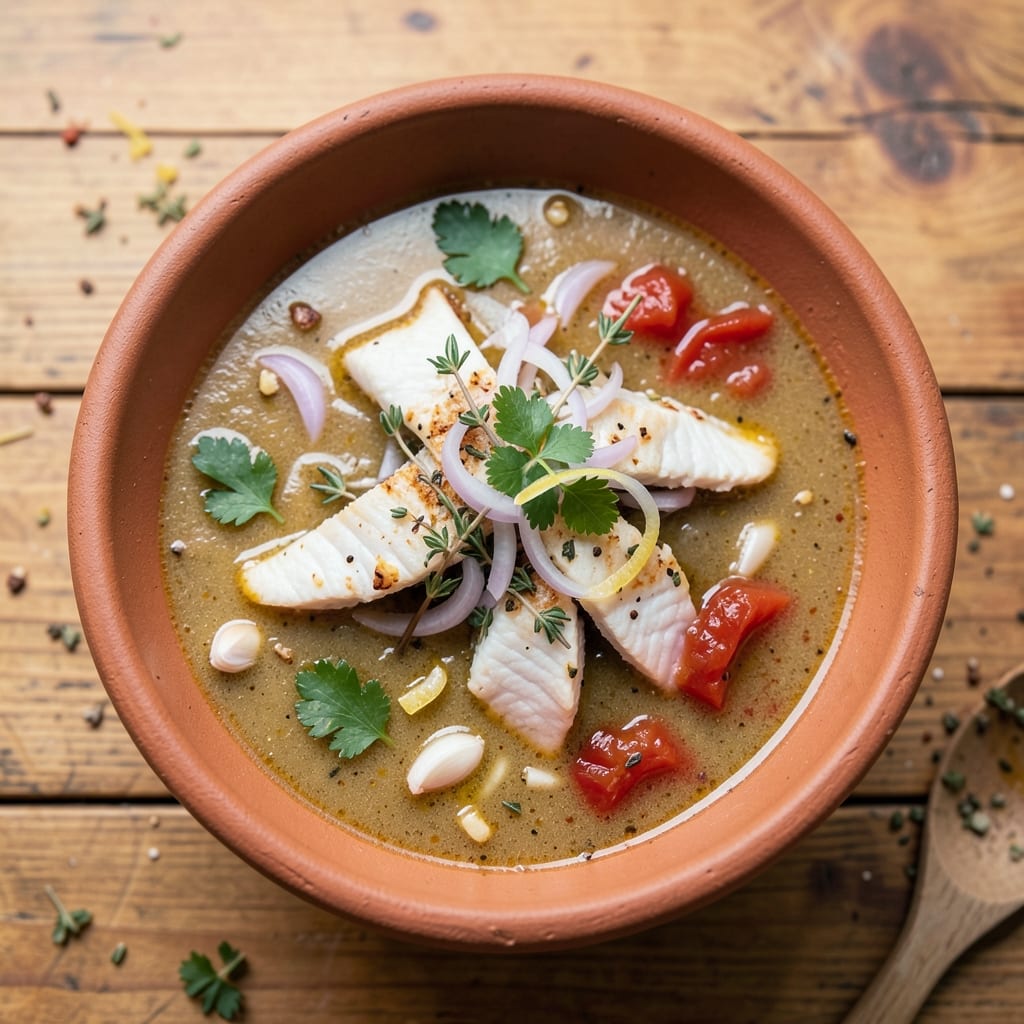
This West African fish soup recipe brings bold flavors to your table with its aromatic blend of tomatoes, herbs, and spices that simmer into a rich, hearty broth. 🌟 The secret lies in slow-cooking the ingredients to develop deep, complex flavors that make every spoonful unforgettable. This dish is perfect for a comforting meal that feels like a taste of home.
The recipe begins with a fragrant base of onions, garlic, and ginger, which form the foundation for the soup's rich flavor profile. Fresh tomatoes and a mix of herbs like thyme, parsley, and cilantro add brightness, while chili peppers bring just the right amount of heat. The fish, typically tilapia or mackerel, is added later to ensure it remains tender and absorbs all the flavors.
By the time you serve this soup, you'll have a steaming bowl of aromatic goodness with tender fish, soft vegetables, and a broth so flavorful it'll have everyone asking for seconds. The dish is simple yet impressive, making it ideal for family dinners or gatherings. Each bite delivers a perfect balance of savory, spicy, and fresh.
This recipe is not only delicious but also versatile—you can adjust the heat level or add extra vegetables like spinach or okra to suit your taste. Perfect for a cozy night in or a special occasion, this West African fish soup is a true crowd-pleaser that will leave everyone wanting more.
Ingredients for african fish soup
Bold flavors start with these aromatic ingredients simmered into unforgettable fish soup goodness.
| Ingredient | Amount | Notes |
|---|---|---|
| White Onions 🧅 | 1 ½ cups | Chopped, medium dice |
| Garlic Cloves 🧄 | 6 cloves | Minced, fresh preferred |
| Fresh Ginger 🌿 | 2 tbsp | Grated, aromatic |
| Fresh Tomatoes 🍅 | 2 lb | Ripe, chopped, or 4 medium |
| Fresh Thyme 🌿 | ½ cup | Stems removed, chopped |
| Fresh Parsley 🌿 | ¼ cup | Chopped, for garnish |
| Dried Cilantro 🌿 | 1 tbsp | Or 0.25 cup fresh |
| Scotch Bonnet Peppers 🌶️ | 1 whole | Seeds removed, adjust heat |
| White Fish Fillets 🐟 | 1 ½ lb | Tilapia or mackerel |
| Vegetable Oil 🫒 | ¼ cup | For sautéing |
| Fish Stock 💧 | 4 cups | Homemade or quality store-bought |
| Lemon Juice 🍋 | 2 tbsp | Freshly squeezed |
| Salt 🧂 | 1 ½ tsp | Adjust to taste |
| Black Pepper 🌶️ | ½ tsp | Freshly ground |
| Okra 🥦 | 1 cup | Sliced, optional |
The tomatoes are the heart of this soup—vine-ripened if you can find them, but any ripe ones work. Trader Joe's and Whole Foods often carry the best varieties, but the regular grocery store stuff is fine too. Look for firm, vibrant tomatoes—they should smell sweet and earthy, not bland. The fish matters too: tilapia stays tender, while mackerel adds richness. If you can't find Scotch bonnet, jalapeño or habanero work for heat, just reduce the amount. Fresh ginger is non-negotiable here—it's what gives the soup that signature zing. Grab it from the produce section, not the jarred stuff.
No fresh thyme? Dried works at one-third the amount, but it won't have the same depth. Short on okra? Skip it—this soup is delicious without it. The fish stock can be homemade (simmer fish bones with veggies for 30 minutes), but Pacific Foods or Imagine brands are solid shortcuts. Want to stretch the recipe? Add 1 cup spinach or collard greens at the end—they wilt in seconds. The cilantro is optional but adds freshness; if you're sensitive to its taste, use parsley instead. And trust me on the lemon juice—it brightens everything up at the end.
This soup tastes even better the next day as flavors meld. Store in an airtight container for 3-4 days in the fridge, or freeze for 3 months in portions. I always double the batch—leftovers make amazing lunches or quick dinners. The broth thickens as it cools, so add a splash of water when reheating. Garnish with extra parsley and a squeeze of lemon before serving—that's the magic touch.
Why You'll Love This Recipe
- Pantry-Friendly Base: I swear by this soup because it uses what’s already in my fridge—no obscure spices or last-minute grocery runs. That fresh ginger and thyme? They’re the secret, but even if you grab them on the way home, the onions and garlic carry the day.
- Herb-Packed Depth: The moment that tomato-ginger blend hits the pot, my kitchen smells like a coastal breeze. Between us, that crisp garlic and thyme turn simple fish into something ridiculously flavorful—no fancy sauce needed.
- Weeknight to Weekend: I make this for tired Tuesday dinners, but it’s also my go-to for Sunday gatherings. The same core flavors work whether it’s a quick lunch or a shared bowl with friends—just adjust the fish and rice.
- Leftovers That Beg for More: Honestly, I’ve never had this soup last past the second day, but when it does, reheating it keeps that tender fish and aromatic broth spot-on. Plus, it’s cheaper than takeout—win-win for my wallet and my taste buds.
Step-by-step instructions for West African herb fish soup
Let's create this vibrant, aromatic soup that captures West Africa's bold flavors.
🍳 Step 1: Build the Flavor Base
Heat the 0.25 cup vegetable oil in a large pot over medium heat. Add the 1.5 cups white onions and cook for 5 minutes until they become translucent and just start to caramelize at the edges. This is where all the magic begins—those sweet, golden onions form the foundation of our soup.
Add the 6 cloves minced garlic and 2 tbsp fresh ginger and cook for another 2 minutes until fragrant. You'll smell that wonderful aromatic punch—garlic's sharpness and ginger's warmth combining perfectly. Don't let them burn; they should just be golden, not brown. Here's where it gets good—toss in the 1 whole Scotch bonnet pepper (seeds removed) and cook for 30 seconds until the heat starts to bloom.
🍳 Step 2: Develop the Herb and Tomato Mixture
Add the 2 lb chopped fresh tomatoes and cook for 8-10 minutes until they break down into a thick, pulpy sauce. Stir frequently to prevent sticking—this is where the tomatoes release their juices and natural sweetness. When the mixture turns deep red and thickens slightly, it's time to add the 0.5 cup fresh thyme and 1 tbsp dried cilantro.
Cook for another 3-4 minutes until the thyme releases its earthy aroma and the cilantro adds its citrusy depth. You'll see the mixture darken and smell even more complex—this is the heart of our soup's flavor profile. Taste it now: it should be tangy, slightly sweet, and packed with herbal notes. If it needs more depth, add a pinch of salt or a splash of water to help it along.
🥘 Step 3: Simmer with Stock and Okra
Pour in the 4 cups fish stock and bring the mixture to a gentle boil. Once boiling, reduce heat to medium-low and add the 1 cup sliced okra. Let it simmer for 10 minutes—this allows the okra to soften slightly while adding its signature slimy texture that thickens the soup beautifully. The okra will break down just enough to release its natural gelling properties without becoming mushy.
Season with the 1.5 tsp salt and 0.5 tsp black pepper, then stir in the 2 tbsp lemon juice. The lemon brightens everything up, cutting through the richness and adding that fresh, zesty finish we all love. Let the soup simmer uncovered for another 5 minutes to let all the flavors meld together. You're looking for a soup that's rich but not heavy, with layers of flavor in every spoonful.
🔥 Step 4: Cook the Fish to Perfection
While the soup simmers, season the 1.5 lb white fish fillets with a pinch of salt and pepper on both sides. Gently add them to the simmering soup and cook for 6-8 minutes—just enough time for the fish to become opaque and flake easily with a fork. The fish should be tender but still hold together when lifted with a slotted spoon. Here's the thing—don't overcook it. You want it to stay moist and delicate, not dry and rubbery.
When the fish is nearly done, stir in the 0.25 cup fresh parsley. This final addition adds a fresh, bright note that cuts through the richness of the soup. The parsley should wilt slightly but still retain its vibrant color. Remove the fish from the pot and set it aside to rest for 2 minutes—this keeps it tender and prevents it from falling apart when serving.
🍽️ Step 5: Serve with Confidence
Ladle the hot soup into bowls, placing one or two fish fillets in each serving. Garnish with additional parsley if desired, and serve immediately with crusty bread or steamed rice. The soup should be vibrant red with green okra strands visible throughout, and the fish should be perfectly cooked—flaky but still holding together. Each bite should deliver that perfect balance of spicy, tangy, herby, and savory flavors that make this soup so special.
Pro tip: If you're serving this to guests who prefer less heat, you can remove the Scotch bonnet pepper before adding the tomatoes, or serve it on the side for those who want to adjust the spice level to their taste.
Pro Tips For Making African Fish Soup
- Sweat the Aromatics Slow: I used to blast the onions, garlic, and ginger on high heat, only to end up with bitter, charred flavors. For this soup, keep the heat medium-low until the onions turn translucent—about 5 minutes—and the garlic just starts to glow golden. That’s when you add the ginger and tomatoes. Rushing this step turns your base into a bitter mess instead of the rich, fragrant foundation the fish needs.
- Blanch the Tomatoes First: Skip peeling tomatoes if you’re in a hurry, but always blanch them for 30 seconds in boiling water before chopping. This softens the skins, makes them easier to peel, and—more importantly—keeps the pulp from turning to mush when you blend it. I learned this the hard way after ending up with a watery, seedy soup that tasted more like tomato juice than a proper base.
- Don’t Overcrowd the Fish: If you’re using whole fish or large fillets, resist the urge to dump everything in at once. Cook the fish in batches—start with half the portion, let it poach for 4-5 minutes until just opaque, then remove it to a plate. This keeps the oil hot enough to properly seal the fish without steaming it into rubbery disappointment. Your future self will thank you when the fish stays flaky and tender.
- Toast the Thyme Leaves: Yes, even if your recipe says to add fresh thyme whole. Dry the sprigs over medium heat for 30 seconds until the leaves crackle slightly—this releases their oils and deepens the flavor. Then remove the stems and add just the leaves to the soup. It’s an extra 30 seconds that makes the difference between "good" and "wow." (And no, I’m not exaggerating.)
Make-ahead tips for african fish soup
Prep Ahead Strategy
Make the flavor base the night before by sautéing onions, garlic, ginger, and Scotch bonnet pepper. Store in an airtight container in the fridge for up to 2 days. This saves 15 minutes of prep time on cooking day and lets flavors develop deeper overnight. 🌟
Broth Prep Shortcut
Simmer your fish stock ahead of time and refrigerate it in 1-cup portions for quick reheating. I always make 8 cups at once—it freezes beautifully for 3 months. Thaw overnight in the fridge before using. This ensures you always have flavorful stock on hand without last-minute shopping trips.
Fish Prep Tips
Clean and pat dry your fish fillets, then store them in a sealed plastic bag with a paper towel to absorb moisture. Keep them in the fridge for up to 24 hours before cooking. Season them just before adding to the soup to prevent them from absorbing too much liquid and becoming watery. 🐟
Vegetable Prep Day
Chop all your vegetables (tomatoes, okra, herbs) and store them in separate glass containers with damp paper towels. They'll stay fresh for 3-4 days in the fridge. This makes assembly on cooking day a breeze—just dump everything into your pot in order. The okra can be pre-sliced and stored separately.
Freezer-Friendly Components
Freeze the tomato-herb mixture (steps 1-2) in 1-cup portions for up to 3 months. Thaw overnight in the fridge before cooking. I also freeze the okra separately—it holds up well and adds great texture when reheated. Just add these frozen components directly to your pot when cooking; they'll thaw as the soup simmers. ❄️
Reheating Leftovers
Reheat portions in a pot over medium-low heat with ¼ cup water to prevent sticking. Bring to a gentle simmer for 5-7 minutes, then adjust seasoning—leftovers often need a pinch more salt. For quick lunches, portion into thermos containers before reheating to keep them hot for hours. The flavors actually improve after the first day!
Nutrition facts
Frequently asked questions
What type of fish works best for this West African soup?
White, firm fish like tilapia or mackerel work beautifully. Tilapia stays tender while mackerel adds rich flavor. Avoid bony fish like catfish unless you're comfortable removing bones. For extra richness, try snapper or sea bass—they hold up well to long simmering.
Can I make this soup without okra?
Skip the okra if you prefer, or substitute with 1 cup chopped spinach or collard greens added in the last 5 minutes of cooking. The soup will still be delicious—okra just adds a signature slimy texture that some people love. For a different twist, try eggplant cubes instead.
How can I adjust the heat level?
Remove the seeds and membranes from the Scotch bonnet pepper for mild heat, or use jalapeño or habanero instead. For no heat at all, simply omit it entirely. Pro tip: Keep the whole pepper in the soup but serve it on the side so guests can add it to their bowls if they want spice.
What's the best way to store leftovers?
Store in an airtight container in the fridge for 3-4 days or freeze for 3 months. Reheat gently with ¼ cup water to prevent sticking. The flavors actually improve after the first day! For quick lunches, portion into thermos containers before reheating to keep it hot for hours.
Can I use canned tomatoes instead of fresh?
Yes, but fresh tomatoes give the best flavor. If using canned, choose no-salt-added and drain well. For extra depth, add 1 tsp tomato paste with the onions. The soup will still be delicious, but the texture and sweetness won't be as vibrant as with fresh tomatoes.