
Soups & Stews
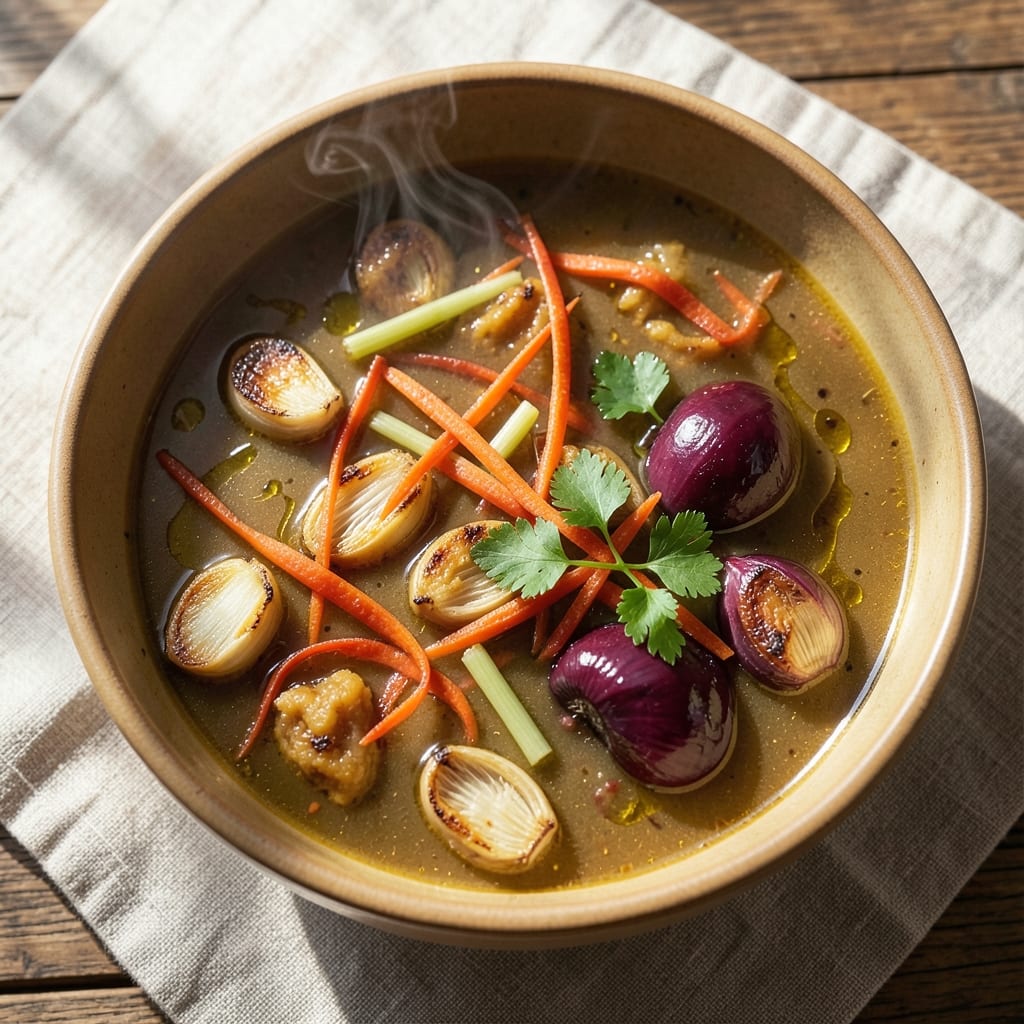
A 52-clove garlic soup transforms bold flavors into velvety richness that lingers long after the last spoonful. This isn't your average garlic soup—it's a deep, aromatic experience where 52 cloves of garlic create a complex, layered broth that balances heat, sweetness, and umami. The secret lies in slow-cooking the garlic to mellow its intensity while extracting its full potential, resulting in a soup so rich it feels like a hug in a bowl.
What sets this recipe apart is the technique: roasting the garlic first to deepen its flavor before simmering it in broth with aromatic vegetables. This method ensures the garlic infuses the liquid without overpowering it, creating a smooth, velvety texture that's perfect for chilly evenings. The process may seem labor-intensive, but the result is worth every minute—each spoonful delivers a symphony of garlic notes that build from subtle to bold.
By the time you're done, you'll have a golden, fragrant soup with tender vegetables and a depth of flavor that makes it a centerpiece dish. The aroma alone will have everyone gathering around the table, and the first taste will confirm why this recipe is a game-changer. Serve it with crusty bread to soak up every last drop of that garlic-infused goodness—it's the kind of soup that turns ordinary meals into memorable experiences.
This isn't just a recipe; it's a flavor journey that proves garlic can be both dominant and delicate. Whether you're serving it as a main course or a hearty appetizer, the 52-clove approach ensures a depth of flavor you won't find in standard versions. Let's get started on creating something truly special.
Ingredients for 52 clove garlic soup
Roasted garlic and aromatic vegetables create a velvety soup with 52 cloves of depth.
| Ingredient | Amount | Notes |
|---|---|---|
| Garlic Cloves 🧄 | 52 cloves | Roasted whole before use |
| Vegetable Broth 💧 | 6 cups | Low-sodium preferred |
| Carrots 🥕 | 2 lb | Medium-sized, peeled, sliced |
| Yellow Onion 🧅 | 1 whole | Medium, chopped |
| Celery Stalks 🥬 | 4 whole | Medium, chopped |
| Extra-Virgin Olive Oil 🫒 | ½ cup | For roasting garlic |
| Fresh Thyme 🌿 | ¼ cup | Leaves only, chopped |
| Fresh Rosemary 🌿 | ⅛ cup | Chopped, stems removed |
| Heavy Cream 🥛 | 1 cup | For velvety texture |
| Salt 🧂 | 1 ½ tsp | Diamond Crystal preferred |
| Black Pepper 🌶️ | ½ tsp | Freshly ground |
| Crusty Bread 🍞 | 1 loaf | For serving (optional) |
The garlic is the heart of this recipe. Whole Food Market or Trader Joe's typically carry the largest bulbs, which yield more cloves. Look for bulbs with tight, unpeeled skins—this indicates freshness. Roasting the garlic whole before peeling intensifies its sweetness and mellows the sharpness, creating that luxurious velvety texture. For the broth, Imagine or Pacific Foods brands offer excellent low-sodium options that won't overpower the delicate garlic flavors. The vegetables—carrots, celery, and onion—should be fresh and crisp; organic selections from the grocery store's produce section work perfectly.
No heavy cream? Coconut milk provides a similar richness, though with a slightly different flavor profile. Short on thyme or rosemary? Fresh parsley at double the amount offers a mild alternative, though it lacks the aromatic depth. The vegetable broth can be substituted with mushroom broth for extra umami, but reduce the salt slightly since mushroom broth tends to be saltier. For those avoiding dairy, cashew cream made from soaked cashews blended with water creates a velvety texture without the heaviness of traditional cream. The garlic cloves can be peeled after roasting or before—both methods work, but peeling after ensures you don't lose any of that roasted goodness down the drain.
This soup reheats beautifully—simmer gently on the stove or microwave in 30-second bursts to preserve its velvety texture. Store in an airtight container for up to 5 days in the refrigerator, though the flavors continue to meld and deepen over time. For longer storage, freeze in 2-cup portions for up to 3 months. The crusty bread pairing is optional but recommended; baguettes from the bakery section work best when lightly toasted to complement the soup's richness. Serve immediately after reheating to enjoy the full depth of the garlic's aromatic profile.
Why You'll Love This Recipe
- No Chopping Chaos: I swear, the only knife work here is dicing one onion, a few carrots, and celery stalks—no mincing, no peeling 50 cloves. (Yes, I counted. Twice.) The garlic just gets smashed whole into the pot, so even my toddler could "help."
- Garlic Overload Bliss: Between us, 52 cloves isn’t a typo—it’s intentional. That slow simmer turns raw garlic into sweet, mellow depth, while the broth soaks up all the golden goodness. The first spoonful? Pure satisfaction, even if the neighbors side-eye my garlic breath.
- Lunchbox Hero: This soup reheats like a dream—no grains or dairy to curdle, just pure, hearty flavor. Pack it in thermoses for work or school, and watch it disappear faster than my willpower on a Monday morning. (Between us, I’ve eaten it cold straight from the fridge. Don’t judge.)
- Pantry Magic: Onion, carrots, celery, broth, and garlic? That’s it. No specialty ingredients, no last-minute grocery runs. I’ve made this for $8 worth of groceries and fed four people twice. Leftovers? Even better the next day, if you can wait that long.
Step-by-step instructions for garlic-infused velvety richness
Transforming 52 cloves of garlic into a velvety, aromatic soup requires precision and patience.
Roast the Garlic for Deep, Sweet Flavor
Preheat your oven to 400°F. Place the 52 cloves garlic cloves in a small baking dish and drizzle with the 0.5 cup extra-virgin olive oil, ensuring each clove is lightly coated. Cover tightly with aluminum foil and roast for 40-45 minutes until the cloves are soft and golden brown, with a sweet, caramelized aroma.
Here's the thing—roasting garlic transforms its sharp bite into a sweet, mellow depth. You'll know they're done when the skins turn papery and the cloves can be easily squeezed from their skins. Let them cool slightly before proceeding, as they'll release their oils more easily when warm.
Sauté the Vegetable Base
In a large Dutch oven, heat the 0.5 cup extra-virgin olive oil over medium heat. Add the chopped yellow onion, celery stalks, and carrots, cooking for 8-10 minutes until the vegetables soften and the onion becomes translucent. This foundational step builds the soup's aromatic complexity.
Don't rush this step—properly sweating the vegetables removes their raw edge and ensures they meld seamlessly into the soup. If the vegetables begin to brown too quickly, reduce the heat slightly. Once they're tender, add the chopped fresh thyme and rosemary, stirring for 1 minute to infuse their earthy notes.
Build the Soup with Roasted Garlic and Broth
Squeeze the roasted garlic cloves from their skins and add them to the Dutch oven. Pour in the 6 cups vegetable broth, scraping up any browned bits from the bottom of the pot. Bring to a gentle simmer over medium-low heat and cook for 20-25 minutes until the vegetables are fork-tender and the flavors have melded together.
This is where the magic happens—the roasted garlic's sweetness blends with the savory broth, creating a rich, aromatic base. Taste the soup at this stage and adjust seasoning with 1.5 teaspoons salt and 0.5 teaspoon black pepper as needed. The soup should be well-seasoned but not overpowering at this point.
Finish with Heavy Cream for Velvety Texture
Reduce the heat to low and stir in the 1 cup heavy cream, allowing it to warm through gently. Simmer for an additional 3-5 minutes, stirring occasionally, until the soup reaches a luxurious, velvety consistency. The cream should be fully incorporated, but don't let it boil—this can cause the soup to curdle.
This final step elevates the soup from hearty to decadent. The cream not only adds richness but also smooths out the texture, creating that signature velvety mouthfeel. If the soup is too thick, thin it with a splash of the reserved broth. The result should be a soup that coats the spoon and lingers on the palate with each bite.
Serve with Crusty Bread
Ladle the soup into bowls and serve immediately, accompanied by slices of crusty bread. The bread's crunch contrasts beautifully with the soup's velvety texture, making each spoonful even more satisfying. The aroma alone—garlicky, herbal, and rich—will draw everyone to the table.
Real talk: this soup tastes even better the next day as the flavors continue to develop. Store any leftovers in an airtight container in the refrigerator for up to 3 days, or freeze for up to 3 months. When reheating, do so gently over low heat to preserve the cream's texture.
Pro Tips For Making 52 Clove Garlic Soup
- Sauté Garlic Low and Slow: After burning three batches of 52 cloves, I learned to cook the garlic on medium-low heat—just enough to make the edges golden without turning the whole thing into a charred mess. Stir every 30 seconds and resist the urge to rush it. ---
- Mince Garlic Evenly: No, you don’t need to chop all 52 cloves to the same size, but try to keep them consistent—about ¼-inch thick slices or rough minces. Uneven pieces mean some burn while others stay raw, and that’s a bitter soup waiting to happen. ---
- Deglaze Before Adding Broth: After browning the garlic, onion, carrots, and celery, splash in ¼ cup of water or broth and scrape up every last bit of stuck-on bits from the pot. That’s where the flavor hides, and skipping it means a weaker soup. ---
- Simmer, Don’t Boil: Once the broth goes in, keep the heat at a gentle simmer—not a rolling boil. Too much heat turns the garlic into a bitter, harsh flavor, and you’ll end up with a soup that tastes like a medicine cabinet exploded.
Wine and beer pairings for this 52 clove garlic soup
Garlic-Infused Whites
This rich, velvety soup pairs beautifully with Chardonnay—specifically a buttery, oak-aged version like Louis Martini Russian River Valley or Kendall-Jackson Vintner's Reserve. The oak and vanilla notes complement the garlic's sweetness while the creaminess of the wine mirrors the soup's texture. For a lighter option, try a dry Riesling from Germany, such as Dr. Loosen Blue Slate, which balances the garlic's intensity with crisp acidity. 🍷
Herbal Reds for Contrast
Aromatic reds like Pinot Noir or Grenache work surprisingly well with this soup. Look for a cool-climate Pinot Noir from Oregon, like Domaine Serene, to avoid overpowering the garlic's delicate notes. The red fruit and earthy undertones in these wines create a harmonious contrast with the soup's herbal depth. For a bolder option, a Syrah from the Northern Rhône—such as Guigal Côte-Rôtie—adds a peppery kick that enhances the garlic's complexity.
Craft Beer Pairings
For beer lovers, a Belgian Witbier like Hoegaarden or Stella Artois cleanses the palate with its citrusy notes and effervescence. The slight tartness cuts through the soup's richness, making each sip refreshing. Alternatively, a honey-brown ale from a local brewery—such as Allagash White—adds a subtle sweetness that mirrors the roasted garlic's caramelized depth. Avoid heavy stouts or IPAs, as their bitterness can clash with the soup's velvety texture.
Unexpected Pairing: Sparkling Wine
Don't overlook sparkling wine as a pairing! A dry Prosecco from Italy, like La Marca Brut, adds a lively effervescence that contrasts beautifully with the soup's richness. The bubbles help refresh your palate between spoonfuls, making the garlic's intensity feel more balanced. For a slightly richer option, try a Champagne such as Moët & Chandon Brut Impérial—its toasty notes complement the roasted garlic's depth. 🥂
Non-Alcoholic Options
For non-drinkers, a sparkling apple cider like Martinelli's or a ginger beer with a splash of lime offers refreshing contrast. The tartness of the apple cider brightens the soup's richness, while the ginger beer's spice adds a warming note. For a more sophisticated option, a chilled hibiscus tea with a hint of honey enhances the garlic's sweetness without overpowering it. These pairings ensure everyone at the table can enjoy the soup's depth.
Nutrition facts
Frequently asked questions
Why roast the garlic instead of sautéing it?
Roasting transforms the garlic's sharp bite into a sweet, mellow depth that's far more complex than raw or sautéed garlic. The oven's dry heat caramelizes the natural sugars in the cloves, creating a rich, nutty flavor that infuses the broth beautifully. Sautéing can burn the garlic quickly, while roasting develops its full potential without bitterness.
Can I reduce the garlic to 30 cloves for a milder flavor?
You can adjust the quantity, but the magic of this soup comes from the 52 cloves creating that velvety, aromatic depth. If you prefer milder garlic, try roasting 20-30 cloves and adding 1 teaspoon garlic powder (from unroasted garlic) to maintain balance. The roasted garlic's sweetness will still shine, but with less intensity.
What if my soup becomes too thick after adding cream?
Simply stir in 1-2 tablespoons of warm broth or water until you reach your desired consistency. The soup should coat the back of a spoon but remain smooth and velvety. If it's still too thick, thin it gradually—adding too much liquid at once can dilute the garlic's rich flavor.
How do I store leftovers without curdling the cream?
Store the soup in an airtight container in the refrigerator for up to 3 days. When reheating, warm it gently over low heat (or in the microwave at 50% power) until just hot. Avoid boiling—this can break down the cream's proteins and cause separation. Stir occasionally for even heating.
What’s the best way to serve this soup as a main course?
Pair it with crusty bread (like a baguette) and a simple green salad with lemon vinaigrette. For extra protein, serve with grilled chicken or shrimp. The soup's richness stands up well to hearty sides, making it a satisfying meal on its own. Garnish with fresh parsley or a drizzle of olive oil for added elegance.