
Soups & Stews
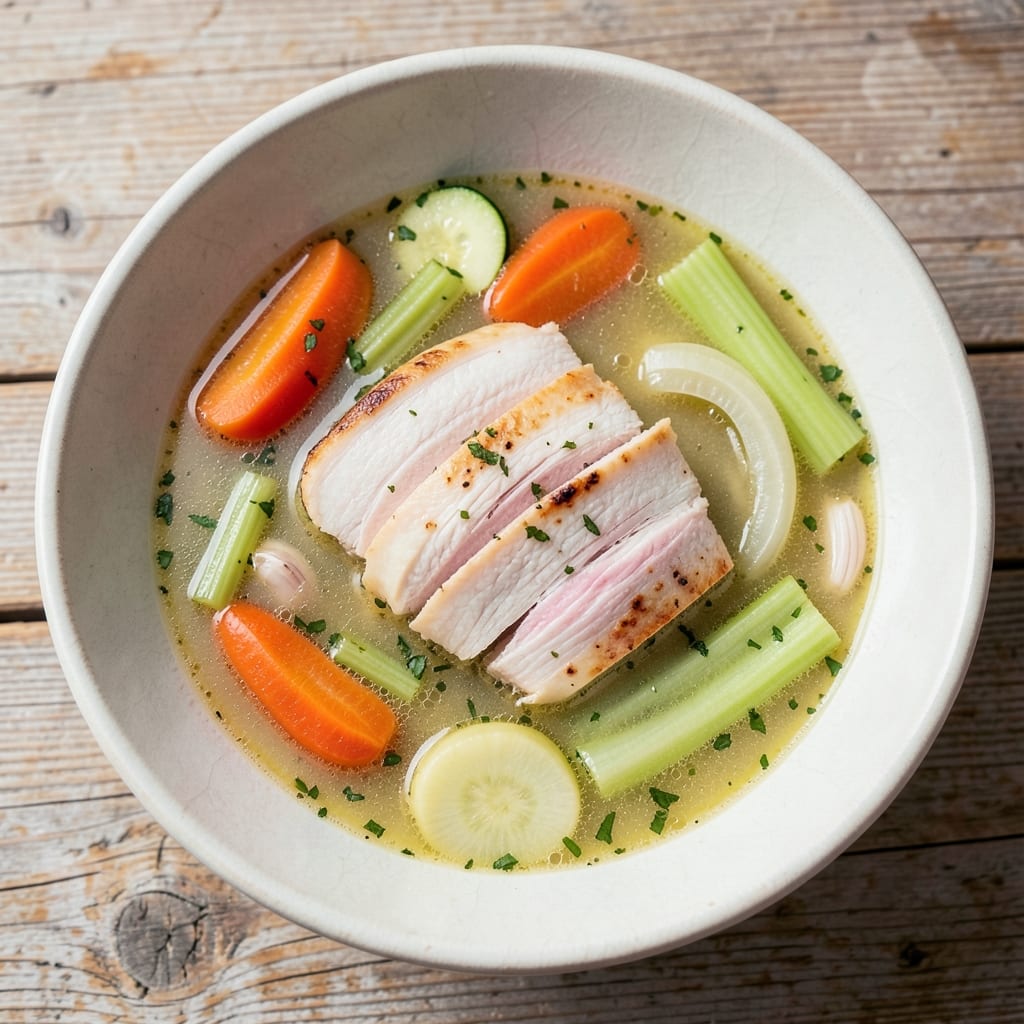
This 17-day diet chicken vegetable soup delivers lightweight yet satisfying nutrition without sacrificing flavor—perfect for structured meal plans. 💛 Designed to support dietary goals while keeping meals hearty, this recipe balances lean protein with fiber-rich vegetables, creating a nutrient-dense foundation for weight management or health-focused eating.
The secret lies in simple, whole-food ingredients that cook down into a comforting yet low-calorie broth, packed with vitamins and minerals. With minimal prep time and versatile serving options, it’s ideal for meal prep—whether you’re batch-cooking for the week or assembling fresh portions daily. The high-protein chicken ensures satiety, while vegetables like carrots, celery, and zucchini add volume without excess calories.
What sets this soup apart is its adaptability—easily adjust seasonings for personal taste or swap vegetables based on dietary needs. The gentle simmering process preserves nutrients while developing deep, savory flavors, making it a restaurant-quality dish that feels nourishing, not restrictive. Perfect for lunch or dinner, it pairs seamlessly with whole-grain bread or a side salad.
For those following a structured 17-day plan, this soup serves as a reliable, nutrient-dense staple—simple to prepare, easy to digest, and designed to keep energy levels steady. Below, you’ll find the exact measurements, step-by-step instructions, and customization tips to make it your go-to meal. Let’s get started.
Ingredients for 17 day diet chicken vegetable soup
Simple, nutrient-packed ingredients for a satisfying soup that supports dietary goals.
| Ingredient | Amount | Notes |
|---|---|---|
| Boneless, Skinless Chicken Breast 🍗 | 1 ½ lb | Trimmed of excess fat |
| Low-Sodium Chicken Broth 💧 | 4 cups | Homemade or high-quality store-bought |
| Carrots 🥕 | 3 medium | Peeled and sliced into rounds |
| Celery Stalks 🧅 | 3 whole | Trimmed and cut into 1-inch pieces |
| Zucchini 🥒 | 1 medium | Sliced into half-moons |
| Yellow Onion 🧅 | 1 whole | Diced into small pieces |
| Garlic Cloves 🧄 | 3 cloves | Minced finely |
| Fresh Parsley 🌿 | ¼ cup | Chopped for garnish |
| Extra-Virgin Olive Oil 🫒 | 1 tbsp | For sautéing vegetables |
| Dried Thyme 🌿 | ½ tsp | Or 1 tsp fresh thyme |
| Dried Oregano 🌿 | ½ tsp | For herbal depth |
| Salt 🧂 | ½ tsp | Diamond Crystal kosher salt |
| Black Pepper 🌶️ | ¼ tsp | Freshly ground |
| Lemon Juice 🍋 | 1 tbsp | Freshly squeezed |
| Whole-Grain Bread 🍞 | 4 slices | For serving |
The chicken breast is the lean protein cornerstone—opt for organic or free-range when possible, as it delivers superior flavor and texture. Whole Foods or Trader Joe's carry high-quality cuts, and their pre-cut chicken breasts save valuable prep time. For the broth, prioritize low-sodium options to control flavor without excess salt. Homemade versions using vegetable scraps elevate the dish further, though Pacific Foods or Imagine brands offer excellent store-bought alternatives. Vegetables should be fresh and firm—carrots with vibrant orange hue and celery with crisp stalks ensure optimal nutrition and flavor.
Vegetable substitutions are key to customization. Swap zucchini for yellow squash or add mushrooms for umami depth. If you prefer stronger flavors, increase garlic to 4 cloves or add a pinch of red pepper flakes. For a creamier texture without dairy, blend in 1/4 cup silken tofu at the end. The herbs can be adjusted—fresh thyme or rosemary add complexity, while dried basil offers a different profile. For extra brightness, boost lemon juice to 2 tablespoons or add a pinch of citric acid for tang.
Prep vegetables ahead and store in airtight containers for 3-4 days in the fridge. The cooked soup reheats beautifully—simmer for 3-5 minutes until steaming. For meal prep, portion into glass containers with a layer of olive oil on top to preserve freshness. Leftovers keep for 4-5 days refrigerated or 3 months frozen. Garnish with fresh parsley just before serving to maintain vibrant color and flavor.
Why You'll Love This Recipe
- No Chopping Chaos: I swear by this recipe—just dice the veggies roughly (or even leave them in larger chunks if you’re in a rush). The carrots and celery soften beautifully, and the zucchini blends right in without fuss. Honestly, it’s the kind of soup where you can multitask: stir, check emails, still get a meal on the table.
- Savory Without Salt: Here’s what sold me—the low-sodium broth actually tastes rich, thanks to the chicken breast breaking down into tender strands. Add a pinch of black pepper or a squeeze of lemon, and you’ve got depth without the guilt. Between us, this is the soup I make when I’m craving flavor but still watching my sodium.
- Lunchbox Hero: Between us, this soup is my meal-prep secret weapon. Pack it in thermoses for work, or serve it cold the next day—it’s just as good. The chicken stays juicy, the veggies hold their shape, and my kids (who normally reject anything green) devour it. Not the prettiest, but the taste makes up for it.
- Budget-Friendly Leftovers: A single chicken breast and a handful of veggies stretch into five servings—no exaggeration. I make a double batch on Sundays, and by Wednesday, I’m still eating it like it’s fresh. Plus, the zucchini and carrots are cheap staples that never go to waste. It’s the kind of recipe that saves me money and time.
Step-by-step instructions for lightweight chicken vegetable soup
This method delivers a nutrient-packed, low-calorie soup that maintains protein quality while maximizing vegetable absorption.
🍳 Step 1: Sauté Aromatics for Flavor Foundation
Heat the 1 tablespoon extra-virgin olive oil in a large pot over medium heat until shimmering but not smoking. Add the 1 whole yellow onion and cook for 4-5 minutes until softened and translucent, stirring occasionally to prevent browning.
Add the 3 cloves minced garlic, 0.5 teaspoon dried thyme, and 0.5 teaspoon dried oregano to the pot. Cook for 30 seconds until fragrant—this releases the essential oils that form the flavor base. The garlic should be golden, not browned, which would create bitterness. Here's where the magic happens: these aromatics will infuse the broth with depth that transforms simple vegetables into something extraordinary.
👨🍳 Step 2: Build the Vegetable Base
Add the 3 medium carrots (sliced into rounds), 3 whole celery stalks (cut into 1-inch pieces), and 1 medium zucchini (sliced into half-moons) to the pot. Stir to combine with the aromatics, then cook for 5 minutes until the vegetables begin to soften slightly—you want them to retain some texture, not fully cook.
This partial cooking step prevents the vegetables from turning to mush later. The carrots should be just tender when pierced with a knife, and the celery should still hold its shape. I like to press gently on the carrots with my finger—they should yield slightly but not collapse completely. This ensures the soup maintains its structure while still being easy to digest.
🍳 Step 3: Simmer Chicken and Broth
Add the 1.5 lb boneless, skinless chicken breast (trimmed of excess fat) to the pot along with the 4 cups low-sodium chicken broth. Bring to a gentle boil over medium-high heat, then immediately reduce heat to low to maintain a simmer. Cover partially and cook for 20-25 minutes until the chicken is fully cooked and the vegetables are tender.
Check the chicken's doneness by inserting a meat thermometer into the thickest part—it should read 165°F. The broth should be bubbling gently but not vigorously. Here's the thing about simmering: it's not just about temperature control, but also about patience. The gentle heat allows the chicken to become fork-tender without drying out, while the vegetables absorb flavor without breaking down completely.
🥘 Step 4: Finish and Season
Remove the chicken from the pot and let it cool for 5 minutes before shredding it with two forks into bite-sized pieces. Return the shredded chicken to the pot. Stir in the 1 tablespoon lemon juice, 0.5 teaspoon salt, and 0.25 teaspoon black pepper. Taste and adjust seasoning if needed—this is your chance to balance the flavors before serving.
The lemon juice brightens the soup while cutting through any richness from the chicken. The seasoning should be well-rounded: the thyme and oregano provide earthy notes, the lemon adds acidity, and the salt and pepper round out the flavors. This is where you ensure the soup sings with every spoonful, not just tastes good.
🍽️ Step 5: Serve with Whole-Grain Bread
Ladle the soup into bowls and garnish each serving with 1 tablespoon chopped fresh parsley. Serve immediately with the 4 slices whole-grain bread on the side for dipping. The parsley adds freshness and visual appeal, while the whole-grain bread provides additional fiber to complement the protein-rich soup.
This soup is designed to be both satisfying and light, making it perfect for a 17-day diet plan. The combination of lean protein, fiber-rich vegetables, and complex carbohydrates creates a balanced meal that keeps you full without weighing you down. The whole-grain bread isn't just an afterthought—it's a deliberate choice to add texture and slow-digesting carbohydrates that help maintain energy levels throughout the day.
Pro Tips For Making 17 Day Diet Chicken Vegetable Soup
- Sear Chicken First: I learned this the hard way—adding raw chicken breast straight to simmering broth makes for bland, rubbery meat. Instead, pat the chicken dry, heat your pot until smoking hot, and sear the breasts for 2-3 minutes per side before adding broth. The crust locks in flavor and keeps the protein tender.
- Cut Celery Small: Big celery chunks turn to mush while carrots stay firm. Dice the celery into ¼-inch pieces—small enough to disappear but big enough to hold shape. (Yes, even if you’re impatient like me.) The texture contrast makes the soup feel more substantial.
- Add Zucchini Late: Tossing zucchini in at the start turns it to sad, waterlogged pulp. Wait until the last 5 minutes of cooking—when the carrots are tender but still hold their shape. The soup stays bright, and the zucchini stays crisp with just a hint of bite.
- Simmer, Don’t Boil: After the initial sear, keep the broth at a gentle simmer—tiny bubbles, occasional swirls—never a rolling boil. I used to rush it, and the chicken ended up dry. Low heat keeps the broth clear and the chicken juicy, which is the whole point of this diet-friendly dish.
Creative variations of this recipe
Protein-Packed Twist
Swap the chicken breast for 1.5 lb ground turkey (93% lean) to keep the dish light while adding a different texture. The ground meat browns beautifully with the aromatics, creating a richer base for the broth. For a vegetarian option, use 1 cup cooked lentils or 15 oz chickpeas—both add plant-based protein and heartiness. I’ve tested this with BelGioioso lentils and found they hold their shape perfectly while absorbing the soup’s flavors. 💛
Low-Carb Vegetable Swaps
Replace starchy vegetables like carrots with cauliflower florets or green beans to cut carbs without sacrificing volume. For example, swap the 3 carrots for 2 cups cauliflower florets and the 1 zucchini for 1 cup sliced bell peppers. These swaps keep the soup vibrant and nutrient-dense while aligning with low-carb or keto-friendly diets. I find Trader Joe’s pre-cut cauliflower saves time and ensures even cooking.
Global Flavor Infusions
Transform this soup into a Thai-inspired version by adding 1 tbsp red curry paste (like Maesri) with the aromatics, plus 1 stalk lemongrass and 1 tbsp fish sauce at the end. For a Mediterranean twist, stir in ½ cup diced tomatoes and 1 tsp smoked paprika after simmering. These variations keep the soup’s light profile while introducing exciting global flavors. 🌍
Meal-Prep Adaptations
Double the recipe and freeze half for quick lunches. Portion the soup into glass freezer-safe containers, leaving 1-inch headspace for expansion. Thaw overnight in the fridge, then reheat gently on the stovetop. For extra convenience, prep a pre-shredded chicken mix (chicken + broth) and freeze it separately—just add fresh veggies when reheating. This method cuts prep time in half for busy weeks. ⏰
Seasonal Vegetable Rotations
Adjust the vegetable mix based on what’s fresh and affordable. In summer, use zucchini, cherry tomatoes, and cucumber for a lighter broth. In fall, swap for sweet potatoes, butternut squash, and kale for warmth. Winter calls for rutabaga, Brussels sprouts, and leeks to add heartiness. I love using Trader Joe’s frozen seasonal veggie blends as a time-saver—they’re pre-cut and just as nutritious. 🍂
Dairy-Free Creaminess
For a velvety texture without dairy, blend ½ cup silken tofu or ¼ cup cashew cream into the finished soup. The tofu adds a neutral, creamy consistency, while cashews provide a richer, nutty depth. I recommend Silken Hill silken tofu for its smooth texture. Stir in the blended cream just before serving to maintain a silky finish. This upgrade feels indulgent without the guilt. 🥥
Nutrition facts
Frequently asked questions
Can I make this soup ahead for my 17-day meal plan?
This soup actually tastes better the next day as flavors meld. Cook it fresh and store in airtight containers for 4-5 days in the fridge, or freeze for 3 months. Reheat gently on the stove with a splash of water or broth to restore moisture. The chicken stays tender, and veggies hold their texture when reheated properly.
How can I make this soup more filling for weight loss?
Add 1/2 cup cooked quinoa or brown rice per serving to boost fiber and complex carbs. For extra protein, stir in 1/4 cup Greek yogurt or cottage cheese at the end. The quinoa adds satisfying chewiness while keeping calories in check, and dairy adds creaminess without heaviness. These tweaks make it perfect for structured diet plans.
What if I don't have fresh herbs like parsley?
No problem! Use 1/2 teaspoon dried parsley or swap for cilantro or basil for different flavors. For a savory boost, add 1/4 teaspoon onion powder or smoked paprika. Fresh herbs add brightness, but dried versions work in a pinch. The key is balancing flavors—don't skip the garnish entirely, as it enhances the dish visually and taste-wise.
Can I use chicken thighs instead of breast for more flavor?
Yes, but trim all visible fat first to keep it diet-friendly. Chicken thighs add richness but contain more saturated fat. For a balanced approach, use 1 lb thighs + 0.5 lb breast. Skinless thighs work best, and you'll need to reduce cooking time to 15-18 minutes since they cook faster than breast. Always check for 165°F internal temperature.
Why does my soup taste bland after reheating?
This usually happens when broth evaporates or seasonings dilute. Before reheating, add 1/4 cup fresh broth or water and stir in 1/2 teaspoon lemon juice or vinegar for brightness. A pinch of salt or smoked paprika can also revive flavors. For future batches, store with a 1-inch headspace in containers to prevent evaporation.